 Botany Botany
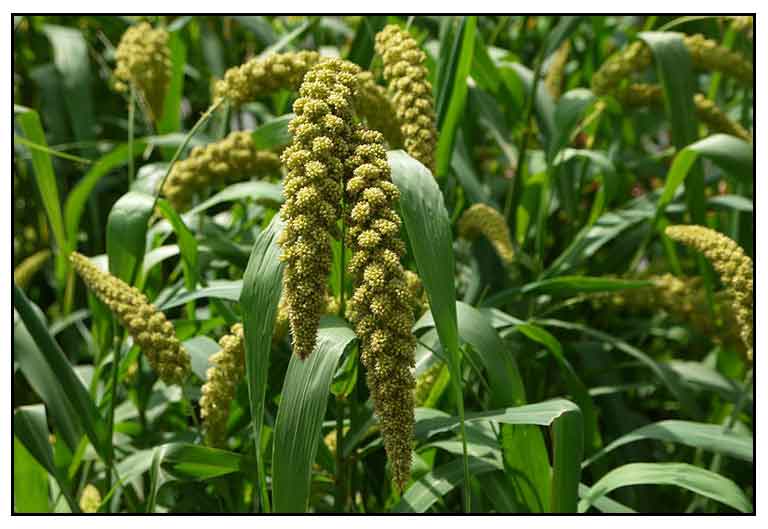
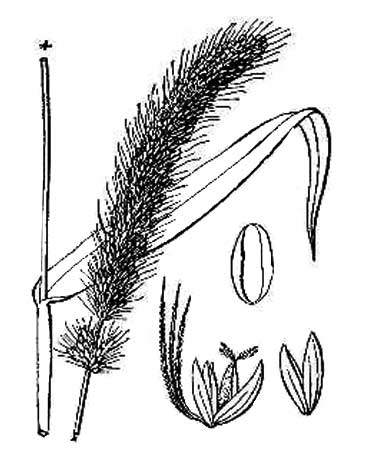
Daua is a grass with stems that are erect, simple or branching at the base, 0.9 to 1.5 meters high, 3 to 8 millimeters in diameter. Leaves are lanceolate, 20 to 40 centimeters long, 1.5 to 3 centimeters wide. Panicles are 8 to 20 centimeters long. Bristles are 1 to 3, often shorter than the spikelets. Spikelets are elliptical, slightly convex, 2.5 to 3 millimeters long.
Distribution
- Introduced.
- Scattered cultivation throughout the Philippines.
- Cultivated in all warm countries.
 Properties Properties
- Considered diuretic, astringent, emollient,
appetizer, digestive, stomachic and refrigerant.
- Studies have suggest alpha-amylase inhibiting, anti-lipase, anti-inflammatory, antioxidant, antihyperglycemic, hypolipidemic, antimicrobial, hepatotoxic properties.
Constituents
- Microbiological analyses showed this millet cereal to be deficient in lysine but high in tryptophan content.
- Seeds yield: 384 calories/100 g; water, 0%; protein 10.7 g; fat 3.3 g; carbohydrates 84.2 g; fiber 1.4 g; ash 1.8 g; minerals (calcium 37 mg, phosphorus 275, iron 6.2mg, sodium 8 mg, potassium 281mg); vitamin B1 (thiamine) 0.48mg; vitamin B2 (riboflavin) 0.14mg: niacin 2.48 mg. (1)
- Leaves yielded two coumarins: 6,7-dimethoxycoumarin and 5,8-dimethoxycoumarin. (see study below) (12)
- Millet nutrition analysis (1 cup cooked millet): 286 calories, 2.4 g total fat, 0.4 g saturated fat, 0.4 g monosaturated fat, 1.2 g polysaturated fat, 3.1 g dietary fiber, 8 g protein, 57 g carbohydrate, 0 g cholesterol, 5 mg sodium, 0.3 mg thiamin, 3.2 mg niacin, 106 mg magnesium, 2.2 mg zinc. (20)
- Proximate composition (%) of foxtail millet bran yielded 8.47 ±0.16 moisture, 12.93 ±0.21 protein, 9.63±0.15 fat, 7.78±0.20 ash, 42.56±0.15 fiver, 18.63±0.87 carbohydrate. Deffated FMB yielded 7.51 moisture, 14.82 protein, 9.63 fat, 7.78 ash, 42.56 fiber, 18.63 carbohydrate. (see study below) (22)
- In a study for antioxidant potency, phytochemicals like alkaloids, phenolics, reducing sugars, and flavonoids were found only in methanolic and aqueous extracts, while tannins were present in all solvent extracts of whole flour and bran-rich fraction. (see study below) (24)
Uses
Edibility
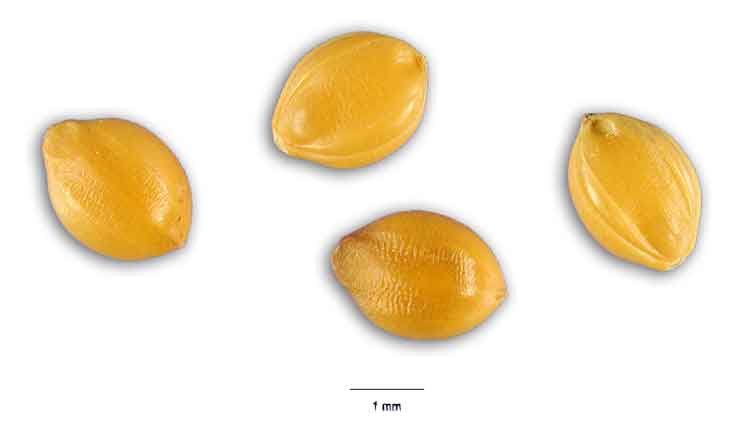
- Seeds are cooked and can be eaten in all ways rice is used, or ground into flour for use in cakes, puddings, etc.
Folkloric
- In China, grain used as emollient and astringent for diarrhea and cholereic affections.
- In India, considered diuretic and astringent; used for rheumatism.
- Seed used for treatment of dyspepsia and indigestion. White seeds used for cholera and fever. Green seeds used as diuretic and strengthening virility. (1)
- In Pakistan, reported tribal use of seeds, crushed and mixed with ghee in form of a cake and eaten for sexual vigor and potency. Tribal ladies use a bark decoction of Acacia modesta and oil of Setaria in a mixture as contraceptive tonic. Also used to increase fertility in both males and females. (10)he
- In India, used for promoting vigor and treatment of bone fracture. (11) In Chhattisgarh, cooked grains used to treat diarrhea. In combination with other herbs/grasses used as sex tonic. Externally, as aqueous paste, used to treat swellings. Used alone or in combination with other herbs for the treatment of dysuria. (17) In the Aurangabad district of India, decoction of whole plant taken internally for rheumatism; also used to decrease the pains of parturition. (18)
- Seeds used for treatment of diabetes.
- In Western Himalaya, mixed with cow's curd for treatment of measles. (19)
- In Chinese medicine, Pinellia and millet soup, a simple mix of Pinella rhizoma and Setaria italica, used for the treatment of insomnia. (21)
Others
- Food and Fodder: Cultivated in Asia for food, and in the U.S. for fodder.
- Erosion control: Can be sown in contour strips for erosion control. (23)
- Thatching: Straw can be used for thatching and bedding. (23)
- Oil: Bran yields 9% oil and can be used for oil extraction. (23)
 Studies Studies
• Chemical Composition / Digestibility Study: Analysis of 12 cultivars of Setaria italica showed the ash and fiber content to be comparable to other millets while protein and calcium are slightly higher. In vitro digestibility studies showed it was high in pepsin and low in trypsin. (2)
• Anti-Lipase Activity: In a search of a new pancreatic lipase inhibitor from natural sources, 75 medicinal plants were screened for anti-lipase activity. Three plants exhibited strong in vitro anti-lipase activity (>80%): Eriochloa villosa, Orixa japonica and Setaria italica. (3)
• Antioxidant / Anti-inflammatory: Administration of an ethanolic extract of S. italica in acute carrageen-induced rheumatoid female rats significantly reduced the levels of cathepsin, uric acid, LDH, ALT and AST as well as increased the levels of antioxidants in serum, liver and kidney tissue. Results showed effective control of scavenging free radicals and potent antioxidant promoting ability probably due to the presence of flavonoids and alkaloids. (4)
• Glucose Lowering / Lipid Benefits: Study showed the supplementation of low GI foxtail millet biscuits cause a significant reduction of baseline serum glucose, serum cholesterol and LDL with a 19.68% reduction of glycosylated hemoglobin. Results suggest the millets have a potential protective role in the management of diabetes. (5)
• Antimicrobial Activity / Coumarins / Leaves: Study of leaves yielded two coumarins: 6,7-dimethoxycoumarin and 5,8-dimethoxycoumarin. Screening for antimicrobial activity showed moderate activity against different strains of bacteria and fungi. (12)
• Silver Nanoparticles / Antimicrobial / Husk: Study reports on a simple and eco-friendly synthesis of silver nanoparticles using Setaria italica husk. Antimicrobial activity was studied against Gram-positive and Gram-negative bacterial, Staphylococcus and Escherichia coli sps., respectively. (14)
• Anti-Inflammatory / Neuropharmacological / Seed: Study evaluated an ethanolic extract of Setaria italica seeds for possible anti-inflammatory and neuropharmacological activities in rats and mice. Results showed strong anti-inflammatory activity with inhibition of carrageenan-induced paw edema. Studies demonstrated neuropharmacological properties with prominent CNS depressant activity in Hole-cross test, significant suppression of movement in Open-field test. (15)
• Antihyperglycemic / Hypolipidemic / Seeds: Study evaluated the antihyperglycemic and hypolipidemic potential of S. italica seeds in streptozotocin-induced diabetic rats. Results showed a significant drop in blood glucose levels in diabetic rats with lower levels of HbA1c. The extract also exhibited significant hypolipidemic effect evidenced by lower levels of triglycerides, total cholesterol, LDL and VLDL, with an increase in HDL cholesterol levels. The activities could be due to the presence of alkaloids or glycosides as active principles. (16)
• Antioxidant Potential of Defatted Foxtail Millet Bran: Study evaluated the antioxidant efficacious DFMB extract using DPPH, ABTS, superoxide radical and reducing power. The highest inhibitory concentration (IC50) on DPPH, ABTS, and superoxide radicals were in the range of 0.131±0.002, 0.795±0.003, and 0.158±0.009 mg/ml. Total phenolic content ranged from 21.49±3.26 to 29.39±1.36 gallic acid equivalent (GAE)/100 g extract. Phenolic content and antioxidant activity in DFMB extracts were significantly correlated (p,0.05). A 50% ethanol extract from DFMB showed the most phenolic compound with substantial antioxidant activity. (see constituents above) (22) Antioxidants were extracted using methanol, ethanol, and water. Methanolic extracts of whole flour and bran-rich fractions exhibited significantly higher (p<0.05) radical scavenging activity (44.62% and 51.80%, respectively) using DPPH and reducing power assays (0.381 and 0.455, respectively) at 2 mg. (see constituents above) (24)
• Antimicrobial / Hypoglycemic / Seeds: Ethanolic crude extract of S. italica seeds and fractions were evaluated for possible antimicrobial (disc diffusion method), hypoglycemic (oral glucose tolerance test) and antidiarrheal (castor oil-induced diarrhea method) effects in albino mice. The EE showed good antimicrobial activity against Gram-negative bacteria with 9-13 mm zone of inhibition compared to ciprofloxacin at 40-41 mm. A chloroform fraction showed promising hypoglycemic property. Antidiarrheal effect was not significant. (25)
• Water Activity in Grains / Storage Safety: Water activity (aW) provides information on microbial spoilage, chemical stability, and physical stability of grains. Study evaluated the water activity in millet grains for microbial growth. Six samples showed aW range of 0.445-0.517. The range of aW at which microbial growth occurs in food grains is 0.97 to0.76 for bacterial and 0.93-0.61 for molds and yeast. Results suggest the grains are safe from microbial contamination and fit for consumption when stored at room temperature under dry conditions. (26)
• Grain Oil Extraction: Study reports on a supercritical fluid extraction (SFE) of foxtail millet bran oil (FMBO) using Box-Behnken central composite design combined with response surface methodology (RSM). Maximum oil yield under optimum condition was 7.97%. The FBMO obtained from SFE showed a much lower phospholipid (0.188 mg/g) content, a higher content of total sterols (1.55%), along with a preferable color. Results suggest a promising nutritional source for food fortification. (27)
• Alpha-Amylase Inhibitors / Anti-Diabetic Potential: Alpha amylase is an enzyme that breaks down starch or glycogen. Prevention of glucose absorption in the human GI tract by inhibition of activity of carbohydrate-hydrolyzing enzymes ( a-amylase and a-glucosidase) is a strategy for control of postprandial hyperglycemia. Study suggests the use of S. italica flour has significant dose-dependent a-amylase inhibitory activity with potential for development for use in non-insulin dependent diabetes mellitus (NIDDM). (28)
• Hepatotoxicity Photosensitization / Renal Failure / Sheep and Goats: Photosensitivity, an abnormal skin reaction to sunlight exposure, can be caused by failure to excrete phylloerythrin due to hepatic dysfunction. Foxtail millet feeding can induce hepatotoxic photosensitization with effects on various organs. This study evaluated the renal function and serum electrolyte status in twelve sheep and goats experimentally feeding on foxtail millet. In three sheep showed clinical signs of hypersensitivity with increases in creatinine, magnesium, sodium and potassium concentration, along with histopatholical changes in the kidney. Results suggest feeding with foxtail millet can cause renal dysfunction and changes in some serum electrolytes. (29)
Availability
- Wild-crafted.
- Products and supplements in the cybermarket.
|