GENERAL INFO
• Trans fat, short for trans-fatty acid, is the common name for unsaturated fat with trans-isomer (E-isomer) fatty acids.
• The FDA Definition: The FDA’s regulatory chemical definition for trans fatty
acids is all unsaturated fatty acids that contain one or more isolated
(i.e., nonconjugated) double bonds in a trans configuration (trans arrangement of the atoms rather than the cis arrangement). Under the Agency’s definition, conjugated linoleic
acid would be excluded from the definition of trans fat. Trans fat may
be monounsaturated or polyunsaturated, but never saturated.
• The Simpler Definition: Trans fat comes from the addition of hydrogen
to vegetable oil through a process of called hydrogenation. It is more
solid than oil and less likely to spoil. Its use in food manufacturing
helps food stay fresh longer, have a longer shelf life and have a less
greasy feel.
• Trans fat has been part of the human diet for
the past 100 years, and for the longest time strangely escaping the attention of healthcare
crusaders, while it was embedding on RBCs, sludging through and clogging
up our arteries.
• Natural Trans Fat: Trans fat also occurs naturally in the milk and body fat of ruminants (cattle and sheep) at a level of 2 to 5% of total fat. These include conjugated linoleic acid (CLA) and vaccenic acid. CLA is conjugated, with two double bonds -a cis and trans, and is excluded from the FDA definition. The US National Dairy
Council has asserted that animal food trans fat are different from partially
hydrogenated oils and do not effect the same negative effects.
• Industrial Trans Fat: Animal-based fats were once the only source of trans fat consumed. The chemistry
of hydrogenation was developed in the 1890s by Paul Sabatier, the process
of hydrogenation patented by the German Chemist Wilhelm Normann in 1902,
and by 1911 was in commercial production as Crisco. Today, the processed food industry is the largest source of trans fat consumption, from the partial hydrogenation of unsaturated plant fats (generally vegetable oils) that has found its way in the fast food, snack food, fried food, and baked food industries. Artificial trans fat in food from partially hydrogenating plant fats may amount to 45% of the total fat. The total fat in baking shortenings may be 30% trans fat, up to 15% in non-reformulated margarine, compared to 4% in butter from ruminant fat.
• The process of partial hydrogenation adds hydrogen atoms to unsaturated
plant fats, making them more saturated, in the process, acquiring a high
melting point, making it attractive for baking and extending the products'
shelf-live and decreasing refrigeration needs. These partially hydrogenated
fats have displaced natural solid fats and liquid oils in many areas of
food production, especially in fast foods, snack food, fried food and
the baked good industries.
• Production increased steadily until the 1960s, as processed vegetable
fats provided alternatives to animal fats and its attendant cultural and
culinary taboos of Koshers and vegetarians.
• For a short time, in the campaign against saturated fat, it even
enjoyed good press, with the unsaturated trans fat of margarine touted
as a healthier alternative to butter.
• By the early 1980s, nutrition and healthcare watchdogs started
catching up. By 1988, studies started filtering in, suggesting trans fats
could cause a large increase in coronary heart disease and contribute
30,000 deaths annually from heart disease. By 1992, the Center for Science
in the Public Interest (CSPI) began campaigning against trans.
• Although saturated fat and dietary cholesterol have had mandatory
listing on food labels since 1993, trans fat has managed exclusion from
labeling requirements and for more than a decade continued to sludge through
the outskirts healthcare efforts.
• Starting January 1, 2006, trans fat joined in the mandatory listing
of saturated fat and dietary cholesterol in the Nutrition Facts section
of food labels.
• The rest, you would hope, is history. But it's not. Information has been poorly disseminated. Labeling continues to be deceptive. Public awareness is dreadfully wanting, especially in the Third World. |
STUDIES AND
OTHER EFFECTS
Coronary
Heart Disease
• The major evidence comes from the Nurses' Health Study - the CHD
risk roughly doubles for each 2% increase in trans fat calories consumption
(instead of carbo calories). By contrast, it takes more than 15% increase
in saturated fat calories to double the CHD risk.
• Conversely, replacing 2% of trans fat consumption with non-trans
unsaturated fats decreases CHD risk by 53%. Reducing saturated fat by
5% with a non-trans unsaturated fat reduces CHD by 43%.
Lipidemias
• Triglycerides: Trans fat also increases triglycerides which contributes
to atherosclerosis or thickening of the artery walls which increases the
risk for stroke, heart attack and heart disease.
• Lp(a) lipoprotein — a type of LDL cholesterol found in varying
levels depending on genetic makeup. Independent of other cholesterol levels,
It may be increased with trans fat, with suspected contribution to heart
disease. More research is needed.
Diabetes
• There is growing concern that the risk for type 2 diabetes increases
with trans fat consumption.
Obesity
• Research suggests trans fat may increase weight gain and abdominal
fat.
Cancer
• No scientific consensus of across-the-board increase in cancer
risks from consumption of trans fat. However, one study has found a connection
between trans fat and prostate cancer.
Infertility
• A study found a more than 70% increased risk of ovulatory infertility
with each 2% increase in energy-intake trans fat consumption.
Alzheimer's / Decreased Cognition / Brain Aging
• In a study examining the cross-sectional relationship between nutrient status and psychometric and imaging indices of brain health in dementia-free elders, a nutrient biomarker pattern (NBP) characterized by high trans fat was associated with less favorable cognitive function and less total cerebral brain volume. |
THE GOOD,
THE BAD, AND THE UGLY
Of course, not all fats are bad. In fact, fat is a major source of body
energy (9 calories per gram compared to 4 calories per gram for carbohydrate
or protein) and is essential in the absorption of the fat-soluble vitamins
A, D, E and K, and carotenoids. Both animal- and plant-derived foods contain
fat, and in moderation is essential for growth, development and health
maintenance. As food ingredient, it provides taste, consistency and stability
and shelf-life.
THE
GOOD
Polyunsaturated fat: soybean oil, corn oil, sunflower oil, foods like
nuts.
Monounsaturated fat — Olive oil, canola oils.
THE BAD
Saturated fat, the main dietary culprit that raises LDL, of which Americans
consume on average 4 to 5 times more as trans fat.
THE UGLY
That's trans fat. Unlike other dietary fats, trans fat is unessential
with no known benefit to human health. Some foods contain as much as 40%
trans fat of the total fat. Baking shortenings contain about 30% trans
fat compared to total fats. Some margarines contain as much as 15% trans
fat by weight compared to the 4% in butter from animal fats. Trans fat also delivers a double whammy:
it increase the LDL (bad cholesterol) and decreases the HDL (the good
cholesterol). |
SOURCES
OF TRANS FAT
Trans fat is found in vegetable shortenings, some
margarines, crackers, cookies, snack foods, and other foods made with
or fried in partially hydrogenated oils. Unlike other fats, the majority
of trans fat is formed when food manufacturers turn liquid oils into
solid fats like shortening and hard margarine. A small amount of trans
fat is found naturally, primarily in some animal-based foods.
Eating Out
/ Ordering Out
Shortenings commonly used by restaurants for deep frying are high in
trans fat. The decreased rancidity of these partially hydrogenated oils
meant that they could be reused for a longer time than conventional
oils. Fast food chains use different fats in different locations; ergo,
trans fat levels in products can have large variation. For example,
an analysis of samples of McDonald's french fries in 2004 and 2005 found
that fries served in New York City contained twice as much trans fat
as in Hungary, and 28 times as much trans fat as in Denmark (where trans
fats are restricted). At KFC, the pattern was reversed with Hungary's
product containing twice the trans fat of the New York product. Even
within the US there was variation, with fries in New York containing
30% more trans fat than those from Atlanta.
The average American
diet contains 5.8 grams of trans fat daily, or 2.6 percent of calories.
• 40% — cakes,
cookies, crackers, pies, bread, etc.
• 21% — animal
products
• 17% —
margarine
• 8%
— fried potatoes
• 5%
— potato chips, corn chips, popcorn
• 4%
— household shortening
• 3%
— salad dressing
• 1%
— breakfast cereal
• 1%
— candy
Data based on FDA’s economic
analysis for the final trans fatty acid labeling rule, "Trans Fatty
Acids in Nutrition Labeling, Nutrient Content Claims, and Health Claims"
(July 11, 2003)
Trans fats
in human milk
The trans fat in human milk fluctuates with the mother's consumption
of trans fat and consequently affects the breastfed infants' trans fat
levels. Reported levels of trans fat in human milk are: Spain 1%; France
2%, Germany 4%, Canada 7%. |
THE GOAL
A fat-free diet is not feasible and unhealthy. A
balance is essential for health. The goal is to keep the intake of saturated
fats, trans fats and cholesterol as low as possible.
• The NAS (National Academy of Sciences) has concluded there is
no safe level of trans fat consumption. There is no adequate level,
recommended daily amount or tolerable upper limit for trans fats. This
is because any incremental increase in trans fat intake increases the
risk of coronary heart disease.[2]
• The WHO and AHA recommend that trans fat be limited to less
than 1% of overall energy intake. So, in a 2000 calories a day diet,
that adds up to 2 grams of trans fat or less a day.
| FRIES
CHIPS |
| |
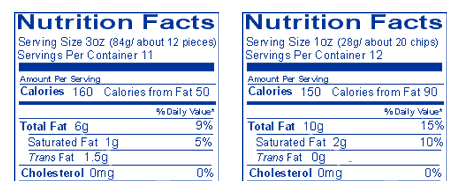
| Above, 2 label examples of your favorite snack
foods. One with 11 servings in the bag, the other, 12 servings.
I know more people who can do a number on the whole bag in one seating
that people who can just eat one or two servings and stop. |
FRIES:
Calories per serving: 160
Number of servings: 11 / Total number of calories in the bag: 1760
calories
Calories from Fat: 6 grams x 9 calories/gm of fat = 54 calories
Total calories from fat: 594 calories
Total trans fat per serving: 1.5 g / Total in the bag: 16.5 g |
CHIPS:
Calories per serving: 150
Number of servings: 12 / Total number of calories in 12 servings:
1,800 calories
Calories from Fat: 10 grams x 9 calories/gm of fat = 90 calories
Total calories in the bag of fries: 1760 calories
Total calories from fat: 1080 calories (12 servings x 90 calories
per serving)
Total trans fat per serving: 0 g |
A
CAVEAT
Deceptive Labeling
!
ZERO TRANS FAT? . . . NOT ALWAYS
In the US, manufactures are allowed to report
trans fat levels of less than 0.5 gm per serving as ZERO trans
fat or trans fat free. And there lies the loophole. Many are critical
of the "0.5 gm threshold" as too high to merit a Zero
or Trans Fat Free labeling. Many eat servings of one product
or another serving or two of another pseudo-zero product here
and there.
But if it had
0.4 g of trans fat per serving which allowed it to be reported
at "zero trans fat" - consuming the 10 servings of chips, not difficult to do,
would have given you 4.8 g of trans fat, way above the recommended
daily limits of 1% of overall energy intake or 2 gm of trans fat
or less a day.
Alas, trans fat contents less than 0.5 g per serving is not required in the labeling. Read beyond the labels. The regulations on labeling should be changed to allow determination of total trans fat intake from the servings consumed, or to specify the total amount of trans fat in the whole packaged good. |
• Trans fat, together with saturated fat
and dietary cholesterol, has earned notoriety of increasing the risk for
coronary heart disease — a disease entity that afflicts more than
12.5 million Americans from which more than 500,000 die each year.
• The FDA estimates that by 2009, the consumers'
response to trans fat labeling will have prevented 600 to 1,200 cases
of coronary heart disease and 250 to 500 deaths each year.
|
THE INFO
IN THE LABEL OR INGREDIENTS LIST
• Reading the label needs a bit of basic math.
The numbers may not be readily apparent and a little arithmetic is essential
in the reading of the percentages of fat-info and in adding up the totals
in the number and size of servings.
• PARTIALLY HYDROGENATED VEGETABLE
OIL — another term for trans fat. (Note: Fully hydrogenated
oil does not contain vegetable oil. However, just "hydrogenated"
vegetable oil usually means trans fat in the oil.
• SHORTENING
— another red flag; shortening contains some trans fat. |
%DV
Percent Daily Value
Despite the confirmed relationship between trans
fat and coronary heart disease, there is still no FDA established "daily
value" or %DV for trans fat. There is a %DV for cholesterol and
saturated fat; for these two, the general rule of thumb is: 5% of Daily
Value is low, and 20% or more is high.
You can also use the %DV to make dietary trade-offs
with other foods throughout the day. You don’t have to give up
a favorite food to eat a healthy diet. When a food you like is high
in any of these cholesterol-raising components, balance it with foods
that are low in them at other times of the day. |
TRANS FAT
IN DIETARY SUPPLEMENTS?
Yes. Some
dietary supplements contain trans fat from partially hydrogenated vegetable
oil as well as saturated fat or cholesterol - especially in energy and
nutrition bars. Because of the FDA’s new label requirement, if a
dietary supplement contains a reportable amount of trans or saturated
fat, which is 0.5 gram or more, the manufacturer must list the amounts
on the Supplement Facts panel. |
THE WORLD
AND THE WEB VS TRANS FAT
Denmark
In March 2003, the first country to legislate laws to regulate the sale
of foods containing trans fat, in essence, banning partially hydrogenated
oils. The extent of restriction makes it the sole country where it is
possible to eat less than 1 gm daily of commercially produced trans
fat.
Canada
In November 2004, passed a ban on trans fat. In December 2005, required
the food labels to list the amount of trans fat. Less than 0.2 gm is
considered trans fat free and can be labeled as Zero Trans Fat. In June
2006, recommended a limit of 5% trans fat to total fat.
European Union, United Kingdom, Australia
Many countries have joined in the bandwagon for change: for trans fat
labeling, for limiting and/or discontinuing use of trans fat in consumer
products. Scientific opinion and position on trans fat pending.
United States
• In 2003, the FDA required the Nutrition Facts panel to include
trans fat.
• However, the regulation allows trans fat levels of less than
0.5 grams per serving to be labeled as 0 grams per serving.
• US cities have joined in the war against trans fat. In May 2005,
Tiburon, California became the first American city with trans fat free
restaurant menus. New York City, Montgomery County in Maryland and Philadelphia
have embarked on campaigns to reduce or eliminate trans fat through
voluntary campaigns or council bans.
BanTransFats.com
• In 2003, launched the national and international trans fat campaign
that included suing Kraft to eliminate trans fat in Oreos. This resulted
in Kraft eliminating trans fat from Oreos and reducing it in about 650
other products. The successful campaign had a huge domino effect, a
cascading of public awareness and opinion.
• Sued McDonald's in 2003 for misleading customers that it has
switched to lower trans fat cooking oil. Consequently, McDonald admitted
to the omission through an information campaign and contributed to an
American Heart Association trans fat program.
• Also was instrumental in making Tiburon, California America's
first trans fat-free city and the many cities that followed suit. |
FOOD INDUSTRY
RESPONSE
• Research at the
US Dept of Agriculture have been investigating whether hydrogenation can
be achieved without the side effect of trans fat production. It has been
shown that the level of trans fat can be altered by modification of the
temperature, pressure, and the length of hydrogenation time.
• Recently, non-hydrogenated vegetable oils have become available
that have life spans exceeding that of the frying shortenings.
• In January 2007, responding to the prospect of an outright ban
on the sale of Crisco, the product was reformulated to meet the US FDA
definition of "zero grams trans fats per serving" (that is less
than one gram per tablespoon) by boosting the saturation and then cutting
the resulting solid with oils.
• Alejandro Marangoni's research group at the University of Guelph,
devised a process using "healthier oils" like olive, soybean
and canola to form an alternative and healthier "cooking fat"
that provides the "trans fat and saturated fat" taste to baked
goods. |
DIET TIPS
• The bottom line - a fat free diet is not feasible,
unpalatable and unhealthy. The effort should be in cutting down
on particular components.
• The present recommendations for fats are 30% of total caloric
intake.
• The WHO and AHA recommend that trans fat be limited to less
than 1% of overall energy intake. So, in a 2000 calories a day diet,
that adds up to 2 grams of trans fat or less a day.
• Choose alternative fats: Replace saturated and trans fats with
monounsaturated (olive oil and canola oil) and polyunsaturated fats
(corn oil, soybean, sunflower oil and foods like peanuts and fish).
They do not raise the bad LDL cholesterol.
• Choose vegetable oils (except coconut and palm kernel oils)
and soft margarines (liquid, tub, or spray) more often because the amounts
of saturated fat, trans fat, and cholesterol are lower than the amounts
in solid shortenings, hard margarines, and animal fats, including butter.
• Make fish a frequent part of the diet. Most fish are lower in
saturated fat than meat. Some fish, such as mackerel, sardines, and
salmon, contain omega-3 fatty acids that are being studied to determine
if they offer protection against heart disease.
• Meats: Go for the lean meats, such as poultry (without skin,
not fried), lean beef and pork (pork tenderloin preferably, or trim
visible fat, not fried).
• When eating or ordering out, inquire about the fats being used
in the food preparation.
• Know the math of calories: Fats are high in calories. From any
source, fat contain 9 calories per gram, more than twice that given
by protein and carbohydrates (carbohydrates and protein have only 4
calories per gram).
• READ THE LABELS! Do the math. Always check out the Nutrition
Facts panel. Choose the lowest combination of saturated and trans fat.
The balance of the total fat minus the saturated and trans fat usually
represents the polyunsaturated fats. And REMEMBER!. . . zero trans fat
is not always zero trans fat — it can be any amount between zero
and 5 g.
• START EARLY! Studies have shown that kids in this fast-food-and-snack
culture, as young as 8 or 9, have high cholesterol and blood fats. It
is never too early to start. Start early and live longer!
|
| by Dr Godofredo U. Stuart |