
HOME      •      SEARCH      •      EMAIL    •     ABOUT


Family Phyllanthaceae
Bagnang-pula
Glochidion rubrum Blume
PINK-BERRIED PIN-FLOWER TREE
COMMON GLOCHIDION
Tai min suan pan zi

Scientific names Common names
Bradleia coronata Benth. Bagnang-pula (Tag.)
Bradleia rubrua (Blume) Steud. Jaket-jaket (Surigao del sur)
Bradleia glauca Benth. Common glochidion (Engl.)
Diasperus coronatus (Müll.Arg.) Kuntze. Pink-berried pin-flower tree (Engl.)
Diasperus leiostylus (Kurz) Kuntze.  
Diasperus wightianus Kuntze.  
Glochidion chademenosocarpum Hayata  
Glochidion coronatum Hook.f.  
Glochidion diversifolius (Miq.) Merr.  
Glochidion foliosum S. Moore  
Glochidion fortunei S. Moore  
Glochidion fortunei var. longistylum H.Keng  
Glochidion fortunei var. megacarpum H.Keng  
Glochidion grave S,Moore  
Glochidion insulare Hook.f.  
Glochidion leiostylum Kurz.  
Glochidion penangense (Müll.Arg.) Airy Shaw  
Glochidion rubrum Blume  
Glochidion suishaense Hayata  
Glochidion thorelii Beille  
Glodichon versicolor S. Moore  
Phyllanthus diversifolius Miq.  
Phyllanthus penangensis Müll.Arg.  
Phyllanthus ruber (Blume) T.Kuros  
Glochidion rubrum Blume is a synonym of Phyllanthus subscandens var. subscandens. POWO
Phyllanthus subscandens var. subscandens is an accepted variety. KEW: Plants of the World Online

Other vernacular names
BORNEO: Dempul, Obah nasi.
CHINESE: Tai min suan pan zi.
INDONESI: Dempul, Dempul lelet, Ki timbul, Ketemung.
MALAYSIA: Gambiran, Senkam, Tetimah, Menyam, Terasi manis, Ubah kecil Rembang panas.
THAILAND: Chum set, Khat na.
VIETNAM: B[oj]t [ees]ch ven su[oos]c d[or], Bọt ếch ven suối; Sóc đỏ.
OTHERS: Kenidei bukit.

Gen info
- Phyllanthaceae, commonly known as the leaf flower family, a family of lowering plants in the order Malpighiales, consisting of about 60 genera and 2,000 species of herbs, shrubs, trees, and rarely climbers or aquatics, predominantly pantropical with highest diversity in the tropics.
- The family is distinguished by the absence of latex and extra-floral nectaries, alternate pinnate leaves, actinomorphic unisexual flowers, and fruits typically capsular schizocarps exhibiting explosive dehiscence. (11)
- Glochidion is a genus of flowering plants in the family Phyllanthaceae, known as cheese trees or buttonwood in Australia, and leafflower trees in scientific literature. As of 2025, POWO lists 169 species.
- Etymology: The scientific name Glochidion rubrum combines Greek and Latin roots. The genus name Glochidion derives from Greek word glochis meaning "point or barb of an arrow," referring to the shape or arrangement of the stamens/anthers. The specific epithet rubrum derives from Latin ruber, meaning "red", referring to the reddish hairs or reddish flush found on parts of the plant.

Botany
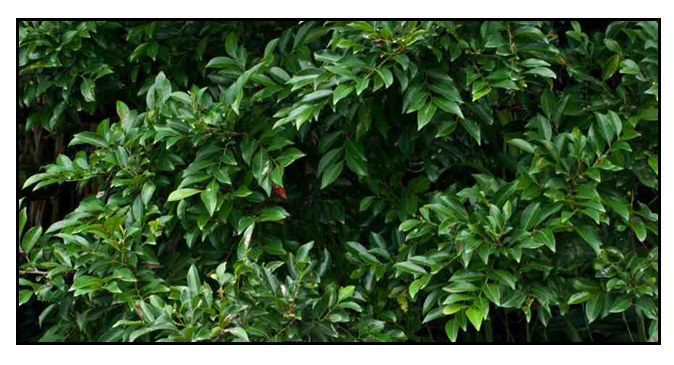
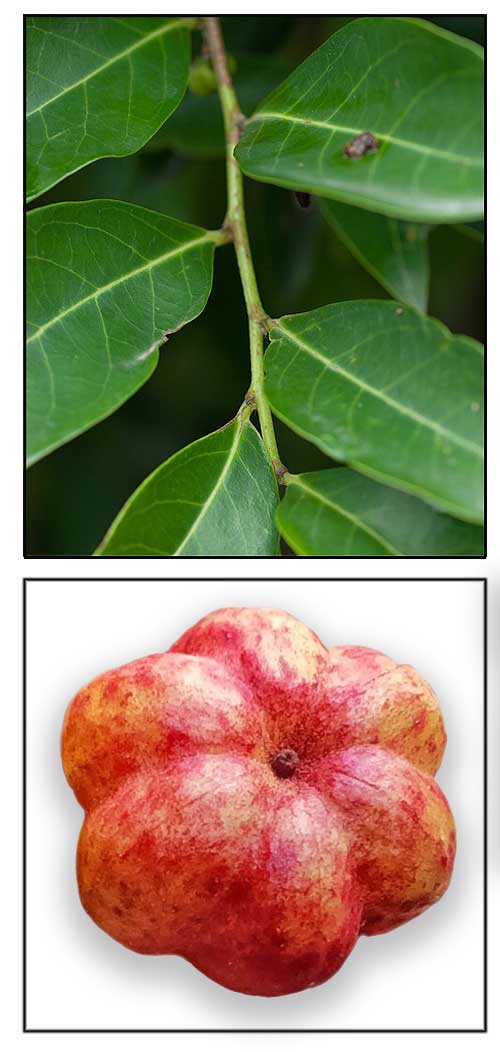
• Bagnang-pula is a shrub or small tree, 2 to 6 meters high. Branches are terete, gray, lenticellate. Branchlets are angular, glabrous or sparsely pubescent when young. Stipules are triangular, about 1 millimeters; petiole 1.5 to 4 millimeters. Leaf blade is ovate, elliptic, oblong or oblong-lanceolate, 5 to 13 centimeters long and 2.4 to 5 centimeters wide, papery to submembranous, glabrous, base acute to obtuse, inequilateral, with 5 to 6 pairs of lateral veins. Flowers are greenish to yellowish whitish, axillary, sessile, with linear bracts at the base. Sepals are 6, free, glabrous on both surfaces. Fruits are lobed around seeds, circular, flattened, depressed above, Capsules are depressed globose, 3.5 to 4 by 6 to 10 millimeters, red, always hairy. Seeds are orange to red, 3.8 to 4 by 3.3 to 3.8 millimeters. (2) (3)

• Shrubs or treelets, 2-6 m tall; branches terete, gray, lenticellate; branchlets angular, glabrous or sparsely pubescent when young. Stipules triangular, ca. 1 mm; petiole 1.5-4 mm; leaf blade ovate, elliptic, oblong, or oblong-lanceolate, 5-13 × 2-4.5 cm, papery to submembranous, glabrous or only nerves puberulent on both surfaces, base acute to obtuse, inequilateral; lateral veins 5 or 6 pairs. Flowers in axillary glomerules, sessile, with linear bracts at base. Male flowers: pedicels 3-4 mm, slender, glabrous; sepals 6, ovate or oblong, ca. 2 mm, glabrous or sometimes sparsely pubescent at base inside; stamens 3, connate. Female flowers: pedicels very short or sessile; sepals 6, ovate-triangular, ca. 2 mm, glabrous on both surfaces; ovary ovoid, 3-4 mm, 3-5-locular, pubescent; style column conical, 1-3.5 mm, sometimes 3-fid at apex, glabrous. Capsules depressed globose, 3.5-4 × 6-10 mm, pubescent, 3-5-grooved. (Flora of China)

• A shrub or small to medium-sized tree up to 18 m tall, bole up to 45 cm in diameter. Leaves slightly obliquely oblong-ovate-lanceolate, 4-12.5 cm × 2-4.5 cm, leathery, usually glabrous, petiole 2-4 mm long. Inflorescence sessile; male flowers with 3 stamens, female flowers with 3-5-celled ovary. Fruit depressed globose, 3-6-lobed, 8-15 mm in diameter, minutely pubescent, shortly stalked. (PROSEA)

Distribution
- Native to the Philippines.
- In the Philippines, found in creek banks, open grasslands, roadsides and scrublands.
- In Balabac, Bohol, Boracay, Catanduanes, Cebu, Leyte, Lumbucan. In Luzon: Abra, Bataan, Benguet, Cagayan, Camarines Sur, Ifugao, Isabela, Laguna, NCR, Nueva Ecija, Nueva Vizcaya, Pampange, Quezon, Rizal; in Mindanao: Misamis Oriental, Surigao, Zamboanga del Norte, Zamboanga del Sur; Mindoro, Negros, Palawan, Panay, Romblon, Sibuyan.
- Planted as ornamental tree, hedge or living fence.

- Also native to Borneo, Cambodia, China Southeast, Jawa, Lesser Sunda Is., Malaya, Maluku, Myanmar, Nansei-shoto, Sulawesi, Sumatera, Taiwan, Thailand, Vietnam. (1)

Constituents
- Methanol extract of leaves yielded four new compounds i.e., (−)-isolariciresinol 2a-O-β-d-glucopyranoside (1), (7R,8S)- and (7R,8R)-4,7,9,9′-tetrahydroxy-3,3′-dimethoxy-8-O-4′-neolignan 7-O-β-d-glucopyranosides (2 and 3, respectively), and tachioside 2′-O-4″-O-methylgallate (4). (see studies below) (7)
- Study isolated aqueous acetone homogenate of dried leaves yielded three hydrolyzable tannins, glochiin M1. glochiin M2, and glochiin C1—the first two are gallates of phorogucinol glucoside, the third is a complex tannin.

Properties
Studies have suggested antioxidant, anti-inflammatory, AGE (Advanced Glycation Products) inhibitory properties.

Parts used
Leaves, stems.

Uses

Edibility
- Pinkish-red fruit and young shoots reportedly edible.
- Young leaves and shoots sometimes used locally consumed as raw vegetable or added to tradtional dishes.
- Not widely cultivated food crop commerce.

Folkloric

- In Mindanao, used by the Mamanwa tribe to treat sprains and sinusitis by massaging or rubbing bark decoction over inflammed areas. Leaf infusion used as eyedrops to treat cataracts; gargled to treat mouth ulcers, drunk for treatment of cough. (13)
- Used for skin complaints.
- In China, macerated leaves used in the treatment of hemorrhoids. (5)
- In Vietnam, used for hemorrhoid; effect attributed to tannins.
- In Borneo, fresh leaves with water boiled inside a bamboo tank, drunk to treat blood in feces. (6)
- In Fiji and Taiwan, used for stomach disorders. (9)
- In Java, leaves used as expectorant for cough relief.
Other ands
• Wood: Use for firewood and charcoal.
Also used for timber.
• Bark: Bark sometimes used for tanning fish nets.

Studies
Lignan and Neolignan Glucosides / Leaves:
A methanol extract of leaves yielded thirteen compounds, four of them new and elucidated as (−)-isolariciresinol 2a-O-β-d-glucopyranoside (1), (7R,8S)- and (7R,8R)-4,7,9,9′-tetrahydroxy-3,3′-dimethoxy-8-O-4′-neolignan 7-O-β-d-glucopyranosides (2 and 3, respectively), and tachioside 2′-O-4″-O-methylgallate (4). (7)
Antioxidant: / Anti-Inflammatory: Study evaluated the antioxidant and anti-inflammatory activity of 15 medicinal plants. Glochidion rubrum exhibited the best antioxidant activity, with its higher content of polyphenols and flavonoids. In addition, G. rubrum demonstrated the strongest inhibitory effect (93.7%) in LPS-activated RAW264.7 cell. (8)
Anti-Glycation End Products (AGE) Inhibition / Twigs: Study evaluated 80 Vietnamese herbal medicines for in vitro inhibition advanced glycation end products (AGEs) formation inhibitory activity, Ten herbal medicines, which included Clochidion rubrum twigs, showed significant AGEs formation inhibitory activity with IC50s <5 µg/mL, approximately 16-31 fold more than positive control, aminoguanidine (IC50 76.47 µg/ml). (10).

Availability
Wild-crafted.

Updated August 2026 / February 2020 / June 2017
January 2014


PHOTOS / ILLUSTRATIONS
IMAGE SOURCE: Glochidion rubrum folaige / by Shih-Shiuan Kao / CC BY-SA 2.0 / Image modified / click on image to go to source page / Wikipedia
OTHER IMAGE SOURCE: Leaves and Fruits of Glochidion rubrum / Kinmatsu's Realms / Non-Commercia / click on image to ho to source pagel / Kinmatsu
OTHER IMAGE SOURCE: Ripening Fruits of Glochidion rubrum / ?? Shihchuan / CC BY-SA 2.0 Generia / click on image to go to source page / Useful Tropical Plants
OTHER IMAGE SOURCE: Glochidion rubrum fruit / © Jay-c de Lente / 2 images / Non-Commercial Use / Image modified / Click on image to go to source pagel / WebFacebookPost
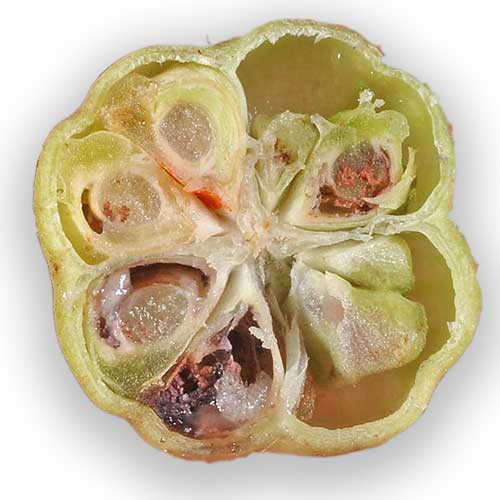
OTHER IMAGE SOURCE: Glochidion rubrum fruit x-section / © Pieter Pelser's Post / Non-Commercial Use / Image modified / Click on image to go to source pagel / WebFacebookPost

Additional Sources and Suggested Readings
(1)
Glochidion rubrum Blume / KEW: Plants of the World Online
(2)
Glochidion rubrum Blume, Bijdr. 586. 1826. / FOC Vol. 11 Page 194, 197 / Flora of China
(3)
Glochidion rubrum Blume, Bijdr. (1825) / Botany and synonyms / Asian Plant
(4)
Glochidion rubrum / Vernacular names / GlobinMed
(5)
Glochidion rubrum / Medicinal Plants of China / Duke. J. A. and Ayensu. E. S. / 1985 / Useful Tropical Plants
(6)
Healing flora of the Brunei Dusun. (Research Notes) / Free Library by Farlex
(7)
Lignan and neolignan glucosides, and tachioside 2′-O-4″-O-methylgallate from the leaves of Glochidion rubrum / Wen-Hu Cai, Katsuyoshi Matsunami, Hideaki Otsuka, Takakazu Shinzato, Yoshio Takeda / Journal of Natural Medicines, October 2009; Volume 63, Issue 4: pp 408-414 / DOI: 10.1007/s11418-009-0344-6
(8)
Antioxidant and anti-inflammatory activity studies of common medicinal plants in Taiwan / Lin, Yun-Ting / China Medical University Repository, Taiwan, 2012-07-27
(9)
Tannins of Euphorbiaceious Plants. XIIII: New Hydrolyzable Tannins Having Phloroglucinol Residue from Glochidion rubrum Blume / Lin-Geeng Chen, Ling-Ling Yang et al / Chem. Pharm. Bull. 43(12) 2088-2090 (1995)
(10)
Screening of herbal medicines from Vietnam with inhibitory activity on advanced glycation end products formation (XIV). / Choi So Jin, Kim Young Sook, Kim Joo Hwan, Tran The Bach, Kim Hin Sook / Korean Journal of Pharmacognosy, Seoul: Korean Society of Pharmacognosy,2015, 46(3): pp 268-278
(11)
Phyllanthaceae / Grokipedia
(12)
Glochidion / Wikipedia
(13)
Ethnopharmacological documentation and molecular authentication of medicinal plants used by the Manobo and Mamanwa tribes of Surigao del Sur, Philippines / Vince Adrian D Ilagan, Grecebio Jonathan D Alejandro, David Jefferson B Paraguison et al / BIODIVERSITAS, 2022; 22(6): pp 3185-3202 /
eISSN: 2085-4722 / ISSN: 1412-033X / DOI: 10.13057/biodiv/d230646
(14)
Glochidion rubrum / Yun Astuti Nugroho / PROSEA: Plant Resources of south-East Asia

DOI: It is not uncommon for links on studies/sources to change. Copying and pasting the information on the search window or using the DOI (if available) will often redirect to the new link page. (Citing and Using a (DOI) Digital Object Identifier)

                                                            List of Understudied Philippine Medicinal Plants
                                          New plant names needed
The compilation now numbers over 1,750 medicinal plants. While I believe there are hundreds more that can be added to the collection, they are becoming more difficult to find. If you have a plant to suggest for inclusion, native or introduced, please email the info: scientific name (most helpful), local plant name (if known), any known folkloric medicinal use, and, if possible, a photo. Your help will be greatly appreciated.

HOME      •      SEARCH      •      EMAIL    •     ABOUT