| Gen info
- Malvaceae, or the mallows, is a family of flowering plants estimated to contain 244 genera with 4225 known species. Well known members with economic importance include cacao, cola, cotton, okra, roselle, and durian, along with familiar ornamentals such as Alcea (hollyhock), Malva (mallow), and Tilia (lime or linden tree). (50)
-
Fifteen species of Thespesia are scattered throughout the tropics (Whitmore, 1972). While the original native origin pf T. populnea is not precisely known, the species has become naturalized throughout most of the world's tropical coastal areas. (43)
- Thespesia populnea is a species of flowering plant in the mallow family, Malvaceae.
- Etymology: The English name 'mallow' derives from Latin malva (also source of English 'mauve'). The word Malva ultimately derives from the word for the plant in ancient Mediterranean languages. (50)
 Botany Botany
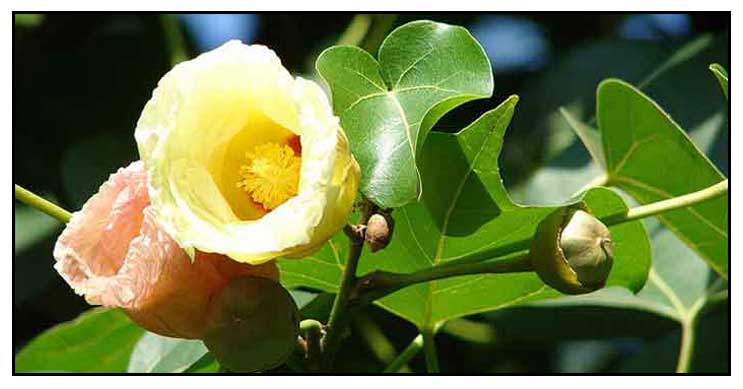
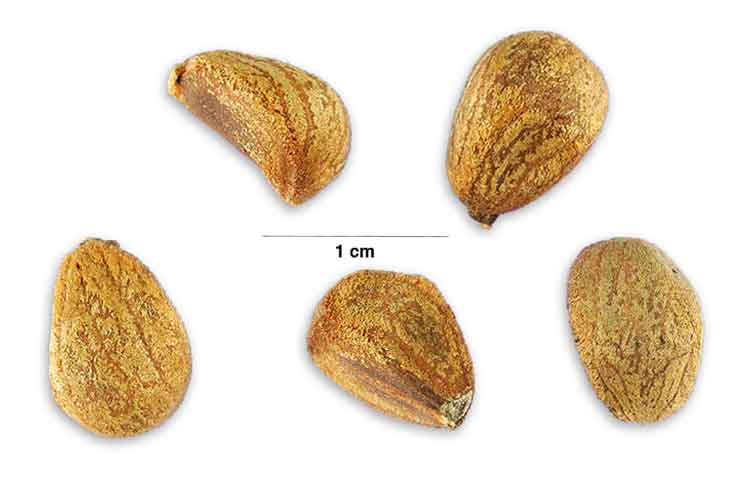
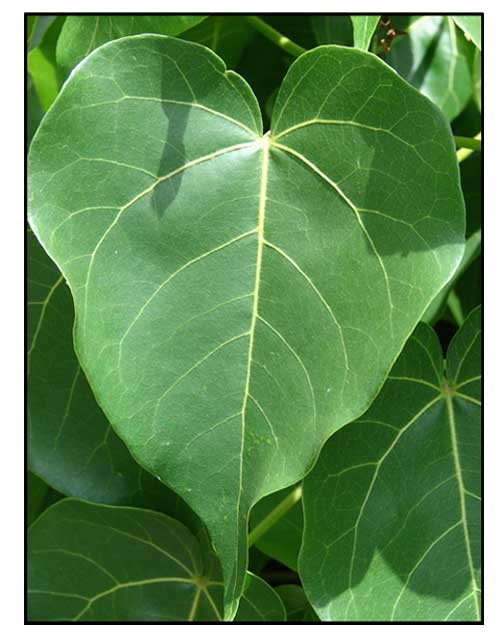
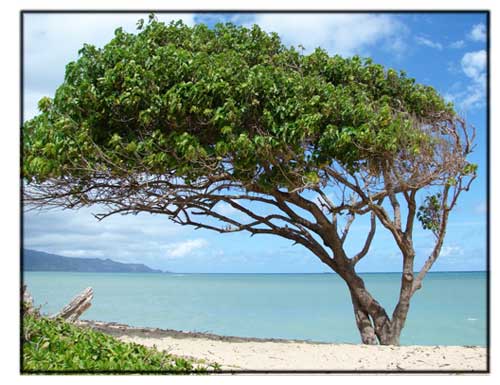
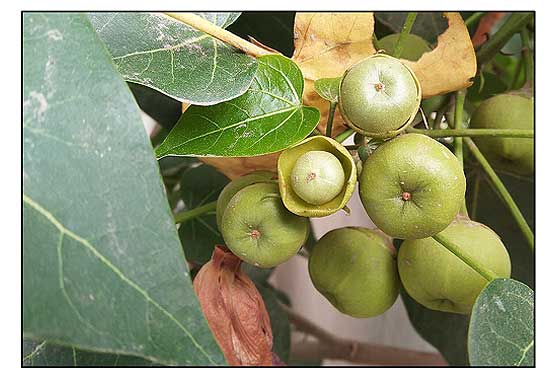
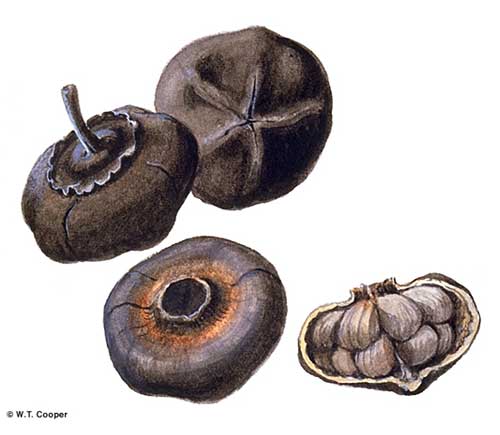
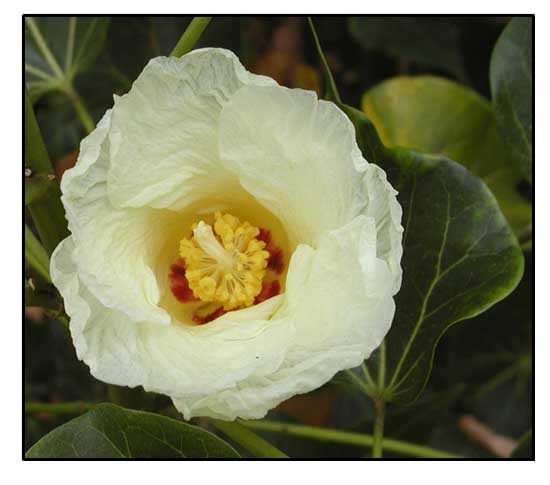
• Banago is a tree that grows to a height of about 10 meters. Branchlets and under surface of the leaves are covered with small, brownish scales. Leaves are glossy, broadly ovate, 8 to 15 centimeters long, with pointed tip and very broad, slightly heart-shaped base. Flowers are borne singly on the axils of leaves. Calyx is truncate, about 1.5 centimeters in diameter. Corolla is yellow, dark-purple inside the base, about 5 centimeters long, with strongly imbricate lobes, turning purplish as it ages. Fruits are are flattened, five-celled capsules, about 2 to 5 centimeters in diameter, turning black when ripe.
 Distribution Distribution
-
Native to the Philippines. (23)
-
Throughout the Philippines along the seashore.
- Also native to Aldabra, Andaman Is., Assam, Bangladesh, Bismarck Archipelago, Borneo, Cambodia, Caroline Is., China Southeast, Cocos (Keeling) Is., Comoros, Djibouti, Eritrea, Fiji, Gilbert Is., Hainan, Hawaii, India, Jawa, Kenya, Laccadive Is., Lesser Sunda Is., Line Is., Madagascar, Malaya, Maldives, Maluku, Marianas, Marquesas, Marshall Is., Mauritius, Mozambique, Myanmar, Nansei-shoto, Nauru, New Caledonia, New Guinea, Nicobar Is., Niue, Oman, Pitcairn Is., Queensland, Rodrigues, Samoa, Seychelles, Society Is., Solomon Is., South China Sea, Sri Lanka, Sudan-South Sudan, Sulawesi, Sumatera, Taiwan, Tanzania, Thailand, Tonga, Tuamotu, Tubuai Is., Vanuatu, Vietnam, Wake I., Wallis-Futuna Is. (23)
- Ornamental cultivation.
- The IUCN lists T. populnea as introduced and invasive in Florida. It may also be invasive in northern Brazil. (16)
 Constituents Constituents
- Seeds contain water, 10%; raw protein, 24.88%, and fixed oil (Thespesia oil).
- Study reports the ripe seeds to contain phosphoric acid and the heartwood a garnet-red resin.
- Study of dichloromethane extracts of wood and dark heartwood yielded eight new sesquiterpenoids, named populene A-H (1-8), along with 11 known compounds. (see study below) (12)
- Phytochemical screening of ethanolic and aqueous bark extracts yielded carbohydrate, protein, tannins, phenol, flavonoids, terpenes, saponins, and gums.
- GC-MS study of seed extract yielded alkaloids, terpenoids, tannins, steroids, and saponins,
with absence of flavonoids, phenols, coumarins, and anthraquinone. (see study below) (36)
- GC-MS analysis of dried flower extracts yielded alkaloids, phenolic flavonoids,
carbohydrates, amino acids, proteins, anthroquinones, saponins, tannins, phylobotannins, glycosides, cardiac glycosides, anthocyanides, terpenoids, and steroids. (see study below) (37)
- Study of T. populnea bark ethanol extract yielded highest amount of polyphenol and flavonoid compounds compared to other extracts. Nine fractions were isolated and identified two compounds: 3,5,7-trihydroxy-4H-chromen-4-one and 2,2’-Trimethoxy-6,8-Dihydroxy-isoflavone. (38)
- Elementary analysis of petroleum ether, chloroform, ethanolic, and aqueous fruit extracts revealed
macronutrients such as Na, K, Ca, micronutrients such as Fe, Cu, Mn, Zn, Co, and heavy metals like Ni, Cd, As, Pb and Hg. (39)
- Study of n-hexane fraction of leaves isolated a pale yellow color oil, phytol. This was the first report on isolation of acrylic diterpene alcohol from the plant. (45)
- Metabolite profiling of leaves by GC-QTOF-MS analysis identified 37 metabolites with sucrose, malic acid and turanose as most abundant. HPLC-DAD analysis identified 18 polyphenols and 17 amino acids. Most abundant polyphenols were gallic acid, catechin and myricetin, with also ample amounts of protocatechuic acid, epigallocatechin gallate, rosmarinic acid, ellagic acid,, rutin and naringenine. (see study below) (47)
- Study of leaves for secondary metabolites yielded flavonoids, tannins, steroids, glycosides, saponins, phenols, terpenoids, alkaloids, anthocyanins, carbohydrates and proteins, with absence of reducing sugars, anthraquinone, leucoanthocyanins and emodines.
(38)
- Phytochemical study of highly bioactive Pet-L isolated 14 compounds (L1-L14), with major compounds of Diosgenin-3-O-β-d-galactopyranoside, betulinic acid, catacerebroside, Mansonone C, Mansonone E & thespesenone. (see study below) (51)
- GC-MS analysis of petroleum ether and ethanol extracts of seeds revealed presence of fourteen fatty acids, with palmitic and stearic acid as predominant FA. (see study below)
(55)
- Phytochemical screening of ethanol bark extract revealed presence of carbohydrates, tannins, flavonoids, saponins, sterols, terpenes, alkaloids, and cardiac glycosides. (see study below) (56)
- Phytochemical screening of aqueous and ethanol extracts of leaves revealed alkaloids, flavonoids, saponin, tannin, proteins, anthraquinone, polyphenol, and carbohydrates in both extracts
with absence of terpenoids and glycosides. Total phenolic content (mg GAE/g) for aqueous and ethanol extracts were 168.04 and 94.92 mg, respectively, and total flavonoid content (mg/QE/g) were 34.22 and 14.78 mg respectively. (see study below) (57)
 Properties Properties
- Heartwood is hard, smooth and durable, of a dark-red color.
- Considered astringent, antifertility, antibacterial, anti-diarrheal, anti-inflammatory, antioxidant, purgative, hemostatic, and hepatoprotective.
- Bark considered alterative, depurative.
- Roots considered tonic.
- Leaves considered emollient.
- Studies have suggested wound healing, antinociceptive, anti-inflammatory, cognitive, hypolipidemic, antibacterial, memory-enhancing, anti-psoriatic, antioxidant, hepatoprotective, anti-implantation, anthelmintic, cytotoxic, antidiabetic, anti-diarrheal, chemopreventive, α-amylase inhibitory, antisteroidogenic, antiarthritic, analgesic, anticancer, cognitive-enhancing, Alzheimer-alleviating, anti-malarial properties.
Parts utilized
Bark, leaves, fruit.
 Uses Uses
Edibility
- Young leaves and green fruits said to be edible as vegetables when cooked.
- Young flower buds and leaves eaten raw or fried in butter. (29)
Folkloric
- Decoction of bark used internally as alterative, externally as an embrocation.
- Decoction of leaves used as emollient for itches.
- Juice of fruit used for herpetic diseases.
- In Mauritius, bark is considered depurative and as treatment for dysentery and hemorrhoids.
 - Decoction of bark used for washing skin diseases. - Decoction of bark used for washing skin diseases.
- Ground bark mixed with coconut oil used for skin diseases.
- Heartwood used as remedy for bilious attacks and colic; the Malays use it for pleurodynia.
- Leaves applied to inflamed and swollen joints.
- Flowers used for itches.
- Fruit juices used in India as external application for psoriasis.
- Juice of fruit applied to warts.
- In Fiji, decoction of leaves used for coughs and headaches.
- In Tonga, leaf and bark decoction used for treating fevers in teething children.
- In Tahiti, fresh capsules are bruised, applied to the forehead for migraines.
- Yellow sap of peduncles used for insect bites.
- In India, ground bark used to treat skin diseases; in Mauritius, for dysentery and hemorrhoids. (44)
- Leaves applied to inflamed and swollen joints. Yellow sticky sap used to treat ringworm in India. (44)
Others
- Wood / Crafts: Used since ancient time for making bowls, utensils, jewelry, figurines and other craft items. Hawaiians make "poi" calabashes of it. Also used for making small canoes. (•) In Tahiti, Milo wood is used for making the to'ere (slotted wooden drum), used in traditional Tahitian tribal drumming. (•) In Hawaii, 'umeke (wooden bowl) has been a highly perfected art form and considered a prized possession for over a thousand years, especially those made of Milo and Kou, since these exotic hardwoods don't impart flavor to food. Prior to 1819, 'umekes were considered sacred and reserved for 'A;i'i (Hawaiian royalty), and under penalty of death to possess one. (16)
- Cordage / basketry: In some of the Pacific islands, outer bark used for making rope, inner bark for finer cordage. Also used for basketry.
- Ornamental: Provides a dense shade with attractive leaves and yellow flowers.
- Dye: Seed capsules yield a yellowish green color. Wood produces a yellow dye used to dye wool . Bark yields tannin used for tanning leather.
- Illuminant: Lamp oil can be made from seeds.
- Ceremonial: Regarded as a sacred tree in Polynesia; planted in cult places or marae. Used for the edification and decoration of platforms for offerings. (49) In Tahiti religious tradition, the milo tree was associated with the god of prayer, and planted around temples. Leaves are used by priests in ceremonial offerings.
- Fodder. Leaves are a good source of protein, calcium and phosphorus for livestock. (29)
- Erosion control: Tolerant of saline conditions and suitable for coastal erosion control. In India, planted for that purpose. (29)
- Agroforestry: Small stems cut and used as fence posts; sometimes tree is cultivated as a living fencepost. (43) In Hawaii and southern India, T. populnea is used in habitat restoration projects for coastal dry forests. (16)
Studies
• Wound Healing / Fruit:
Study showed the aqueous extract of the fruits of Thespesia populnea with significant wound healing activity in the excision wound and incision wound models in rats following topical and oral administration. (1)
• Antinociceptive / Anti-Inflammatory / Bark: Study of ethanolic extract of bark yielded alkaloids, carbohydrates, protein, tannins, phenols, flavonoids, gums, mucilage, saponins and terpenes. Results showed anti-inflammatory and analgesic activities. Acute toxicity studies showed no mortality even at the highest doses. (2)
• Antioxidant / Hepatoprotective / Bark: The aqueous and methanolic extracts of TP bark exhibited significant antioxidant activity against carbon tetrachloride-induced liver injury in rats. (3)
• Cognitive Effects / Potential Alzheimer Benefits / Hypolipidemic: Study on the TP extract showed multifarious beneficial effects, as memory improving property, cholesterol lowering, anticholinesterase and anti-inflammatory activities. It presents a promising candidate for improving memory and a worthwhile plant to explore for its possibilities in the management of Alzheimer patients. (4)
• Antibacterial / Flowers: Phytochemical studies of flowers yielded flavonoids, alkaloids, tannins and anthraquinone glycosides. The methanolic extract of flowers was active against 13 of 14 tested bacteria. Results show T populnea is not only an interesting source of antimicrobial activity but also a potential source of phenolic antioxidants. (5)
• Antimicrobial Synergism with Oxytetracycline / Flowers: Study showed a synergistic activity of oxytetracycline with a methanolic extract of Thespesia populnea flowers. It showed synergistic activity against all 12 tested bacteria, both gram+ and gram-, the highest against Shigella boydii. (6)
• Anti-Hepatotoxic / Rhamnoglucoside: Study on rats of ethanol extract of fractions of TP using a CCl4 model of liver injury showed significant anti-hepatotoxic activity. Study yielded a rare flavonoid, quercetin-7-O-rhamnoglucoside. (7)
• Anti-Psoriatic / Bark: Phytochemical study on bark extract yielded carbohydrates, glycosides, tannins, flavonoids, triterpenoids, phytosterols, proteins and lipid/oils. Study showed the pet-ether extract with maximum anti-psoriatic activity. Results indicate the plant TP is promising for further investigations to prove its anti-psoriatic activity. (8)
• Memory Enhancing / Bark: Study investigating the effects of TP bark on memory in rats showed it to be a promising candidate for memory improving and worthwhile exploring for its potential in Alzheimer management. (9)
• Anti-Implantation: Chromatographic pure principle from PE extract showed significant anti-implantation activity (60%) at 110 mg/kbw, while EAc extract showed a 48.6% effect. The active principles were found to be a mixture of two groups of long-chain fatty acids from GLC. (10)
• Anthelmintic Activity: Study investigating the anthelmintic activity of a polyherbal formulation containing herbs of Thespesia populnea (bark), Terminalia alata (bark), Clematis triloba (roots) and Ceratophyllum demersum (leaves) on adult earthworm Pheretima posthuma showed the ethanol extract to have a marked and potent anthelmintic activity. Individually, all the plants exhibit anthelmintic activity, but with a more potent effect when combined. (11)
• Cytotoxic / Antibacterial Sesquiterpenes / Wood and Dark Heartwood: Study of dichloromethane extracts of wood and dark heartwood isolated eight sesquiterpenoids, populene A-H together with 11 known compounds. The cytotoxic activity was evaluated against four cancer cell lines (MCF-7, HeLa, HT-29 and KB). Mansonone E (11) and (+)-gossypol (18) showed significant activities. Antibacterial properties against B subtilis, S aureus, and E faecalis are presented. (12)
• Antidiabetic: Study showed an ethanol extract to have an anti-diabetic effect against STZ-induced diabetic rats through a possible mechanism of inhibition of free radical generation. (13)
• Antibacterial / Leaves: Study of methanolic leaf and callus extract exhibited significant antibacterial activity against drug resistant strains of E coli, Staphylococcus aureus, K pneumoniae and Salmonella typhi. (14)
• Chemopreventive / Antilipidperoxidative Potential: Study investigated the chemopreventive potential and antilipidperoxidative effect of an ethanolic extract of T. populnea on DMBA-induced hamster buccal pouch carcinogenesis. There was significant prevention of tumor incidence, tumor volume and tumor burden. Results conclude the ethanolic extract of TP bark has potent chemopreventive efficacy and significant antilipidperoxidative effect in DBMA induced oral carcinogenesis. (15)
• Hepatoprotective / CCl4-induced Injury: Study evaluated the hepatoprotective activity of an ethanol extract of the stem bark in carbon tetrachloride (CCl4)-induced liver injury in rats. Results showed hepatoprotective effect almost comparable to silymarin, the reference drug. (21) Study evaluated methanol and water extracts of bark of T. populnea for hepatoprotective activity against CCl4 induced liver damage. Extracts showed dose dependent reduction in enzyme parameters with increase in total protein levels. The MET showed higher protection than the AET. (28)
• Anti-Inflammatory / Membrane Stabilization / Fruits: Ethyl alcohol and aqueous extracts of Thespesia populnea were investigated for anti-inflammatory activity via prevention of hypotonicity induced HRBC membrane lysis. Results showed a biphasic anti-inflammatory effect. Diclofenac was used as standard. (24)
• Antibacterial / Bark: Study investigated the antibacterial activity of bark of T. populnea against four bacterial (S. aureus, S. pyogenes, E. coli, P. aeruginosa) and two fungi C. albicans, A. flavus). A petroleum ether extract showed significant activity against all organisms while ethanolic and aqueous extracts showed moderate to mild activity. (25)
• α-Amylase Inhibitory Activity/ / Anti-Diabetic / Leaves: Study evaluated the leaves of T. populnea for the presence of amylase inhibitors. Methanolic and ethyl acetate extracts of leaves were found to possess potent amylase inhibitory activity. Leaves also exhibited antioxidant activity. Results suggest T. populnea can mitigate postprandial hyperglycemia and ameliorate oxidative stress and help prevent diabetic complications. (26)
• Diuretic / Bark: Study evaluated various solvent extracts of dried bark powder for diuretic potential in albino rats. At 400 mg/kg, the extract showed significant increase in volume of urine, urinary concentrations of Na, K, and Cl. (see constituents above) (27)
• Wound Healing / Stem Bark: Study evaluated fine powder of stem bark for wound healing activity. Results showed significant acceleration of wound healing in excised wound model in wistar albino rats. (30)
• Anticancer / Decoction of T, populnea and A. pavonina: Study showed decoction prepared with Thespesia populnea and Adenanthera pavonina exhibited anti-proliferative activity and induced apoptosis on Hep-2 cancer cells without any toxicity against Artemia salina. (31)
• Anti-Steroidogenic / Antifertility Effect /
Bark: Study evaluated the anti-steroidogenic effect of T. populnea bark in adult female mice. There was significant reduction (p<0.05) in wet weight of both ovaries. The two ovarian enzymes ]3-,17-hydroxy steroid dehydrogenase and serum estrogen and progesterone also decreased (P<0.05) significantly. The antifertility effect of the methanolic extract was attributed to its anti-steroidogenic activity. (32)
• Effect on Cisplatin Induced Nephrotoxicity: Study evaluated the effect of Thespesia populnea on cisplatin-induced nephrotoxicity on male Sprague-Dawley rats. Thespesia populnea extract ameliorated cisplatin induced kidney and liver damage as evidenced by reduction in levels of serum urea, creatinine, AST, ALT, and bilirubin. Reduction in the biomarkers suggest a regeneration process. The activity might be attributable to nephroprotective compounds such as flavonoids, alkaloids, etc. (33)
• Diarrheal / Antimotility and Antisecretory Mechanisms / Stem Bark: Study evaluated fractions of aqueous fractions from stem barks of Thespesia populnea for antidiarrheal activity in castor oil induced diarrhea, prostaglandin E2 induced diarrhea and charcoal meal test as in vivo models. Results showed good antidiarrheal activity. Phytochemical analysis showed the presence of gums and mucilages. Possible mechanisms may be the combination of antisecretory and antimotility mechanisms, i.e., inhibition of elevated prostaglandin biosynthesis and reduced propulsive movement of the intestine. (34)
• Antibacterial / Antifungal / Leaves: Study evaluated the antibacterial and antifungal activities of Thespesia populnea leaf extracts using seven solvents (hexane, chloroform, dichloromethane, ethyl acetate, acetone, methanol, and water) against human pathogens by disc diffusion method. Highest antibacterial activity was exhibited by methanol cold extract against Staphylococcus epidermis (15 mm) and Bacillus cereus (14 mm). A hot hexane extract showed 12 mm inhibition against Pseudomonas aeruginosa. All seven solvent extracts showed inhibition against Candida albicans. (35)
• Antioxidant / Seeds: Study of seed extracts yielded alkaloids, terpenoids, tannins, steroids, and saponins, The n-butanol extract showed antioxidant activity. (36)
• Effect on HIV/AIDS Opportunistic Infections / Flowers: Study of Thespesia populnea flower extracts showed antimicrobial activity against Staphylococcus aureus and Streptococcus pyogenes, opportunistic pathogens in HIV/AIDS patients. (see constituents above) (37)
• Antioxidant / Anti-Inflammatory / Flowers: Study of an ethanolic extract of flowers showed anti-inflammatory activity by HRBC membrane stabilization and Albumin denaturation methods and antioxidant activity by DPPH and ABTS methods. (40)
• Anti-Cancer against Human Liver Cancer / Flowers: Study evaluated the anti-cancer activity of a variety of concentrations of ethanolic extract of flowers. MTT assay with CTC value of 352.4 µg/ml showed significant anticancer activity against liver cancer HpG2 cell line (41)
• Antioxidant / Antibacterial / Leaves: Study of an ethanolic extract of leaves showed significant antioxidant activity by DPPH and ABTS assays and antibacterial activity by agar well diffusion and micro broth dilution methods. Phytochemical analysis yielded flavanoids, phenols and alkaloids. (42)
• Anti-Inflammatory / Antinociceptive / Antiarthritic / Roots and Flowers: Study evaluated the anti-inflammatory, antinociceptive and antiarthritic activities of methanolic extract of flower and root extracts. Flower and root extracts significantly (p<0.01) decreased formation of granuloma tissue induced by cotton pellet and inhibited acetic and induced vascular permeability in mice. Extracts also exhibited significant (p<0.01) analgesic activity in formalin induced paw licking response and increased latency time in hot plate test. Extracts inhibited paw thickness in the adjuvant-induced arthritis test. (45)
• Wound Healing / Leaves: Study evaluated the wound healing activity of petroleum ether, alcohol, and aqueous extracts of leaves of T. populnea on excision and incision wound models in albino rats. All three extracts showed significant significant increase in wound contraction and formation of scar in excision wound model and significant increase in breaking strength of resutured incision wound. Wound healing activity was attributed to presence of flavonoids, alkaloids and phytosterols. (46)
• Polyphenol Composition and Antioxidant Activity / Leaves: Study evaluated the polyphenol composition and antioxidant capacity of T. populnea leaves. A correlation analysis revealed a positive correlation between the antioxidant capacity and phenolic compounds viz. gallic acid, catechin, myricetin, quercetin, apigenin, cinnamic acid, and coumarin which indicates these phenolic compounds are the main contributors of antioxidant potential of Thespesia populnea. Results suggest a potential source of nonconventional functional food. (see constituents above) (47)
• Cognitive Enhancing / Antioxidant / Symptomatic Alleviation of Alzheimer's Disease: Bioassay guided study evaluated ethanolic extracts of different organs (wood, bark, and leaves) to determine the most active organ by in vivo and in vitro testing. In In vitro studies, ethanolic leaves extract (ELE) showed highest activity as acetylcholinesterase inhibitor and antioxidant in increasing mitochondrial complex I and III, The petroleum ether fraction of leaves(Pet-L) exhibited highest activity in nearly all tests. In in-vivo testing, highest dose of 200 mg/kbw showed potent activities. Molecular docking study of isolated and identified compounds showed thespesenone, mansonone C and mansonone E with strongest binding affinity to acetylcholinesterase enzyme. Thespesenone and mansonone C exhibited a mixed-type inhibition. Study suggests the ELE together with the Pet-L fraction are promising candidates for the management of memory impairment caused by oxidative stress in Alzheimer's diseases. (see study above) (51)
• Wound Healing Topical Gel / Leaves: The plant is known for its polyphenol and flavonoid content, which plays a crucial role in wound healing activity on 2 cm-wound induced on the dorsal area of rats. Study evaluated a topical gel of alcoholic extracts of leaves for antimicrobial and wound healing activities. The prepared gel showed antibacterial activity against both E. coli and S. aureus, faster wound healing, and histopathologically, showed reduction in inflammatory cells. In vivo wound healing studies showed comparable healing properties with Soframycin® gel. Results suggest the gel from T. populnea extract is beneficial for topical wound management. (52)
• Anti-Inflammatory on Drug-Induced Rats / Leaves: Study evaluated an ethanolic leaf extract of T. populnea for anti-inflammatory activity on carrageenan-induced paw edema rats. Extracts was administered orally at 100 mg/kbw. Acute toxicity studies of oral doses revealed high safety profile, Results showed significant anti-inflammatory activity attributed to active phytoconstituents and their influence on the prostaglandin pathway. (53)
• Anti-Malaria / Plasmodium berghei Model / Leaves: Study evaluated the effect of T. populnea leaf extract in BALB/C mice infected with Plasmodium berghei ANKA (PbA). Results showed administration of T. populnea leaf extract (200 mg/kbw) with chloroquine had the effect of decreasing degree of parasitemia and significantly increased hemoglobin levels. Results showed the portia tree leaf extract has anti-malarial effect and can significantly prevent anemia. (54)
• Anti-Inflammatory / Analgesic / Antipyretic / Seeds: Oral administration of petroleum ether and ethanol extracts of seeds (200 and 400 mg/kgw) and fractions (200 mg/kg) significantly reduced carrageenan induced paw edema and brewers yeast-induced pyrexia. Extracts and fractions also showed significant analgesic activity in tail immersion testing. Among all fractions EtOAc showed most significant results. (55)
• Wound Healing / Bark: Study evaluated the wound healing activity of ethanolic extract of Thespesia populnea bark and its fractions. Results showed the ethanolic bark extract and its bioactive fractions Pet-B and EtAc-B in hydrogel formulations (F1-F4) can be considered good wound healers, effectively stimulating wound contraction in excision wound model via antioxidant and anti-inflammatory activities, in addition to stimulation of collagen synthesis. (56)
 • Cytotoxic Against Colorectal Cancer Cell Line HCT15 / Leaves: Study evaluated the effect of T. populnea leaves on HCT15 colorectal cancer cell line. MTT assay showed dose-dependent viability inhibition from both aqueous and ethanol extracts. The aqueous extract showed more apoptotic activity than the ethanolic extract. (see constituents above) (57) • Cytotoxic Against Colorectal Cancer Cell Line HCT15 / Leaves: Study evaluated the effect of T. populnea leaves on HCT15 colorectal cancer cell line. MTT assay showed dose-dependent viability inhibition from both aqueous and ethanol extracts. The aqueous extract showed more apoptotic activity than the ethanolic extract. (see constituents above) (57)
• Wound Healing / Fruit: Study evaluated the wound healing effect of aqueous extract of dried and powdered fruits of T. populnea on open wounds and restructured incision wounds in rats. Results showed the fruit aqueous extract possess good wound healing activity evidenced by accelerated progression of wound healing, reduced epithelization time and reduce scar area on complete epithelization. Results are confirmed by increase of hydroxy proline content in wound tissues. (58)
Availability
- Wildcrafted.
- Cultivated. |


,_Tumon_beach,_Guam.jpg)