Gen info
- Ormocarpum is a genus of flowering plants in the legume family, Fabaceae. It includes 17 species . The genus was recently assigned to the informal monophyletic Dalbergia clade of the Dalbergieae.
- Taxonomy:
It was first described by the Portuguese missionary João de Loureiro and later assigned to its current name by American botanist Elmer Drew Merrill.
-
Etymology: The genus name Ormocarpum derives from Greek words ormos, meaning "necklace", and karpos, meaning "fruit", referring to the segmented fruit that resembles a necklace. The specific epithet cochinchinense derives from Latin, or alternatively, from Cochinchina (now known as southern Vietnam), referring to the natural distribution of the species. (2)
 Botany Botany
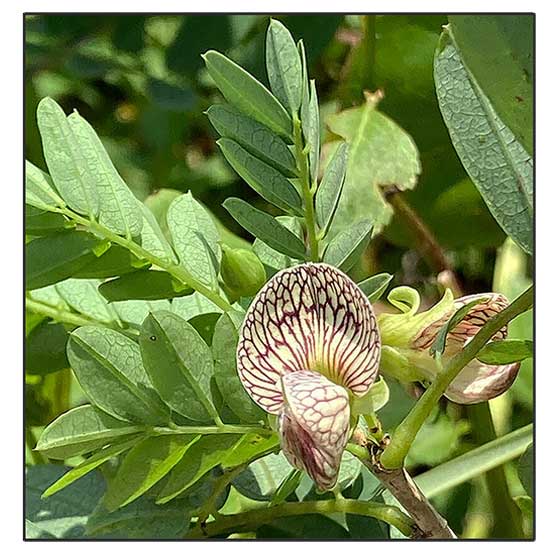
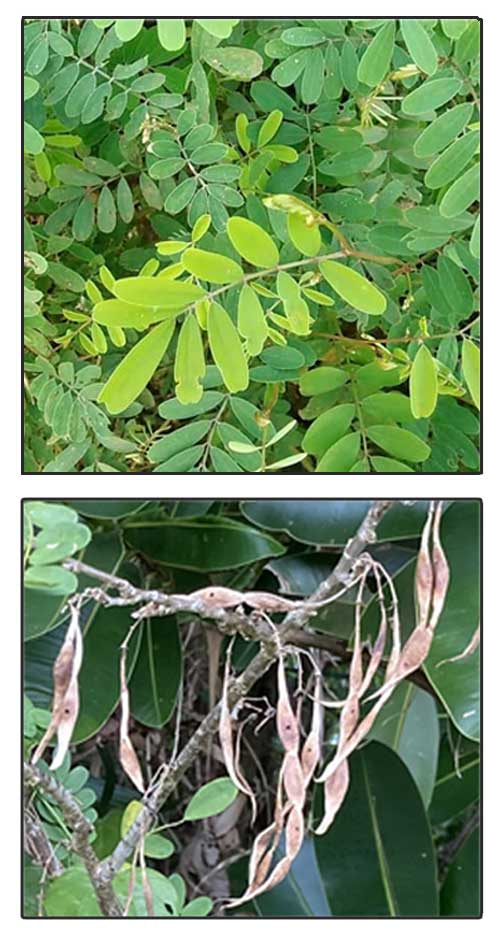
• Growth form: A shrub or small tree, 6 - 8 m tall. Foliage: Leaves are odd-pinnate, 9-20 leaflets, with a single leaflet at the terminal end. Each leaflet is papery, about 1.2-5 cm long by 0.5-2 cm wide, elliptic, oblong to obovate. The venation is reticulate, with the mid vein thickened and raised. Stems: Young stems are yellowish-brown in color and hairless, becoming fissured at maturity. Flowers: White to yellow, 1-2.4 cm long, usually with 2 - 13 flowered, arranged on a short axillary inflorescence. Fruit: Fruit is an inflated, smooth, linear pod measuring 1.5 - 2 cm long by 0.7 - 0.9 cm wide. The pod is dark, blackish green colored, slightly sickle-shaped, divided into 4 - 5 articles. Seeds are oblong, brown measuring 6 mm long by 2.5 mm wide. (Flora & Fauna Web)
Distribution
- Native to the Philippines.
(1) (3)
-
In Camiguin; in Luzon: Batangas, Camarines, Ilocos Norte, Ilocos Sur; in Mindanao: Surigao del Norte.
- Dry open slopes and thickets at low and medium elevation. 0-700 m.
(3)
- Also native to Andaman Is., Bismarck Archipelago, India, Jawa, Maluku, Nansei-shoto, New Guinea, Sri Lanka, Sulawesi, Thailand, Vietnam. (1)
Constituents
- Phytochemical screening reveals presence of flavonoids, saponins, triterpenoids, and alkaloids. (4)
- Phytochemical screening of leaves using various solvents revealed presence of flavonoids, alkaloids, steroids, terpenoids, saponins, gums, tannins, resins, coumarins, glycosides, carbohydrates. (see study below) (9)
- Phytochemical screening of leaf extracts using different solvents showed the aqueous extract to have the maximum amount of phytochemicals followed by methanolic extract. Aqueous extract yielded alkaloids, betacyanin, cardiac glycosides, coumarins, flavonoids, phenol, quinones, saponins, steroids, tannins, and terpenoids, with absence of anthocyanin and glycosides. Quantification of alkaloids yielded 4.3 mg/g dry weight. (14)
- GC-MS analysis of ethanol extract of leaves showed presence of flavonoids, alkaloids, steroids, tannins, terpenoids, glycosides, saponins, acidic compounds, coumarins, with absence of fat and oils.
 Properties Properties
- Considered of emollient, detersive, mucilaginous.
- Studies have suggested bone healing, antioxidant, osteogenesis promoting, antidiabetic, antibacterial, anticancer, environmental remediative, osteoprotective, mosquitocidal, wound healing properties.
Parts used
Leaves.
Uses
Edibility
- Not a common food plant. Rarely eaten as dietary staple. In animal studies, leaf preparations given orally.
Folkloric
- In the villages of Tamil Nadu, India, traditionally used for curing of bone fracture.
- Used in Indian folk medicine for bone fracture healing, wound care, and muscular pain relief. Raw leaf consumption or lehiyam preparation used for chest pain. Root decoction used for rheumatic fever. Topical leaf application used for anxiety relief. Root extract used for its tonic and stimulating effects on lumbago. Oil rubbed with root bark used as remedy of paralysis. Bark with its tannins and terpenoids, applied topically for bone and nerve conditions. (4)
- For bone fracture healing, leaf paste is mixed with castor oil and applied over fracture site. Effect attributed to osteoblastic (bone-forming) activity,and acceleration of callus formation. For wound healing, leaf paste applied over cuts, ulcers, and minor wounds. For inflammation, decoction of leaves or paste applied to swellings, joint pains, and rheumatism. For paralysis, root bark oil applied externally as massage therapy for paralyzed limbs. (4)
- In Vietnam, leaves used for treatment of boils and arthritis.
Studies
• Effect on Bone Fracture Healing / Leaves: Study evaluated the efficacy of powdered shade-dried leaves extract of O. cochinchinense in healing of bone fractures in experimentally fractured albino Wistar rat. Methanolic leaf extract at concentration of 100 mg/kbw. Fractured animals treated with the methanolic extract, oral and topical application, showed highest healing, evidenced by bone fusion and tissue covering of fused bones observed by the 14th day. Inorganic phosphorus levels were increased, along with accelerated process of mineralization. (5) Animals treated orally and well as topically showed healing effects within 7 days by radiological exam. Topical treatment alone showed lower healing effects. Biochemical analysis of minerals and enzymes associated with bone healing showed a positive trend with serum Ca, inorganic phosphorus, and alkaline phosphatase concentrations. (6)
• Promotion of Osteogenesis: Bone tissue engineering requires a high restorative index as a demand from modern day requirements. Study reports on the systematic analysis of aqueous extract of O. cochinchinense (OCE) as repository of natural bio-actives capable of eliciting in vitro biomineralization and osteogenesis. MTT assay and Live/Dead staining results exhibited significant proliferation index. Alizarin Red staining showed augmented biomineralization. Activity of alkaline phosphatase was enhanced. Expression levels of early and late osteogenic markers were profoundly increased after OCE treatment in a dose-dependent manner. Results demonstrate potential of OC for promotion of osteogenesis, exemplifying its potential for bone tissue engineering. (7)
• Antioxidant / Leaves: Study evaluated methanolic extract of leaves and 12 fractions for antioxidant activity using DPPH assay. Results showed the 6th fraction separated from column chromatography possesses good antioxidant property up to a level of 73.4%. (8)
• Antioxidant / Leaves: Antioxidant properties of leaves were evaluated after extraction of various compounds using different solvents i.e., DMSO, ethyl acetate, ethanol, methanol, and chloroform. The extracts showed significant (p<0.001) antioxidant potential in a dose dependent manner with IC50s of
13.05, 14.08, 15.02, 15.12,and 14.88 µg/mL respectively, compared to IC50s of standard reference ascorbic acid with 6.10, 7.218, 8.15, 9.10, and 8.18 µg/mL. Results suggest OC as a potent antioxidant. (see constituents above) (9)
• Antidiabetic / Antioxidant / Leaves: Study evaluated the antioxidant and antidiabetic potential of OC leaf through in vitro and in silico approaches. The methanol extract exhibited highest phenolic and flavonoid content over other solvent extracts (aqueous, acetone, hexane and chloroform) correlating with strong antioxidant activity. Methanol extract also exhibited significant inhibitory effects on α-amylase and α-glucosidase enzymes, indicating potential as an antidiabetic agent. Molecular docking analysis identified compounds, including myo-inositol, with favorable binding energies comparable to standard metformin. Selected compounds showed strong binding affinity towards α-amylase and α-glucosidase enzymes. Findings suggest potential source for antioxidant and antidiabetic agents. (11)
• Gold Nanoparticles / Antibacterial / Antioxidant / Anticancer / Leaves: Study reports on the synthesis of gold nanoparticles (OC-AuNPs) using O. cochinchinese leaf extract as green reducing and capping agent. The OC-AuNPs demonstrated potent antibacterial activity, showing higher efficacy against S. aureus and K. pneumonia than E. coli and P. aeruginosa. The NPs exhibited significant antioxidant properties in DPPH assay and dose-dependent cytotoxicity against leukemia cell line, Jurkat J6 cancer cells in MTT assay. The OC-AuNPs also acted as efficient catalysts, degrading methylene blue and rhodamine B dyes. Study highlights the multifaceted applications of OC-AuNPs in biomedicine and environmental remediation. (13)
• Osteoprotective Potential / Regulation of Sex Steroid Receptors / Leaves: Study evaluated the fracture healing efficacy of OC leaf extract (OCLE) in induced unilateral femur fracture in healthy adult female Wistar albino rats. OCLE was administered through oral gavage for 21 days. OCLE treatment significantly increased serum ALP activity, while decreasing TRAP (tartrate-resistant acid phosphatase), which are indicative of increased bone formation and reduced bone resorption, respectively. OCLE treatment increased mRNA and protein expression levels of sex steroid receptors. Results suggest OCLE treatment promotes bone-fracture healing processes by modulating the expression levels of sex steroid receptors, key bone-related genes, stemness factor and components of Wnt/ß-catenin and NFkB pathways, underscoring the therapeutic potential of OCLE in healing bone fractures and metabolic bone diseases. (15)
• Silver Nanoparticles / Mosquitocidal Potential / Leaves: Study reports on the rapid synthesis of AgNPs using aqueous leaf extract of OC. The acute toxicity of OC leaf extract and synthesized AgNPs was evaluated against larvae of malaria vector Anopheles stephensi, dengue vector Aedes aegypti, and filariasis vector Culex quinquefasciatus. Compared to the leaf extract, the AgNPs showed high toxicity against A. stephensi, A. aegypti, and C. quinquefasciatus with LC50s of 10.43, 11.26,and 12.35 µg/mL, respectively. Synthesized AgNPs were safer to non-target mosquito predators Diplonychus indicus and Gambusia affinis. Results suggest potential for OC as a bioresource for rapid, cheap, and effective nanosynthesis of mosquitocides. (16)
• In vitro Synthesis of Calcite Crystals from O. cochinchinense: The level of calcium in the plant is found to be one of the reasons for its bone healing effect. Extract from leaves and callus was analyzed and levels of calcium quantified. Comparing levels of minerals in leaf and callus extract, the amount of calcium was high in the leaf extract. Results showed tissue culture of O. cochinchinense can be an alternative for biomineralization of calcite crystals and can be used as source of bone healing aid. (17)
• Biomaterial Composite for Bone Regeneration: Bioceramics are widely used as biomaterial to promote bone regeneration. Study evaluated the creation of a novel biomaterial composite of biphasic calcium phosphate (BCP), chitosan (CH), casein (CA), and ethanolic leaves extract of O. cochinchinense ()C) fabricated and characterized for physiochemical properties. Results showed the mechanical and physical properties of the novel biomaterial could be used for tissue engineering for repair of bone defects in non-load-bearing areas. The biomaterial has potential for use in bone regenerative medicine in non-load-bearing applications. (18)
• Wound Healing / PVA-Urea Composites: Study reports on the preparation of ternary blended polyvinyl alcohol (PVA)-urea hydrogels containing O. cochinchinense, Cinnamomum zeylanicum, and antibiotic cephalexin by freezing-thawing method and evaluated its wound healing efficacy. PVA is a recyclable and biocompatible artificial polymer blend. Biological studies involving antibacterial, antifungal, cytotoxicity and wound healing activities were carried out for the composite membranes. Results showed the composite membrane developed has a lot of potential for wound dressing and other applications. (20)
Availability
- Wild-crafted.
- Leaves in the cybermarket.
|