Gen info
• Cichorium is a genus of plants in the tribe Cichorieae within the family Asteracea. The Genus includes two cultivated species commonly known as chicory (Cichorium intybus) and endive (Cichorium endivia), plus several wild species.
• Cichorium endivia is a species of flowering plant belonging to the genus Cichorium, which is widely cultivated as one of the species of similar bitter-leafed vegetable known as endive or escarole.
• Historical snippets: Endive's historical trail, recorded in Greco-Roman texts and Ayurvedic manuscripts, goes way back ancient Mesopotamia. It might have been first recorded by Theophrastus, the Greek naturalist in the 4th century BCE, as a bitter plant used to stimulate the appetite. In 1st century CE, Pedanius Dioscorides described the leaves with the name "skeron", suggesting it for digestive complaints. Archaeological finds have described seeds in Egyptian tombs, hinting culinary and medicinal use by pharaohs. Its journey continued into medieval Europe, the Renaissance era, and into the landscape of modern culinary delights and folk remedies. (15)
Botany
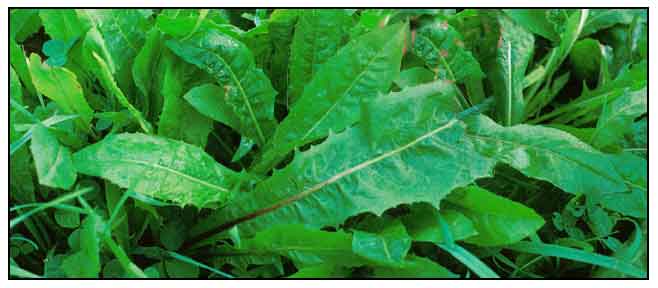
• Endive is a cultivated plant growing up to 1 to 1.7 meters high, with a dense rosette of curly leaves arising from the base. Leaves are brittle, oblong, and lobed or cut. Flowers are purple or pale blue, the upper ones passing into leafy bracts.
• Growth form: Annual or biennial herb up to 0.6 m tall. Foliage: Leaves deeply dissected, 12-15cm long, light green in color. Flowers: Inflorescence is a light blue head. (Flora & Fauna Web)
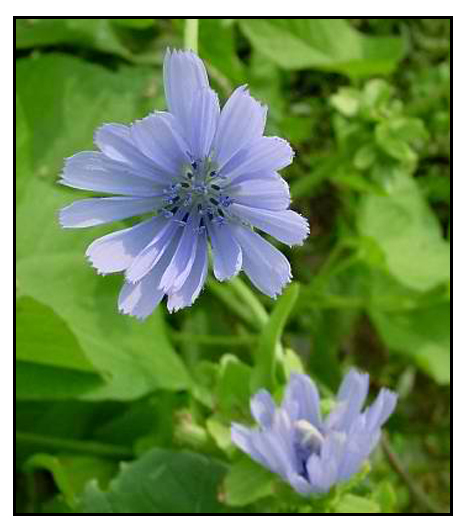 C. endivia and C. intybus C. endivia and C. intybus
-
There is considerable confusion between Cichorium endivia and Cichorium intybus. Both are accepted names of separate species. (The Plant List)
-
C. endivia var. crispum, C. endivia var. latifolium, and C. intybus var. endivia are synonyms and variants of Cichorium endivia.
- C. intybus var. endivia is a synonym/variant of Cichorium endiva rather than a variant of Cichorium intybus.
-
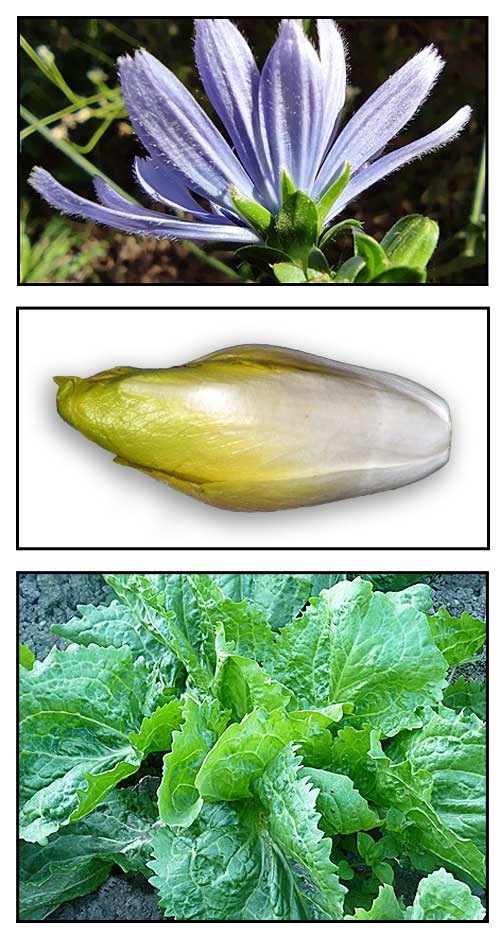
The three main types of endives seen in the culinary setting are: (1) curly endive / frisée (2) broad-leaf endive / escarole, and (3) Belgian endive--each varying in taste and bitterness.
- Curly endive (Frisée) with the scientific name of Cichorium endivia var crispum, sometimes called chicory.
It has a bushy head of curly greens, with bitterness more intense in the darker shade of green.
- Broad-leaved endive (Escarole) - it is a the same genus and species of the curly endive, but a different variant. The lighter colored leaves are less bitter.
- Belgian endive - it is a form of common chicory, Cichorium intybus, a different species from
the two other endives. It is described as rocket-shaped--a small cylindrical head of lettuce with pale yellow leaves and slightly curly edges. (Endive / The Spruce) (11)
Distribution
- Cultivated around Manila and other large towns.
- Cultivated from imported seeds.
- Grows best in the Baguio area.
- Native of the Mediterranean region.
- Native to Egypt and Palestine. (9)
 Constituents Constituents
- Excellent source of calcium and iron.
- Leaves contain inosit, a bitter principle, ceryl alcohol, d- and B-lactucerol and traces of urea.
- Root yielded twelve known sesquiterpene lactones and a new guaianolide 10ß-methoxy-1α, 11ß,13-tetrahydrolactucin, together with three known phenolic acid esters. (1)
- Phytochemical screening yielded five compounds: 2-furanmethanol-(5'→11)-1,3-cyclopentadiene-[5,4-c]-1H-cinnoline, 2-phenylethyl-β-D-glucopyranoside, kaempferol-3-O-β-D-glucoside, kaempferol, and adenosine. (see study below) (4)
- Nutritive value analysis per 100 g reveals nutrient values of 17 Kcal, carbohydrate 3.35 g, protein 1.25 g, total fat 0.20 g, cholesterol 0 mg, dietary fiber 3.10 g; vitamins: folates 142 µg, niacin 0.4 mg, pantothenic acid 0.9 mg, pyridoxine 0.02 mg, riboflavin 0.075 mg, thiamine 0.08 mg, vitamin A 2167 IU, vitamin C 6.5 mg, vitamin E 0.44 mg, vitamin K 231 µg; electrolytes: sodium 22 mg, potassium 314 mg; minerals: calcium 52 mg, copper 0.099 mg, iron 0.83 mg, magnesium 15 mg, manganese 0.420 mg, phosphorus 28 mg, selenium 0.2 mcg, zinc 0.79 mg; phytonutrients: carotene-ß 1300 µg. (7)
Properties
- Leaves of wild plants are very bitter.
-
Considered resolvent and cooling.
- Roots considered tonic, demulcent, stimulant, and febrifuge.
- Studies have suggested photoprotective, hepatoprotective, anticancer, antiproliferative, apoptotic, antidiabetic, antioxidant properties.
Parts used
Leaves, roots.
Uses
Edibility / Culinary
- Leaves eaten raw or cooked.
-
Used as salad green, like lettuce.
-
Leaves have variable bitterness. Blanching which reduces bitterness may also decrease its nutritional value.
Folkloric
- Much valued by the Hakims as a resolvent and cooling medicine and prescribed in bilious complaints.
-
Roots used for dyspepsia and fever, as a tonic and demulcent.
- Root considered warm stimulating, and febrifuge.
- Fruit is a cooling remedy for fevers, headaches and jaundice.
Studies
• Phytochemicals: Study of the roots isolated twelve known sesquiterpene lactones and a new gualanolid 10b-methoxy-1a,11b,13-tetrahydrolactucin with three known phenolic esters. (1)
• Photoprotection: Application of a root extract on the skin prior to UVB irradiation totally prevented erythema. Study suggests C. endivia extracts might possess sun-protective qualities that make them potentially useful as sunscreens. (2)
• Hepatoprotective / Anti-Oxidative on HepG2 Cells: Study evaluated the in vitro and in vivo hepatoprotective properties of C. endivia extract. Results showed CEE significantly blocked oxidative stress and cytotoxicity induced by t-BPH in HepG2 cells. Results suggest CEE may be a valid safe remedy to cure liver disease. (4) Cichorium endiva extracts inhibited H2O2-injured HepG2 cells by reducing the ROS level. The CE extract's antioxidant mechanism may be closely related to the antioxidant defense mechanism associated with its activation of the Nrf2-ARE pathway in HepG2 cells. (10)
• Antiproliferative / Breast Cancer: The anticancer activity of root extract was examined on a breast cancer line MFC7 and compared with anticancer 5FU (5-fluorouracil). The expression of DNA markers was high both in cells treated with 5FU and root extract. Results show C. endivia contains a combination of phenolic compounds and presents as anticancer especially for breast cancer. (5)
• Antidiabetic / Ameliorative Effect of Leaves on Oxidative Stress / Leaves: Study evaluated the antidiabetic effect of an aqueous suspension of CE leaves powder in STZ-induced diabetic rats. Results indicated the role of oxidative stress in diabetes induction and showed a protective and/or ameliorative effect of CE, similar to glibenclamide. (6)
• Hepatoprotective / Antioxidant: Study evaluated a hydroalcoholic extract of C. endivia leaves against acetaminophen-induced oxidative stress and hepatotoxicity in mice. Results showed hepatoprotective and antioxidant activity comparable to silymarin, a known hepatoprotective drug. (8)
• Anticancer / Apoptosis of Human Colorectal Cancer Cells: Study found (3S)-1,2,3,4-tetrahydro-β-carboline-3-carboxylic acid (1), an amino acid isolated from C. endivia, to show cytotoxic activity in colo-rectal cancer cell line HCT-8. At 0.5-4 µM concentration, the compound induced apoptosis of HCT-8 cells in a dose-dependent manner, which was accompanied by loss of mitochondrial membrane potential, activation of caspase-3, caspase-8, and caspase-9, up-regulation of Bax and down-regulation of Bcl-2. The compound also suppressed activation of NF-kB, an inhibitor of apoptosis. Results suggest potential for development as a chemotherapeutic drug against cancer. (13)
• Hepatoprotective against Acetaminophen Toxicity / Leaves: Study evaluated the effect of hydro-
alcoholic extract of C. endivia leaves against acetaminophen-induced oxidative stress and hepatotoxicity in male rats. Liver damage was manifested by significant increase in liver MDA, serum lipids, total cholesterol, total bilirubin, creatinine and enzymes AST, ALT and ALT.
Pretreatment with C. endivia leaves extract or silymarin for 21 days modulated the observed abnormalities evidenced by pronounced improvement in biochemical and antioxidant parameters. Results showed hepatoprotective and antioxidant activity of leaves extract. The extract was compatible with silymarin, a known hepato-protective drug. (14)
Availability
Cultivated.
|