  Gen info Gen info
- Chenopodium is a genus of perennial or annual herbaceous flowering plants known as goosefoot, occurring anywhere in the world. The highly polyphyletic genus currently contains about 132 species
- Taxonomy: The genus Chenopodium was described by Carl Linnaeus in 1753 in Species Plantarum,. The type species is Chenopodium album.
- Etymology: The generic name Chenopodium derives from Greek words chen (goose) and podion (foot), referring to the shape of the leaf, which resembles a goose's foot. The specific epithet album, derives from Latin albus, meaning "white", referring to its pale, whitish appearance.
-
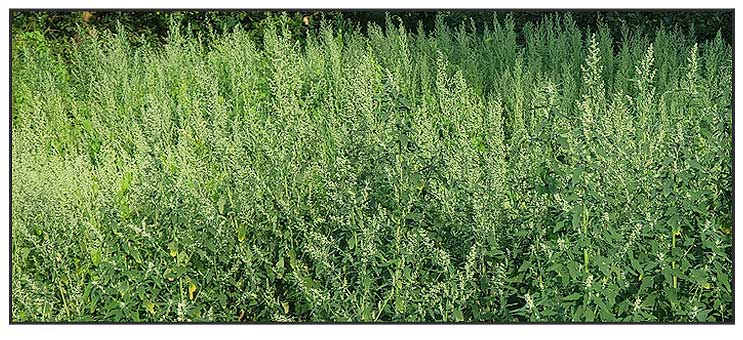
Chenopodium album is a fast-growing annual plant in the flowering plant family Amaranthaceae. While cultivated in some regions, elsewhere it is considered a weed.
- Historical snippets: Lamb's quarters was once considered the most valuable vegetable in a man's diet, and any surplus used as cattle fodder. It lost its vegetable ranking when spinach was introduced from southwest Asia in the 16th century. Melde, a common name derives from Anglo-Saxons, from Old Norse meldr, the Vikings' word for a certain quantity o ground meal, and referring to the leaf's underside texture. It grew for profusely in some areas that settlements of early Britons were named after it. (2)
Botany
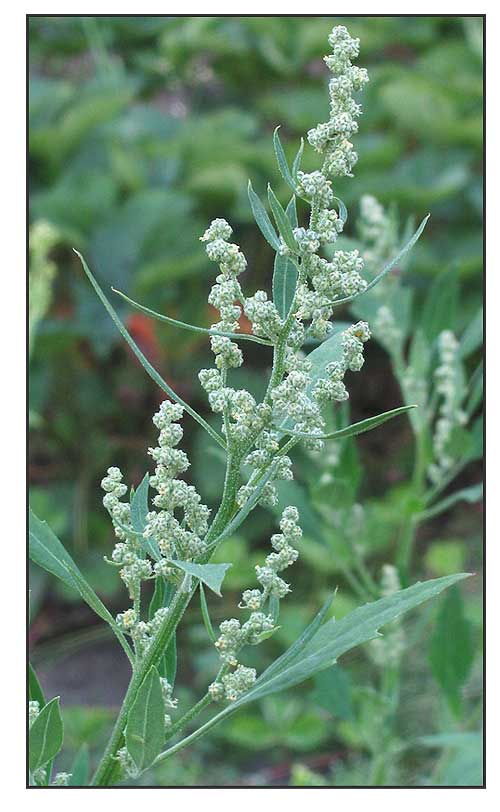
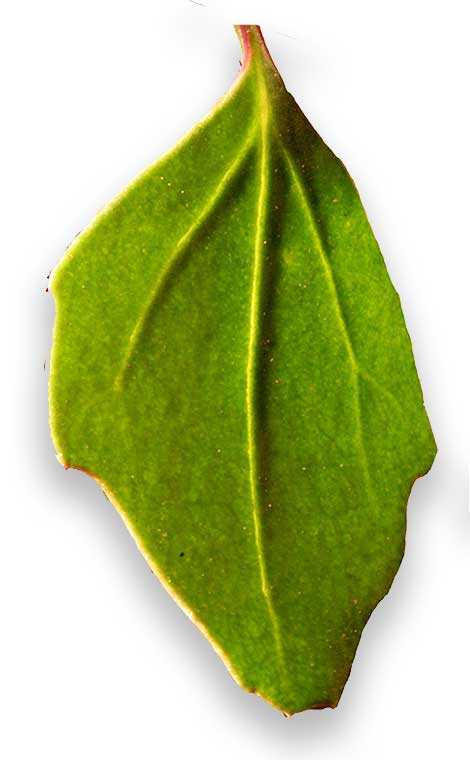
• It tends to grow upright at first, reaching heights of 10–150 centimeters (4–59 in), rarely to 3 m); it then typically becomes recumbent after flowering (due to the weight of the foliage and seeds) unless supported by other plants. Leaves are alternate and varied in appearance. The first leaves, near the base of the plant, are toothed and roughly diamond-shaped, 3–7 cm long and 3–6 cm broad. The leaves on the upper part of the flowering stems are entire and lanceolate-rhomboid, 1–5 cm long and 0.4–2 cm broad; they are waxy-coated, unwettable and mealy in appearance, with a whitish coat on the underside. Small flowers are radially symmetrical and grow in small cymes on a dense branched inflorescences 10–40 cm long. Flowers are bisexual and female, with five tepals which are mealy on outer surface, and shortly united at the base, with five stamens. (1)
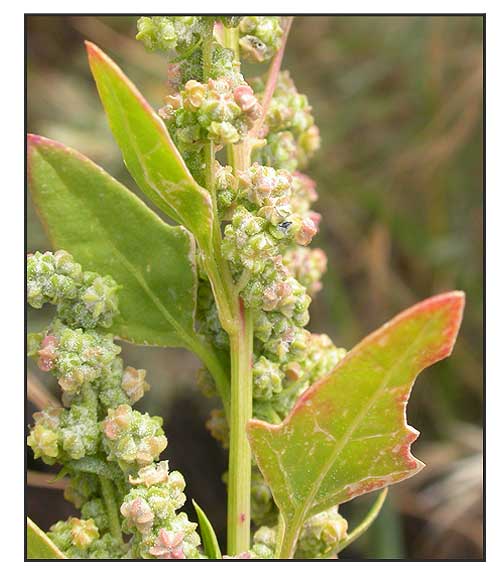 • Erect annual herb up to 1.5(–4) m tall; young vegetative parts densely clothed with mealy-white or red-purple vesicles; stem angular, ribbed, with longitudinal dark green or red streaks. • Leaves alternate, simple; stipules absent; lower leaves with long petioles, ovate-rhomboid, irregularly and coarsely toothed or incised, higher ones gradually with shorter petioles, elliptical-oblong-lanceolate, less deeply incised or entire; blade 1.5–18 cm × 0.5–18 cm. Inflorescence a large, axillary and terminal, leafy panicle, consisting of clusters of flowers.• Flowers bisexual, regular, 5-merous; tepals connate at base; stamens opposite tepals; ovary superior, depressed globose, 1-celled, style short, stigmas 2.• Fruit a nut, entirely enclosed by the incurved tepals, thin-walled, indehiscent, 1-seeded.• Seed nearly smooth, lenticular, 1–2 mm in diameter, testa thinly leathery, blackish-brown; embryo annular, surrounding the endosperm.• Seedling with epigeal germination; hypocotyl 2–7 cm long; cotyledons leafy, stalked; first pair of leaves opposite, subsequent leaves alternate. (PROTA) • Erect annual herb up to 1.5(–4) m tall; young vegetative parts densely clothed with mealy-white or red-purple vesicles; stem angular, ribbed, with longitudinal dark green or red streaks. • Leaves alternate, simple; stipules absent; lower leaves with long petioles, ovate-rhomboid, irregularly and coarsely toothed or incised, higher ones gradually with shorter petioles, elliptical-oblong-lanceolate, less deeply incised or entire; blade 1.5–18 cm × 0.5–18 cm. Inflorescence a large, axillary and terminal, leafy panicle, consisting of clusters of flowers.• Flowers bisexual, regular, 5-merous; tepals connate at base; stamens opposite tepals; ovary superior, depressed globose, 1-celled, style short, stigmas 2.• Fruit a nut, entirely enclosed by the incurved tepals, thin-walled, indehiscent, 1-seeded.• Seed nearly smooth, lenticular, 1–2 mm in diameter, testa thinly leathery, blackish-brown; embryo annular, surrounding the endosperm.• Seedling with epigeal germination; hypocotyl 2–7 cm long; cotyledons leafy, stalked; first pair of leaves opposite, subsequent leaves alternate. (PROTA)
Distribution
- Naturalized.
- In northern Philippines (Luzon, Benguet); often at higher altitudes, around 1300-1400 m.
- A noxious weed with global distribution.
- In India, cultivated as a traditional leafy vegetable. In isolated hill communities inhabiting the montane zone of the middle Himalayan range, C. album is a subsistence food crop. (4)
 Constituents Constituents
- Nutrient composition of leaves per 100 g edible portion: water 84 g, energy 184 kJ (44 kcal), protein 4.3 g, fat 0.8 g, carbohydrate 7.3 g, fiber 2.1 g, Ca 280 mg, P 81 mg, vitamin A 11,300 IU, thiamine 0.15 mg, riboflavin 0.4 mg, niacin 1.3 mg, ascorbic acid 90 mg (Rubatzky & Yamaguchi, 1997). (4)
- Nutritional composition of seeds of Himalayan cultivars per 100 g: energy 1654 kJ (395 kcal), protein 16 g, fat 7 g, carbohydrates 66 g (Partap, Joshi, & Galway, 1998) (4)
- Major phytoconstituents are non-polar lipids, phenols, lignins, alkaloids, flavonoids, glycosides, saponins, ascorbic acid, β-carotene, catechin, gallocatechin, caffeic acid, p-coumaric acid, ferulic acid, β-sitosterol, campesterol, xanthotoxin, stigmasterol, n-triacontanol, imperatorin, ecdysteroid crytomeridiol, n-trans-feruloyl- 4-O-methyl dopamine , β- sitosterol, lupeol and 3 hydroxy nonadecyl henicosanoate. Analysis of leaves for trace elements revealed sodium, potassium, calcium, magnesium, iron, zinc, phosphorus, copper, manganese, and nitrogen. (11)
- Study for leaf essential oil yielded 0.64% v/v: tricyclene, α-thujene, α-pinene, camphene, sabinene, β-pinene, myrcene, p-cymene, limonene, benzyl alcohol,1,8-cineole, cis-ocimene, γ-terpinene, linalool, pinane-2-ol, allo ocimene, citronellal, borneol, terpinen4-ol,α-terpineol, citronellol, ascaridole, neral, linalyl acetate, geranial, borneol acetate, thymol, carvacrol, ethyl cinnamate, acetyl eugenol, elemicin and benzyl benzoate.
(11)
- Phytochemical screening of aerial parts
revealed alkaloids, flavanoids, saponins, triterpenoids, steroids, carbohydrate, tannin, coumarins, phenols, carboxylic acid, amino acid and proteins. (12)
- Essential amino acids in leaves and seeds include: lysine, isoleucine, phenylalanine, tyrosine, threonine, tryptophan, valine, histidine, and methionine. (14)
- Studies for mineral content of leaves (mg/100 g dry weight) show varied results (Bahadur et al. 2011 and Adedapo et al. 2011): Mg 2.54 and 0.72, Ca 3.85 and 2.17, K 3.65 and 6.93, P 1.55 and 0.32, Na 0.30 and 0.37, Zn ND and 50, Cu ND and 13, Fe (ppm) 0.93 and 255, Mn ND and 118. (14)
- GC-MS analysis of methanolic extract of C. album leaf revealed main bioactive components of n-Hexadecanoic acid, L-Proline, 5-oxo-, methyl ester, Pidolic Acid, l-Phenylalanine, N-butyryl-, methyl ester, 3,7,11,15-Tetramethyl-2-hexadecen-1-ol, Hexadecanoic acid, methyl ester, 2-Diacetylamino-3-(1H-indol-3-yl)-propionic acid, methyl ester, among others. (15)
Properties
- An under-exploited vegetable with high functional potential and nutrient properties.
- Weeds are low growing while cultivated plants are tall and leafy.
-
Studies have suggested nutrient, antioxidant, antimicrobial, nephroprotective, antiurolithiatic, anticancer, antibacterial, anthelmintic, contraceptive, hepatoprotective, chemoprotective, anti-gastric ulcer, anti-inflammatory properties.
Parts used
Leaves, seeds.
Uses
Edibility
- Leaves and young shoots are edible; eaten as leaf vegetable, usually steamed or cooked like spinach. Moderation advised because of high oxalic acid content.
- Seeds can be mixed with wheat and baked into bread; also boiled and eaten or toasted as tortillas. (2)
- Seeds can be sprouted and added to salads. Seeds should be soaked in water overnight and rinsed before use to remove the saponins. (3)
- Seed is processed into flour for pancakes and bread; boiled and mixed with other ingredients to make gruel; or roasted and ground for porridge. Also used for preparing fermented and alcoholic beverages. (4)
- Young inflorescences are edible; cooked, with a taste akin to broccoli. (3)
- Young shoots and leaves used as famine food.
Folkloric
- No reported folkloric medicinal use in the Philippines.
- Traditionally used as blood purifier, diuretic, sedative, hepatoprotective, anthelmintic, laxative.
- Report suggests eating leaves with beans have a carminative effect, preventing wind and bloating. (3)
- Seeds are chewed for treatment of urinary problems. Juice of stems applied to freckles and sunburn. Juice of roots used for treatment of bloody dysentery.
(3)
- Medicinally, seed used to improve appetite; as anthelmintic, laxative, aphrodisiac, and tonic. Also used to treat biliousness, abdominal pains, eye diseases, throat problems, hemorrhoids, and diseases of the blood, heart, and spleen. (4)
- Cooked leaves or herbal tea used for treatment of kidney stones, colic, and urinary tract problems. Dried plant powder used as diuretic. Plant also used for sexual healthy-promoting properties. Whole plant powder used for treating headaches and seminal weakness. Cooked plant parts (leaves and stems) used for treatment of flu, gall stones, and tuberculosis. Also used for treatment or sunstroke, sunburn, and swollen feet. (6)
- In Pakistan, fresh infusion of whole plant used to treat intestinal ulceration. Whole plant used as antiscorbutic and blood purifier, and for treatment of anemia. Roots used for treatment
if rheumatism and snake poison. (6)
- In India, fine powder of leaves used to allay skin irritation and leaf juice used for treating burn. Powdered plant (25-50%) mixed with normal food reported to suppress the estrous cycle. Decoction of aerial parts mixed with alcohol rubbed on areas affected by arthritis and rheumatism. (14)
Others
- Dye: Young shoots yield a green dye. (3)
- Soap: Crushed fresh roots used as mild soap substitute. (3)
- Fodder: Plant used as fodder. Seeds often used as poultry and livestock feed. (4)
Studies
• Antimicrobial / Antioxidant / Aerial Parts: Study of evaluated the antimicrobial and antioxidant activities of ethanol extracts of aerial parts of C. album and protective effects against gentamicin-induced nephrotoxicity in male Wistar albino rats. A methanol extract showed highest ZOI diameter on Bacillus cereus (26 mm). The ME also showed highest activity in DPPH and ABTS antioxidant assays. An ethanol extract showed highest reducing power in CUPRAC, while a water extract showed highest reducing power in FRAP. On gentamicin-indced renal damage, C. album significantly dropped urea and creatinine levels, while histopathologic exam most exhibited mild glomerular congestion. Results suggest CAE can be used as supportive treatment in nephrotoxicity. (5)
• Antiurolithiasis / Inhibition of Calcium Oxalate and Brushite Crystallization / Leaves: Study evaluated the effect of aqueous extract of leaves of C. album (CAAE) on in-vitro crystallization of CaOx and brushite crystals. CAAE significantly inhibited the slope of nucleation and aggregation of CaOx crystallization, decreased the crystal density, and inhibited the growth and caused dissolution of brushite crystals. Standard drug cystone or citric acid also exhibited similar effects. Results showed leaves of C. album were effective in prevention of experimentally induced urinary stones. (7)
• Anticancer / Leaves: Studies of C. album leaf extract have demonstrated strong anticancer action by inhibiting cell growth and apoptosis, extending mean survival time, reducing tumor weight, reestablishing all metabolic parameters and booting host immunity. Erlich ascites carcinoma, gastric cancer, and breast cancer have showed susceptibility to its anticancer effects. (8)
• Antibacterial / Leaves: Studies evaluated the antibacterial activities of methanol, acetone, and chloroform extracts of C. album leaves against Lactobacillus, Bacillus subtilis, and Escherichia coli using well plate method. Maximum activity was observed at 100% concentration. Maximum ZOI were observed with E coli (19mm) and Lactobacillus (19mm). Antibacterial activity was comparable with Amoxicillin. (9) Study evaluated different concentrations of C. album powdered leaf extracts against B. subtilis, S. aureus, P. aeruginosa, and E. coli. Results showed significant activity against both gram positive and gram negative bacteria. A 50% methanol extract showed best activity against S. aureus with ZOI 13 mm, B. subtilis with ZOI 12 mm at 100% concentration. (17)
• Anthelmintic: Studies evaluated the in vitro and in vivo anthelmintic potential of C. album using Haemonchus contortus and their eggs in adult motility assay and egg hatch test in sheep. Results showed dose- and time-dependent anthelmintic action. (10)
• Contraceptive / Sperm Immobilizing / Seeds: Study evaluated an aqueous decoction of seeds for sperm-immobilizing and contraceptive effects by spermicidal action. Contraceptive efficacy was evaluated by intrauterine and vaginal use of C. album decoction in rats and rabbits, measuring mating and pregnancy outcomes. Sperm death was reported, mediated by C. album via oxidative damage of cellular macromolecules by in situ generation of reactive oxygen species. (10)
• Hepatoprotective in Carbon Tetrachloride Toxicity / Whole Plant: Study evaluated the protective effect of methanolic extract of C. album whole plant against carbon tetrachloride hepatotoxicity in Wister albino rats. DPPH assay showed C. album has potential for reduction of oxidative stress. Results showed C. album minimized the levels of ALT, AST, and ALP at different concentrations (100, 200, and 300 mg/kg). C. album also decreased the elevated urea level and improved WBC, RBC, and hemoglobin levels. Results suggest hepatoprotective activity of C. album and potential as safe alternative to commercial hepatoprotective medicines. (11)
• Antinutritional Factors: Saponins have been found in bulbs, roots, stems, fruits, and leaves, in some cases throughout the whole plant, varying from 0.1% to 5%, usually in quantities too small to do any harm. While toxic (5.2 mg/100 g dwb), they are poorly absorbed and most pass straight through without causing problems. Also, cooking breaks it down to a large extent. Nitrate (3% to 5% dw) content is mostly concentrated in the stem part, which is generally discarded. Oxalate (0.9 to 3.9 g/100g fw) is concentrated mainly in the stem. Oxalic acid (360 to 2,000 mg/100g), which in large quantities can interfere with absorption of nutrients in food, is reduced by cooking. Phytic acid, an antinutrient by binding minerals (iron, zinc, calcium, magnesium) and reducing their absorption. (It also has antioxidant benefits, potentially lowering cancer risk, and serves as preservative). Phytate level (18.1 mg/100g) is within tolerable limits and can easily be detoxified by soaking, boiling, or frying (Adedapo et al. 2011). Drying and storage showed no significant effect on antinutrient content of leaves while blanching and cooking resulted in significant reduction of oxalic acid, and blanching in significant reduction of phytic acid. (14)
• Potential Against Reproductive Toxicity Induced by Cyclophosphamide: Study evaluated the therapeutic potential of hydroalcoholic extract of C. album (CAHE) against cyclophosphamide (CYP)-induced reproductive toxicity in male albino rats, using measures of oxidative stress, sperm quality, and disruption of hormonal balance. Results showed CAHE significantly (p<0.05) attenuat4d CYP-induced oxidative stress, indicated by reduced lipid peroxidation and restoration of antioxidant markers such as glutathione and catalase. CAHE also improved sperm motility, viability, density, and morphology in CYP-treated rats. Results suggest potential as a natural therapeutic agent for mitigating chemotherapy-associated reproductive toxicity. (16)
• Hepatoprotective Against Paracetamol Toxicity: Studies evaluated the hepatoprotective effects of ethanol extract of C. album against paracetamol-induced hepatotoxicity in albino rats. Toxicity was evidenced by significant increases in serum bilirubin, ALT, AST, ALP, decrease in serum albumin and total protein levels. Extract treatment resulted in marked reduction of the elevated chemical markers, along with increase in serum albumin level. (18)
• Anti-Ulcer Effect: Studies evaluated an alcoholic extract of C. album for anti-ulcer activity using three models: pyloric ligation, ethanol, and cold-restraint stress induced ulcers. Ranitidine was used as standard. Results showed significant decreases in volume of gastric acid secretion, free acidity, total acidity, and ulcer index. Histopathologic exam of sections of ulcerated area revealed significant increase in regenerated glandular epithelium width. Collagen content was significantly increased the the extract. (19)
• Anti-Inflammatory / Antioxidant / Leaves: Study evaluated the antioxidant and anti-inflammatory potential of C. album, using DPPH and ß-carotene bleaching test and anti-lipid peroxidation in rat-liver microsomal membranes. C. album showed significant inhibitory activity on production of pro-inflammatory mediator nitric oxide was induced in LPS-stimulated RAW 264.7 cells by dichloromethane fraction of C. album extract with IC50- of 81.7 µg/mL. The same sample showed concentration-dependent anti-denaturation effect on heat-treated bovine serum albumin (IC50 975.6 µg/mL). (20)
• Antiurolithiasis / Leaves: Study evaluated the effect of methanolic and aqueous extracts of leaves of C. album on ethylene glycol-induced urolithiasis in rats. Extract doses of 100, 200, and 400 mg/kg and Cystone (750 mg/kg) were administered daily orally for 28 days. Extracts treatment significantly attenuated the EG-induced elevations in urine and plasma levels of calcium, phosphorus, urea, uric acid, and creatinine along with decreases in urine volume, pH, and oxalates. Treatment also decreased renal tissue oxalate and deposition of oxalate crystals in the kidney. Extract effects were comparable to Cystone. Effect may be due to inhibitory effect on crystallization and stone dissolution attributable to presence of phytochemicals like flavonoids and saponins. (21)
• Anticancer / Human Breast Cancer Cell Lines / Leaves: Study evaluated the effects of C. album leaves on the growth of estrogen dependent (MCF-7) and estrogen independent (MDA-MB-468) human breast cancer cell lines. Among extracts studies, the methanol extract exhibited maximum anti-breast cancer activity with IC50 of 27.31 mg/ml against MCF-7 cell line. At 48 h exposure and 100 mg/ml concentration, the MeOH extract showed 94.06^ inhibition against MCF-7 cell line, indicating presence of some structural moiety responsible for the antiproliferative effect. (22)
• Anticancer Potential Against Ehrlich Ascites Carcinoma / Leaves: Study evaluated the in vivo anticancer effects of C. album leaf extract against Ehrlich ascites carcinoma (EAC) cells in Swiss albino mice. At concentration of 200 and 400 mg/kg, the leaf extract showed statistically significant 30.60% and 41.80% cell growth inhibition (p<0.001), increase life span (22.27% and 51.07%), decreased tumor weight (18.50g and 13.67 g). Results showed potent anticancer activity via cell growth inhibition and apoptosis, increase survival time, decreased tumor weight, and restoration of biochemical parameters and stimulation of host immunity. (23)
• Anticancer: Studies have highlighted anticancer properties of methanolic and ethanolic extracts of C. album, exhibiting effectiveness in inhibiting growth of cancer cell lines <https://www.wisdomlib.org/science/journal/world-journal-of-pharmaceutical-research/d/doc1368313.html>
Availability
- Wild-crafted.
- Seeds and extracts in the cybermarket. |


,_wild_field,_Warsaw,_Poland.jpg)

.jpg)