 Gen info Gen info
Fabaceae or Leguminosae, commonly known as the legume, pea, or bean family, is a large and agriculturally important family of flowering plants, which includes trees, shrubs, and perennial or annual herbaceous plants. The are recognize by their fruit (pea), or their compound stipulate leaves. It is the 3rd largest land plant family with about 765 genera and nearly 20,000 known species, only behind Orchidaceae and Asteraceae.
- The 5 largest genera of the family are Astralgus (>3,000 species), Acacia (> 1,000 species), Indigofera (around 700 species), Crotalaria (around 7000) and Mimosa (about 300 species).
- Etymology: The name Fabaceae comes from defunct genus Faba, now included in Vicia. ""Faba" derives from Latin, meaning "bean".
- Crotalaria is a genus of flowering plants in the family Fabaceae, commonly known as rattlepods. It includes over 700 species of herbaceous plants and shrubs.
-
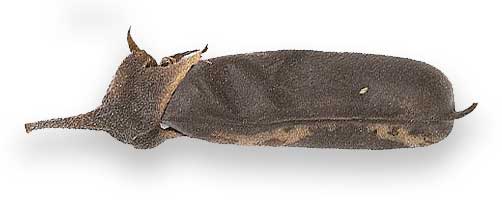
The rattlepod name derives from the mature seeds loose in the pod, rattling when shaken. It derives from an ancient Greek word meaning "castanet", the same root for the name of rattlesnakes (Crotalus).
- Crotalaria retusa is a species of flowering plant in the legume family, with common names including devil-bean, rattleweed, shack shack, and wedge-leaf rattlepod.
Botany
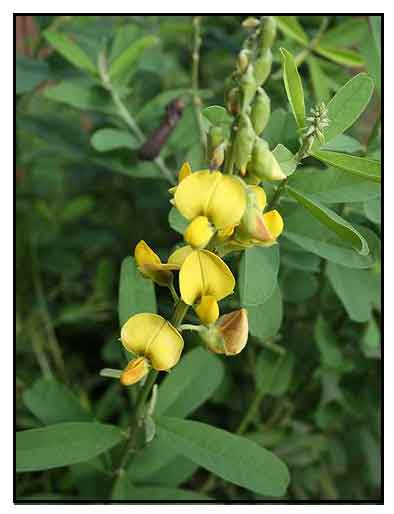
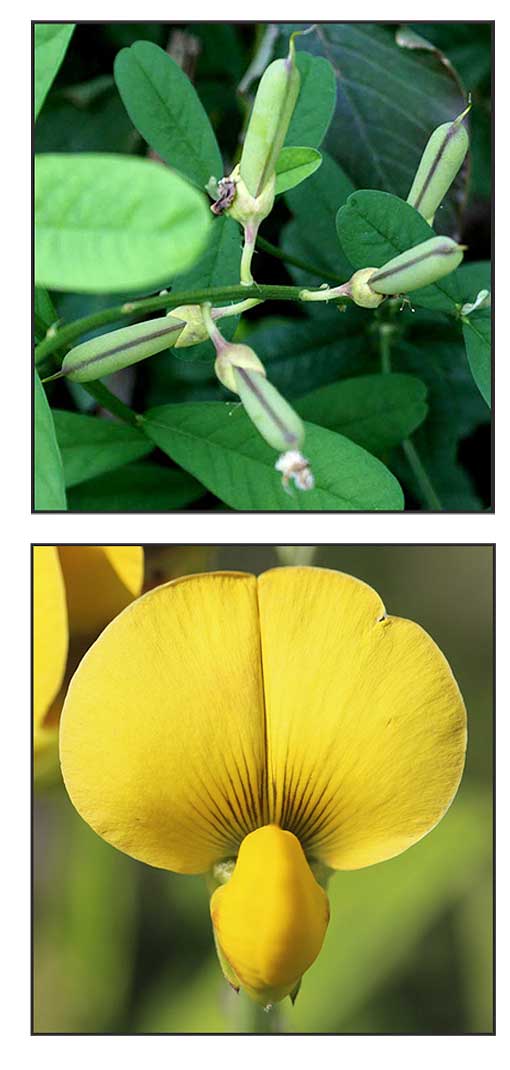
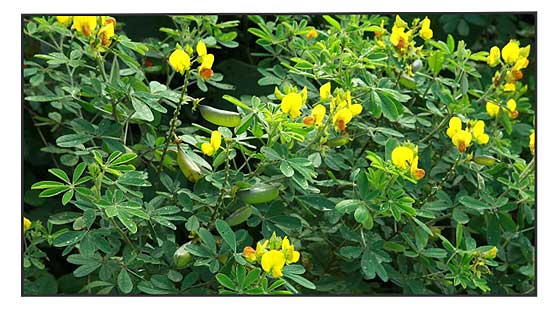
• Kalog-kalog is a half-woody plant growing to a height of 1 meter high. Leaves are alternate, simple, oblanceolate, 6 to 8 centimeters long, 2 to 2.5 centimeters wide, and with rounded ends. Pea flowers are yellow, arranged along a simple terminal flowering stalk (raceme) about 15 centimeters long. Fruits are inflated, smooth, cylindrical pods, 4 centimeters long and 1 centimeter wide, containing several, loose, flattened, black rounded seeds, 3 millimeters in diameter.
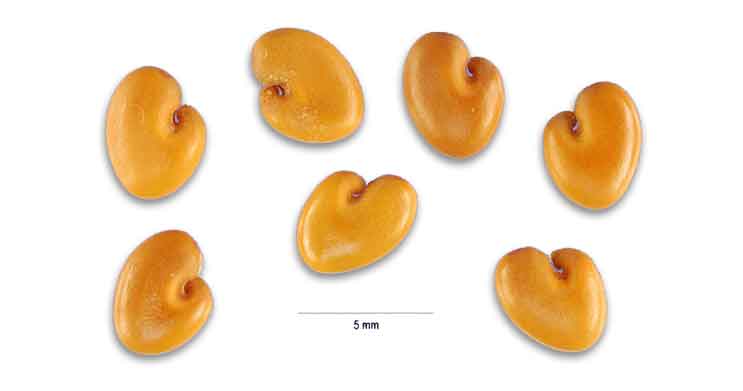 • Growth form: Herbaceous plant with erect growth habit, can grow up to 1.2 - 1.5 m tall. Foliage: Simple leaves, obovate, having a rounded leaf tip and a wedge-shaped leaf base (3.3 - 9.2 cm long, 1 - 3.8 cm wide). They are sessile, spirally arranged and have an entire leaf margin. Stems: Stem is ridged and velvety with short hairs. Flowers: Bright yellow flower consists of 1 large triangular petal hanging over 2 smaller petals that are curled upwards like a hook (1.7 - 2.4 cm long). Flowers are arranged in terminal spike inflorescences located at the branch tips (27 cm long). Fruit: Dry, hairless, cylindrical fruit is known as a pod (3 - 4 cm long). Pod color changes from greenish to dark brown to black when mature. Shaking a mature pod produces a rattle sound, because the seeds get loose inside. • Growth form: Herbaceous plant with erect growth habit, can grow up to 1.2 - 1.5 m tall. Foliage: Simple leaves, obovate, having a rounded leaf tip and a wedge-shaped leaf base (3.3 - 9.2 cm long, 1 - 3.8 cm wide). They are sessile, spirally arranged and have an entire leaf margin. Stems: Stem is ridged and velvety with short hairs. Flowers: Bright yellow flower consists of 1 large triangular petal hanging over 2 smaller petals that are curled upwards like a hook (1.7 - 2.4 cm long). Flowers are arranged in terminal spike inflorescences located at the branch tips (27 cm long). Fruit: Dry, hairless, cylindrical fruit is known as a pod (3 - 4 cm long). Pod color changes from greenish to dark brown to black when mature. Shaking a mature pod produces a rattle sound, because the seeds get loose inside.
(Flora & Fauna Web)
Distribution
- Native to the Philippines.
- Also native to Assam, Bangladesh, Bismarck Archipelago, Borneo, Cambodia, China Southeast, Comoros, East Himalaya, Hainan, India, Iran, Jawa, Kenya, Laccadive Is., Laos, Lesser Sunda Is., Madagascar, Malaya, Maldives, Maluku, Mauritius, Mozambique, Myanmar, Nepal, New Guinea, Northern Territory, Oman, Rodrigues, Réunion, Saudi Arabia, Somalia, Sri Lanka, Sumatera, Taiwan, Tanzania, Thailand, Vietnam, West Himalaya, Western Australia, Yemen. (6)
-
A common weed and a hindrance to cultivation and maintenance of orchards and plantations.
- Listed as a noxious weed in several U.S. states, Puerto Rico, the Virgin Islands; listed as as invasive weed in India, Cuba, and Cocos Island.
 Constituents Constituents
- Study of seeds yielded proximate values of moisture 15.00, fiber 37.50, ash 15.00, crude protein 4.37, oil 15.00, and carbohydrates 13.13%. (see study below) (3)
- Study isolated a pyrrolizidine alkaloid, monocrotaline.
- Phytochemical screening of leaf, stem, seed, pods and flowers yielded saponins, tannins, alkaloids, and sterols. Leaf showed highest concentration of phenols (67.35 ± 1.153 mg GAE/g of extract). (see study below) (17)
- Phytochemical screening of crude extract of leaves yielded alkaloid++, steroid++.
flavonoid+, tannin+, reducing sugar++, with an absence of saponin and phenol. (see study below) (18)
- Qualitative screening of aqueous extract of aerial parts revealed presence of sterols, polyterpenes, polyphenols, catechic and gallic tannins, flavonoids, alkaloids, and quinonic compounds. (see study below) (27)
- GC-MS study of aerial parts revealed main compounds of trans-hex-2-enal (66.67%) in fresh leaves; benzene acetaldehyde (23.90%) in dry leaves, and 3-ethyl-4-methyl-pent-3-en-2-one (42.80%) in fresh flowers. (see study below) (28)
Properties
- Plant is nematode-resistant.
- Known as a butterfly host plant.
- Studies have suggested clastogenic, leishmanicide, antivenom, neurotoxic, antioxidant, clot lysis, antiproliferative, antimicrobial, anti-inflammatory, antinociceptive, antihyperglycemic, anticholinesterase, anthelmintic, antioxidant, tyrosinase inhibitory, α-amylase and α-glucosidase inhibitory properties.
Poisoning / Toxicity concerns
- Primary source of toxicity of many Crotalaria species is due to the presence of pyrrolidine alkaloids, which are poisonous to birds and large mammals.
- Crotalaria retusa seeds are some of the most toxic of Crotalaria species.
- Poisoning: In Australia, only horses are known to die from eating the plant, with most cases occurring in the wet season. Grazing over fresh plant for 3-4 weeks typically leads to death in about 3 months, referred to as "Kimberly Horse Disease" or "walkabout" disease. Death can sometimes take two or more years. Signs of poisoning include loss of weight, sleepiness, and depression. Horses become irritable and start walking aimlessly until they die. In the U.S.A., seeds have been found to be poisonous to chickens. (24)
Parts used
Whole plant.
 Uses Uses
Edibility
- Flowers and leaves reportedly eaten as vegetable.
- In Vietnam, seeds are roasted and eaten.
Folkloric
- No reported folkloric medicinal use in the Philippines.
- In Ayurveda, plant vitiated kapha, vata, cough, dyspepsia, fever.
- Powdered seeds mixed with milk used for increasing body strength; also used for skin diseases.
- In Cameroon, plant used in the treatment of eczema.
- In Tamil Nadu, India, plant used for cough, dyspepsia, fever, cardiac disorders, stomatitis, diarrhea, scabies, impetigo.
- In Zaria, northern Nigeria, powdered plant mixed with roasted black caraway, taken in small quantities for stomach coli and flatulence. Squashed flowers with added potash, cooked into a soup, and taken for amenorrhea. For scabies, decoction of whole plant used for bathing.
 - Roots used for hemoptysis. - Roots used for hemoptysis.
- Leaves mixed with those of Crotalaria quinquefolia, consumed or applied externally for fever, scabies, lung afflictions, and impetigo.
- In Bangladesh, tribal people in the Chittagong Hill tracts use fresh juice and paste of leaves and seeds for skin diseases. (9)
- In India, seeds used for skin infection, constipation and pain. (10)
- Whole plant infusion used for treatment of thrush and skin infections. Roots used for treatment of hemoptysis. Powdered seeds boiled in milk used for treatment of skin diseases, leprosy, flatulence, and fever, and as analgesic against pain from scorpion bites. (25)
Others
- Fiber: Bark and stems are sources of strong fiber; used for cordage and making canvas. (17)
- Dye: In East Africa, used as dye plant. (17)
- Oil: Seed yields a non-edible, nondrying oil, with potential for use in making shampoo, creams, and shoe polish. (17)
- Livestock hazard: Although reported as a forage plant, it poses a potential hazard to livestock because of pyrrolizidine alkaloid content.
- Agroforestry: Occasionally utilized as a cover crop and for green manuring.
Studies
• Clastogenic / Fruits: Study evaluated the clastogenicity of six extracts (tea and aqueous extract of leaves, tea, aqueous and methanolic extracts of dried fruit, and tea of unripe fruit), which were injected intraperitoneally into mice that were killed 24 h after treatment for preparation of bone marrow cells. Extracts of C. retusa fruits caused dose-dependent increase in frequency of chromosomal aberrations in mice. No statistically significant increase in aberrant cells were observed with leaf extracts. The possibility of pyrrolizidine alkaloid, monocrotaline, present in C. retusa exerting a clastogenic effect on mouse bone marrow cells was entertained. (2)
• Oil and Nutritive Value of Seeds: Study of seeds yielded proximate values of moisture 15.00, fiber 37.50, ash 15.00, crude protein 4.37, oil 15.00, and carbohydrates 13.13%. Oil showed to be non-drying and of low saturation. Saponification value implicated non-edibility, however, with use in production of shampoos, skin creams, and shoe polish. Its fairly high acid value suggested it required little purification to increase shelf-life.(see constituents above) (3)
• Leishmanicide: Study evaluated the cytotoxicity for procyclic promastigotes cells of Leishmania chagasi. Results showed cytotoxicity of EE at 10 and 30% for cells of Leishmania chagasi, an effect that might be associated only to the concentration of the alcohol present in the extract and not to the concentration of the plant in study. (4)
• Monocrotaline / Alkaloid / Neurotoxicity: Study showed MCT treatment caused changes on pattern of glial fibrillary acidic protein and ßIII-tubulin expression, with dose and time dependent intense down regulation and depolarization of neuronal tubulin. The cytochrome P450 enzyme system was involved in the MCT induced cytotoxicity in CNS cells. (5)
• Nematode Resistant: Plant is known to be nematode-resistant. Studies have found the dried plant parts can be worked into the soil as amendments to deter and reduce root galling by root-knot nematode, Meloidogyne incognita.
• Clastogenic Effects on Mouse Bone Marrow Cells: Study evaluated the clastogenicity of six extracts of leaves, tea, aqueous, and methanolic extracts of dried fruit and tea of unripe fruit. Extracts from fruits were shown to cause a dose dependent increase in the frequency of chromosomal aberrations in mice. The possibility that the pyrrolizidine alkaloid, monocrotaline, exerting a clastogenic effect on mouse bone marrow cells is discussed. (10)
• Monocrotaline / Pyrrolizidine Alkaloid: Study isolated one potent pyrrolizidine alkaloid, monocrotaline, from Crotalaria retusa. PAs (pyrrolizidine alkaloids) are toxic to humans and animals and known hepatotoxic, pnuemotoxic, genotoxic, neurotoxic, and cytotoxic. The structural elucidation of the toxic PAs provide a structure based in silico toxicological studies and modeling in drug design against various potent diseases in addition to estimation of pharmaceutical formulations. (11) Study evaluated three Crotalaria species viz. Crotalaia retusa, C. microcarpa, and C. naragutensis for alkaloids and its potential for toxicity.
Of the three, only C. retusa yielded unsaturated pyrrolizidine alkaloids. The alkaloids of C. retusa showed toxicity to albino Wistar rats, with marked microscopic hepatic lesions, along with significant toxic features in the lungs, kidneys, and intestines. Toxicity pattern was typical of alkaloid monocrotaline. (20)
• Role of Astrocytes in the Neurotoxicity of Monocrotaline: Review presented the main toxicological aspects of Crotalaria genus and recent findings on the mechanisms involved in the neurotoxic effects of MCT, which was extracted from C. retusa, and its interaction with neurons in isolated astrocytes. (13)
• Monocrotaline / Histological Damage and Oxidant Activity in Brain Areas of Mice: Study evaluated the effect of MCT in histopathological analysis of hippocampus (HC) and parahippocampal cortex (PHA) and in oxidative stress (OS) parameters in various brain areas. Lipid peroxidation was seen in all brain areas after administration of MCT. Monocrotaline caused cell lesions in HC and PHA cortex regions and produced oxidative stress. (14)
• Anti-Venom / Inhibition of Venom Phospholipase A2 Activity: The inhibitory activity of leaf extracts of various plants were evaluated on Opisthacanthus capensis (Black creeping scorpion) venom phospholipase A2 activity. Crotalaria retusa inhibited O. capensis venom PLA activity in vitro with an inhibition patterns of competitive inhibition with Kcat remaining unchanged. (15)
•
Antioxidant / Antiproliferative: Study evaluated total phenolic content, antioxidant, and antiproliferative effect of Crotalaria retusa leaf, stem, seed, pod, and flower as well as fractions. Leaf showed the best radical scavenging activity with an EC50 value of 0.222 ± 0.004 mg/mL. All extracts induced cytotoxicity in a dose dependent manner. Stem showed highest cytotoxicity against selected cancer cells. Study showed the antiproliferative nature of C. retusa, and Jurkat was the most sensitive cell line. (see constituents above) (17)
• Anticoagulation / Clot Lysis Activity: Study evaluated the clot lysis effect of four Bangladeshi plants. C. retusa crude extract of leaves showed highest significant potency at 39.16 ± 9.52 %, compared with standard streptokinase with 79.55 ± 9.09%. (see constituents above) (18)
• Antioxidant / Antimicrobial / Callus and Leaves: Study evaluated the in vitro antimicrobial and antioxidant activity of methanol extracts of callus culture (CCE) and leaves (WPE) of C. retusa. The wild plants extract showed highest highest antibacterial activity with zone of inhibition of 13.83 ± 0.33 mm on Pseudomonas aeruginosa. The leaf extract also sowed higher antioxidant activity (91%) than the callus extract (58%). WPE showed higher flavonoid content than the CCE; total phenol content was comparable. (21)
• Anti-Inflammatory / Antinociceptive / Seeds: The albumin fraction from the seeds contains lectin, a protein known to have analgesic and anti-inflammatory properties. Study evaluated the albumins extracted from C. retusa for anti-inflammatory and antinociceptive properties. Intraperitoneal adminis-
tration of albumin at doses of 5, 10, or 2-0 mg/kg significantly inhibited carrageenan-induced paw edema in mice. Albumins (20 mg/kg) inhibited neutrophil migration into the peritoneal cavity induced by carrageenan. At the same dose, there was significant reduction of second (inflammatory) phase of licking time induced by formalin. Presence of lectin was evidenced by detection of hemamaglutinating activity against humann erythrocytes in albumins. Anti-inflammatory and antinociceptive activities were attributed to inhibitory effect on neutrophil migration of lectin present in albumins. (25)
• Study on Ethno-Medicinal Use: A questionnaires study on the ethno-medicinal use of C. retusa in Burkina Faso by herbalist and traditional healers revealed 9 diseases. The most cited was congenital syphilis (72.5%), followed by malaria (7.5%) and hallucinations (7.5%). Whole plant was most often used, and decoction was the main form of preparation. Main modes of used were purgative, drink, and bath. There was a general lack of knowledge among herbalists and traditional healers on potential toxicity. (26)
• Antidiabetic / Antihyperglycemic / Aerial parts: Study evaluated the effects of an aqueous extract of leaves, flowers, and pods of C. retusa on glycemic in rats. Extract showed hypoglycemic activity in normoglycemic animals treated with dose of 1000 mg/kbw with 21.04% reduction of glycemia. After an overload of glucose, EACr at 1000 mg/kbw and glibencladmie 10-2g/kbw showed better antihypergly-cemic activity in post-treated rats with % reductions of 41.90 and 50.39%. The EACr hypoglycemic and antihyperglycemic properties were attributed to presence of alkaloids, tannins, and flavonoids. (see constituents above) (27)
• Anticholinesterase / Aerial parts: Acetylcholinesterase (AChE) inhibition is a promising strategy for the treatment of neurological disorders. Study evaluated the anticholinesterase and cytotoxic potential of aerial parts against Artemia salina. The volatile constituents of fresh leaves, hexane and ethanolic extracts, decoction and dichloromethane fraction demonstrated potential inhibition of AChE. The extracts were non toxic to larvae of A. salina. (see constituents above) (28)
• Anthelmintic / Leaves: Study evaluated the anthelmintic potential of C. retusa leaf extract against Pheretima posthuma, using measures of time of paralysis and death. The ethanolic extract showed significant anthelmintic activity, with shorter paralysis and death time at 100 mg/mL compared to the aqueous extract. The anthelmintic activity was dose dependent. Albendazole was used as standard. (29)
• Antioxidant / Acetylcholinesterase, Tyrosinase, α-Amylase and α-Glucosidase Inhibitory / Antioxidant / Bark, Fruits and Flowers: Study evaluated the α-amylase, α-glucosidase, AChE, butyrylcholinesterase, and tyrosinase inhibitory activity and antioxidant properties of extracts of C. retusa bark, fruits, and flowers. Fruits and bark extracts exhibited highest concentrations of quercetin and rutin, respectively. p-hydroxybenzoic acid, a phenolic derivative of benzoic acid, was identified in all plant parts. Bark extracts showed highest concentrations of flavonoids and phenolics and showed highest antioxidant capacity. Extracts showed high inhibitory activity against α-glucosidase (21.22 mmol acarbose eq/g), acetylcholinesterase (8.71-8.26 mg galantamine eq/g), butyrylcholinesterase (4.16-2.36 mg galantamine eq/g) and tyrosinase (113.11 -125.26 mg kojic acid eq/g). Results suggest potential for development of novel biopharmaceutical, nutraceutical, and cosmetical products. (30)
• Antiproliferative Against Cancer Cells / Antioxidant: Study evaluated the antioxidant and antiproliferative effect of C. retusa extracts of leaf, stem, seed, pod, and flower and fractions of stem. Phytochemical screening yielded saponins, tannins, alkaloids, and sterols. Leaf showed highest concentration of phenols (67.35 mg GAE/g extract) and best free radical scavenging activity with EC 50- of 0.222 mg/mL. Antioxidant activity was attributed to total phenol content. All extracts showed induced cytotoxicity in a dose dependent manner. The MTT cell viability assay showed that only the stem of this plant had antiproliferative activity against all the three cancer cells (Jurkat, MCF 7 and PC 3). Jurkat was most sensitive to all the C. retusa extracts. (31)
Availability
Wild-crafted. |