Gen info
- Leonotis is a genus of flowering plants in the family Lamiaceae. The genus contains 12 species
- Leonotis was named by Robert Brown in 1810 in Prodromus Florae Novae Hollandiae et Insulae Van Diemen.
-
Leonotis nepetifolia is a species of plant in the genus Leonotis and family Lamiaceae (mint). It is the only species distributed out of Africa.
- Etymology:
The genus name Leonotis derives from Greek words leon meaning "lion" and otis meaning "ear." The name means "lion's ear." The distinct tubular, orange flowers, whose velvety and curved upper leaves resemble the ear of a lion. The specific epithet nepetifolia refers to the shape of plant's foliage: nepeta referring to the genus of plants known as catnip or catmint to its resemblance to the catnip plant.
 Botany Botany
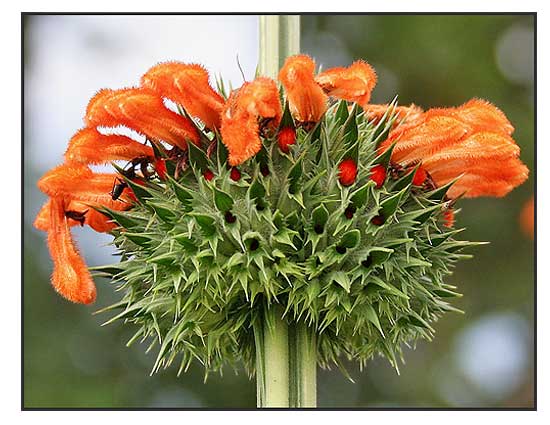
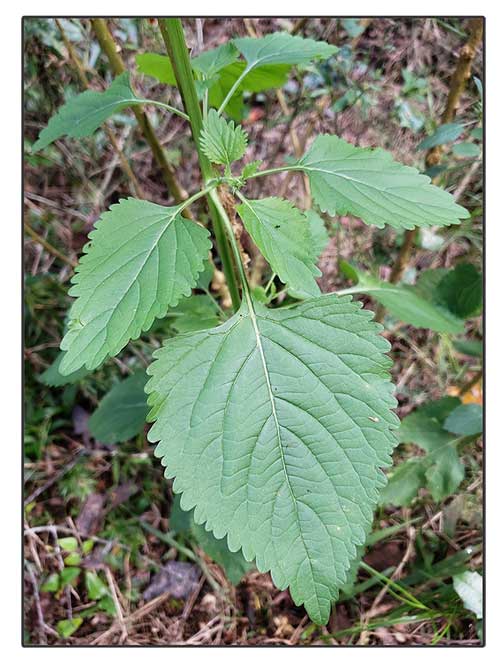
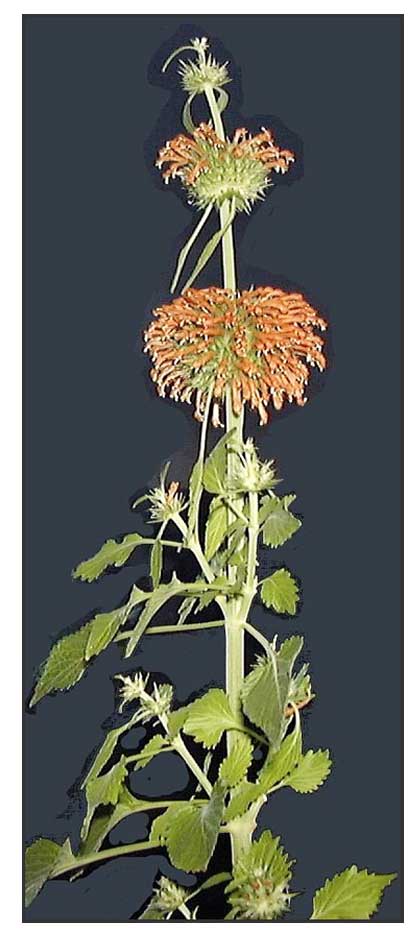
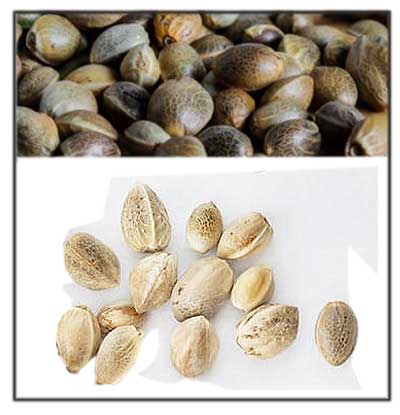
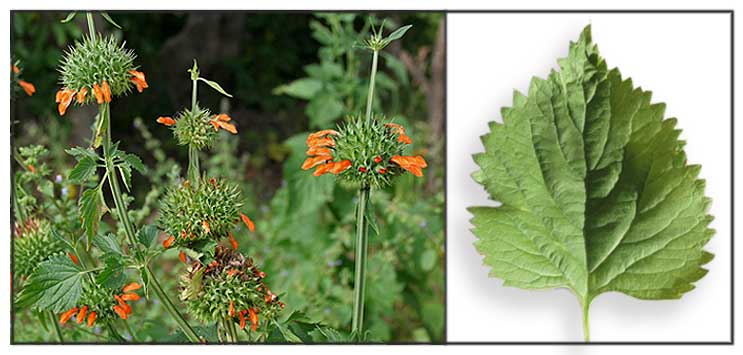
• L. nepetifolia is an erect annual herb that grows 2.5 m high, occasionally reaching up to 3 m. Stem is unbranched at the base and loosely branched towards the apex with strongly angled stems having appressed retrose hairs that are longer at the nodes. Leaves are smooth with a toothed margin; they are large, ovate, lobed, acute, and winged in the upper part. Inflorescence comprises axillary dense, globose multi-flowered verticillasters. Flowers are orange and borne in spiny clusters. Floral leaves are lanceolate and deflexed; bracts are linear, highly spinous-pointed, and deflexed. Calyxes are tubular, incurved, and hairy with 8-9 sharp pointed teeth. The plant typically has a bilabiate, orange-scarlet and hairy corolla with the upper lip densely woody, and the lower lip made up of three lobes. Stamens are four and didynamous; the ovary has four lobes and the fruit contains four ovoid nutlets. (5)
• Robust annual or short-lived perennial herb, often 1-3 m tall, growing from a small slender taproot. Stem usually single, branching below the inflorescence, with a tuft of white to yellowish hairs at the leafnodes. Leaves opposite, petiolate, ovate, 3-20 cm long, covered in short hairs and sessile glands, more densely so below; margin crenate-dentate. Flowers in 2-5(7) subspherical inflorescences per branch, separated by prolonged internodes. Corolla 19-38 mm long covered in orange hairs with 3 fringes of hairs inside at the base of the tube. (Flora of Malawi)
Distribution
- Naturalized along roadsides. 500 m. (2)
- Native to Angola, Bangladesh, Benin, Botswana, Burkina, Burundi, Cameroon, Central African Republic, Chad, Congo, DR Congo, Eritrea, Eswatini, Ethiopia, Gabon, Gambia, Ghana, Guinea, Guinea-Bissau, Gulf of Guinea Is., India, Ivory Coast, Kenya, Liberia, Madagascar, Malawi, Mali, Mauritius, Mozambique, Namibia, Nepal, Niger, Nigeria, Northern Provinces, Rwanda, Senegal, Sierra Leone, Sri Lanka, Sudan-South Sudan, Tanzania, Togo, Uganda, Zambia, Zimbabwe. (2)
- Considered an invasive plant in Australia, Florida, and Hawaii. However with its tendency to grow in disturbed areas, researchers in Hawaii concluded it's not likely an ecological threat.
 Constituents Constituents
- Preliminary phytochemical screening of methanol extract of stem revealed presence of alkaloids, saponins, glycosides and triterpenoids. (see study below) (4)
- Phytochemical analysis of root extracts (PE, CE, EE, and AE) yielded: carbohydrates (EE, AE), alkaloids (all), protein and amino acid (EE, AE), flavonoids (all), fixed oil and fats (EE, AE), steroids and triterpenoids (all), with absence of glycosides, tannins and phenolic acids, waxes, mucilage and gums. (10)
- Study of methanol extract of leaves yielded: alkaloids +, phenolic compounds +++, glycosides +, terpenoids ++, flavonoids +++, tannins ++, reducing sugars +++, saponins +, with absence of proteins. (see study below) (15)
- GC-MS study of seed oil revealed presence of 22 components. Major components are: 9-octadecenoic acid (Z)-, methyl ester (35.40%); 6-octadecynoic acid, methyl ester (22.68%); 9,12-octadecadienoic acid (Z,Z)-,methyl ester (15.59%), and hexadecanoic acid, methyl ester (14.44%). (see study below) (16)
- GC-MS analysis of leaves for secondary metabolites yielded: Hematoporphyrin, Cyclodecasiloxane, Decanic acid, 2-(5-(5-[Cyano-(9,9-dimethyl-1,4-dixa-7-aza-spirol[4,4]non-7-en-y]-3-3-dimethyl-prrolidin02-ylide. (19)
- Phytochemical studies have shown presence of alkaloids (leonurine and stachydrene), iridoid glycoside (leonuride), iridoid glycosdies (leonurin and leonuridine), diterpenoids (leocardin), flavonoids (rutin, quercetin, hyperoside, apigenin), volatile oil, tannins, and vitamin A. (21)
Properties
- Leonotis nepetifolia and L. leonurus are mildly psychoactive, similar to cannabis, although providing a far less potent and less intense "high".
-
Studies have suggested anxiolytic, anti-inflammatory, antibacterial, hepatoprotective, anticancer, antioxidant, antidiabetic, anticonvulsant, wound healing, antidiarrheal properties.
Parts used
Whole plant, seeds, flowers, leaves.
 Uses Uses
Edibility
- Flowers are edible; cooked with green, leafy vegetables.
- Nectar sucked or licked from base of the flowers.
Folkloric
- No reported folkloric medicinal use in the Philippines.
- In Trinidad, shandilay leaves are brewed as tea for fever, coughs, womb prolapse, malaria; also considered beneficial to bone and lung health.
- The plant is an ingredient of Granthiparna, along with Angelica archangelica or Abies pindrow, a traditional Ayurvedic herb used for its digestive, respiratory,and anti-inflammatory properties.
- Used in traditional medicine for its calming or tranquilizing effects. (4)
-
Used for treatment of bronchial asthma, diarrhea, fever, influenza, malaria, cough, epilepsy, skin maladies, and rheumatism.
- Decoction or infusion of whole plant or leaves used for treatment of malaria. Decoction or powdered flower and leaves in porridge or tea used for diarrhea. Decoction of stem, leaves, and flowers or powdered flower in porridge used for asthma. Paste of leaves, seeds, roots, inflorescence applied topically to skin infections. Powder or ash of flowers and leaves applied to wounds, burns, and scalds. Infusion, decoction, or paste of leaves, flowers, and seeds applied locally for rheumatism, Decoction of whole plant or leaves used for cancer and diabetes. Tea of whole plant or leaves used for fever. Leaves and inflorescence prepared as tea or boiled to a viscous paste taken orally for cough. Leaves brewed as tea used for uterine prolapse. Decoction of leaves used for parasitic worm infections. Decoction of leaves drunk for convulsions. Inflorescence ash mixed with mustard oil applied topically for postnatal breast pain. Leaves are chewed or boiled in water drunk for labor pains. Ash of whole plant applied topically for paralysis. Decoction of whole plants drunk for hepatitis. (5)
- In Rwanda, leaves used for treatment of pneumonia, anthrax, and syphilis. (8)
- Leaves and flowers used as cholagogue. Infusion used as antidysenteric. Decoction with salt or sugar drunk to dissolve renal calculi.
(8)
- In India, ash or paste of seed, flower, and inflorescence externally applied to burns. Inflorescence paste paste mixed with groundnut oil used for wound healing. Leaf paste applied to eczema. Whole plant ash mixed with mustard oil applied externally to post natal breast pain, joint pain, and areas of body swelling. Crushed leaves gently rubbed to alleviate burning due to scorpion sting. Whole plant decoction drunk for relief of joint pain. Decoction of stem, leaf, and flowers used for jaundice. (11)
- Dried leaves and flowers reportedly smoked to relieve/prevent
epilepsy.
- Used a food additive to treat fever and cough.
 Others Others
- Oil: Seeds are rich in a fatty oil resembling olive oil. (8)
- Leonurine / Psychoactive / Entheogenic: Plant has been reported to be psychoactive with effects similar to cannabis, but less potent and less intense "high". Records from 18th century Portuguese botanists in Goa describes use by endemic tribes that that use tea brewed from leaves as a digestive upsets and as a health tonic. Dried flowers were also smoked before hunts "to sharpen the focus". By the 20th century, herb fairs in Maharashtra featured its essential oil for its aroma, to calm anxiety and to promote restful sleep, eventually finding it ensconced into tribal lore. (9) In Spanish-speaking countries, it is referred to as Mota, referring to the smoking of dried leaves and flowers as marijuana substitute. (•) Anecdotal reports suggest L. nepetifolia produces a more potent "high" than L. leonorus. (•) The psychoactive effect is attributed to the mild alkaloid leonurine (4-guanidino-n-butyl syringate), responsible for the mild cannabis-like euphoric and calming effect.
Studies
• Anxiolytic / Behavioral Effects / Stem: Study evaluated the behavioral effects of methanol extract of Leonotis nepetifolia stem in mice, using doses of 37.5, 75, and 150 mg/kg. Intraperitoneal LD50 was 3.8 g/kg. The extract significantly prolonged the duration of diazepam-induced sleep at highest dose. There was not observable effect on exploratory activity and motor coordination. At 150 mg/;kg the extract elicited a significant decrease in number of rearings in the staircase test. Results suggest potential anxiolytic activity and may justify its traditional use as tranquilizer. (see constituents above) (4)
• Anti-Inflammatory / Leaf Essential Oil: Study evaluated the anti-inflammatory activity and underlying molecular mechanisms of action of leaf essential oil. GC-MS study for leaf essential oil revealed 44 constituents with germacrene D, ß-caryophyllene, α-humulene, and phytol being the predominant terpenoids. The leaf EO significantly reduced expression of pro-inflammatory cytokines (TNF-α, IL-1ß, and IL-6), inflammatory enzymes (iNOS, COX-2), and intracellular ROS, while enhancing levels of endogenous antioxidant enzymes (SOD, GSH, GPx, and CAT). Study suggests the leaf EO has potential to modulate several key signaling pathways, which are intricately involved in the inflammatory response and oxidative stress. In vivo studies and clinical trials will help validate the results for future applications. (7)
• Antibacterial / Hepatoprotective / Paracetamol-Induced Toxicity: Study evaluated the hepatoprotective activity of various extracts (EA, n-hexane, and hydroalcoholic) of L. nepetifolia in paracetamol-induced hepatotoxicity in Sprague-Dawley rats. Antimicrobial activity was done by disc diffusion method against S. aureus, E. coli, B. subtilis, and K. pneumonia. Phytochemical screening revealed presence of alkaloid, flavonoid, and glycosides. Results showed the ethyl acetate extract exhibited more significant antimicrobial and hepatoprotective activity. (8)
• Effect on Inflammatory Bowel Disease: Study evaluated the beneficial effect of L. nepetifolia on inflammatory bowel disease (IBD) using doses of 100 and 200 mg/kbw to rats with IBD induced by intra-rectal administration of acetic acid. Mesalazine (300 mg/kbw) was used as standard. Measures evaluated included DAI (disease activity index) and MPO (myeloperoxidase) activity. Both doses significantly reduced DAI score and MPO activity. All parameters suggest the 200 mg/kg dose is more effective than the lower dose. Results showed the ethanolic extract at 200 mg/kg showed significant (p<0.05) inhibition of rat IBD and is effective in protecting against acetic-acid induced IBD. (12)
• Hepatoprotective Components / Molecular Docking / Roots: Study evaluated an ethanolic extract root bioactive used to treat hepatotoxicity for possible efficacy, safety and molecular modeling against the caspase-3 enzyme. Computationally based docking study revealed lead compounds (chlorogenic acid and gallic acid) have potent caspase-3 inhibitory properties, with the same covalent interaction at Phe and Met. Gallic acid and chlorogenic acid work synergistically to induce hepatoprotection. (13)
• Anticancer / Antioxidant / Leaves: Study evaluated the antioxidant and antiproliferative potential of L. nepetifolia leaves. On DPPH assay, a methanol extract showed more significant free radical scavenging activity with % inhibition of 60.57%. Predominant phytochemicals phenols and flavonoids were quantified as 0.107% and 0.089%. Cytotoxicity testing using MTT assay using breast and laryngeal cancer cell lines (MCF-7 cells and Hep2 cells showed increased cell viability with increasing concentration of the methanol extract and dose dependent damage to cancer cell lines. (see constituents above) (15)
• Antimicrobial / Antioxidant / Essential Oil of Seeds: Study evaluated the essential oil from seeds for antimicrobial and antioxidant activities. Antimicrobial activity by agar diffusion bioassay against 5 standard pathogenic. The oil showed significant activity against Pseudomonas aeruginosa and partial activity against Staphylococcus aureus. EO showed moderate free radical scavenging activity by DPPH assay. (16)
• Antibacterial Mode of Action / Leaves: Study evaluated the potential cytotoxicity and antibacterial mode of action of hydroethanolic extract of L. nepetifolia leaves (HELn). HELn showed no cytotoxicity in in vitro evaluation (IC50>200 µg/mL). It showed good spectrum of antibacterial activity with major activity against Shigella flexneri, Enterococcus faecalis, Staphylococcus aureus, and Baciillus subtilis with MIC=6.25 µg/m, Helicobacter pylori with MIC 25 µg/mL, and Streptococcus pyogenes with MCI 50 µg/mL. Mode of action is associated, at least partly, with changes in permeability of bacterial membwranes, evidenced by increased entry of hydrophobic antibiotics in S. flexneri and intense efflux of K+ and nucleotide leakage in E. faecalis and S. flexneri. In addition, high phenol content (11.55%), especially flavonoids (6.47%) along with carotenoids, fatty acids, and steroids, known for antibacterial effects, were detected in HELn. (18)
• Antidiabetic Activity / Root: Study evaluated the antidiabetic properties of hydroalcoholic extract of L. nepetaefolia roots using male Wister albino rats. Results showed the aqueous extract at dose of 500 mg/kbw showed better efficacy in lower blood glucose levels in alloxan induced diabetic rats, comparable effect with 10 mg/kg of glibenclamide. (20)
• Anticonvulsant Activity / Capitulum: Study evaluated the anticonvulsant activity of crude methanol extract of L. nepetifolia capitulum in doses of 150, 300, and 600 mg/kg using maximal electroshock test (MEST), Pentylenetetrazole (PTZ), strychnine (STN) and 4-aminopyridine (4-AP) induced seizure tests in mice. Extract at 150 mg/kg showed 66.67% protection against PTZ-induced seizure and significantly increased (p<0.05) mean onset of seizure. Against STN, extract showed 66.67% protection and increased latency of seizure onset. Extract showed no activity against MEST and 4-AP. Results suggest the capitulum contains bioactive anticonvulsant compounds, giving credence to its traditional use. (21)
• Wound Healing Activity: Study evaluated the wound healing effect of topical administration of ethanolic extract of L. nepetifolia on healing of induced-burn wounds in rats. Standard drug was Soframycin. Results showed the plant extract treated wound healed much faster evidenced by improved rate of contraction and decreased period of epithelization. Biochemical study showed significant increase in hydroxyproline, hexosamine, super oxide dismustase among others. (21)
• Antidiarrheal / Leaves: Study on the antidiarrheal effect of ethanolic leaf of L. nepetifolia revealed a statistically significant (p<0.05) decrease in transit distances covered by the charcoal meal compared to positive and negative controls. (21)
• Wound Healing / Anti-Inflammatory / Transformed Root Extract: Inflammation is closely related to asthma and its defining feature: airway remodeling. Study evaluated the effects of normal (NR) and transformed (TR) Leonotis nepetifolia roots on respiratory cells and against gingival epithelium. Extracts from NR and TR roots were added to lung fibroblast, bronchial epithelial and gingival fibroblast cell lines, in the presence of HRV-16 infection, to determine the impact on inflammation. The TR inhibited rhinovirus-induced IL-6 and IL-1ß expression in all tested airway cells (p<0.05), and decreased GM-CSF expression in bronchial epithelial cells. The TR root extract demonstrated wound healing potential. Both extracts showed anti-inflammatory and antioxidative effects, but the TR exhibited stronger effects, possibly due to high concentration of beneficial metabolites such as phenols and flavonoids. Results suggest potential as therapeutic agent for the TR root extract. (22)
Availability
- Wild-crafted.
- Tinctures, teas in the cybermarket. |





_in_Narshapur,_AP_W2_IMG_1165.jpg)
_in_Narshapur,_AP_W_IMG_1164.jpg)

