|
Gen info
• Alpinia is a genus of flowering plants in the ginger family, Zingiberaceae. Species are native to Asia, Australia, and the Pacific Islands. It is the largest genus in the ginger family with 249 species and 2 hybrids. Several species are cultivated as ornamental plants.
• The genus was erected by Scottish botanist William Roxburgh in 1810.
• Etymology: The genus name Alpinia honors Prospero Alpini (1553-1617), a 17th-century Italian botanist who specialized in exotic plants and introduced coffee and bananas to Europe. The specific epithet zerumbet is a Indian vernacular name of Arabic origin, likely for Z. zerumbet.
• Species in the genus are generally known as shell gingers. Shell ginger or shell flower refers to its individual pink flowers, especially when in bud, resembling sea shells.
Botany
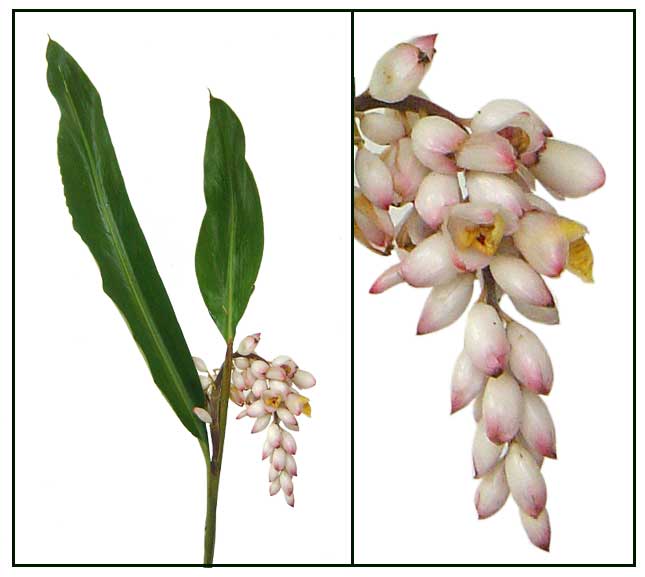
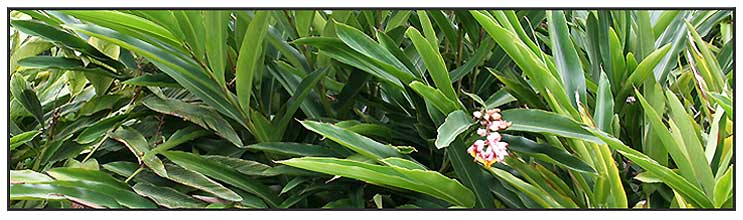
• Langkauas na pula is a tall, leafy, perennial
herb, growing to 2 to 3 meters tall. Stems are reed-like, 0.4 to 1 meters high.
Leaves are lanceolate to linear-lanceolate, 60 to 70 centimeters long, 8 to 10 centimeters
wide, smooth on both sides with hairy margins. Inflorescence is nodding
and about 30 centimeters long. White calyx is subcampanulate, about 1.8 centimeters long.
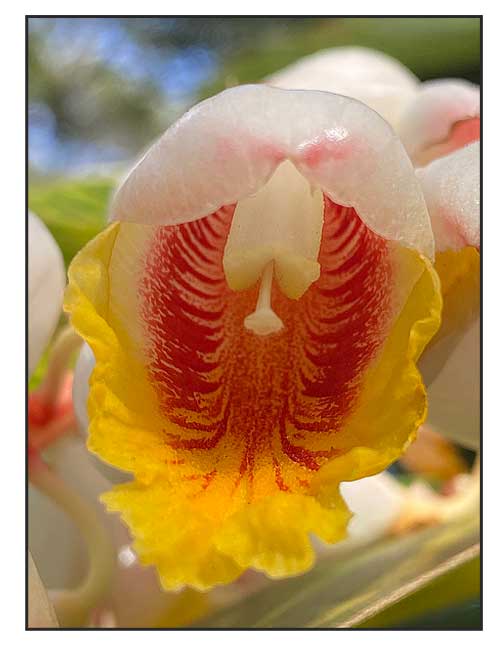
Corolla tube is white and about 3 centimeters long; the red lobes are broadly
elliptic, and about 3 centimeters long. Lip is broad, ovate and about 4 centimeters long,
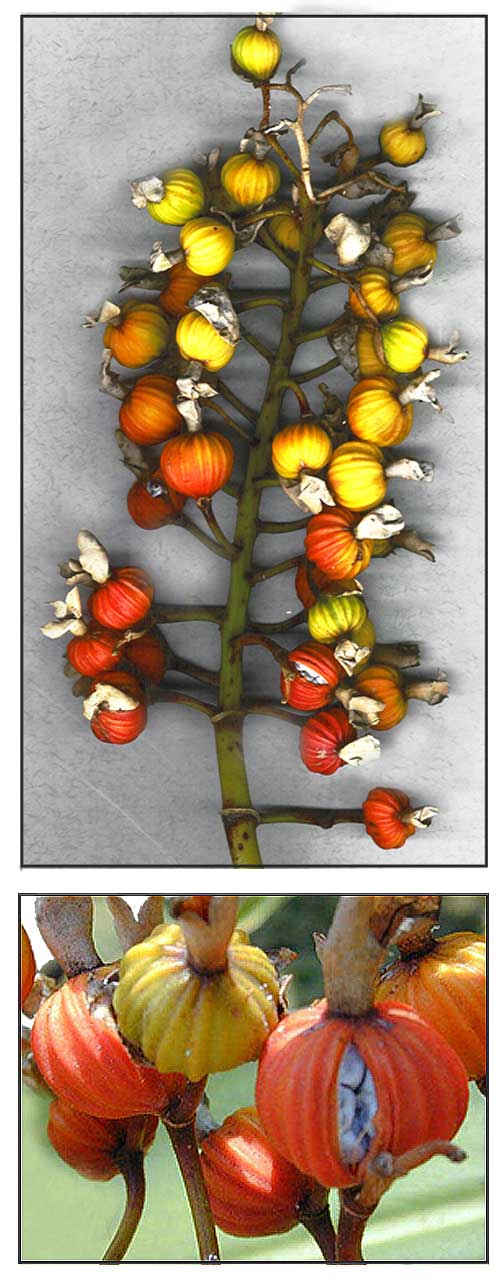
yellow with red striations and dots. Capsule is somewhat spherical,
about 2 centimeters in diameter, and reddish.
• Growth form: A rhizomatous, herbaceous perennial that grows in upright clumps up to 2 - 3 m tall. Foliage: Leaves are green, leathery, oblong to oblong-lanceolate, growing up to 30 - 70 cm long and 5 - 14 cm wide. The margin is usually entire and brownish. The leaves are arranged alternately in two ranks, i.e. distichously. Stems: The erect aboveground 'stems' are pseudostems, a shoot formed from a series of leaf sheaths tightly wrapped around one another, and can reach 2 - 3 m tall. The true stems are underground ginger-like rhizomes (thick, horizontal modified stems). Flowers: The inflorescence is a pendulous raceme growing at the terminal end of the leafy shoots. Individual flowers are fragrant, bilaterally symmetrical, and tubular, composed of a white calyx, a shorter corolla tube with milky white, pink-tipped lobes, and a distinct yellow lip with an orange-red center. Fruit:The fruit is a round capsule (a type of dry, dehiscent fruit), usually light orange to orange-yellow. (Flora & Fauna Web)
Distribution
- Cultivated for ornamental purposes in gardens.
- Not naturalized.
- Native to Bangladesh, Cambodia, China South-Central, China Southeast, Hainan, Japan, Laos, Malaya, Myanmar, Nansei-shoto, Taiwan, Thailand, Vietnam.
 Constituents Constituents
- The main constituents of the volatile oil from the leaves are d-camphor
(30%) and d-camphene (17%), with lineol and limonene in smaller amounts.
- Seeds contain 0.51% essential oils comprised of monoterpenoids, oxygenated
monoterpenoids, sesquiterpenoids, oxygenated sesquiterpenoids, aldehydes,
acid and esters.
- Preliminary screening of rhizomes and leaves yielded volatile oils and flavonoids. GC-MS yielded 1,8-cineole and terpinen-4-ol as major compounds in the essential oil of leaves and rhizomes respectively.
(25)
- Various plant parts have yielded: flavonoids (catechin, epicatechin, kaempferol-3-O-glucuronide, kaempferol-3-O-rutinoside, quercetin, rutin), kava pyrones (5,6-dehydrokawain [DK], dihydro-5-6-dehydrokawain [DDK], dihydroflavokawin B, Flavokawin B), phenolic acids (benzene propanoic acid, benzoic acid, benzyl acetone, ethyl-4-O-feruloyl-ß-glucopyranoside, p-chlorobenzoic acid, cinnamic acid, p-coumaric acid, 2,3-dihydrobenzofuran, ferulic acid, iso-ferulic acid, hydrocinnamic acid methyl ester, hydrocinnamic acid-p-hydroxy-methyl ester, p-hydroxybenzaldehyde, p-hydroxybenzoic acid, 2-methyl benzoic acid, methyl trans-cinnamate, pyrocatechin, syringaldehyde, syringic acid, vanillic acid, vanillin), phenylpropanoids (citrussin B, coniferin, syringin), sterols (campesterol, cholest-4-en-3-ol, chlest-5-en-3-ol, cholestane, cholestenone, sitosterol, stigmasterol), terpenoids ( alpinein, cadamomin, coronarin E, 1,7-diphenyl-5-hydroxy-6-hepten-3-one, ß-eudesmol, humulene, nerolidol, pinocembrin, zerumbetol, Zerumins A,B), among others. (29)
- Study of leaf essential oil by GC-MS analysis yielded
major components of major components 4-terpineol (32.9±4.0%), 1,8-cineole (21.4±1.2%), γ-terpinolene (10.0±1.8%) and sabinene (7.1±4.6%), with a strong predominance of monoterpenes. (see study below) (30)
- Study of various plant parts (leaf, flower, and rhizome) for essential oil
yielded terpenoids, confirming the presence of EO in all analyzed organs. The leaf yielded the highest EO (0.30%), while petal and rhizomes recorded 0.10% and 0.06%, respectively. The major constituent in all was the terpinen-4-ol, followed by 1,8-cineol in the leaf and α-terpineol in the flower and rhizome. (31)
- GC-MS study of leaf tissue identified 46 volatile compounds
including 1, 8-cineole (43.5%), p-cymene (14.7%), humulene (5.5%), camphor (5.3%), linalool (4.7%), (E)-methyl cinnamate (3.8%), gamma-cadinene (3.3%), humulene oxide II (2.1%) and a-terpineol (1.5%). The majority were terpenoids of which oxygenated monoterpenes were most abundant at 57.2% of total volatiles. Of the volatiles, alcohol made up the largest (52.8%) and aldehydes (0.2%) the smallest. (35)
- Study yielded five bioactive compounds,
three new compounds, 8(17),12-labdadiene-15,16-dial
(labdadiene) and (1E,3E,5E)-6-methoxyhexa-1,3,5-trien-1-yl)-2,5-dihydrofuran (MTD) from
rhizomes and (E)-2,2,3,3-tetramethyl-8-methylene-7-(oct-6-en-1-yl)octahydro-1H-quinolizine
(TMOQ) from seeds, along with two compounds previously isolated from rhizomes, 5,6-dehydrokawain (DK) and dihydro-5,6-dehydrokawain (DDK). (see study below) (38)
- Chromatographic analysis of fresh and thermally treated leaves identified 38 volatile organic compounds (VOCs). Terpenoids were the predominant class of VOCs
. Among phenolic compounds identified by LC-HRMS from fresh and thermally heated leaves were proanthocyanidines, (+) catechin, (-)epicatechin, quercetin-3-O-glucoronide, isorhamnetin-3-O-glucoronide, kaempferol-3-O--rutinoside, pinocembrin, alpinetin, pinostrobin, and other compounds. (see study below) (41)
- A 50% hydroalcoholic extract from fresh leaves yielded flavonoids as main constituents: alpinetin, kaempferol-3-O-glucuronide, (-)-epicatechin, and pinocembrin. (see study below) (46)
Properties
- Alpinia zerumbet is aromatic
in all its parts.
- Considered analgesic, antibacterial, antioxidant, anti-inflammatory, anti-platelet, antispasmodic, diuretic, hypotensive, muscle relaxant, uterine stimulant.
- Rhizome considered abortifacient.
- Studies have suggested antioxidant, hypolipidemic, antihypertensive, antinociceptive, antidiabetic, anti-inflammatory, hepatoprotective, larvicidal, anti-psychotic, spasmolytic, vasorelaxant, anxiolytic, anti-psychotic, antidepressant, thrombolytic, anti-aging, catalytic properties.
Parts
used
Stems, leaves.
 Uses Uses
Edibility / Nutrition
- Leaves and rhizomes are used as spice and flavoring in foods such as rice, meats, and pasta
-
In Ambonia,
leaves are used as wrappers in cooking rice.
- In Malaysia, the pith
of the young stem near the rhizome is commonly eaten.
- In Japan, leaves are used to wrap rice cakes (mochi) and to flavor noodles. Also, sold as herbal tea. Rhizomes are used as spice. In Taiwan, leaves are used to wrap rice dumplings. (29)
- In Brazilian folk medicine, used as sedative and hypotensive. (31)
Folkloric
• Decoction
of leaves used as bath and wash in fevers.
• In Brazilian
folk medicine, decoctions and infusions used as diuretic, antihypertensive, and antiulcerogenic. Also used for rheumatism, headaches, and sinusitis.
• In China, the Miao tribe uses the fruit to treat gastrointestinal and cardiovascular diseases. (29)
• In Vietnam, juice from boiled leaves, flower, rhizomes, and seeds used to treat fever, stomachache, bloating, indigestion, diarrhea. (37)
• In India, used for treatment of catarrhal and rheumatic afflictions.
Others
• Fiber: In Japan, fibers used to produce paper, kariyushi wear, and textiles. In Taiwan, stem fibers are woven into traditional handicrafts by aboriginal tribes. (29)
Studies
• Antihypertensive
/ Cardiovascular Effects / Essential Oil: Study
showed the intravenous treatment with the essential oil of A zerumbet
and its main constituent terpine-4-ol in the experimental hypertensive
rat dose dependently decreased blood pressure giving further support to a previous hypothesis
of its hypotensive effect partially attributable to the actions terpenene-4-ol. (2)
• Antinociceptive / Essential Oil:
Study showed the
essential oil of Alpinia zerumbet promoted a dose-dependent antinociceptive
effect through a mechanism that probably involves the participation
of opiate receptors. (3)
• Sciatic
Nerve Effect: Study
of the essential oil of AZ on rat sciatic nerve showed significantly
reduced compound action potential. (4)
• HDL
/ Lipid Benefits: Study
showed the high contents of rutin, quercetin and polyphenolics in ethanolic
extract of AZ seeds exhibited moderate antilipoperoxidative and potent
DPPH free radical scavenging activities. Both seed powder and seed oil
are effective hypolipidemics with potent HDL-C elevating capabilities
and offers a promising lipid-benefiting plant medicine.
• Flavonoids
/ Kava Pyrones: Study
yielded flavonoids and kava pyrones. The flavonoids rutin, kaempferol-3-0-rutino-side,
kaempferol-3-O-glucuronide, (+)-catechin (-)-epicatechin are
substances known to contribute hypotensive, diuretic and anti-ulcer
activity while the kava pyrones have been attributed antiulcer and antithrombotic
benefits. These compounds may explain the use of the plant in the treatment
of hypertension. (6)
• Antihypertensive
/ Vasodilator: Study
showed chronic administration of AZ induced significant reduction of systolic, mean, and diastolic arterial pressure in rats with DOCA-salt hypertension. The vasodilator effect is probably dependent on the activation of NO-cGMP pathway. The results provide experimental support for its use as an antihypertensive medicinal plant. (9)
• DK / Effect on Skin Diseases-Related Enzymes / Antioxidant / Rhizomes: Study evaluated the inhibitory effect of crude extracts and isolated compounds on antioxidant and skin disease-related enzymes. Study isolated 5,6-dehydrokawain (DK), dihydro-5,6-dehydrokawain (DDK) and 8(17),12-labdadiene-15,16-dial (labdadiene) from the rhizomes. DK showed higher inhibitory activities on DPPH, ABTS, and PMS-NADH scavenging assays. Results suggest the rhizome aqueous extract is a source of bioactive compounds against enzymes causing skin diseases. DK can be used as a potent inhibitor and used in anti-skin disease formulations. (13)
• Antidiabetic
/ Labdadiene / Advanced Glycation End Products (AGEs) Inhibitors: Study
evaluated the inhibitory activities on fructosamine adduct and α-dicarbonyl formulations by hexane extracts. Labdadiene, isolated for the first time from the rhizomes, showed to be a potent antiglycation agent that inhibits AGEs, with the potential to prevent glycation-associated complications in diabetes. (14)
• Veterinary Larvicidal
/ Gastrointestinal Nematodes: Study
showed dose-dependent effect inhibitory activity on Haemonchus contortus larvae hatching and exsheathing. (15)
• Antiatherogenic
/ Anti-LDL Oxidation / Seeds: Study of acetone extracts from different plant parts were evaluated for its inhibitory activity on atherosclerosis in vitro. The seed extract showed the strongest activity against tyrosinase, pancreatic lipase, 15-lipoxygenase and LDL oxidation activities. Most of the extracts showed partial agonistic properties towards estrogenic activity. (16)
• Antipsychotic / Antioxidant: Study evaluated the antipsychotic, hypnotic, myorelaxant, and antioxidant effects of essential oil on ketamine-induced hyperlocomotion in mice. Results showed prevention of hyperlocomotion, hypnotic activity, and decreased antioxidative stress. Results suggest antipsychotic and antioxidant effects with a potential for the treatment of schizophrenia. (17)
• Longevity-Extending Effects: Study of a leaf extract on Caenorhabditis elegans lifespan under both normal and stress conditions showed increased in survival rate better than quercetin. The effect was attributed to in vitro free-radical scavenging effects and up-regulation of stress-resistance proteins. Results suggest C. elegans has a potential as dietary supplements for aging and age-related diseases.(18)
• Endothelium-Dependent Vasorelaxant Effects: Study in rat-isolated aorta preparations evaluated the vasorelaxant effects of essential oils and its main constituent, 1,8-cineole (CIN). Results conclude that EOAZ induces potent vasorelaxant effect that appears totally dependent on the integrity of a functional vascular endothelium. Data supports its used in the treatment of hypertension.(19)
• Essential Oil in Fibromyalgia: Study evaluated the effects of a novel bioproduct based on essential oil of AZ on sleep quality, pain, and depression, as well as biochemical markers of disturbances in patients with fibromyalgia. EOAz promoted significant improvement in sleep, depressive symptoms, and quality of life. Results may be due to modulatory activity on serotonin levels of the patients. (21)
• DDK: Dihydro-5,6-dehydrokavain (DDK) is a major and promising component of Az (shell ginger). Study reports on its isolation and synthesis by asymmetric pathways, its simple chemical structure facilitating synthesis of DDK derivatives. Synthesized products have potential for development of commercial products, antiobesity pharmaceutical drugs, preparation of dietary supplements, and natural herbicides or fungicides. (22)
• Antibacterial / Sinusitis: Study evaluated extracts and fractions of flowers from Az against 12 bacterial pathogens associated with sinusitis. A hexane fraction showed broader activity spectrum inhibiting 10 of 12 tested bacteria specially P. gingivalis, F. nucleatum, and F necrophorum. Results showed promising antibacterial activity against bacterial responsible for acute and chronic sinusitis. (23)
• Hypolipidemic / Sinusitis / Essential Oil and Crude Fiber: Study evaluated the hypolipidemic effect of the discarded angiocarps of Alpina zerumbet. Diets were prepared using seed powder (ASP), seed husk powder (ASH) and seed essential oil (ASO). Results showed increased fecal neutral cholesterol excretion and significant reduction of triglycerides. ASH showed greater reduction of LDL. ASO and whole powder of Az have been reported to possess hypolipidemic bioactivity. The effect is attributed to the combined effect of essential oil and the crude fiber. (24)
• Hepatoprotection / Cytotoxicity / Essential Oil: Preliminary phytochemical screening of rhizomes and leaves yielded volatile oil and flavonoids. The LC50 of aqueous extract of dried rhizome powder was more than 1000 µg/ml and a methanol extract of dried rhizome was 500-750 µg/ml. The hepatoprotective activity on monolayer hepatocytes was 100 µg/ml for aqueous extract and 25-50 µg/ml for methanolic extract. On in vitro cytotoxicity testing, an aqueous extract exerted toxicity on U937 cells at 100 µg/ml concentration while it was safe on PBMC cells; a methanolic extract was safe on both U937 and PBMC cells till 100 µg/ml concentration. (see constituents above) (25)
• Thrombolytic Activity: Study of aqueous extracts of A. zerumbet, Alpinia nigra and Urena sinuata showed43.85%, 42.83%, 26.40% thrombolytic activity and also showed 37.14%, 60.00%, 26.83% synergistic activity with streptokinase respectively. (26)
• HIV-1 Integrase and Neuraminidase Inhibitors: Study investigated the leaves and rhizomes of Alpinia zerumbet for activity against HIV-1 integrase (IN) and neuraminidase (NA). 5,6-Dehydrokawain (DK), dihydro-5,6-dehydrokawain (DDK), and 8(17),12-labdadiene-15,16-dial (labdadiene) were isolated from the rhizomes and were tested for enzyme inhibitions. Results showed Az can be a source of bioactive compounds against IN and NA, and that DK and DDK have potentials in the design of drugs against these viral diseases. (27)
• Effect on Longevity: The longevity of the population in the Okinawa Islands of Japan have been attributed to genetic factors and traditional Okinawa cuisine, which is low in calories and high in plant content. Report highlights the major bioactive phytochemicals such as dihydro-5,6-dehydrokawain (DDK; 80–410 mg/g−1 fresh weight), 5,6-dehydrokawain (DK; ≤100 mg/g−1), and essential oils, phenols, phenolic acids, and fatty acids (≤150 mg/g−1 each). Study enumerates the longevity-specific bioactivities of Alpinia zerumbet viz., anti-obesity, anti-lipocytes, anti-pancreatic lipase, anti-dyslipidemia, anti-atherosclerosis, anti-diabetes, antihypertension, antitumor properties. Personal experience and literature review suggest that culinary shell ginger may contribute to the population's longevity. (28)
• Antibacterial / Potentiation of Aminoglycosides / Leaf Essential Oil: Study evaluated the leaf essential oil for antibacterial activity alone or in association with aminoglycosides against twelve strains (standard and multi-resistant clinical isolates from sputum and wounds) of seven Gram-negative and five Gram-positive bacteria. Multi-resistant clinical isolates of S. aureus and E. coli were more sensitive to the EO with MICs of 32 and 128 µg/mL, respectively. The EO enhanced the antimicrobial activity of aminoglycosides against all tested strains, except for S. aureus. (30)
• Chemopreventive Against H2O2-Induced DNA Damage in Leukocytes: Study showed that in concentrations up to 300 µg/mL or doses up to 400 mg/kg, essential oil of Alpinia zerumbet was not mutagenic in leukocytes and in mice, but has antioxidant and protective effects against cytotoxicity and clastogenesis induced by H2O2. (32)
• Longevity-Extending Effects on Life Span of Caenorhabditis elegans / Leaves: Study evaluated the effects of leaf extract of A. zerumbet on C. elegans lifespan. The extract significantly increased mean lifespan by 22.6%, better than positive control, resveratrol. It increased survival rate significantly better than quercetin. The longevity-extending effects was attributed to its in vitro free radical scavenging effects and upregulation of stress-resistance proteins, including SOD2 and HSP-16.2. Results suggest a potential source of dietary supplements for aging and age-related diseases. (33)
• Use with Kinesiotherapy on Patients with Muscle Spasticity / Essential Oil: Study assessed subacute and chronic treatment of muscle spasticity using essential oil therapy with Kinesiotherapy. Results showed essential oil associated with Kinesiotherapy is is an effective intervention strategy for chronic treatment of spastic muscle. (34)
• Central Nervous System Effects / Essential Oil of Leaves: Study evaluated the central nervous system effects of essential oil of A. zerumbet leaves using various behavioral models. Results showed the essential oil of leaves have depressant and possible antipsychotic activity, as suggested by reversal of stereotypy induced by apomorphine, with effects comparable to haloperidol treatment. (36)
•
Antidiabetic components / Rhizomes and Seeds: Study of rhizomes and seeds yielded five bioactive compounds. Labdadiene from the rhizomes expressed antiglycation and advanced glycation end products (AGEs). Cholest-4-ene-3,6-dione, a steroid from the seed extract, showed inhibition activities against pancreatic lipase, 15-lipoxygenase and LDL oxidation. TMOQ from the seeds showed inhibitory activities on xanthine oxidase, LDL oxidation and NADPH oxidase, along with an increase in cAMP level. Results suggest A. zerumbet is an important source of phytochemical compounds with antidiabetic properties. (38)
•
Effect of Heat Treatment on Nutrient Profile of Leaves: Study evaluated the effect of thermal treatment such as boiling or steming on leaves of A. zerumbet. Carbohydrate content of leaves improved during thermal treatment, with increase after steaming (18.86 to 19.79%) and boiling for 30 min (25.85%). Significant amount of protein (6.79%) was found after a 20 min boiling treatment. All treatments resulted in low lipid content (<1.0%). Boiling treatment for 10 min resulted in highest total phenolic contents (TPC) 339.5 mg/g and flavonoids (TF) 54.6 mg/g. Steaming showed different results, with 20 min steaming showing higher TPC (150.4 mg/g) and TF (65.0 mg/g). Total phenolics and flavonoids and antioxidant activity were significantly affected by cooking method and the length of time exposure to heat. Samples boiled for 30 and 10 min showed higher antioxidant activity by posphomolyb-denum and DPPH methods (151.5 mg/g extract and 101.5 µg/ml, respectively). (see constituents above) (41)
•
Anxiolytic / Antidepressant / Literature Review: Review reports on the A. zerumbet anxiolytic and antidepressant effects through increase in noradrenergic neurotransmission and decrease in oxidative stress on the central nervous system by increasing antioxidant activity. It also causes reduction in OL-6 and elevates BDNF (Brain-Derived Neurotrophic Factor) levels in the hippocampus, contributing to the antidepressant, anxiolytic, and anti-inflammatory actions. (42)
•
Anti-Inflammatory Monoterpene Esters / Pericarp: Study of A. zerumbet pericarp isolated 2 new monoterpene esters (1,2) and four known compounds. Anti-inflammatory activity was evaluated by its inhibitory effects on interleukin 1-ß-induced production of nitric oxide in primary cultured rat hepatocytes. Compound 1 and cardamonin (3) showed inhibitory activities with IC50s of 17.6 and 10.2 µM, respectively, comparable to positive control Ng-methyl-L-arginine acetate salt. (43)
•
Anxiolytic / Antidepressant / Antioxidant: Study evaluated the antidepressant and anxiolytic effects of hydroethanolic extract of A. zerumbet (HEA) using tail suspension and light/dark tests on Swiss male mice with doses of 200, 400, or 800 mg/kg. The HEA significantly reduced the period of immobility in tail The extract showed significant antioxidant activity in DPPH, H2O2 scavenging activity, ferric-reduction power and protection against lipid peroxidation. (44)
•
Contributory Role for Human Longevity? / Viewpoint: Longevity of population in the Okinawa Islands of Japan has been attributed to genetic factors and the traditional Okinawa cuisine, which is low in calories and high in plant content. Personal local experience and review of literature suggest that the culinary shell ginger may contribute to longevity among the Okinawan population, attributed to the plant's abundant phytochemical content, antioxidant and anti-obesity properties. Also, A. zerumbet extends lifespan in animals by 22.6%. (45)
•
Vasodilator / Bioactive Flavonoids: Study of fresh leaves yielded a polyphenol-rich extract with an expressive vasodilator effect. Effects were studied in perfused mesenteric vascular bed. A 50% hydro-
ethanolic extract from fresh leaves (AZE4) showed to be the best extract with greatest vasodilator effect (ED50=7.1)_ and TPC (16.30 mg
GAE/g). Study results suggest potential source of bioactive flavonoids to treat cardiovascular diseases. (see constituents above) (46)
•
AuPD Bimetallic Nanoparticles / Nanocatalytic: Study reports on the eco-friendly synthesis of AuPD bimetallic nanoparticles, using A. zerumbet as natural reducing and stabilizing agent. The AuPD NPs exhibited enhanced catalytic activity suggesting remarkable synergy between the two metals. Results suggest potential of the A- zerumbet-mediated AuPD nanoalloys as sustainable and highly efficient nanocatalysts for detoxification of nitroaromatic pollutants and production of value-added amines. (47)
•
Effect of Storage on Antioxidant and Phenolic Content of Leaves: Study compared infusions, hydroalcoholic extracts and tinctures obtained from fresh and dried leaves of A. zerumbet. Both fresh and dried leaves contained high amounts of flavonoids with antioxidant activity. The 80% hydroalcoholic extract from fresh leaves exhibited highest antioxidant activity by phosphomolybdenum and DPPH methods. HPLC study of infusions from fresh leaves showed highest DDK (dihydro-5.6-dehudrokavain) content, 6,63 mg/g extract. On evaluation for loss of volatile substances, results showed even after a storage time of 30 days, there were still volatile substances in the dried material. Loss of terpinen-4-ol and γ-terpinene from fresh leaves was very low, suggesting slow release. (48)
Availability
Wild-crafted.
 |