 Gen info Gen info
- Mesosphaerum is a genus of flowering plants in the Lamiaceae family, comprising 24 accepted species of herbs and subshrubs characterized by their aromatic foliage and clustered inflorescences. (3)
- Taxonomy: The genus was first described by Irish botanist Patrick Browne in 1756 in his work The Civil and Natural History of Jamaica.
-
Etymology: The genus names Mesosphaerum derives from Greek words mesos meaning "middle" and sphaera meaning "ball" or "sphere," referring to the central or spherical structure of the fruit in species of the genus. (3) The specific epithet pectinata means "comb-like."
Botany
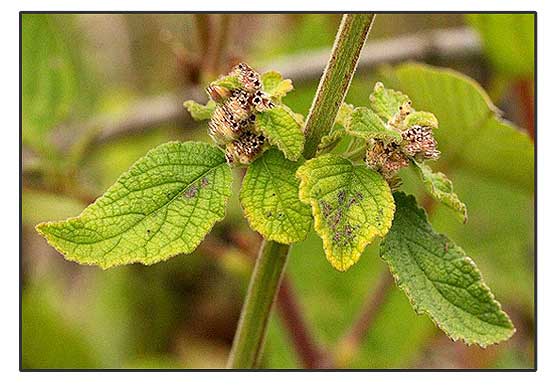
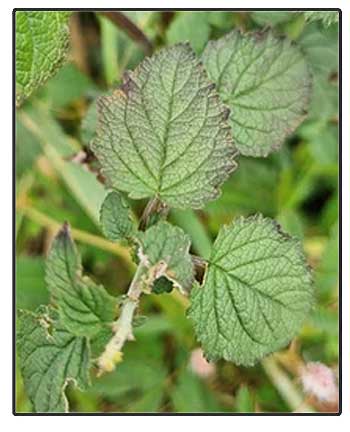
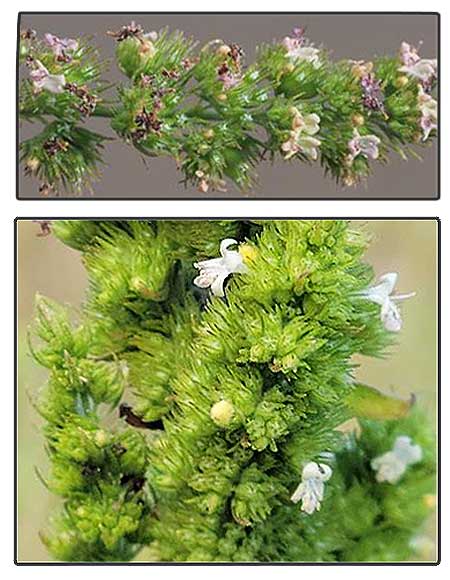
• An annual or short-lived perennial herb growing 0.6–2.3 m (2 ft 0 in – 7 ft 7 in) tall, with the lower stems becoming softly woody with age. Leaves are carried on stalks 15–40 mm (0.59–1.57 in) long. Blades are ovate to narrowly ovate, 15–45 mm (0.59–1.77 in) long and 10–30 mm (0.39–1.18 in) wide, sparsely hairy on the upper surface and paler beneath, where they are usually softly white-felted. Leaf tips are blunt, the bases truncate, and the margins finely and irregularly scalloped to toothed. Inflorescence is terminal and often branched. Flowers are usually arranged in dense, horizontal, comb-like clusters, sometimes paired on a shared stalk, though looser arrangements also occur. Lower bracts resemble small leaves and become progressively smaller towards the tip; the bracteoles are narrow, bristle-like, and about 3 mm (0.12 in) long. Calyx is about 2.5 mm (0.098 in) long at flowering and enlarges to 5 mm (0.20 in) in fruit, with dense hairs inside the throat. Corolla is whitish to pale mauve and approximately 3.5 mm (0.14 in) long.
Distribution
- Introduced. (1) (2)
- Naturalized. (1)
- Native to Bahamas, Belize, Bolivia, Brazil North, Brazil Northeast, Brazil South, Brazil Southeast, Brazil West-Central, Cayman Is., Colombia, Costa Rica, Cuba, Dominican Republic, Ecuador, El Salvador, Florida, French Guiana, Guatemala, Guyana, Haiti, Honduras, Jamaica, Leeward Is., Mexican Pacific Is., Mexico Central, Mexico Gulf, Mexico Northeast, Mexico Southeast, Mexico Southwest, Netherlands Antilles, Nicaragua, Panama, Peru, Puerto Rico, Suriname, Trinidad-Tobago, Venezuela, Venezuelan Antilles, Windward Is. (2)
- Common weed of cultivated land, pastures, plantations, road and trail-sides, waste places. (5)
 Constituents Constituents
- Study of leaves isolated analogues of rosmarinic acid and flavonoids, consisting of two new compounds, sambacaitaric acid (1) and 3-O-methyl-sambacaitaric acid (2), and nine known compounds, rosmarinic acid (3), 3-O-methyl-rosmarinic acid (4), ethyl caffeate (5), nepetoidin A (6), nepetoidin B (7), cirsiliol (8), circimaritin (9), 7-O-methylluteolin (10), and genkwanin (11). (see study below) (14)
- HPLC analysis of aerial parts revealed several metabolites: caffeine acid (13.92%), rutin (7.89%), and ferulic acid (5.44%). (see study below) (16)
- Study for essential oil of 24 plants of H. pectinata by hydrodistillation and GC-MS/FID revealed 30 compounds using two clusters. Results revealed chemical diversity. Cluster I (18 plants) presented ß-elemene (2.46-25.77%), ß-caryo-phyllene (16.20 - 60.95%), germacrene D (0-21.59%) and caryophyllene oxide (5.38-42.21%) as major compounds. Cluster II (6 plants) yielded ß-caryophyllene (5.68-15.57%), (Z)-ß-guaiene (2.17-7.31%), caryophyllene oxide (1.58-22.89%) and calamusenone (23.12-64.36%) as major compound. (19)
Properties
- Considered antiasthmatic, antibacterial, aphrodisiac, blood purifier, emollient, hemostatic. (5)
-
Studies have suggested anti-inflammatory, gastroprotective, anticancer, antibacterial, antinociceptive, antioxidant, neuroprotective, antileishmanial, antiplasmodial properties.
Parts used
Aerial parts, leaves, flowers, bark.
 Uses
Uses
Edibility
- No information on edibility.
Folkloric
- No reported folkloric medicinal use in the Philippines.
- Plant decoction drunk for treatment of asthma, cough, chest pains, difficult breathing, and tuberculosis. Decoction of aerial parts drunk to alleviate liver problems and as aphrodisiac to build sexual stamina in men. Ground plant powder brewed as tea for treatment of diarrhea. Decoction of bark used for treatment of menstrual problems and diarrhea. (6)
- Leaves brewed as tea and drunk for cleansing of the blood. Leaf decoction used as remedy for thrush. Macerated leaves applied externally as emollient to soothe the skin. (6)
- Leaf decoction used as wash for treatment of persistent sores. (6)
- In Brazil, aerial parts, leaves, and flowers traditionally used for treatment of gastrointestinal disorders, rhinopharyngitis, nasal congestion, bacterial and fungal infections, colic, inflammation, and pain. (7) Tea infusion drunk 2 to 3 times daily for menstrual cramps. Infusion of flowers used for asthma, cough, and bronchitis. (•) Infusion of leaves and bark used for treatment of pain and cancer. (14)
- In East Africa, used for treatment of snake bites.
Others
- Repellent: Plant smoke used as insect repellent. (6)
Studies
• Anti-Inflammatory / Pectinolide-enriched Fraction: Study of evaluated the antinociceptive and anti-inflammatory activities of the pectinolide-enriched fraction (PEF) of Mesosphaerum pectinatum in animal models. The PEF significantly decreased licking time. In the carrageenan-induced peritonitis model, PEF (100 and 200 mg/kg) significantly decreased total and differential leukocyte counts. PEF (0.1, 1.0, and 3.0 mg/ear) significantly reduced ear edema, comparable to standard drug dexamethasone. No analgesic effect was not observed on hot plate test. Results suggest the pectinolide-enriched fraction exhibits anti-inflammatory effect associated with inhibition of release of the inflammatory mediators. (5)
• Gastroprotective / Aerial Parts: Study evaluated the gastroprotective activity of aqueous extract of aerial parts of M. pectinatum (AEMP) in acidified-ethanol (AE)-induced ulcers in male Swiss mice. HPLC analysis detected rosmarinic acid in the AEMP. Pretreatment with AEMP (all doses) significantly reduced the area of AE-induced gastric lesions and MPO activity. It also decreased IL-6 levels, increased sulfhydryl groups in gastric tissue, and attenuated the histological alterations induced by AE, Pretreatment with NP-SH blocker or indomethacin reversed the gastroprotective response of AEMP. Also, treatment withe AEMP increased mucus production in the pylorus-ligation model. The gastro-
protective action was attributed to reduction in inflammatory response, which involved NP-SH and possibly prostaglandins. (8)
• Effect on Human Breast Cancer Tumor Line / Aerial Parts: Study evaluated the antiproliferative effect of M. pectinatum extract on MDA-MB-231 breast cancer tumor line. Ethanol extract of leaves (MPL) and flowers (MPFl) showed best antiproliferative effects. Dose of 100 µg/mL was significantly efffective in inhibiting cell proliferation. MPL and MPFl showed IC50s of 45.91 µg/mL and 52.01 µg/mL, respectively. Analysis revealed major secondary metabolities were present. The major pectinolide present in the most active extract is pectinolide "E". (9)
• Cytotoxicity of Compounds Against Breast Cancer Cells / Hyptolide: Study evaluated inflorescences (MPIn), leaves (MPL), branches (MPB), root (MPR) extracts and three compounds (pectinolide J, hytolide, and pectinolide E) isolated from MPIn against breast tumor cell lines. The MPIn, MPL, and MPR exhibited specific antiproliferative activity on tumor cell lines with IC50s of 52.01, 45.91, and 82.84 µg/mL, respectively. Although isolated substances did not present good antiproliferative activity, when the three were associated, a greater biological effect was observed, suggesting synergism. Hyptolide (5.6 µg/mL) showed sufficiently low IC50 to merit consideration as drug prototype. (10)
• Antibacterial against Oral Bacteria-Related Diseases / Essential Oil o f Leaves: Study evaluated the Anti-Streptococcus mutans activity of Hyptis pectinata essential oil obtained by hydrodistillation of dried leaves. Antimicrobial activity was investigated using agar diffusion and microdilution methods, and chlorhexidine as standard control. The EO showed considerable inhibitory effect against all clinical isolates from patients' saliva and ATCC strains tested, with MIC and MBC of 200 µg/ml. Results showed H. pectinata EO has promising potential as alternative to chlorhexidine for control of oral bacteria-related diseases and hygiene. (11)
• Antinociceptive / Leaves: Study evaluated the antioxidant and orofacial antinociceptive properties of aqueous extract of H. pectinata leaves (AEHP) using invitro and invivo models. AEHP reduced 2,2-diphenyl-1-picrylhydrazyl radical up to 72.10% with EC50 of 14.56 µg/mL. AEHP showed 40.80% inhibition of lipoperoxidation induced by 2'-azobis(2-amidinopropane) dihydrochloride in the thiobarbituric acid-reactive assay. AEHP at all test doses reduced (p<0.001) the nociceptive responses in the formalin test. The AEHP effect was not changed in the presence of naloxone, an opioid antagonist. AEHP significantly inhibited mice face rubbing for capsaicin and glutamate in all doses. Results suggest AEHP has peripheral and central antinociceptive activities, which are not related to opioid receptors. (12)
• Antioxidant / Neuroprotective/ Leaves: Study evaluated the neuroprotective activity and cellular mechanisms in the pharmacologic action of ethanolic leaf extracts of H. pectinatum, H. suaveolens, and H. marrubioides using Caenorhabditis elegans as an animal model of Machado-Joseph disease (MJD), expressing a human mutant ATXN-3 and C. elegans model of fronto-temporal dementia with parkin-sonism-17 (FTDP-17), expressing a mutant form of tau protein. Results showed chronic treatment with 1mg/mL of HS/HP/HM extracts had a beneficial impact on the diseases, significantly ameliorating the locomotor defects of C. elegans. Chronic treatment also increase the animal's survival. In both models, there was significant protection against juglone-induced oxidative damage by >50%. There was also higher induction of gst-4 in extract treated animals upon exposure to oxidative damage. Results support antioxidant and neuroprotective activity of HP, HS, and HM, suggesting activation of specific antioxidant enzymes like gst-4. (13)
• Antileishmanial / Phenylpropanoids / Leaves: Study of leaves isolated analogues of rosmarinic acid and flavonoids, consisting of two new compounds, sambacaitaric acid (1) and 3-O-methyl-sambacaitaric acid (2), and nine known compounds, rosmarinic acid (3), 3-O-methyl-rosmarinic acid (4), ethyl caffeate (5), nepetoidin A (6), nepetoidin B (7), cirsiliol (8), circimaritin (9), 7-O-methylluteolin (10), and genkwanin (11). The compounds were evaluated in vitro against promastigote form of L. braziliensis. Compounds 1, 2 and 4 exhibited antileishmanial activity, with compound 1 showing potency comparable to pentamidine. (14)
• No Topical Wound Healing Effect / Leaves: Study evaluated the healing action of ethanol extract of Hyptis pectinata leaves in induced incisional clean wound lesions in the middle of the back in Wistar rats. Results showed the ethanol extract exhibited no better results in reducing wound diameter when compared to positive control (dexpantheol ointment 5%). (15)
• Antiproliferative/ Antioxidant / Aerial Parts: Study evaluated aqueous extract of aerial parts of Hyptis pectinata (HYP) for chemical composition, antioxidant, and antiproliferative activities. HYP showed antioxidant activity in both DPPH and MTT assay from first dilution at 10 mg/mL up to 9th dilution at 0.08 mg/mL in a 2-fold dilution signifying presence of antioxidant compounds at those concentrations. At 1 mg/mL to 32 mg/mL, HYP dose-dependently and significantly inhibited (p<0.001) Sorghum bicolor seed radicle growth. Results suggest the aqueous extract of aerial part possess antioxidant and antiproliferative activities. (see constituents above) (16)
• Antinociceptive / Leaves: Oral administration of hexanes, chloroform, and ethyl acetate extracts of leaves of H. pectinata significantly reduced the number of writhes induced by acetic acid and increased the response to thermal stimuli in hot-plate test. Effect was completely reversed by opioid antagonist naloxone. (17)
• Antinociceptive / Antiedematogenic / Leaves: Study evaluated the antinociceptive effects of H. pectinata and antiedematogenic effects. An aqueous extract of Hp leaves administered orally at doses of 100, 200, and 400 mg/kg showed significant antinociceptive effect in acetic acid-induced abdominal writhing. There was increase in hot-plate latency with doses of 200 and 400 mg/kg p.o. In the formalin test, there was no significant effect during first phase testing, but dose of 1200 mg/kg p.o. reduced nociceptive effect by 70% during second phase. At 600 mg/kg p.o. the extract inhibited carrageenan-induced rat paw edema by 33.1%. Results suggest antiedematogenic and antinociceptive effects. (18)
• Antimalarial Tablet Formulation / Acute Toxcity Test / Leaves: Study reports on the formulation of tablets from H. pectinata leaf extract as antimalarial drug and evaluated its toxicity effect by invivo administration of extract and Hyptolide in Sprague Dawley rats. Acute toxicity testing results showed H. pectinata extract at concentrations of 300, 500, 1000, 1500, and 2000 mg/kg and Hyptolide did not cause death in rats from all groups up to the 14th day. The manufacture of Hp tablets using gelatin binder with varying concentrations of 1%, 3% and 5% indicated a higher concentration of gelatin had the effect of increasing hardness, decreasing brittleness and longer disintegration time. Best concentration of gelatin binder was 3%. Results of acute toxicity test of H. pectinata extracts and Hyptolide did not show any toxic effects. (20)
• Effect on Liver Mitochondrial Respiration / Leaves: Study evaluated the effects of aqueous extracts of Hyptis pectinata leaves on liver mitochondrial function in vitro. Eight rat livers were subjected to isolation of mitochondria by differential centrifugation. Results showed the extract of leaves may not injure the mitochondrial inner membrane but decreases significantly the oxidative phosphorylation. (21)
• Antidepressive Effect / Leaves: Study evaluated the effects of aqueous extract of H. pectinata leaves on rodent central nervous system (CNS) using pharmacologic screening, open field, forced swimming, apomorphine-induced hypothermia, elevated plus maze and thiopental-induced sleep tests in male and female Swiss mice and Wistar rats. Results showed decreased frequency of grooming behavior and decreased immobility time. There was no effect in the elevated plus maze and sleeping time induced by thiopental models. The most important results was an antidepressive effect revealed by forced swimming and apomorphine-induced hypothermia tests. Pharmacologic screening did not reveal major effects on the CNS, except for a decrease in time spent in grooming behavior. Results suggest a possible antidepressive effect. (22)
• Antiplasmodial Against Plasmodium via ClpP Inhibition / Hyptolide / Leaves: Hyptolide and epoxy hyptolide were successfully isolated and synthesied from H. pectinata leaves extract. Study evaluated the in vitro antiplasmodial activity of H. pectinata extract, hyptolide, and epoxy hyptolide against chloroquine sensitive 3D7 strain of Plasmodium falciparum. Results showed hyptolide, epoxy hyptolide, and Hp extract showed potential inhibition of proliferation of P. falciparum in a dose-dependent manner with IC50s of 2.06, 2.75, and 11.84 µg/ml, respectively. Further inhibition assay toward Pk-ClpP revealed hyptolide (δ-lactone) was more potent than ß-lactone and PMSF showed remarkable dose-dependent inhibition activity. Results suggest hyptolide exhibited antiplasmodial activity via Pk-ClpP inhibition and has potential for development as antimalarial drug. (23)
• Hyptolide Effect on Breast Cancer Stem Cells (BCSCs): Study evaluated the effects of hyptolide, a compound isolated from Hyptis pectinata, on apoptosis induction in BCSCs. Results showed hyptolide inhibited BCSCs cell growth with IC50 of 55 µg/mL. Hyptolide showed cytotoxic effect by apoptosis induction up to 32% through S-phase cell cycle arrest in a dose-dependent manner through regulation of SRC, EGFR, and MAPK1 signaling pathway. Further studies are suggested for molecular mechanisms to develop hyptolide as a BASC-targeted drug. (24)
Availability
- Wild-crafted.
|