 Gen info
- Allium is a large genus of monocotyledonous flowering plants with around 1000 accepted species, making Allium the largest genus in the family Amaryllidaceae and amongst the largest plant genera in the world. In some older classification systems, Allium was place in Liliaceae. Most species are edible as vegetable including onion, garlic, scallions, shallots, leeks, and chives. (3)
-
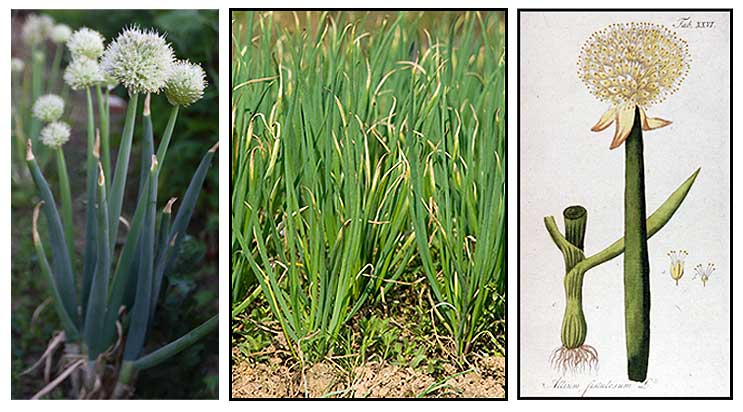
Allium fistulosum, the Welsh onion, also called the bunching onion, long green onion, Japanese bunching onion, and spring onion, is a species of perennial plant, often considered a kind of scallion. I3)
- Etymology: The generic name Allium is the Latin name for garlic. (•) The specific epithet fisitulosum derives from Latin, meaning "hollow", referring to the hollow scapes (leafless flower stalks). (4)
-
Misnomers: The common name Welsh onion is a misnomer - the plant is neither indigenous to Wales nor common in Welsh cuisine; its use of Welsh is a near-obsolete to denote "foreign or non-native", indeed, this onion a species native to China. Other names applied to the plant are also ambiguous: green onion, salad onion, spring onion, which are applied to other young green onion stalk or other similar members of the genus Allium.
 Botany Botany
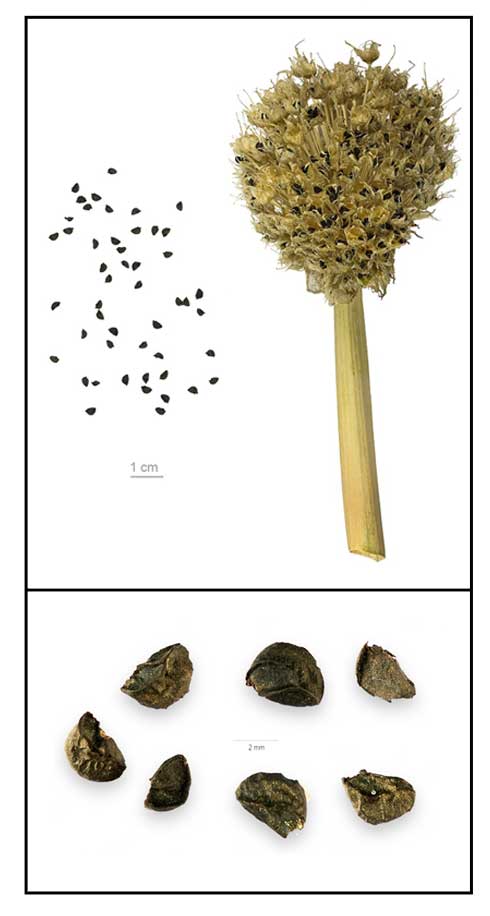
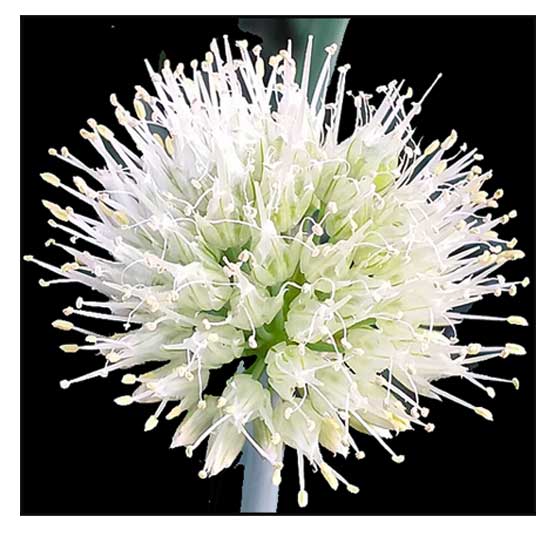
• Growth form: Perennial herb with indistinct bulbs that grows in clusters. The base of the stem is slightly swollen. Leaves held erect. This plant was cultivated from a wild onion that may have been Allium altaicum. Foliage: Leaves are bluish-green, pointed hollow tubes (27 – 32 cm long, 0.5 – 0.7 cm wide at the base). Flowers: Flowers small and white, have stamens that extend well past the petals. Flowers arranged in round umbel inflorescences and borne on green, hollow stalks similar to the leaves. Fruit: Fruit initially green and becomes light brown and papery at maturity. Contains black seeds.
(Flora & Fauna Web)
• Bulbs 2–12+, borne on short rhizome, cylindric, 2–5 × 1–2.5 cm; outer coats enclosing 1 or more bulbs, white to light brown, membranous, without reticulation; inner coats white, cells obscure, quadrate. Leaves persistent, 2–6, sheathing lower 1/4–1/3 of scape; blade terete, fistulose, 10–40 cm × 10–25 mm. Scape persistent, solitary, erect, fistulose, inflated in middle, tapering to umbel, (12–)15–70 cm × 8–25 mm. Umbel persistent, erect, compact, 50–100-flowered, globose to ovoid, bulbils unknown; spathe bracts persistent, 1–2, 1–3-veined, ovate, ± equal, apex acute. Flowers narrowly campanulate to urceolate, 6–9 mm; tepals erect, yellowish white, withering in fruit, margins entire, apex acute, outer lanceolate, inner narrowly ovate, unequal; stamens long-exserted; anthers white to yellow; pollen white; ovary crestless; style linear, equaling stamens; stigma capitate, obscurely 3-lobed; pedicel 10–30 mm. Seed coat shining; cells 4–6-angled, ± rectangular. (Flora of North America)
Distribution
- Cultivated; not naturalized.
- Native to China. (1)
Constituents
- Major bioactive components include phenolic imidates, cinnamic acid derivatives, phenolic glycoside, flavonoids, furostanol saponins, welsonins A1, OnioninsA1, fructans, polymers of fructose, and phenylpropenoic acid amides. (5)
- Studies have reported flavonoids viz., isoquercitrin, kaempferol, quercetol, quercitrin; phenolic compounds
as ferulic acids, p-coumaric acid; sterols as ß-sitosterol, campesterol, stigmasterol, and allicin from the whole plant (Vlase et al, 2013). (6)
- Study for allicin content yielded 5.275 mg/100g prepared at room temperature and 892.2 mg/100g
prepared by heating. (Allicin content was higher obtained by heating because alliin and its derivatives were transformed into allicin.) (9)
- Bioactive phytoconstituents include
flavonoids, furostanol, saponins, cinnamic acid derivatives, thiocyanate-type sulfide, among others.
- GC-MS analysis of ethanol extract of bulb identified 31 compounds consisting of flavonoids, steroids, fatty acids, fatty alcohols, and sulfur containing compounds. (13)
- Study of subterranean parts isolated three new carcinogenic triglycerides, fistulous A , B, and C. along with two known ingenious triglycerides, dioxin and sapping P-d/ (14)
- Nutritional composition of raw green tops per 100 g edible portion is: water 90.5 g, energy 142 k (34 kcal), protein 1.9 g, fat 0.4 g, carbohydrate 6.5 g. Ca 18 mg, Mg 23 mg, P 49 mg, Fe 1.2 mg, Zn 0.52 mg, vitamin A 1160 IU, thiamine 0.05 mg, riboflavin 0.09 mg, niacin 0.40 mg, folate 16 µg. ascorbic acid 27 mg (USDA 2002). Green tops have higher nutritional value than blanched pseudostems. (18)
- Study of seeds isolated a new unsaturated fatty acid monoglyceride (1), glycerol mono-(E)-8,11,12-trihydroxy-9-octadecenoate, along with five known compounds: tianshic acid (2), 4-(2-formyl-5-hydroxymethylpyrrol-1-yl) butyric acid (3), p-hydroxybenzoic acid (4), vanillic acid (5), and daucosterol (6). (see study below) (20)
- Ethanolic and aqueous extracts of leaves yielded yielded saponins, flavonoids, and steroids, with absence of alkaloids and triterpenoids. (see study below) (21)
Properties
- Studies have suggested anti-glycation, anti-allergic, anti-obestiy, cardioprotective, estrogen-enhancing, immune-competence regulating, antioxidant, α-glucosidase inhibitory, tyrosinase and elastase inhibitory, antifungal, anthelmintic, anti-inflammatory, analgesic properties.
Toxicity concern
- Welsh onion is generally safe and beneficial for humans as food and medicine. However, like other Allium species it contains compounds (disulfides and thiosulfinates) that are toxic to dogs and cats, with potential for causing anemia and red blood cell damage. (see oral toxicity study below: 24)
Parts used
Leaves, roots, seeds.
 Use Use
Edibility
- Used as vegetable crop in many countries.
- Flowers, leaves, roots are edible.
- Edible, raw or cooked; imparts a strong onion flavor Used in salads, cooked as vegetable, or used as flavoring.
Folkloric
- No reported folkloric medicinal use in the Philippines.
- Used in various traditional remedies for treatment of cold, influenza, abdominal pain, headache, arthritis, abdominal pain, constipation, parasitic infections, high cholesterol.
- In traditional Chinese medicine, recommended for treatment of renal deficiency and stones, dizziness, colds, high blood pressure, cancer, poor vision, carbuncles, sores, etc. (6) Also used as tonic and aphrodisiac, and for treatment of habitual abortion.
- In Japan, used as immunity booster, for treatment of common colds, headache, heart disease, and arthritis. (6)
Others
- Repellent: Plant juice used as moth repellent. Whole plant used to repel insects and moles. Plant said to reduce or prevent white ant infestation in gardens. In China, diluted juice used as treatment against aphids. (11)
Studies
• Antiglycation Activity: An ethanolic extract (100 µl) of Welsh onion exhibited significant anti-glycation effect by inhibiting the fluorescent AGEs formation with 27.9%, compared to positive control, amino-guanidine, at 20 mM (75.9%). (6)
• Anti-allergic Activity Leaves: A. fistulosum leaves ethanolic extract at 200-1,000 µg/ml exerted anti-allergic activity on calcium ionophore A23187 stimulated mast cell line (RBL-2H3) by notable reduction of ß-hexosaminidase and indicating a suppressive effect on degranulation of RBL-2H3 cells (Jippo et al, 2022). (6)
• Anti-Obesity Activity . Ferulic Acid and Quercetin: Study evaluated the effects of ethanolic (AFE) and aqueous extract (AFW) of A. fistulosum on body weight and other obesity-related parameters in male mice. HPLC showed both AFE and AFW contained ferulic acid and quercetin. Oral administration of AFE and AFW to HFD-fed mice decreased body weight as well as liver and adipose tissue weight and adipocyte size. AFE Rx showed improvement in serum lipid profiles and adiponectin levels. Both AFE and AFW significantly attenuated HFD-induced changes in serum leptin and insulin-like growth factor 1 levels, liver expression of AMPK, and adipose tissue expression of UCP2. Results suggest potential of A. fistulosum extracts as functional food materials for weight control in obesity. (7)
• Cardioprotective Against Myocardial Ischemia / Seeds: Study evaluated the protective effect of seeds of A. fistulosum extract (SAFE) against acute myocardial ischemia in rat and dog models. Results showed seeds of SAFE can reduce the degree of myocardial ischemia in dogs after coronary ligation, decrease the infarcted area in rats and dogs after ligation, and inhibit the elevation of serum CK and LDH. Results showed the saponins isolated from SAFE has a protective effect on hypoxia/ reoxygenation (H/R)-induced human umbilical endothelial cell (HUVEC) injury. (8)
• Improvement of Ovarian Function in Letrozole Induced-PCOS / Root: Letrozole, a nonsteroidal aromatase inhibitor, blocks conversion of testosterone to estrogen and subsequently induces PCOS (polycystic ovarian syndrome). Study evaluated the effect of root extract of Allium fistulosum in improving ovarian functions in letrozole-induced PCOS rats. Treatment with AF extract showed low plasma LH/FSH ratio, high estrogen levels, ovarian morphology, folliculogenesis-related genes, and aromatase expression under PCOS mimic conditions. Results suggest the AF influenced aromatase production, enhanced estrogen steroid synthesis, and restored the estrogenic feedback mechanism on the pituitary-ovary system. (12)
• Effect on Immune Response / Immune Competence Regulating / Leaves: A study revealed Welsh onion mucus enhances TNF-α and monocyte chemotactic protein-1 production from RAW264 cells and natural ki8ller (NK) cell activity in murine spleen cells. Study evaluat4eed the effect of Welsh onion green leaf extract (GLE) on immune competence in a randomized, double-blind, placebo controlled trial of 55 health subjects after NK cell activity screening. Low- and high-dose GLE supplementation was give for 4 weeks. Results showed enhancement of NK cell activity. The immune score result showed the immunity of the high-dose group did not change although it was significantly lowered in the placebo group, suggesting that GLE ameliorated the immunity suppression. Results suggest low- and high-dose GLE might positively regulate immune competence. (15)
• Antioxidant and Enzyme Activity / Flower, Leaf and Pseudostem, Stem, Root: Study evaluated the antioxidant and enzyme activity of hot water extracts of four parts of the Welsh onion. Results showed the hot water extract of flower had highest content of antioxidants. The leaf and pseudostem, stem, and root extracts showed high polyphenol content and DPPH radical scavenging activity. Stem extract showed high total flavonoid and ABTS radical scavenging. Roots showed highest α-glucosidase and elastase inhibitory activities, while stem showed highest tyrosinase inhibitory activity. (16)
• Potential Food Applications: Study evaluated different parts of spring onion varieties (bulb, pseudo-
stem, leaves) and their potential for function food applications. In proximate composition, leaves comprise 52% of plant weight, with highest crude protein (12.25-14.43%) and crude fiber (0.39-0.74%), while bulbs make up 33%, with highest crude fat (0.13-0.18%). Of physicochemical properties, titrable acidity (0.13-0.19%) were superior in bulbs than leaves and pseudostems. Pseudostems represented 15% of plant weight. Leaves showed higher antioxidant activity, phenolic (32.793-36.375 mg GAE/g) and flavonoid contents (25.448-31.067 mg QE/g), and DPPH radical scavenging activity (93-24-94.12%). The leaves, often discarded as waste, can potential as a rich source of protein and bioactive compounds for development of antioxidant-rich function foods and an alternative plant protein source for fortified food products. (17)
• Antifungal / Seeds: Study of seeds isolated a new unsaturated fatty acid monoglyceride (1), glycerol mono-(E)-8,11,12-trihydroxy-9-octadecenoate, along with five known compounds: tianshic acid (2), 4-(2-formyl-5-hydroxymethylpyrrol-1-yl) butyric acid (3), p-hydroxybenzoic acid (4), vanillic acid (5), and daucosterol (6). Both 1 and 2 were found to inhibit the growth of Phytophtohora capsici on V8 media. (20)
• Anthelmintic Against Ascaris lumbricoides / Leaves: Study evaluated the anthelmintic activity of ethanolic and aqueous extracts of A. fistulosum leaves (50, 100, and 200 mg/ml) against Ascaris lumbricoides at room temperature for 7 hours, in measures of time of paralysis and time of death of the worms. Pyrantel pamoate was used as positive control. Both extracts showed dose-dependent anthelmintic activity at all test concentrations. (see constituents above) (21)
• Antioxidant / Flavonoid Content / Effect of Thermal Treatment: Study evaluated the antioxidant activity and flavonoid content of Welsh onion (green-leafy and white-sheath varieties) and effect of thermal treatment on them, and compared with those of onion (Allium cepa: yellow and red varieties). Antioxidant activity was measured by TEAC and FRAP assays. Order of antioxidant activity was red onion > yellow onion = green Welsh onion > while Welsh onion. Total flavonoid content was red onion > yellow onion > green Welsh onion > while Welsh onion. Major flavonoid of green Welsh onion was kaempferol. Boiling for more than 15 minutes increased the antioxidant activity of green Welsh onion, while the other three were decreased. Results suggest green Welsh onion is a more potent antioxidant food, comparable to yellow onion, and a good source of kaempferol. Boiling of green Welsh onion increased antioxidant activity and decreased flavonoid content. (22)
• Analgesic / Anti-Inflammatory: Study evaluated the phytochemical, safety profile, analgesic and anti-inflammatory effects of A. fistulosum in mice. Analgesic activity was evaluated using tail-flick and hot-plate methods, and acetic acid-writhing for peripheral analgesic activity. For anti-inflammatory activity , 1% carrageenan was used to induce paw edema. was tested. Phytochemical screening yielded flavonoids, carbohydrates, amino acids, glycosides, phenols, and tannins. Results showed analgesic and anti-inflammatory effects. Activity was predominantly attributable to phytochemical compounds like flavonoids. Safety profile by Lorke's method showed safety at treated dose. (23)
• Oral Toxicity Study / Aerial Parts: Study evaluated the oral safety profile of 50% hydroethanolic extract of A. fistulosum aerial parts in female Wistar rats. Acute oral toxicity was evaluated using OECD guideline at limit dose of 5000 mg/kg. Chronic toxicity study used doses of 0, 40, 200, or 1000 mg/k/day for 30 days, followed by 30-day treatment-free period for reversibility. Results showed no mortality or behavioral toxicity at acute limit dose, indicating a wide safety margin. Doses of 40-200 showed no significant hematological or biochemical changes, and minor reversible alterations. The 1000 mg/kg dose cause hepatic and pulmonary architectural distortions. The NOAEL (No Observed Adverse Effect Level) for chronic use was determined below 1000 mg/kg. Overall, A. fistulosum has a favorable safety profile at therapeutic doses. Further trials are needed to confirm safety and efficacy in humans. (24)
• Cancer Risks from PAH (Polycyclic Aromatic Hydrocarbons) Contamination: PAHs in vegetables may pose a cancer risk via consumption of contaminated vegetables. Study evaluated the concentrations of PAHs in home-grown A. fistulosum from an industrial city in China and assessed the exposure risks.
Sources of PAHs were vehicle emissions, agricultural waste burning, and pollution discharges of petroleum factories. For individuals of different gender and age groups (children, teenagers, adults, and old), the incremental lifetime cancer risks (ILCRs) ranged from 1.4 to 3.5x10⁻⁵, all higher than safe risk level of 10-6. Findings suggest growing of A. fistulosum in urban areas of an industrial city may pose low cancer risks to consumers. (25)
Availability
- Ornamental and culinary cultivation.
|