Gen info
- Fabacea, commonly known as the legume pea, or bean family, is a large and agriculturally important family of flowering plants that includes trees, shrubs, and perennial or annual herbaceous plants, which are easily recognized by their fruit (legume) and their compound, stipulate leaves. It is widely distributed and is the third largest land plant family, behind only Orchidaceae and Asteraceae, with about 765 genera and nearly 20,000 known species.
- Melilotus, known as melilot or sweet clover, is a genus of legumes in the family Fabaceae. Several species are common grassland plants and weeds of cultivated ground. The genus currently has 23 accepted species and two natural hybrids.
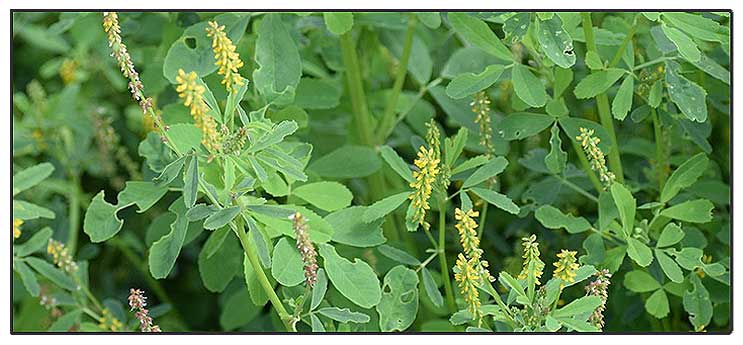
- Melilotus indicus, sometimes wrongly written as Melitotus indica, is a yellow-flowered herb in the Fabaceae family.
- Etymology: Melilotus, the genus name and English names, both derive from Greek melilotos from meli (honey) and lotos (lotus), via Latin melilotos and Old French melilot.
- Taxonomy: It was first published as Trifolium indicum by Carl Linnaeus in his 1753 Species Plantarum, and transferred into Melilotus by Carlo Allioni in 1785. (11)
Botany
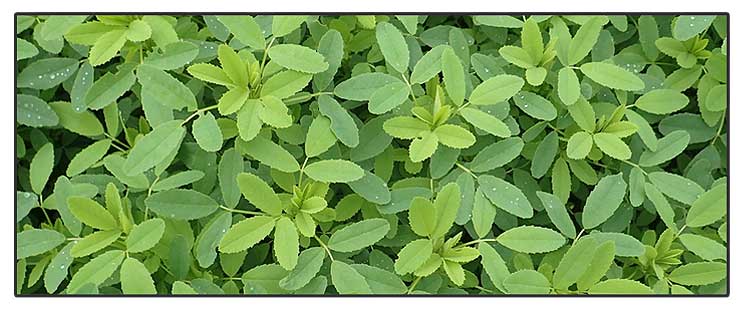
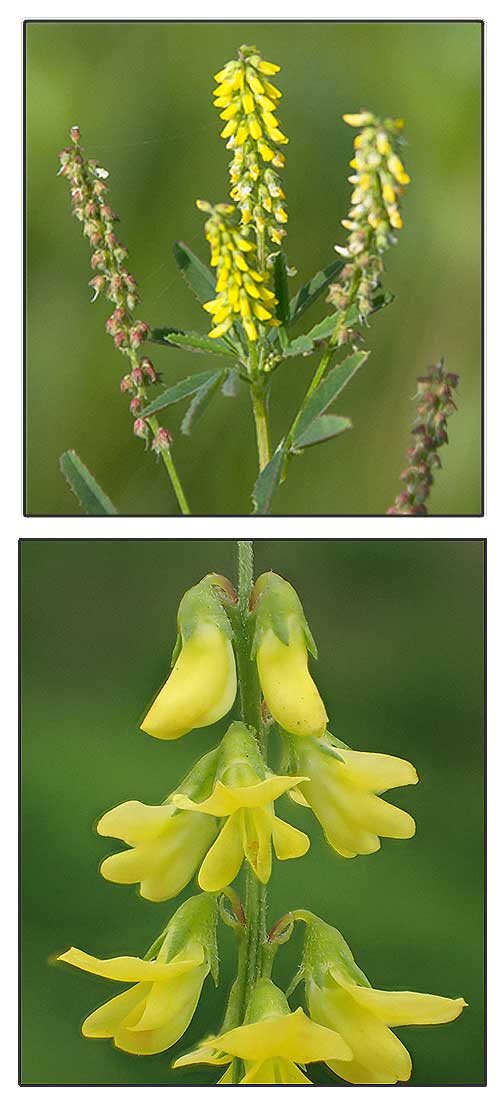
• Erect, annual herb up to 60 cm tall. Stem pubescent. Stipules lanceolate to setaceous, 5-8 mm long; petiole up to 4.5 cm long, petiolule up to 5 mm; leaflets oblong to obovate, 0.8-2.5 cm × 2-9 mm. Raceme 10-16-flowered; peduncle up to 3 cm long. Flowers yellow; calyx about 1.5 mm long, teeth triangular-lanceolate; corolla 2-3 mm long; style 0.9-1.2 mm long. Pod 1-seeded, 1.5-4 mm long, prominently reticulately veined, olive-green. Seed ovoid, about 2 mm long, yellow-brown, finely verrucose. (PROSEA)
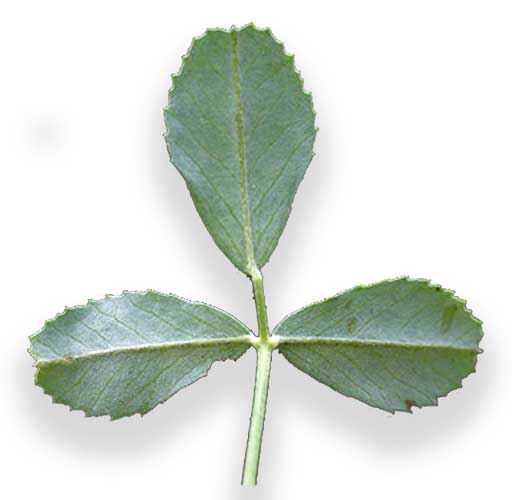
• Annual herbs, slightly pubescent to glabrescent. Stems erect or ascending, 20-50 cm, terete, simple or branching from base. Stipules lanceolate, 4-6 mm, base auriculate, with 2 or 3 tiny teeth, margin membranous; leaflets obovate-cuneate to narrowly oblong, 10-25(-30) × 8-10 mm, appressed hairy abaxially, glabrous adaxially, lateral veins 7-9 pairs, parallel running into teeth, base cuneate, margins serrulate toward apex, apex obtuse or truncate, sometimes retuse. Racemes slender, dense, 1.5-4 cm; peduncle long; flowers 15-25; bracts filiform; pedicels ca. 1 mm. Corolla yellow, 2.2-2.8 mm; standard broadly ovate, retuse, equal to wings and keel, or sometimes keel slightly longer. Ovary narrowly ovate; ovules 2. Legume olive-green, becoming red-brown when ripe, globose, ca. 2 mm, slightly exserted from calyx, glabrous, veins reticulate. Seed 1, dark brown, broadly ovoid, ca. 1.5 mm. (Flora of China)
 Distribution Distribution
- Naturalized.
(1)
- In Luzon: Benguet.
- Native to Afghanistan, Albania, Algeria, Assam, Baleares, Bangladesh, Bulgaria, China South-Central, China Southeast, Corse, Cyprus, East Aegean Is., East Himalaya, Egypt, France, Greece, Gulf States, Hainan, India, Iran, Iraq, Italy, Kazakhstan, Kriti, Kuwait, Lebanon-Syria, Libya, Morocco, Myanmar, Nepal, North Caucasus, NW. Balkan Pen., Oman, Pakistan, Palestine, Portugal, Sardegna, Saudi Arabia, Sicilia, Sinai, Spain, Tadzhikistan, Taiwan, Thailand, Tibet, Transcaucasus, Tunisia, Turkmenistan, Türkiye, Türkiye-in-Europe, Uzbekistan, West Himalaya, Western Sahara, Yemen. (2)
- Introduced in United States, it often considered a weed, but not invasive as it close relative Melilotus officinalis, which more aggressively outcompetes native prairie species. (11)
Constituents
- Quantitative analysis of ethanol extract yielded nine compounds: quercetin (7.63 ppm), gallic acid (0.43 ppm), caffeic acid (1.44 ppm), vanillic acid (5.62 ppm), benzoic acid (5.42 ppm), chlorogenic acid (5.92 ppm), syringic acid (1.59 ppm), p-coumaric acid (0,56 ppm) and m-coumaric acid (0.36 ppm).
(see study below) (5)
- Total polyphenols content of ethanolic extract was 120.067 µg GAE/mg extract. Toral flavonoids was 25.65 µg QE/mg. (see study below( (7)
- GC-MS analysis of fractions of ME of dried herb identifed compounds including 3-O-methyl-D-glucose, 3-hydroxyspirost-8-en-11-one, 1-phenanthrenecarboxylic acid-tetradecahydro-7-(2-methoxy-2-oxoethylidene)-1,4a,8-triethyl-9-oxo-methylester, 3-(1-methylhept-1-enyl)-5-methyl-2,5-dihydrofuran-2-one, squalene, phytol, 4-(4-hydroxy-2,6,6-trimethyl-7-oxabicyclo[4.1.0]hept-1-yl-3-buten-2-one, 2,4-bis(1,1-dimethylethyl)phenol, geranyl isovalerate and thymol.
(see study below) ( 8)
Properties
- Plants have a sweet smell, which is due to the presence of coumarin in tissues. Coumarin, while responsible for the sweet smell of hay and newly mowed grass, has a bitter taste, possibly discouraging consumption by animals. (10)
- Coumarin concerns: Plant contains coumarin, which acts as appetite suppressant and provides some protection from grazing. It is found naturally in many fruits i.e., strawberries, black currants, apricots, and cherries. Coumarin is of low toxicity to humans. It has been used as flavoring and aromatic additive in foods. Fresh plant material, consumed in moderation, is generally safe. However, dried material, especially when improperly dried or invaded by fungi, may become potentially more toxic, breaking down to form other compounds that can have anticoagulation effect. (9)
-
Leaves and seeds considered antibacterial, anticoagulant, astringent, emollient, laxative, narcotic.
-
Studies have suggested anticancer, antioxidant, antiangiogenic, antihypertensive, lipase inhibitory, α-amylase inhibitory, chitin-inhibitory, pesticidal properties.
Parts used
Seeds, stems, leaves, flowers.
 Uses Uses
Edibility
- Young shoots and fresh leaves are edible; safe to eat raw or cooked.
- Used as potherb or flavor enhancer.
- Caution: May become toxic when dried. (see above)
Folkloric
- No reported medicinal use in the Philippines.
- Elsewhere, traditionally used as analgesic, antioxidant, insecticide, emollient, and astringent Use for treatment of gastritis, inflammatory disorders, psoriasis, genital organ disease, and wounds. (7)
- Seed is made into a gruel and used for treatment of bowel complaints and infantile diarrhea. (9)
- Decoction used as disinfectant wash to bathe infections. (9)
- Poultice or plaster of plant applied to swellings. (9)
- In Ayurvedic texts, some palm-leaf manuscripts note it as "Uchchhista-madhura" for mild digestive support. In rural Gujharat, folk healers used paste of fresh leaves to soothe swollen joints. In Tamil Nadu, decoction of stems and flowers sweetened with jaggery is given to nursing mothers to ease colic. In Himachal Pradesh, dried leaves blended with honey is given as a gentle nervine tonic. In Punjab, grandmothers continue to swear for use of a daily cup of herbal tea for creeping arthritis. (14)
- Plant juice applied to cuts and wounds.
Others
- Agroforestry: Plant used as green manure. A soil improver through its nitrogen fixing properties.
- Insect repellent: Leaves repel insects. Placed in bed to repel bedbugs. (9)
- Apian: A source of nectar for bees.
- Forage: As a salt tolerant species, it is particularly useful as forage crop where other legumes cannot grow. Naturalized in Australia and New Zealand. By 1907, used as cattle forage in King Island, where it is sometimes called King Island melilot or King Island clover. (11)
Studies
• Anticancer / Antioxidant: Study evaluated the in-vivo skin carcinogenesis attenuating potential of ethanolic extract of M. indicus (Miet) in a 7,12-dimethylbenz[a]anthracene (DMBA)-induced skin cancer model. HPLC analysis indicated an abundance of quercetin and other phytoconstituents. Extract showed moderated antioxidant potential by DPPH radical scavenging assay (IC50 = 93,55 µg/ml). Topical acute skin irritation study showed non-irritant nature of Miet. Study showed marked improvement in skin architecture. Miet 50% showed comparable effects with 5-fluorouracil. Significant (p<0.05) anticancer effects were seen in coumarin-quercetin combination-treated animals compared to single agent (coumarin and quercetin alone) treated animals. CAM (chorioallantoic membrane assay) showed antiangiogenic potential of Miet. Miet treatment significantly down-regulated serum CEA (carcino-
embryonic antigen) and TNF-α (Tumor necrosis factor-α). Results suggest Miet has skin cancer attenuating potential via synergistic actions of bioactive molecules. (see constituents above) (5)
• Antihypertensive: Study evaluated the effect of M. indicus in normotensive and fructose-infuced hypertensive rats. Aqueous-ethanolic extract doses of 250, 500, and 750 mg/kg were used. Extract significantly (p<0.001) decreased blood pressure and heart rate in a dose-dependent manner. The 750 mg/kg dose showed maximum antihypertensive effect. There was not significant alteration in blood chemistry and no histopathological effects to heart, liver, and kidney tissues. Results support is traditional medicinal use for hypertension. (6)
• Antioxidant: Study evaluated the antioxidant activity of aqueous extract (AqE) and ethanolic extract (EE) of M. indicus. Total polyphenols content of ethanolic extract was 120.067 µg GAE/mg extract. Total flavonoids was 25.65 µg QE/mg. The AqE showed higher scavenging activity by DPPH assay with IC50 0.09 mg/ml). Inhibitory activity of the extracts in ß-carotene/linoleic assay was 70.983 for AqE and 66.169 for EE. (7)
• Alpha-Amylase and Lipase Inhibitory / Antidiabetic / Anti-Obesity: Study evaluated methanolic extract of dried, ground herb and fractions for antidiabetic and anti-obesity potential. The ME and fractions displayed porcine pancreatic alpha-amylase inhibitory activity higher than Acarbose. Extract also promoted lipase activity showing opposite trend to that of Orlistat. (see constituents above) (8)
• Antioxidant / α-Amylase Inhibitory Potential: Ethanolic extract showed a flavonoid content of 0.49 mg/g and demonstrated comparable antioxidant activity (1C50=1.6 mg/mL) to vitamin C (IC50=0.01 mg/ml). Molecular docking using human salivary amylase (1C8Q) showed promising binding scores for chlorogenic acid and kaempferol (-6.09196091 and -5.45953274 kcal/mol, respectively) compared to acarbose drug (-8.8864727 kcal/mol). Results suggest a valuable source of natural antioxidants. (12)
• Anticancer / Apoptosis in Hepatocellular Carcinoma Cells / Aerial Parts: Study reports on the mechanism underlying effects of Melilotus inducus methanolic extract (MIE) on human hepatocellular carcinoma cells, specifically HepG2 and SNU-182 cells. MIE impaired proliferation and induced cell death in both HepG2 and SNU-182 cells but not in normal hepatic L-02 cells. Cytometric analysis showed apoptosis in HepG2 and SNU-182 cells, which may be attributed to a mechanism involving mitochondrial-mediated pathways evidenced by decreased in mitochondrial membrane potential (ΔΨm), increase in Bax/Bcl-2 ration, and translation of apoptosis inducing factor (AIF) from mitochondria to nucleus. Results suggest potential of extract for development of human hepatocellular carcinoma treatment. (13)
• Chitin Inhibitor Effects on Spodoptera littoralis / Pesticidal / Aerial Parts: Study evaluated the biological effects of sublethal concentrations of M. indicus extract in comparison with three insect growth regulators (IGRs), novaluron, lufenuron, and diflubenzuron against the life cycle of Spodoptera littorais. All tested compounds, especially M. indicus, prolonged the duration of the larval and pupal stages compared to untreated control. Emerged adult % was highly reduced by 91.35%, 78.96%, 77.33%, and 62.46% after larval feeding with M. indicus, diflubenzuron, novaluron, and lufenuron, respectively. M. indicus and diflubenzuron caused high increment in malformation in larvae, pupa, and adults. (15)
Availability
- Wild-crafted.
- Products in the cybermarket: Dried herb, loose tea, liquid extracts and tinctures.
|