| 
Gen info
• Samanea is a genus of flowering plants in the family Fabaceae. The type species is Samanea saman from South America.
• Etymology: The genus epithet Samanea and species epithet saman derived from the linguistic corruption of the tree's vernacular Spanish name in northern Venezuela, zaman, meaning "Mimosa-like tree". The common name "Rain tree" refers to the tree's habit of folding up leaves before rain, or to shower of secretions from the sap-sucking Cicadas resting on the tree. (7) Alternatively, "rain tree" has been attributed to Indonesian and Malaysian local names ki hujan or pokok hujan, because the leaves fold during rainy days to allow rain to fall through the tree. (62)
• Historical snippet: Legend tells of the Venezuelan political leader and army general Simón Bolivar (1783-1830), known to have led 5 Latin American countries (Venezuela, Colombia, Peru, Ecuador, Bolivia) to independence from Spanish monarchy rule, to have camped his entire liberation army under a very large Albizia saman tree, now popularly referred to by locals as "saman de guerra", meaning the "saman of war" in Spanish-Portuguese. (7)
• Chankiri Trees in the Killing Fields: In Cambodia, the trees were widely planted for its tall height and expansive branches and shade it provides. Chankiri trees can be found in the Killing Fields, an execution field used by the Khmer Rouge during the Cambodian genocide, where children and infants of parents accused of crimes against the regime were smashed against the trees, so that the children "wouldn't grow up and take revenge for their parents' deaths" (Tyner, James A; Philo, Chris (2009). (62)
Botany
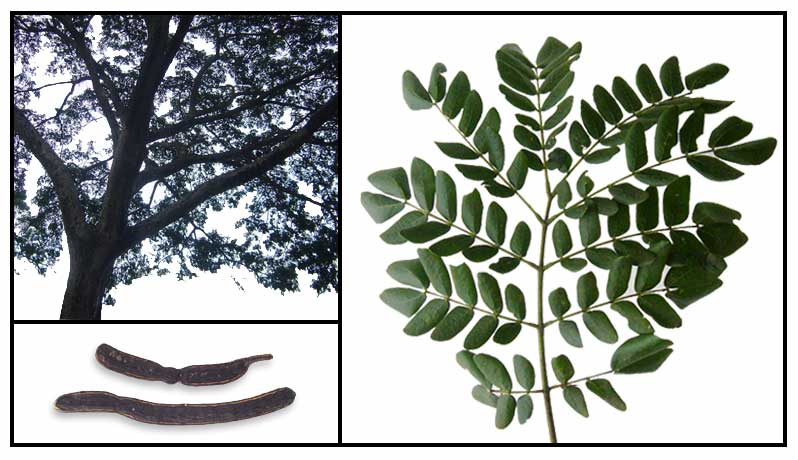
• Acacia is a large umbraculiform tree
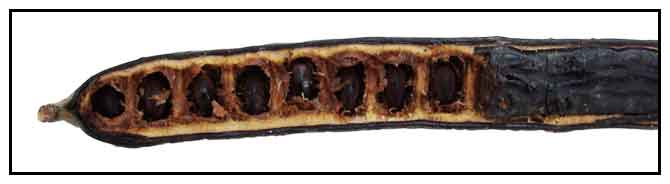
growing to a height of 20 to 25 meters. Bark is rough and furrowed. Branches are widespread. Leaves are evenly bi-pinnate and hairy underneath. Pinnae are 8 to 12 and 15 centimeters long or less. Leaflets are 12 to 16 in the upper pinnae, 6 to 10 in the lower ones, decreasing in size downward, hairy beneath, with the mid-nerve diagonal, and oblong-rhomboid, 1.5 to 4 centimeters long. Flowers are pink, borne in dense, peduncled, axillary, solitary, fascicled heads. Fruits are pods, straight, somewhat fleshy, indehiscent, 15 to 20 centimeters long, 2 centimeters wide, with
a pulpy sweet mesocarp.
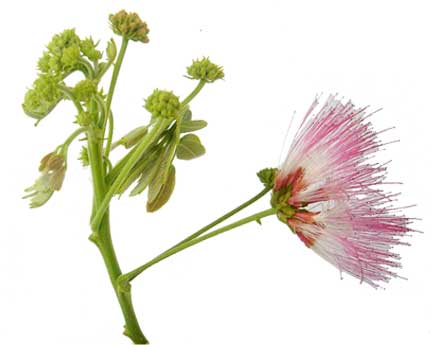 • Growth form: A tree, usually up to 30m tall in cultivation and may reach up to 60m tall in its native range. Its crown is symmetrically umbrella-shaped, wide-spreading (up to 80m across for mature specimens in open spaces) and branching occurs at relatively low height from tree base. Trunk: Dark brown, becoming more fissured with age, and peeling off in long fibrous strips. Foliage: Leaves alternate, bipinnately-compound, with small asymmetrical leaflets that are more curved on outer margin, and finely velvety on underside. Leaflets fold up in early evening and during overcast days. Partially deciduous under local conditions. Flowers: Produced as dense powderpuff cluster with numerous filamentous stamens, pink above and white below, slightly fragrant, attractive to bees. Fruit: Loment seedpods, fairly straight, fleshy with thickened edges and constricted in between seeds, ripening to black and breaking apart into segments along constrictions. Contain numerous dark brown seeds embedded in sticky, sweet-smelling, brownish-black pulp. Thought to be previously dispersed by now-extinct Pleistocene mammals, seeds now eaten and dispersed by cattle and other vertebrates, or by natural disintegration of the pods on the ground. (Flora & Fauna Web) • Growth form: A tree, usually up to 30m tall in cultivation and may reach up to 60m tall in its native range. Its crown is symmetrically umbrella-shaped, wide-spreading (up to 80m across for mature specimens in open spaces) and branching occurs at relatively low height from tree base. Trunk: Dark brown, becoming more fissured with age, and peeling off in long fibrous strips. Foliage: Leaves alternate, bipinnately-compound, with small asymmetrical leaflets that are more curved on outer margin, and finely velvety on underside. Leaflets fold up in early evening and during overcast days. Partially deciduous under local conditions. Flowers: Produced as dense powderpuff cluster with numerous filamentous stamens, pink above and white below, slightly fragrant, attractive to bees. Fruit: Loment seedpods, fairly straight, fleshy with thickened edges and constricted in between seeds, ripening to black and breaking apart into segments along constrictions. Contain numerous dark brown seeds embedded in sticky, sweet-smelling, brownish-black pulp. Thought to be previously dispersed by now-extinct Pleistocene mammals, seeds now eaten and dispersed by cattle and other vertebrates, or by natural disintegration of the pods on the ground. (Flora & Fauna Web)
Distribution
- Introduced to the Philippines. (29)
- Introduced about 1860 from tropical America.
-
Throughout the Philippines
in waste places along roads and trails in fallow, rice paddies,
etc.
- Widely planted as a shade tree and avenue tree.
- Native to
Belize, Colombia, Costa Rica, Ecuador, El Salvador, Honduras, Nicaragua, Panamá, Venezuela. (29)
- In some places, spontaneous.
- Now pantropic in cultivation.
 Constituents Constituents
· Saponin-like alkaloid
pithecolobin has been isolated from the bark and the seed.
· Alkaloids are said to be abundant in the bark, stems,
leaves, and seeds.
· Leaves and stems have saponin and tannin; gum from the trunk.
· Pods are rich in starch and sugar, with a fair proportion of albuminoid substances.
· Bark has no tannin. Trunk yields an inferior gum.
· Study of n-hexane fraction of methanolic extract of whole plant yielded two compounds: lupeol and epilupeol.
· Proximate analysis of browse leaves on Dry Weight Basis showed moisture 61.95 ± 0.56%, crude protein 23.42 ±0.31%, ether extract 2.80 ± 0.08%, crude fiber 28.73 ± 0.19%, ash 5.69 ± 0.01%, Nitrogen Free Extract 39.73 ± 0.52%, energy 1154.15 ± 0.13 Kj/kg. (31)
· Study on mineral content of browse leaves (mg/100g on dry weight basis) yielded Ca 780 ± 6.00, magnesium 185.20 ± 0.80, potassium 1454.00 ± 5.00, iron 23.95 ± 0.05, zinc 1.51 ± 0.01. (31
- Phytochemical screening of flower extract and fractionates yielded flavonoids, tannins, saponins, carbohydrates, terpenoids, phenols, and glycosides, with absence of alkaloids, phlobatannins, sterols, quinones, and oxalates. (35)
- HPTLC and GC-MS analysis yielded six
compounds from the methanolic fraction of Samanea saman: (1) 9,Octadecenoic acid (Z) methyl ester, (2) Dodecanoic acid, 10-methyl, methyl ester, (3) 13- Hexyloxyacylotridec-10-en-2-one, (4) 15- Octadecenoic acid, methyl ester (5) Diethyl -1- (8 –amino -1- naphthyl) -1,2,3 triazole -4,5 –dicarboxylate, and (6) N.N – [1,4 –butanediyl bis [ ethylimino] -3,1 propane diyl] bis[ N-ethyl acetamide]- RT 24.1. (40)
- Proximate composition (%) of seeds pf Albizia saman yielded: crude fat 9.77±1.21, crude protein 39.40±0.30, crude fiber 3.21±0.10, ash 2.10±0.40, moisture 4,20±0.11, and carbohydrate 41.32±0.50.
(41)
- Preliminary phytochemical screening of flowers revealed bioactive compound, including alkaloids, flavonoids, saponins, sterols, tannins, and phenols. Proximate analysis of flowers showed it to be rich in carbohydrates (50.43%) and fiber (17.35%). with moderate protein content (11.17%) and low fat (5.78%).
-
Elemental analysis of flowers revealed presence of sodium (13.21 mg/100g), potassium (16.54 mg/100g) , calcium (11.89 mg/100g) and magnesium (8.72 mg/100g). Iron was significant at 20.47 mg/100g, along with trace elements of chromium, manganese, cobalt, and copper. Toxic heavy metals, including lead, cadmium, mercury, and arsenic were found in trace amounts, underscoring importance of monitoring. (48)
- Study evaluated the anti-nutritional and proximate composition of pods of S. saman. Whole pod had 1.49mg/100g oxalate, 1.97mg/100g hydrogen cyanide, 0.71mg/100g tannins, 27.07mg/100g saponins, 0.51mg/100g flavonoids and 1.71mg/100g alkaloids, while the pulp showed 1.89mg/100g oxalate, 1.51mg/100g hydrogen cyanide, 0.86mg/100g tannins, 28.46mg/100g saponins, 1.00mg/100g flavonoids and 1.41mg/100g alkaloids; and the seeds 1.39mg/100g oxalate, 1.61mg100g hydrogen cyanide, 0.56mg/100g tannins, 26.51mg/100g saponins, 0.49mg/100g flavonoids and 1.86mg/100g alkaloids. Crude proteins were 13.21% for whole pod, 10.98% for pulp, and 21.55% for seed. Crude fiber of the plant were 15.95%, 6.77%, and 8.47% for whole pod, pulp, and seed, respectively. Whole pod had 47.33% carbohydrate which was significantly (p≤0.05) lower than the carbohydrate of pulp (57.53%) and seed (55.52%). (52)
Properties
- Slightly acidic tasting, cooling.
- Antipyretic, antimicrobial, stomachic, astringent, antidermatoses, laxative, antimalarial, sedative.
- Studies have suggest
antimicrobial, antitubercular, antioxidant, anticancer, anti-termite, anti-ulcer, larvicidal, insecticidal, anthelmintic, antiemetic, anti-obesity, analgesic, nephroprotective, diuretic, phytoremediative, antihyperlipidemic, anti-inflammatory, wound healing, anxiolytic properties.
Parts
utilized
· Entire plant.
· Collect from May to October.
· Rinse and sun-dry.
Uses
Edibility
-
Mesocarp of the fruit is sweetish, sometimes eaten by children.
- The fruit pulp can be made into beverage that tastes like lemons.
Folkloric
· In the Philippines, a decoction of the inner bark or fresh cambium and leaves is
used to treat diarrhea.
· Acute bacillary dysentery,
enteritis, diarrhea: use 15 to 30 gms dried material in decoction.
· Also for colds, sore throat, headache.
· A decoction of the inner bark or fresh cambium and leaves is
used to treat diarrhea.
· Anaphylactic dermatitis, eczema, skin pruritus: use decoction
of fresh material and apply as external wash.
 · Latex used as gum arabic for gluing. · Latex used as gum arabic for gluing.
· Seeds chewed for sore throat; inner bark decoction and fresh leaves used for colds and diarrhea.
· In Pakistan infusion of leaves used as laxative. Decoction of inner bark used for diarrhea, colds, and intestinal ailments.
· In Jamaica leaf infusion used for treating blood pressure.
· In Tropical Africa seeds are chewed for treating gum and throat inflammations.
· In Venezuela rain tree is a traditional remedy for colds, diarrhea, headache, intestinal
ailments and stomach ache. Root decoction used as hot bath in stomach cancer.
· Root decoction used in hot baths for stomach cancer.
· In the West Indies,
the leaf infusion is used as a laxative and seeds chewed for sore throat.
· The alcoholic extract of leaves used for tuberculosis.
· In Columbia,
the fruit decoction is used as a sedative.
Others
- Shade tree: Valued for as a shade tree. In plantations, the tree provides shade for crops like coffee, tea, cocoa, nutmeg, and vanilla.
- Fodder: Seasonally copious pods with sweet pulp that can be grounded
and converted to fodder and alcohol as an energy source. It is a valuable source of feed for cattle and horses. It is also
an important honey plant like most mimosaceous trees.
- Alcohol: High sugar content of the pod can be utilized for producing alcohol by fermentation.
- Fuel: The wood produces 5200-5600 kcal/kg. It vigorous regrowth after lopping or pollarding makes it a valuable source of high quality firewood and charcoal. However, its value as fuel is secondary to its use for furniture making and carvings. (39)
Grounded up seedpods used as raw material for making biofuel. (7)
- Gum/resin: The bark is an abundant source of gum and resin. (39)
- Crafts: Grounded up seedpods are shaped into balls and dried in the sun to make cricket-ball substitutes used as toys by children in southern India. Dried seeds made into necklaces. (7) Popularly used in carving, making tables, wood basins and bowls. Hats are made from the shavings of the wood.
- Host plant: In Thailand, the tree is used as a primary host plant for Laccifer lacca (Lac insect) that feeds on resin-rich bark of the tree, and coat colonized branches with a reddish resinous pigment, which can be harvested as a poor quality and brittle seedlac, or further processed into shellac. (7)
 . .
Studies
• Preliminary phytochemical screening
and antimicrobial activity of Samanea saman: A study
of the aqueous plant extract on three organisms (Escherichia coli, Staphylococcus
aureus and Candida albicans) showed inhibitory activity against all
the tested organisms. Phytochemical screening revealed tannins, flavanoids,
saponins, steroids, cardiac glycosides and terpenoids. The study validates
the use of the plant in traditional medicine. (1)
• Antibacterial:
A methanol extract from leaves showed a highly significant antibacterial
activity in vitro for Xanthomonas pathovars and for human pathogenic
bacteria. (3)
• Larvicidal: Of 112 medicinal plant species collected in Thailand, Samanea saman (stem bark) was one of 14 plants that exhibited high toxicity to the fourth instar larvae of Aedes aegypti in preliminary screening. (4)
• Antioxidant:
(1) Several extracts of Samanea saman showed the highest antioxidant potential in both DPPH and reducing power assay. (2) Study showed a methanolic extract to have radical scavenging activity with values higher than ascorbic acid. Phytochemicals yielded carbohydrates, phytosterols, saponin, phenolic compounds, and tannin. (5)
• Anti-Termite:
Study of ethanolic extracts of seeds and bark of Acacia collected from the Laurel Farm in Lipa city yielded saponins, tannins, alkaloids, reducing agents - glycosides, carbohydrates. Results showed termite killing activity comparable to solignum. (6)
• Anti-Ulcer / Bark:
Study of bark extract in albino rats showed significant dose-dependent antiulcer activity comparable to standard drugs. The volume of acid secretion, total and free acidity was decreased and pH of gastric juice was increased compared to ulcer control group. (9)
• Toxicity and Tolerance to Metals:
Increased concentration of different metals significantly reduced germination which was more prominent for Pb and Cd as compared to Cu and Zn. (12)
• Bioactivity Analysis: Bioactivity analysis assays on hexane (HE) and methanol (ME) extract of leaves showed: (1) Both had moderate bacterial activity against P. aeruginosa (2) HE antifungal activity against Fusarium solani, ME against Trichophyton longifusus (3) Cytotoxicity in brine shrimp lethality assay (4) HE Insecticidal activity against R. dominica and T. granarium.
• Antimicrobial / Phytochemical Screening:
Study of various extracts for antimicrobial activity against B. subtilis, S. aureus E. coli, P. aeruginosa and Candida albicans. Only the methanol extract showed inhibitory activity against Bacillus subtilis and Staphylococcus aureus. Various extracts showed varying amounts of alkaloids, saponins and resins, with an absence of acidic compounds. Flavonoids were moderately present in the ethyl acetate extract. Findings suggest the use of S. saman pods in ethno-medication. (13)
• Pods / Tannins / Antimicrobial / Tea: Screening of n-hexane extract of pods showed a moderate presence of secondary metabolites. Pods yielded the characteristic reddish brown solid tannins, which on analysis showed to be the condensed (catechol) type. Tannin components were cyanidin, catechin, epicachin, anthocyanin monoglycones, delphinidine and malidin. Tannins in the ethyl acetate fraction showed the highest antimicrobial activity, including C. albicans. Results suggest the ground pods could be a significant source of natural antimicrobials and antifungals that can be used in the formulation of a novel tannin/energy rich nutraceutical tea. (14)
• Antioxidant / Antimicrobial / Cytotoxic: Study bark extracts showed good antioxidant and cytotoxic potential of chloroform and hexane soluble fractions and antimicrobial activity of carbon tetrachloride fraction. (16)
• In vitro Anthelmintic Activity: Study of alcohol and aqueous extracts of the bark of S. saman was tested against Pheretima posthuma. Results showed anthelmintic activity in the same concentration as albendazole. (17)
• Insecticidal Activity: Study on insecticidal activity showed the hexane extract with 50% mortality against Rhyzopeertha dominica and Tribolium granarium. (18)
• Antiemetic Activity: A methanolic extract of leaves showed 76.41% inhibition of emesis measured as reduction in number of retches in chicks. Chlorpromazine decreased the retches by 33.97%. (19)
• Antimicrobial / Spermine Alkaloids / Sick Buildings Microbes: Study of an 80% methanolic extract of Samanea saman leaves yielded two known macrocyclic spermine alkaloids, pithecolobines 1 and 2. Results showed the isolated compounds, especially pithecolobine 2, might a potential plant-based formulation for management of microbes in sick enclosed buildings. (20)
• Antioxidant / Organprotective / Leaves: Study evaluated the polyphenol and flavonoidal contents and organprotective effects of leaves of Samanea saman. Results showed concentration dependent in vitro and in vivo antioxidant activities in all test models. Study also showed a 70% alcoholic extract of leaves possess hepatoprotective, nephroprotective and gastroprotective activities attributed to the plant polyphenolic compounds—flavonoids and tannins. (21)
• Antiseptic Potential / Antibacterial / Alkaloids / Bark: Study evaluated the antibacterial potential of alkaloidal extracts from bark of S. saman and potential of its raw material for antiseptic formulations. The bark yielded a higher percentage of alkaloids exceeding the lowest yield of any medicinally useful alkaloid ever produced on a commercial basis. The crude extracts and alkaloid-rich fraction exhibited complete inhibition against Staphylococcus aureus. Results suggest potential of bark as source of alternative medicine. (22)
• Analgesic / Leaves: Study evaluated the analgesic effects of methanol extract of leaves of Samanea saman and Prosopis cineraria using a tail immersion test. Both extracts showed significant analgesic effects when compared with pethidine. (23)
• Antiemetic / Leaves: Study evaluated the antiemetic activity of methanol extracts of five leguminous plants. All the extracts showed antiemetic activity, (24)
• Pods as Boiler Feed: Samanea saman is a good source of protein and energy. The pod meal contains a about 13.75% protein, 89.25 to 1.175% dry matter, 2.98 to 1.63 ether extract, 2.19 to 14.54% crude fiber, 0.23 to 3.27% ash and 6.44 to 55.67% nitrogen extract. Leaves and pods can be tapped as sources of feeds for ruminants during drought periods when feeds are scarce. (25)
• Anti-Diabetic / Leaves and Bark: Study evaluated methanolic leaf extract of S. saman for potential anti-diabetic activity by in- vitro α-amylase inhibition and in-vivo epinephrine induced diabetic rats. Results showed significant reduction of blood sugar levels with significant inhibition of α-amylase. (26) Study evaluated hydroalcoholic extracts of leaf and bark of A. saman for hypoglycemic effects. In vitro inhibitory assays of the plant extracts using alpha-amylase, alpha-glucosidase and glucose diffusion inhibition assays were done to evaluate for any significant anti-diabetic effect. The plant leaf and bark showed promising therapeutic activity for maintenance of diabetes mellitus. (38)
• Pithecolobine / Antimycobacterial / Leaves: A bioactive compound, pithecolobine isolated from the fraction of ethyl acetate:methanol (80:20) showed remarkable antimycobacterial activity. (27)
• Nephroprotective / Polyphenols / Antioxidant / Leaves: Study investigated a hydroalcoholic extract of leaves for its protective effects on paracetamol induced renal damage in rats. Extract of leaves improved all the induced changes in physical, tissue and blood parameters, together with significant reversal of elevated LPO and reduced tissue GSH level. Results were attributed to the presence of antioxidant principles. (28)
• Antimicrobial / Cytotoxicity: Study investigated various extracts and fractions of crude fractions for antimicrobial activity and brine shrimp lethality. The carbon tetrachloride soluble partitionate of the methanol extract exhibited mild to moderate antimicrobial activity (Shigella dysenteriae, Sarcina lutea, Bacillus subtilis, B. cereus) and carbon tetrachloride and dichlormethane soluble fractions strong cytotoxicity with LC50 of 0.831 µg/m by brine shrimp lethality assay. (30)
• Biosorbent for Lead: Study showed Albizia saman leaf powders can be used as an effective natural biosorbent for economic treatment of aqueous solutions containing lead. (33)
• Pithecolobine / Antimicrobial / Antioxidant: Pithecologine isolated from alkaloid extract of Albizia saman showed antimicrobial activity against seven human pathogenic bacterial and two yeasts with minimum inhibitory concentrations (MIC) values of 1.9-125 µg mL-1. It also showed antioxidant activity with IC50 of 250 µg mL. (34)
• Inhibitory Effect of Alkaloids on Growth and Fumonisin B Production / Pithecolobine: Study evaluated the antifungal and antifumonisin activities of budmunchiamine A and pithecologine against Fusarium verticillioides. Budmunchiamine A was isolated from A. amara and pithecolobine from Albizia saman. Results showed both significantly inhibited the growth and fumonism B1 production by F. verticillioides in a dose dependent manner. Findings suggest potential as alternative agents to control fungal and mycotoxin contaminations in food grains. (36)
• Pithecolobine / Antitubercular / Anticancer: Study of methanol extract of leaves of Samanea saman yielded the presence of pithecolobine. The compound showed remarkable activity against Mycobacterium tuberculosis. It was also effective against lung cancer associated with tuberculosis. Docking studies of pithecolobine against target proteins Enoyl-acyl carrier protein reductase (ENR) and Decaprenylphospho-beta-D0ribofuranose 2-oxidase (DprE1) reveals the compound pithecolobine is a potential drug candidate for tuberculosis. (37)
• Anticancer / Flowers: Study evaluated the in vitro anticancer activity of Albizia saman flower extract on MCF-7 cell line (human breast cancer cell line). Results showed the ethanolic extract of A. saman flower has moderate anticancer activity with 94.72% growth inhibition at 200 µg/ml. IC value was 120.1 µg/ml and the regression value was 0.999. (42)
• Nyctinastic Leaf Opening Regulated by Ion Channels: The circadian leaf opening and closing (nyctinastic movement) is triggered by the alternate swelling and shrinking of motor cells at the base of the leaf, which is, in turn, facilitated by changing osmotic pressures brought about by ion flow through anion and potassium ion channels. Study identified three key ion channels in mimosoid tree Samanea saman: the slow type anion channel, SsSLAH1 and SsSLAH3, and the Shaker-type potassium channel, SPORK2. Results confirm the importance of SLAH1 in leaf movement using SLAH1-impaired Glycine max. (43)
• Jasmonic Acid / Independent Activator of Leaf-Closing Movement: Study previously identified 12-O-ß-D-glucopyranosyljasmonic acid as the bioactive metabolite leaf-closing factor (LCF), which induced nyctinastic leaf closure of Samanea saman. Data point to the existence of at least two separate JA signaling pathways in S. sama and that 12-O-ß-D-glucopyranosyljasmonic acid exerts its leaf-closing activity through a mechanism independent of the COH-JAZ module. Jasmonic acid and its derivatives, collectively called hasmonates, play important roles in controlling growth, development, and responses to environmental changes in higher plants. (44)
• Hepatoprotective
Against CCl4-Induced Hepatic Damage / Bark: Study evaluated a methanol extract of bark for hepatoprotective activity against Swiss albino mice with carbon tetrachloride induced liver damage. The extract demonstrated significant dose-dependent protection against CCl4-induced hepatocellular damage as evidenced by significant decrease in level of serum markers. (45)
• Antidiabetic / Anti-Obesity / Leaves: Study evaluated the methanol leaf extract of Samanea saman for antioxidant, antidiabetic, and anti-obesity activities. A leaf extract was studied for its inhibitory effect on glucose utilization using different assays viz., α-amylase and α-glucosidase inhibition assay, glucose uptake by yeast cells, nonenzymatic glycosylation assay followed by glucose diffusion assay. The ME strongly inhibited pancreatic lipase, α-amylase and glucosidase activities.
In vivo studies were suggested to confirm the results. (46)
• Immunoadjuvant / Anti-Inflammatory: Study evaluated
the anti-inflammatory activity of chloroform extract and immunoadjuvant activity of a butanolic extract. The Chloroform extract was evaluated for anti-inflammatory potential by inhibition of carrageenan-induced mouse paw edema. The extract exhibited moderate control of initial phase of inflammation, provoking inhibition of edema formation, similar to reference compound dexamethasone. Butanolic extract of stem bark was evaluated for immunoadjuvant activity against ovalbumin antigen, showed relevant potential in comparison with commercial extract or Quillaja saponaria, a commonly used adjuvant for experimental vaccine formulatons. (47)
• Fodder Potential / Foliage, Fruit, Seeds: Study evaluated the potential of S. saman as feed for animals of productive interest. Foliage, fruit, and seeds were studied for dry matter, crude protein ash, neutral detergent fiber, acid detergent fiber, lignin, calcium, phosphorus concentration and secondary metabolites. Seeds contribute significantly to the nutritional value of the fruit. Fruits and foliage contain acceptable levels of protein and minerals, moderate to slight presence of secondary metabolites and low levels of fiber. The foliage is less palatable, but its antimicrobial and antioxidant properties can justify its use. (49)
• Anthelmintic Against Ascaris lumbricoides / Leaves: Study evaluated the anthelmintic activity
of plant leaves extracts against Ascaris lumbricoides. Phytochemical screening revealed flavonoids, saponins, and tannins. Results showed all concentrations (50, 100, and 200 mg/ml) revealed anthelmintic activity, with no significant difference compared to positive treatment with 50 mg/ml of albendazole. (50)
• Novel Mucoadhesive Gum / Seeds: Natural polymers are the most accepted pharmaceutical excipients of formulator's choice. Study reports on the extraction of a natural gum from the seeds of S. saman using ethanol as solvent. Mucoadhesive property of the gum was evaluated by swelling index, mucoadhesive force, and shear stress measurement.
Polymeric tablet of the gum with concentrations of 10, 30, 50, 70 and 90% w/w were formulated and results show best mucoadhesive and swelling property. Results suggest the gum may be used in formulation of mucoadhesive dosage form. (51)
• Anti-Nutritional and Proximate Analysis / Pods: Study evaluated the anti-nutritional and proximate composition of pods of S. saman. Utilization of S. saman pods is a significant source of bioactive compounds that if harnessed in the formulation of nutraceutical beverages could offer a whole lot of health benefits. (see constituents above) (52)
• Phytoremediation Potential / Activated Carbon for Adsorption of Copper: Study evaluated the ability of Samanea samana-activated carbon (SSAC) to remove copper from an aqueous solution. Results showed SSACexhibited exceptional performance with copper removal efficiency of 99.4% under an adsorbent mass of 0.25g, reaction time of 30 min, and concentration of 10 mg/L. Study suggests SSAC has potential as economical biomaterial to treat heavy metal in wastewater. (53)
• Antihyperlipidemic / Leaves: Study evaluated the activity and optimal dose of trembesi leaf extract for reducing total and LDL cholesterols in hypecholerolemic mice. Results showed an ethanol extract of leaves at dose of 175 mg/kbw can reduce total cholesterol by 37.07% and LDL by 50.24%. (54)
• Diuretic / Bark: Study evaluated the diuretic potential of methanol extract of bark of Samanea saman in albino rats using in-vivo Lipschitz test model. Furosemide was used as standard. Results showed significant diuretic activity. The ME at doses of 200 and 400 mg/kbw exhibited increase in urine volume and electrolyte excretion when compared to control. (55)
• Immunological Adjuvant Activity / Triterpenoid Saponin / Stem Bark: Study evaluated a new complex triterpenoid saponin isolated from the stem bark of S. saman for hemolytic activity using invitro assays and adjuvant potential on cellular immune response against ovalbumin antigen using in vivo models. The compound exhibited significant immunological adjuvant activity. (56)
• Anti-Inflammatory on Fibronectin Expression / Would Healing / Leaf Extract Gel: Study evaluated the effects of a 12% concentration of rain tree leaf extract gel on fibronectin expression in the process of healing traumatic ulcers in male white rat wistar Rattus norvegicus. Gel of rain tree leaf extract was extracted with a 98% ethanol solvent. Results showed a 12% concentration of rain tree leaf extract significantly enhanced fibronectin expression, contributing to the healing of traumatic ulcers. (57)
• Antimicrobial on Chicken Patties / Pod: Study evaluated the antimicrobial effect of S. saman whole pod extract (SSWPE) against bacteria such as B. subtilis, S. aureus, E. faecalis, E. coli, S. pyogenes, S. typhi, K. pneumonia and P. aeruginosa and its potential for use in chicken patties to reduce microbial contaminants. Agar well diffusion method showed the SSWPE was active against all tested bacteria with varying zones of inhibition and 25 µg/ml as MIC against both gram positive and gram negative bacteria when compared to standard Cirpofloxacin at 1 µg/ml. Total microbial counts increased with increment of time of storage. (58)
• Anti-Anxiety / Leaves: Study evaluated various extracts of leaves of S. saman for anxiolytic activity in mice using Elevated plus maze and Rota rod apparatus. Among all extracts, only the methanol extract exhibited significant anti-anxiety activity at dose of 200 mg/kg in mice. Phytochemical screening yielded alkaloids, tannins, saponins, flavonoids in the methanol extract - constituents that may be responsible for the anxiolytic potential of S. saman. (59)
• Burn Wound Healing / Leaf Gel Formulation: Study evaluated the effective concentration of trembesi leaves extract gel formulation against burn wound healing on rat (Rattus novergicus). Three concentrations of 6, 9 and 12% were used. Burn wound was induced on the back skin of rat by hot induction tool. Results showed the 6% extract showed healing effect average on 13th days; 9% on 11th days, and 12% on 9th days. Results showed the 12% trembesi extract with best burn wound healing effect. Activity was attributed to saponin content, which can accelerate collagen formation. (60)
Availability
Wild-crafted.
|