 Gen info Gen info
- Chrysopogon aciculatus is a species of grass native to the tropics of Asia, Polynesia, and Australia.
- While widely considered an invasive species, it is also used for medicinal purposes.
-
Etymology: The genus name Chrysopogon derives from ancient Greek words khrusos meaning 'gold' and pogon meaning 'beard".
-
Common name "love grass"
comes from the seeds produced by inflorescences, which adheres to objects, clothing, humans and animals. It can also penetrate the skin.
- The common name amorseco (Spanish, "dry love") should not be confused with the amor seco tree, Alchornea glandulosa. (20)
Botany
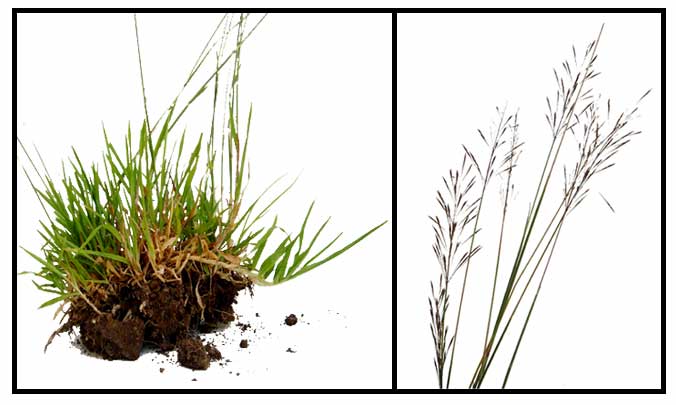
Amor-seco is a dense, leafy perennial grass, creeping and branching below, with short
horizontal stems. Flowering stems
are erect, 20 to 60 centimeters high. Leaves are short, linear-lanceolate,
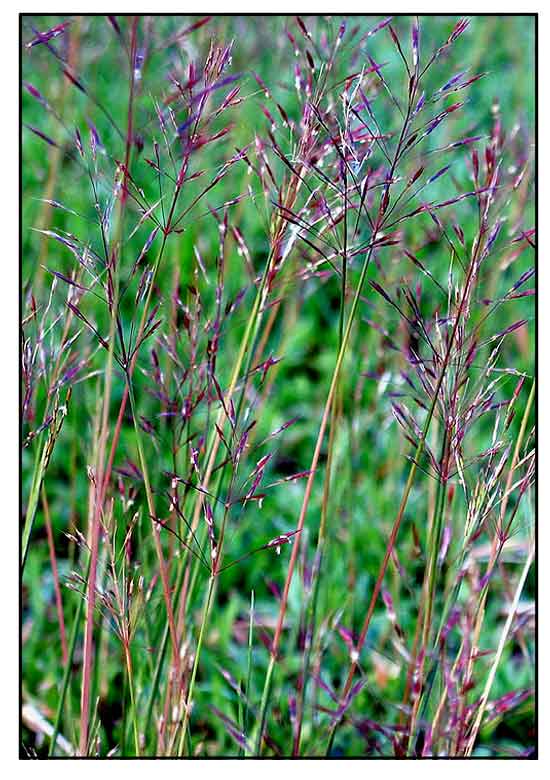
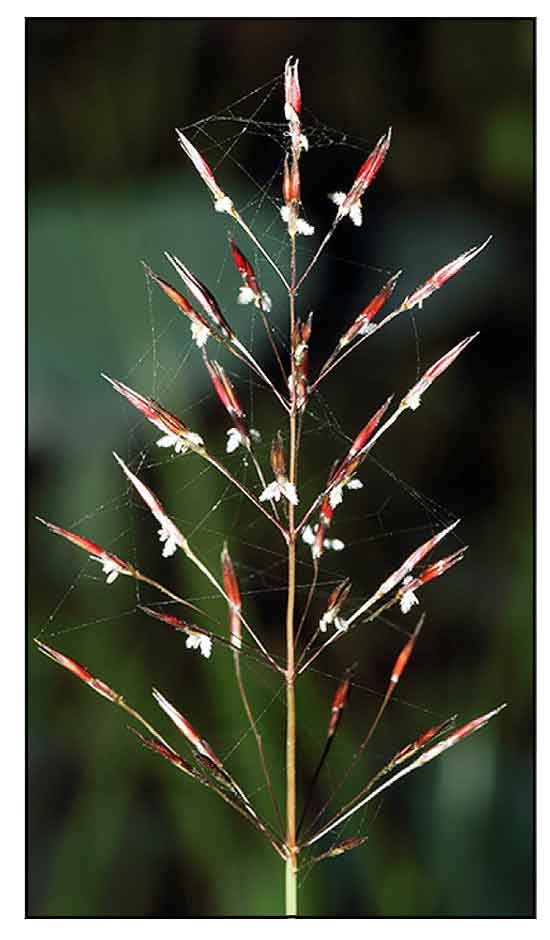
3 to 10 centimeters long, 4 to 6 centimeters wide. Panicles are purplish, open, with few whorled branches, 5 centimeters long, or less, bearing few-flowered spikes. Sessile spikelet is very narrow,
about 3 millimeters long; callus is elongated, barbed; fourth glume is linear,
acuminate, with a short scabrid awn.
 Distribution Distribution
- Native to the Philippines.
-
Found throughout
the Philippines in open places at low and medium altitudes.
- A troublesome pest of a weed on lawns and golf courses, the seeds adhering to trousers and dresses.
- Also occurs from India to China and southward through Malaya to tropical Australia and Polynesia.
- A perennial or rhizomatous geophyte, growing primarily in seasonally dry tropical biome.
- In improved pastures or landscape areas, considered a noxious weed.
Constituents
- Study suggests substantial amounts of sterols and terpenes in the flowers.
- Phytochemical screening of methanol extract yielded saponins, tannins, phenols, terpenoids, and phytosterols, while an n-hexane extract yielded tannins, terpenes and phytosterols. (see study below) (6)
- LC-MS analysis of ethanol extract yielded aciculatin, nudaphantin, and 5α,8α-epidoxyergosta-6,22-diene-3ß-ol. GC-MS analysis of n-hexane fraction yielded citronellylisobutyrate; 2,4-dihydroxy-7-methoxy-(2H)-1,4-benzoxazin-3(4H)-one and nudaphantin.
(see study below)
(16)
Properties
- Needle-like prickly spikelets can be source of injury to animals and humans and annoyance of spikelets sticking to clothing or fur that can penetrate the skin. (12)
-
Antidiarrheal, diuretic, antidotal, antirheumatic.
- Studies have suggested antibacterial, cytotoxic, anti-inflammatory,
anti-arthritic, phytoremediative , anticancer properties.
Parts
utilized
Entire plant
 Uses Uses
Edibility
· Leaves are highly palatable, but abundant flowering culms and spikelets have low palatability. (15)
Folkloric
· In the Philippines decoction of root is used for diarrhea.
· Traditional healers in Laguna, Philippines, use decoction of roots for stomachaches, headache, muscle pain, urinary tract infection, liver disease, gall bladder stone.
· In Ternate decoction used for those who might have swallowed poison.
· Decoction of entire plant as a diuretic.
· In Indonesia, plant used as poison antidote.
· In Bangladesh, root juice used for liver pain.
· Ashes of burned roots taken internally for rheumatism.
· In ancient Hindu medicine, one of several plants – Curcuma longa, Berberis asiatica,
Ocimum basilicum, Trichosanthes dioica, Azadirachta indica, among others,
ground and mixed in equal proportion and applied over the body as an
ointment for pruritus, skin eruptions, urticaria, and tumescence. Also
mixed with other herbal plants as a purgative, pustulant and anodyne.
· In Bangladesh, leaves of Chrysopogon aciculatus, Saraca asoca and Vitex negundo are warmed and applied topically to areas of pain and paralysis, 2-3 times daily. (8)
· In India, fresh rhizome along with 3-5 black pepper is crushed into a paste and taken every morning for one month on an empty stomach for gastric disorder or stomach aches. (11)
· In East Sepik of Papua, New Guinea plant used for swelling. In Ayurveda, used as diuretic. (13)
· In West Kalimantan, stems and leaves used by ethnic Chinese, Dayak, and Malay communities for treatment of jaundice. (17)
· Rhizomes and roots used for stomach ache, gastric disorders, diarrhea, dysentery, and jaundice. (18)
Others
· Ground cover: Grows extensively by rhizomes to form a dense ground cover. Also used for erosion control. (12)
· Livestock: In Bangladesh, whole plant used for cattle leg swellings.
· Weaving: Culms used for weaving hats, mats, brushes, and small cases.
· Others: Used for grazing and as lawn grass. However, it can annoy livestock and humans due to the prickly spikelets that stick to and penetrate clothing or skin. (15)
Studies
• Antibacterial: Study evaluated phytochemicals and antimicrobial activity of methanol and n-hexane extracts of Andropogon aciculatus. A methanol extract of A. aciculatus showed antimicrobial activity against gram-positive bacterium Bacillus subtilis. (see constituents above) (6)
• Aciculatin / Cytotoxic / Anti-Inflammatory: A new flavone-glycoside aciculatin from Chrysopogon aciculatus have been shown to have cytotoxic, anti-inflammatory and anti-arthritis activity. Limited availability from natural sources have limited further biologic studies. Study reports on the total synthesis of aciculatin with an overall yield of 8.3%. (7)
• Aciculatin / Anti-Cancer: Aciculatin, a natural compound from Chrysopogon aciculatus has shown anti-cancer potency. Study showed that aciculatin induces cell death in human cancer cells and HCT116 mouse xenografts due to G1 arrest and subsequent apoptosis. Results suggest the induction of cell cycle arrest and apoptosis occurs via inhibition of MDM2 expression, thereby inducing p53 accumulation without significant DNA damage and genome toxicity. (9)
• Aciculatin / Inhibition of Granulocyte Colony-Stimulating Factor / Anti-Arthritic Potential: Study shows aciculatin inhibits IL-1ß-stimulated G-CSF expression and the subsequent neutrophil differentiation, suggesting it might have therapeutic potential for inflammatory arthritis. (10)
• Remediation Potential / Nickel Contaminated Soil: Study assessed the performance and remediation potential of C. aciculatus grown in nickel contaminated soil. Results showed C. aciculatus can tolerate Ni contamination in soil and can be used as turf grass on Ni polluted soils. (14)
• Analgesic: Study evaluated the analgesic activity of ethanol extract of C. aciculatus using acetic acid induced writhing, reflex method, and hot plate technique. The ethanol extract showed no mortality at highest dose of 4,000 mg/kg. The whole plant extract significantly (p<0.05) inhibited acetic acid induced writhing in mice at doses of 500 and 750 mg/kg. It delayed response time in hot plate test in a dose dependent manner. LC-MS analysis yielded aciculatin, nudaphantin, and 5α,8α-epidoxyergosta-6,22-diene-3ß-ol. GC-MS analysis of n-hexane fraction yielded citronellylisobutyrate; 2,4-dihydroxy-7-methoxy-(2H)-1,4-benzoxazin-3(4H)-one and nudaphantin. Some compounds were found to be interacting with binding site for arachidonic acid in COX-2 enzyme. (16)
• In Vivo Toxicity Study: Study evaluated the in vivo toxic effects of Chrysopogon aciculatus whole plant extract (roots, stems, and flowers) in ICR mice. Results showed no significant clinical signs or gross pathologic effects. (19)
Availability
Wild-crafted.
|