|  Gen
info Gen
info
- Due to its resemblance to plumeria
(Plumeria obtusa, white calachuche) and being introduced from Bangkok,
Thailand, the plant is called Bangkok kalachuchi in the Philippines.
- Etymolygy: The genus name is derived from the vernacular name for Adenium obesum, Oddaeyn, referring to Aden, where A. obesum was originally found. (31) The species epithet obesum derives from Latin, meaning obese or swollen, referring to the plant's enlarged caudex.
Botany
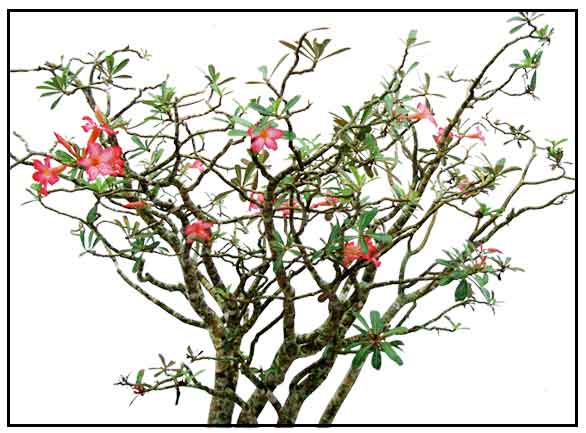
Bangkok calachuche is a succulent shrub or small tree, with a thick
or swollen trunk, sometimes with fleshy tap roots, growing up to 3 meters high. Bark is smooth, shiny green to pale brown, with green slashes in color. Stems exude a milky sap.
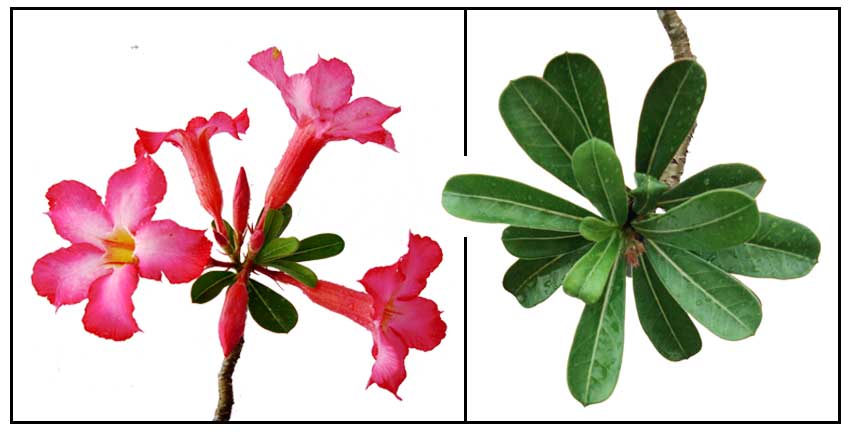
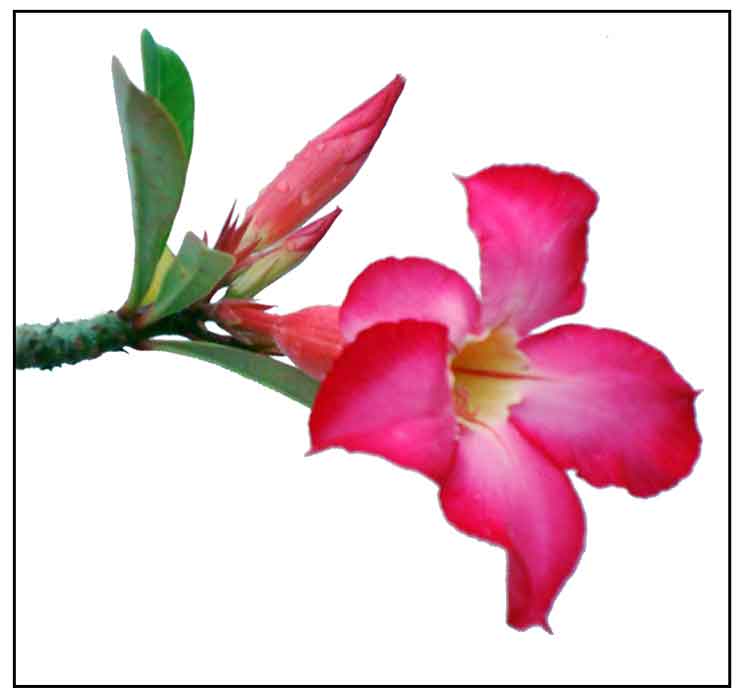
Leaves are spatulate, dark green, deciduous, fleshy, and arranged in alternate spiral, and clustered at the tips of the shoots. Nerves are pinnate, hardly prominent, 6 to 15 pairs laterally. Flowers are showy, funnel-shaped,
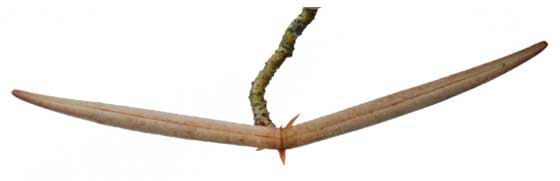
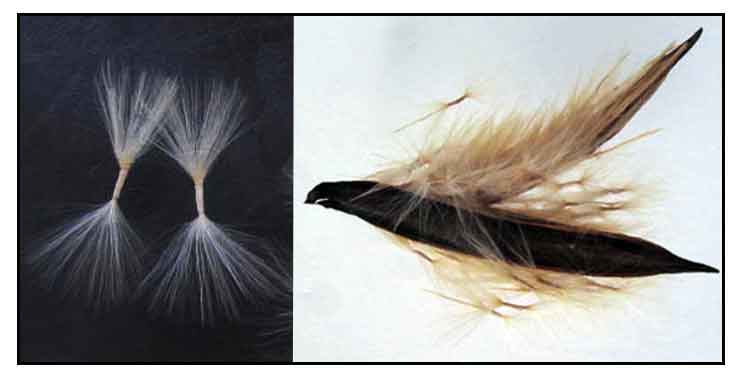
with five distinct pinkish or light red lobes. Fruit is a follicle occurring in clusters to two or three, 15 to 25 centimeters long, 1 to 1.5 centimeters across, with elongated acuminate tips, finely pubescent. Seeds are linear, with a pappus on both ends.
 Distribution Distribution
- Native to South African countries.
- Introduced to Thailand, and from there, to the Philippines.
- Common garden cultivation.
 Constituents Constituents
- Study has yielded some 30 cardiotoxic
glycosides with actions similar to digitalis.
- Roots and stems contain the same glycosides.
- Ethanol extract yielded the cardenolides somalin, hongheloside A, 16-acetylstrospeside, and honghelin and the flavonol 3,3'-bis(O-methyl)quercetin. (see study below)
(1)
- Phytochemicals of stem-bark yielded alkaloids, steroids, saponins, glycosides, anthraquinones, tannins, and flavonoids.
- Aqueous extract of leaves yielded active components such as saponins, tannins, flavonoids, terpenoids, glycoside and alkaloid. (see study below) (17)
- Ethanol stem bark extract yielded alkaloids, saponins, tannins, flavonoids, glycosides, steroids, and triterpenes with no anthraquinones. (see study below)
(19)
- Phytochemical screening of methanol extract of A. obesum fruit (pods) isolated 42 compounds consisting of cardiac glycosides, triterpenoids, and steroids. (see study below) (28)
- Study of roots and stems isolated 30 cardiac glycosides (15 known glycosides and 15 new combinations of known aglycones and sugars. Oleandrigenin ß-gentiogiosyl-ß-thevetoside was the main glycoside. Also isolated were neridienone A and 16, 17-dihydroneridienone A, common pregnanes in Apocynaceae.
-
Ethanol extract of A. obesum have been reported to contain an inactive triterpene (dihydroifflaionic acid) and an inactive flavonol 38 (3-0-methylkaempferol). The methanol extract of A. obesum stem bark has been reported to contain some alkaloids, flavonoids, saponins, tannins, glycosides, anthroquinones and steroids. Petroleum ether extract of stem bark yielded only saponins, tannins, steroids and glycosides. (see study below) (36)
Properties
- Oleandrigenin has been shown to have cytotoxic effects.
- Study have suggested antibacterial, anticancer, antioxidant, antiviral, trypanocidal, acaricidal, antioxidant, molluscicidal, piscicidal, antibiotic, anesthetic, anticance, anti-inflammatory properties.
Parts utilized
Bark, roots, sap.
Uses
Folkloric
- No recorded folkloric medicinal use
in the Philippines.
- In Arabian traditional
medicine, sap and bark are used to treat bone dislocations, rheumatism,
sprains, paralysis, swellings, wounds, skin infections.
- In Saudi Arabia and Yemen,
the juice from the stem and crushed bark is applied on wounds.
- Stem juice applied to pimples.
- In Sahel, Africa, a decoction
of roots, alone or in combination with other plants, is used for treatment
of venereal diseases. Root or bark extract is used as bath or lotion
for skin diseases and lice. Latex is used for decaying teeth and septic
wounds.
- In Somalia, root decoction
used as nose drops for rhinitis.
- In Kenya, latex is rubbed
on the head for lice. The bark is chewed as abortifacient.
Others
- In Senegal and Ethiopia,
used as arrow poison.
- In Kenya, used for ethnoveterinary
control of lice and fleas in livestock. Powdered stems used for skin
parasites of camels and cattle.
- In Uganda, fresh roots are cut, crushed, and mixed with water and the solution used to wash the body to control ticks and helminthosis of livestock. (24)
- Used in magic potions.
Studies
• Cytotoxicity / Antitumor / Human Epidermoid Nasopharyngeal Carcinoma:
Phytochemical study yielded cardenolides somalin, hongheloside A,
16-acetylstrospeside, honghelin and flavonol quercetin. Ethanol extract
exhibited activity against human epidermoid carcinoma of the nasopharynx
test system. (1)
• Cytotoxicity / Human Colon Cancer Cell Lines: Study showed AO exhibited very strong cytotoxicty against
2 human colon carcinoma cell lines.
• Cytotoxic Pregnane / Leaves: Study yielded two pregnanes possessing a 16-en-20-one system from the leaves of A obesum which exhibited a cytotoxic activity against murine leukemia P388/S cells. Their 16, 17-dihydro derivatives proved to be non-cytotoxic. (6)
• Phytochemicals / Cardiac Glycosides / Roots and Stems: Roots and stems of A obesum yielded 30 cardiac glycosides – 15 know glycosides and 15 new combinations of aglycones and sugars. Oleandrigenin-beta-gentiobiosyl-beta-D-thevetoside was the main glycoside. (3)
• Antibacterial / Stem Bark: Extracts of stem-bark of Adenium obesum were tested against selected strains of gram negative bacteria - E. coli, K. pneumonia, S. typhi, N. gonorrhea, P. aeruginosa. Extracts showed significant zones of inhibition against 80% of the tested organisms. (7)
• Molluscicidal: Study of a methanol extract showed molluscicidal activity which increased as the temperature increased. Results conclude application of sublethal concentration of methanol extracts may be helpful in snail control through interference with snail biochemistry and physiology. (8)
• Antiviral / Cardiotonic Glycoside: Study screened the methanolic extracts of six Saudi plants for in vitro antiviral activity using influenza virus A/PR/8/34 (H1Nl) and MDCK cells in an MTT assay. Extracts of Adenium obesum was one of two plants that showed antiviral activity. A chloroform fraction yielded active compound A identified as oleandrigenin-[beta]-D-glucosyl (1->4)-ß-D-digitalose. (9)
• Nanoparticles from Leaf Extract / Antibacterial Effect: Study reports the synthesizing of AgNPs (silver nanoparticles) leaf extracts of A. obesum. Results suggest an environmentally friendly method of biological AgNPs production for application in nanatechnology based industries: cosmetics, foods, medical and antibacterial applications. (11)
• Antibiotic Plant Synergy for Resistant Bacteria: Study investigated the synergistic activity of methanolic extract of plant stem bark with oxytetracycline against some drug resistant bacterial isolates. Results showed synergistic activity and suggests the plant can be a source of bioactive substances with broad spectrum of activity when combined with antibiotic. (12)
• Cosmetic Component / Invention: Patent application was submitted for use of Adenium obesum extract in a cosmetic product to help strengthen cutaneous barrier, reinforce cohesion of the dermal-epidermal junction, prevent and delay effects of skin aging, and to provide a protective and hydrating moisturizing effect. (13)
• Toxicological Evaluation / Stem Bark / African Catfish: Study evaluated the toxicity of ethanol extract of A. obesum stem bark as tool for aquaculture pond management prior to stocking with catfish, Clarias gariepinus. The toxic nature of the extract in the exposed hardy fish can be exploited for effective aquaculture pond management against unwanted predatory and weed aquatic organisms. However, indiscriminate use of higher concentrations can jeopardize the aquatic biodiversity. (14 ) Study evaluated the acute toxicity of aqueous extract of stem bark to determine the median lethal concentration (LC50) in exposed Clarias gariepinus. LC50 was 8.38 mg/l for the extract where mean mortality was significantly (p<0.05) concentration and exposure period-dependent. (see constituent above) (36)
• Phenolic Content / Flavonoids / Radical Scavenging Activity: Study investigated the antioxidant activities of 10 Arabian herbs and spices, including Adenium obesum flowers. A. obesum showed considerable concentration of total phenolics and a considerable amount of total flavonoids. It is a rich source of anthocyanins. The 100% methanol extract showed the best free radical scavenging activity due to its high content of anthocyanins. (15 )
• Antimicrobial / Leaves: Study evaluated the antibacterial activity of aqueous and alcoholic extracts of leaves of Adenium obesum. Results showed the methanolic extract to have effective antibacterial activity against gram-positive bacteria and ineffective against gram-negative bacteria. (17)
• Hematologic Toxicity Study / Stem Bark: Study investigated the acute toxicity of ethanol extract of A. obesum stem bark in Wistar rats in relation to haematological parameters. Rats showed no obvious signs of toxicity, morbidity or mortality. Median lethal dose (LD50) of the extract was ≥ 5000 mgkg-1. Results showed A. obesum is not haematotoxic and is considered a safe medicinal plant. (18)
• Hepatotoxicity Study / Stem Bark: Study evaluated the toxicity and histopathological effects ethanol stem bark extracts on the liver of female Wistar rats. Doses of 300, 2000, and 5000 mg/kg were orally administered by gavage. Exposed rats showed no mortality and did not show signs of toxicity. Changes in liver enzymes were non-significant (p>0.05). Congestion and fatty degeneration in the liver of exposed rats were not significantly (p>0.05) different compared to control. Adenium obesum did not cause major hepatic damage in exposed rats. Results suggest a safe oral medicinal plant within the dose and exposure period used in the study. (19)
• Silver Nanoparticles / Leaf / Induced DNA Damage, Apoptosis and Autophagy via ROS: Study reports a novel one-step biosynthesis of silver nanoparticles (AgNOs) using leaf extracts. The AgNPs were able to induce dose-dependent cytotoxicity in MCF-7 cells. It also significantly enhanced the level of ROS level, DNA damage, apoptosis and autophagy. (20)
• Piscicidal / Stem Bark: Study evaluated the use of ethanol extract of Adenium obesum stem bark as a potent organic piscicide against unwanted predatory animals and/or fish in fish ponds. (21)
• Trypanocidal / Stem Bark: Using Trypanosoma brucei as test organism, study evaluated about 200 extracts of varying polarities from forty tropical plants of Nigeria for in vitro trypanocidal activities. Among the plants investigated, significant trypanocidal activity was observed in seven, including Adenium obesum stem barks. (22)
• Antioxidant / Flowers: Study evaluated the antioxidant activities of 10 Arabian herbs and spices. Of the studied plants, Adenium obesum and A. vera showed a high total phenolic content, a considerable content of total flavonoid and high levels of TEAC radical-scavenging activity compared with the other plant. Adenium obesum total phenolic content was 1889.66 mg GAE/100 g; a total flavonoid content of 553.52 mg QEA/100 g; and a TEAC (Trolox equivalent antioxidant capacity) of 6326.51 µmole/100g. (23)
• Silver Nanoparticles / Antioxidant: Study reports on the biosynthesis of silver nanoparticles by reduction of silver nitrate from leaf extract of Desert Rose. The highest anthocyanins content (18340.9 mg/L) and best free radical scavenging activity were obtained from a 100% methanol extract. There was a good correlation between antioxidant activity (R2=0.9368) for water/ethanol series extracts. (25)
• Antimicrobial Flavonoids / Stems: Study of ethyl acetate crude extract of stems isolated two pure new flavonoids 5,7,3',4'-tetrahydroxy flavone (1) and 3,5,7,3',4',5'-hexahydroxyflavone (2) along with other minor compounds. The pure antimicrobial flavonoid compounds showed significant antibacterial activities against Staphylococcus aureus, Escherichia coli, Pseudomonas aeruginosa, and Proteus vulgaris in disc diffusion assay with inhibition zones of 9-14 mm. Maximum inhibition zone was exhibited by compound 2 at 200 µg/ml against Proteus vulgaris (IZ=14mm). (26)
• Antimicrobial Compound / Antioxidant / Stem-Bark: Study screened the antioxidant and antimicrobial activities of an isolated compound from a chloroform extract. The chloroform extract showed highest antioxidant activity with EC50 value of 28.32 µg/ml followed by water, methanol, butanol, ethyl acetate and hexane extracts. All crude extracts and pure compound exhibited moderate antimicrobial activity against gram-positive S. aureus and gram-negative E coli, P. aeruginosa, and P. vulgaris. The active metabolite was identified as 3,4-dihydrocinnamic acid (R)-1-carboxy-2-(3,4-dihydroxyphenyl) ethyl ester, a common plant ingredient known as rosmarinic acid. (27)
• Cytotoxic Cardiac Glycosides / Fruit Pods: Phytochemical screening of methanol extract of A. obesum fruit (pods) isolated 42 compounds consisting of cardiac glycosides, triterpenoids, and steroids. Cardiac glycosides were tested against three human cell lines, 3T3 (normal cells), HeLa (human cervical cancer cell line) and PC-3 (human prostate cancer cell lines). Cardiac glycoside, honghelin (4), obeside B (5), and obeside (6) showed significant effects against cells lines HeLa, 3T3 and PC-3 compared to standard drug doxorubicin. (28)
• Molluscicidal / Cardiac Glycosides / Stems: Study sought to isolate molluscicidal active compounds from stems of Adenium obesum. Two known cardiac glycosides, cerberin and nerifolin, were isolated and showed significant molluscicidal activity with LD50 values of 5.39 and 4.3 µg/g bw, respectively. (29)
• Cytotoxic Effects Against A549 Lung Cancer: MTT assay evaluated the anticancer or cytotoxic effects of AOE on A549 lung cancer cells. The AOE showed an IC50 of 256.75 µg/mL. AOE treatment significantly decreased cell viability of A549, which was 79.82%, 57.82%, 27.48% as compared to untreated cells or control cells. Results showed AOE exhibited substantial cytotoxic activity against lung cancer cells. (32)
• Anticancer / Antioxidant / Anti-Inflammatory / Leaves: Study evaluated ethanolic extracts of Adenium obesum leaves for anticancer, antioxidant, and anti-inflammatory activities. Antioxidant capacity was evaluated by DPPH, ABTS, superoxide, hydroxyl radical scavenging, and lipid peroxidation inhibition. The AOE showed cytotoxic activity against A549 lung cancer cells, inhibiting the viability of cancer cells by inducing nuclear condensation and fragmentation. The EOE demonstrated anti-inflammatory potential in murine alveolar macrophages (J774A.1) in vitro model. The AOE showed its potential in reducing the levels of inflammatory mediators including proinflammatory cytokines and
TNF-α. (32)
• Mitigates Testicular Injury / Flower: Study evaluated the protective effects of A. obesum flower extract (AOE) on testicular injury in streptozotocin (STZ)-induced type 1 diabetic rats. Treatment with AOE increased serum testosterone, FSH, LH, decreased testicular thiobarbituric acid reactive substances (TBARS) content, effectively enhanced reduced glutathione (GSH) content and SOD activity. It also inhibited diabetes-induced testicular tissue injury and prevented inflammatory and apoptotic responses by decreased TNF-α, IL-6, and Bax and increased Bcl-2. Results showed the AOE mitigates testicular injury, oxidative stress, inflammatory response and apoptotic cell death in STZ-induced diabetic rats. (33)
• Anesthetic Potential / Stems: Study evaluated the anesthetic effect of stem extracts on Swiss mice. The 10% concentration showed shortest onset of effect and longest length of effect with 0 minutes and 1.95 minutes, respectively. Results suggest the stem extract has anesthetic potential. (34)
• Antidiabetic / Flowers: Study evaluated the in-vivo and in-vitro antidiabetic potential of methanolic and ethyl acetate extracts of A. obesum flowers using doses of 100, 200, 300 mg/kbw orally in streptozotocin induced diabetic rats. Metformin was used as standard drug. Both extracts showed strong alpha-amylase inhibitory activity in a dose dependent manner with significant reduction in blood glucose levels (p<0.0001) and significant increase in serum insulin (p<0.0001). (35)
• Elucidation of Anticancer Properties by Molecular Docking: Study aimed to elucidate the plausible mechanisms of anticancer activity of A. obesum by evaluating the binding interaction of its nine major selected compounds with macromolecular receptors implicated in initiation and progression of cancer using various in silico approaches. Molecular docking results showed compound Δ16-3-Acetyldigitoxigenin (16-anhydro-3-acetylgitoxigenin) scored the best binding energy scores with the majority of the target proteins. The compound possessed favorable drug-like properties without significant toxicities. (37)
Caution / Toxicity Concerns
- Leaves and flowers are poisonous to goats and cattle.
- Milky sap can cause skin irritation and allergic dermatitis.
- Source of fish and arrow poison prepared from the latex of the bark
and fleshy parts of the trunk, but always in combination with other
poisons. In Africa, despite its toxicity, is used in medical applications
and magic potions. source
- In a wide area of Africa, arrow poison is prepared from the root sap;
sometimes from the wood or stem latex. It provides a quick kill for
big game hunting. In Senegal, Nigeria and Cameroon, fish poison is prepared
from a decoction of the bark and leaves.
Availability
- Cultivated.
- Seeds in the cybermarket.
|