 Gen info Gen info
- Beta vulgaris is economically the most important crop of the large order Caryophyllales.
- It has several cultivar groups: (1) Sugar beet, which produces table sugar; (2) root vegetable known as beet root or garden beet; (3) leaf vegetable known as chard or spinach beet; and (4)
mangelwurzel, the fodder crop. (30)
- The wild ancestor of the cultivated beets is the sea beet, Beta vulgaris subsp. maritima,
(30)
- Etymology: The genus name Beta is the ancient Latin name for beetroot
- Taxonomy: The species description of Beta vulgaris was made in 1753 by Carl Linnaeus in Species Plantarus, at the same time creating the genus Beta. Linnaeus separated sea beet (Beta maritima) as its own species, and left only cultivated beets in Beta vulgaris. Today sea beet and cultivated beets are considered belonging to the same species, because they may hybridize and form fertile offspring. (30)
- Beta vulgaris is classified into three subspecies: Beta vulgaris subsp. adanensis; B. vulgaris subsp. maritima (see beet); and B. vulgaris subsp. vulgaris
where all cultivated beets belong, including sugar beet in the cultivar group Altissima. (30)
- Sugar beet is a major commercial crop due to high concentrations of sucrose, which is extracted to produce table sugar. It was developed from garden beets in Germany in the late 18th century after the roots of beets were found to contain sugar in 1747. (30)
Botany
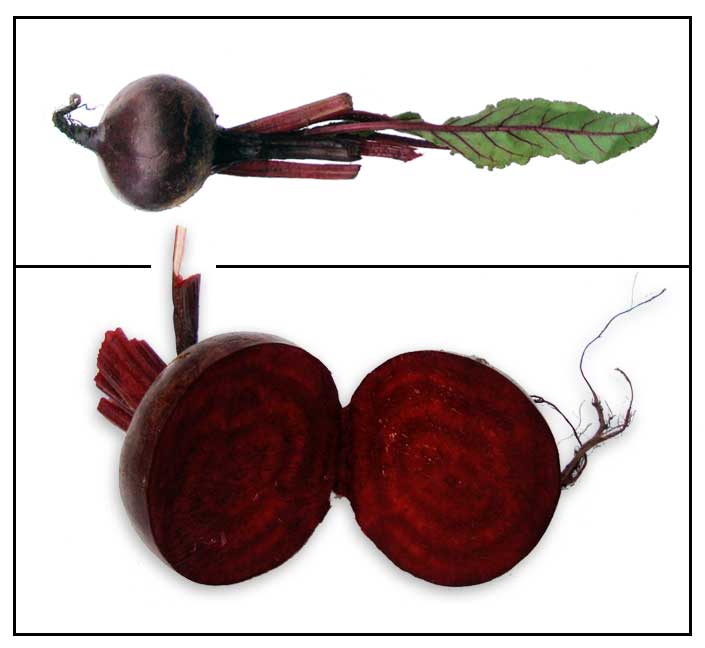
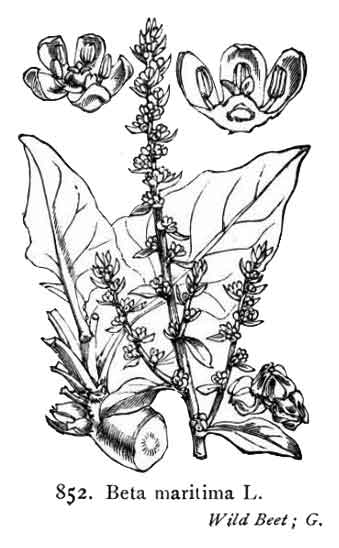
• Beet is a succulent, smooth herb. Erect stem is 30 to 90 centimeters long. Lower or root leaves are ovate or oblong-obtuse, often trowel-shaped, up to 25 centimeters long. Upper leaves are rhombic-ovate, oblong-ovate or lanceolate. Flowers are greenish, stalkless, solitary or 2- to 3-adnate, in axillary spikes or corymbose clusters. Spikes are slender, 15 to 45 centimeters long. Utricle is adnate to the disk and base of the perianth. Seed is horizontal with thin testa, floury albumen and annular embryo.
 • Beta vulgaris is a herbaceous bennial or, rarely, perennial plant up to 120 cm (rarely 200 cm) height; cultivated forms are mostly biennial. Roots of cultivated forms are dark red, white, or yellow and moderately to strongly swollen and fleshy (subsp. vulgaris); they are brown, fibrous, sometimes swollen, and woody in the wild subspecies. Stems grow erect or, in the wild forms, often procumbent; they are simple or branched in the upper part, and their surface is ribbed and striate. Basal leaves have a long petiole (which may be thickened and red, white, or yellow in some cultivars). The simple leaf blade is oblanceolate to heart-shaped, dark green to dark red, slightly fleshy, usually with a prominent midrib, with entire or undulate margin, 5–20 cm long on wild plants (often much larger in cultivated plants). Upper leaves are smaller, their blades are rhombic to narrowly lanceolate. Flowers are produced in dense spike-like, basally interrupted inflorescences. Very small flowers sit in one- to three- (rarely eight-) flowered glomerules in the axils of short bracts or in the upper half of the inflorescence without bracts. Hermaphrodite flowers are urn-shaped, green or tinged reddish, and consist of five basally connate perianth segments (tepals), 3-5 × 2–3 mm, 5 stamens, and a semi-inferior ovary with 2-3 stigmas. Perianths of neighboring flowers are often fused. Flowers are wind- or insect-pollinated, the former method being more important. In fruit, the glomerules of flowers form connate hard clusters. Fruit (utricle) is enclosed by the leathery and incurved perianth, and is immersed in the swollen, hardened perianth base. Horizontal seed is lenticular, 2–3 mm, with a red-brown, shiny seed coat. The seed contains an annular embryo and copious perisperm (feeding tissue). (30) • Beta vulgaris is a herbaceous bennial or, rarely, perennial plant up to 120 cm (rarely 200 cm) height; cultivated forms are mostly biennial. Roots of cultivated forms are dark red, white, or yellow and moderately to strongly swollen and fleshy (subsp. vulgaris); they are brown, fibrous, sometimes swollen, and woody in the wild subspecies. Stems grow erect or, in the wild forms, often procumbent; they are simple or branched in the upper part, and their surface is ribbed and striate. Basal leaves have a long petiole (which may be thickened and red, white, or yellow in some cultivars). The simple leaf blade is oblanceolate to heart-shaped, dark green to dark red, slightly fleshy, usually with a prominent midrib, with entire or undulate margin, 5–20 cm long on wild plants (often much larger in cultivated plants). Upper leaves are smaller, their blades are rhombic to narrowly lanceolate. Flowers are produced in dense spike-like, basally interrupted inflorescences. Very small flowers sit in one- to three- (rarely eight-) flowered glomerules in the axils of short bracts or in the upper half of the inflorescence without bracts. Hermaphrodite flowers are urn-shaped, green or tinged reddish, and consist of five basally connate perianth segments (tepals), 3-5 × 2–3 mm, 5 stamens, and a semi-inferior ovary with 2-3 stigmas. Perianths of neighboring flowers are often fused. Flowers are wind- or insect-pollinated, the former method being more important. In fruit, the glomerules of flowers form connate hard clusters. Fruit (utricle) is enclosed by the leathery and incurved perianth, and is immersed in the swollen, hardened perianth base. Horizontal seed is lenticular, 2–3 mm, with a red-brown, shiny seed coat. The seed contains an annular embryo and copious perisperm (feeding tissue). (30)
Distribution
- Grown in many places in the Philippines, especially Baguio.
- Native to the Mediterranean.
- Widely cultivated in America, Europe, and throughout India.
Constituents
• Herb contains saponin, betaine phytosterine, ash, calcium, iron, vitamins A, B and C.
• Root contain saponin, isoleucin, leucine, tyrosine, betaine, lysin, arginine, histidine, phenylalanine, urease and tyrosinase.
• Root has yielded flavonoids, carbohydrates, betain, neobetain and anthocyanin pigments.
• Root yields betanins, used industrially as a red food colorants.
• Phytochemical screening has yielded flavonoids, carbohydrates, pentose, amino acids, saponins, tannins and steroids.
• Proximate composition of beetroot showed average values of proteins 1.
35 ± .2%; fats 0.3 ± 0.1%; carbohydrates 7.59 ± 0.4%; dietary fiber 1.9 ±0.2%; moisture 87.4 ± 0.3%; ash 1.4 ±0.2%. Mineral composition with average value (mg/100g) yielded iron 0.75 ±1.20; potassium 30.12 ± 0.29; calcium 12.20 ±1.20; manganese 0.79 ± 1.98; copper 0.09 ± 0.47. (34)
• Study of aerial parts for essential oil yielded 25 components, accounting for 98.1% of the total oil, characterized by a high proportion of oxygenated sesquiterpenes (39.2%), followed by sesquiterpene hydrocarbons (30.3%) and one apocarotenoid (26.3%). Main compounds were gamma-irone (26.3%),
α-cadinol (12.1%), T-cadinol (10.6%), bicyclogermacrene (10.4%) and delta-cardinene (6.0%). (see study below) (36)
• Study evaluated the roots of three cultivars for triterpene saponins. Results showed the roots of all three cultivars contained 11 saponins
consisting of oleanolic acid or hederagenin aglycone and varying numbers of sugars, with the dominant triglycoside derivative of oleanolic acid. (49)
• Nutritional value of raw beets per 100 g (3.5 oz) yield: Energy 180 kJ (43 kcal); Carbohydrates 9.56 g, sugars 6.76 g, dietary fiber 2.8 g; Fat 0.17 g; Protein 1.61 g; Vitamins: Vitamin A equi. 2 µg, beta carotene 20 µg, Thiamine (B1) 0.031 mg, Riboflavin (B2) 0.04 mg, Niacin (B3) 0.334 mg, pantothenic acid (B5) 0.155 mg, Pyridoxine (B6) 0.067 mg, Folate (B9) 109 µg, Vitamin C 4.9 mg; Minerals: calcium 16 mg, iron 0.8 mg, magnesium 23 mg, manganese 0.329 mg, phosphorus 40 mg, potassium 325 mg, sodium 78 mg, zinc 0.35 mg; water 87.58 g. (USDA Database) (30)
Properties
• Roots traditionally used as expectorant, diuretic, and cure for mental and hepatic diseases.
• Leaves considered tonic, diuretic, anti-inflammatory.
• Studies have suggested hepatoprotective, antidiabetic, anti-adhesion, cytotoxicity, antioxidant, gastroprotective, anti-inflammatory, hematopoeitic, anticancer, antiproliferative, antihypertensive, antimicrobial, immunomodulatory, hypolipidemic, colorant, antihypertensive, antiacetylcholinesterase, anxiolytic, antidepressant, antiviral, antiherpetic, genotoxicity, anticoagulant, antipsoriatic, neuroprotective, diuretic properties.
Parts
utilized
Roots, leaves. seeds.
 Uses Uses
Edibility
• Highly prized for their large, red, edible roots.
• Succulent fleshy roots are cooked and eaten in salads and as vegetables.
• Leaves are also boiled and eaten as a vegetable; used as substitute for spinach.
• A traditional food for Jewish Rosh Hashana (New Year.)
• A good source of calcium and iron.
Folkloric
• Red beet used as an emmenagogue.
• White beet is used as laxative and diuretic.
• Decoction, with a little vinegar added, used for itching, cleans scurf and dandruff. Also used for all ulcerous and running sores.
• Seeds have cooling and diaphoretic properties.
• Fresh leaves applied to burns and bruises.
• Hippocrates suggested the use of beet leaves as binding for wounds.
• In Roman times, used as aphrodisiac.
• In Turkey, used for diabetes.
• In Iraq, used for folk treatment of liver and kidney diseases, for stimulation of the immune and hematopoietic systems, and in special diets in the treatment of cancer. (35)
• In the Aravali regions of Rajasthan,
India, rhizome juice drunk to cure kidney stones. (45)
Others
• Colorant: Betanins from the roots used industrially as red food colorant, e.g., to intensify the color of tomato paste, desserts, jams, jellies, etc.
Studies
• Hepatoprotective / CCl4-Induced Hepatotoxicity:
Ethanolic extract of Beta vulgaris roots exhibited significant dose-dependent hepatoprotective activity against carbon tetrachloride-induced hepatotoxicity in rats. (1)
• Antidiabetic:
Chard (B vulgaris L var. cicla) is used as a hypoglycemic agent in diabetic patients in Turkey. The study showed the plant extract when administered by gavage may reduce blood sugar by regeneration of beta cells. (2)
• Anti-Adhesion Activity:
Study showed B vulgaris (beet) root has the potential of interfering with adhesion of bacteria to host epithelial surfaces. (3)
• Cytotoxicity Reduction:
A crude extract of leaves of Indian spinach (B vulgaris L var. benghalensis) was observed to modify significantly the cytotoxic effects of a known carcinogen, lead subacetate, in mice in vivo (4).
• Antioxidant / Duodenal Protecting Effect: Study concludes table beet can protect the entire body from oxidative damage caused by ischemia-reperfusion of the liver but the effects on gut mucosa needs further investigation. (5)
• Anti-Inflammatory:
Study of aqueous extract showed anti-inflammatory activity in the carrageenan-induced rat paw edema, closely resembling indomethacin. (6)
• Betanine / Natural Red Dye:
Beetroot is the main source for the natural red dye. (FDA approved E162) The main component of the extracted "beetroot red" is betanine. Studies have shown betanines have antioxidant, antimicrobial, and antiviral activities. The study is on the development of a statistical method for optimizing extraction conditions. (9)
• Cytotoxicity / Anti-Cancer:
Study evaluated the cytotoxic effect of red beetroot extract with anticancer drug, doxorubicin (adriamycin) in human prostate cancer cells and human breast cancer cells. Results showed betanin, the major betacyanin constituent, may play a role in the cytotoxicity exhibited by the red beetroot extract. (10)
• Hepatoprotective / Ethanol-Medicated Hepatotoxicity:
Study showed an n-butanol fraction of Beta vulgaris to possess potent hepatoprotective effect against ethanol-induced hepatic toxicity, with a potential role in the management of alcoholic liver disease. Silymarin was the reference drug. (11)
• Peroxidase Source / Production:
Peroxidase is an enzyme that plays a crucial role in scavenging free radicals within the plant system. Commercially they are components in chemical diagnostics and laboratory experiments. Study showed the red beet hairy root system is a promising source for the production of this expensive enzyme. (12)
• Hematopoietic Benefits / Anemia Remedy:
Study in experimental rat models showed a methanolic root extract produced dose-dependent increase in packed cell volume, hemoglobin concentration, RBC counts, and total lymphocyte counts. (13) Study evaluated the anti-anemic effect of beetroot on male wistar rats with anemia induced by phenylhydrazine. All the red cell indices increased in the beet group compared to control. (58)
• Phenolics Content:
Total phenolic contents in roots parts were found to decrease in the order peel, crown, flesh. Cold storage produced significant differences. (14)
• Pharmaceutical Excipient / Disintegrating Agent:`
Study showed Beta vulgaris pulp powder is a good pharmaceutical adjuvant, specifically as a disintegrating agent. (15)
• Radiotherapy and Benefits of Beta vulgaris Supplementation:
Study showed supplementation of Beta vulgaris in irradiated patients did not worsen survival time. There was reduction of acute radiation reactions, and level markers of oxidative stress/DNA damage were not influenced. Results suggest supplementation of Beta vulgaris in irradiated patients is safe. (16)
• Anti-Inflammatory / Roots:
An ethanolic extract of B. vulgaris roots showed good anti-inflammatory activity on carrageenan-induced rat paw edema method. (17)
• Hepatoprotective in Diabetes: Study evaluated chard extracts on its effect on the liver of diabetic rats. In the diabetic group given chard, serum enzymes, total lipid level, sialic and uric acid levels, blood glucose and liver LPO and NEG levels decreased. Results conclude the extract has a protective effect on liver in diabetes mellitus. (18)
• Chemical Composition of Leaves during Developmental Stages: Study showed beetroot leaves are an excellent source of omega-3, in addition to having significant antioxidant activity and total phenolic compounds and minerals. Chemical constituents changed during developmental stages, with the 100-day leaves showing the greatest amount of omega 3 and 6 and TPC. Results the food uses and nutritional value of in natura and dehydrated beetroot leaves. (19)
• Antiproliferative / Immunomodulatory: Study evaluated the various concentrations of methanolic extracts of roots for in vitro anti-proliferative and in-vivo immunomodulatory activity of Beta vulgaris against MCF7 breast cancer cell line. Results showed in vitro inhibition of tumor cell growth. It showed immunomodulatory effects in-vivo via assessment of humoral antibody response and delayed-type hypersensitivity response. (20)
• Hypolipidemic Effects: In the study of STZ-induced diabetic rats, the augmented triglyceride and cholesterol due to diabetes were significantly decreased by the Beta vulgaris plant extract. (21)
• Review / Benefit of Supplementation in Health and Disease: Review discusses beetroot's biological activity and evaluates evidence from studies that specifically investigated the effect of supplementation on inflammation, oxidative stress, cognition and endothelial function. (23)
• Nephroprotective /
Amelioration of Gentamicin-Induced Nephrotoxicity: Study evaluated the protective effect of beetroot ethanolic extract on gentamicin-induced nephrotoxicity. Results suggest beetroot extract treatment attenuates renal dysfunction and structural damage through reduction of oxidative stress, inflammation, and apoptosis in the kidney. (24)
• Chemical Compositional Study of Leaves in Various Developmental Stages: Study evaluated beetroot leaves in natura and dehydrated form in terms of fatty acid composition, proximate composition, minerals, total phenolic compounds and antioxidant activity. Results showed significant levels of protein and lipids in all developmental stages. All proximate composition nutrients decreased during the maturation stages. Antioxidant activity and chemical constituents, mainly the ω-3fatty acid, increased during the stages of development. Results suggest that in natura and dehydrated leaves can be used in the preparation of broths, meals, or added to other foods. Dehydrated leaves showed the greatest nutritional value. (25)
• Study for Use as Natural Coloring Agent for Foods and Cosmetics: Study evaluated beet as coloring agent in food and cosmetic. The juice showed good antioxidant and antimicrobial qualities. The juice augmented Henna color, with the best results obtained with 50:50 mixture. When added to homemade cakes, it was acceptable to many volunteers in color and taste questionnaires. Study suggests further study of plants in the formulation of natural plant pigments. (26)
• Antimicrobial / Roots: Study of an ethanolic root extract of B. vulgaris showed antimicrobial activity against gram negative and gram positive bacteria. Streptomycin was used as reference control. (27)
• Effect on Oxidative Injury in Aorta and Heart of Streptozotocin-Diabetic Rats: Study evaluated the effect of feed chard (B. vulgaris var. cicla) on diabetes-induced free radical-mediated injury in rat aorta and heart tissues of female Swiss albino rats. Results showed treatment reversed the effects of diabetes on blood glucose and tissue lipid peroxidation and glutathione levels. (28)
• Prevention of High Blood Pressure: Study evaluated the efficacy of natural sources vs medications in the prevention of high blood pressure. Results suggest natural sources, especially a combination of garlic and beet roots, gave good results. (29)
• Improvement of Scopolamine Induced Spatial Memory Disorder / Antioxidant / Leaves: Study evaluated the effect of beet root leaf extract on scopolamine-induced spatial memory impairment in male Wistar rats. Morris water maze task was used to assess spatial memory. The extract significant increased antioxidant capacity and decreased serum MDA level in scopolamine-treated rats (p<0.05). Results suggest the leaf extract can ameliorate memory impairments and provide protective effects against scopolamine induced oxidation. (31)
• Effect on Liver Enzymes . Non-Alcoholic Fatty Liver Disease / Clinical Trial: A double-blind parallel group, randomized clinical trial evaluated the efficacy of Beta vulgaris extract in the treatment of NAFLD. Integration of B. vulgaris extract in the standard treatment of NAFLD significantly improved AST, ALP, FBS. LDL and HDL. The effect on ALT increased over time. (32)
• Antibacterial / Aerial Parts: Study evaluated the ethanol extracts from aerial parts of four plants, including Beta vulgaris, Amaranthus graecizans, Rumex obtusifolius and Polygonum patulum for antibacterial activity against some gram positive and gram negative bacteria i.e., P. aeruginosa, L. monocytogenes, S. epidermis, S. aureus, K. pneumonia, S. typhi, B. cereus, B. anthracis, E. coli and S. pyogenes. The majority of extracts showed inhibitory effects at different concentrations. E. coli was the most resistant. Beta vulgaris showed second highest inhibitory zone with 20 mm against Staphylococcus epidermis. (33)
• Dermatological Use / Acne and Psoriasis / Leaves: Study evaluate aqueous and methanolic extracts of fresh and dried leaves for phytochemical contents and the effects in the treatment of acne and psoriasis using 360 patients. Phytochemical screening showed rich flavonoids content, specially quercetin and kaempferol. Results showed significant healing effect in the treatment of acne, with more predominant results with fresh leaves. The solution form showed better results than the ointment formulation in the treatment of acne. Same results were seen for psoriasis,except for the ointment formulation showing better results. (35)
• Essential Oil / Antioxidant / Cytotoxicity / Aerial Parts: Study evaluated the chemical composition, antioxidant, cytotoxic, anticholinesterase and anti-tyrosinase activities of essential oil of aerial parts. Study of aerial parts for essential oil yielded 25 components. The EO exhibited high antioxidant activity (IC50 0.055± 0.006 mg/ml) with catalase value of 524.447 ±2.58 units/mg protein. It also exhibited significant cytotoxic eff3ct against A549 cell line, with IC50 of 42.44 ± 1.40 µg/ml. Results suggest potential application in the food and pharmaceutical industries. (see constituents above) (36)
• Antihypertensive / Raw Beet Juice and Cooked Beet: Study evaluated the effect of raw beet juice (RBJ) and cooked beet (CB) on blood pressure of 24 hypertensive patients. aged 25-68. Although both forms of beetroot were effective in improving BP, endothelial function and systemic inflammation, the raw beetroot juice had greater antihypertensive effects. along with more improvement in endothelial function and systemic inflammation compared with CB. (37)
• Antiacetylcholinesterase / Antioxidant: Study showed that chard (Beta vulgaris) may provide a natural source of antioxidant and antiacetylcholinesterase and proline content. (38)
• Antibacterial / Antioxidant / Beetroot: Study evaluated the total phenolic content (TPC), antioxidant and antibacterial activities of methanolic extract of Marigold flower (MF) and beet root (BR). BR total phenolic compound was 38,4 mg/g GAE compared to MF 42.5 mg/g GAE. Both extracts showed significant activities against both type of Gram negative (E. coli, S. dysenteriae) and Gram-positive (B. subtilis, S. aureus) bacterial strains. (39)
• Antiviral / Antiherpetic: Study in Colombia evaluated extracts from nine species of plants traditionally used for treatment of various diseases for potential antitumor (cytotoxicity) and antiherpetic activity.
Beta vulgaris did not show cytotoxic activity. The aqueous extract of Beta vulgaris, showed some antiherpetic activity with acceptable therapeutic indexes (the ratio of CC50 to EC50). (40)
• Hematological Effects in Female Volunteers / Red Beetroot: Study evaluated the effect of taking 8 g of beetroot for 30 days on the blood hematological parameters of female volunteers. Results showed mild increase in hemoglobin levels, decrease in total iron binding capacity (TIBC), increase in serum ferritin and decrease in transferrin, along with a mild increase in serum iron levels after taking beetroot. MCV increased in four volunteers. Further studies were suggested to identify mechanisms of action and optimum dosing patterns. (41)
• Hypocholesterolemic: Study evaluated the lyophilized aqueous extract of B. vulgaris (beet root) for possible antihypercholesterolemic and antioxidant potential in cholesterol rich diet-induced hypercholesterolemia in Wistar albino rats. Beet root extract treatment significantly reduced MDA level and significantly replenished the reduced NP-SH content in both liver and heart tissue. BVE at doses of 250 and 500 mg/kbw for 70 consecutive days showed a significant decrease in total cholesterol and triglycerides and significant increase in HDL-C. Acute toxicity testing showed no mortality of morbidity in rats. Results suggest significant antihyperchlesterolemic and antioxidant potential and/or free radical scavenging/ properties. (42)
• Mitigation of the Effects of Food Preservatives and Colorants: Study evaluated the the biochemical influence of broccoli and beet extracts on selected individual additives NaNo2 or sunset yellow treated rats, in addition to gene expression of some antioxidant enzymes. Results showed rats co-administered with beet or broccoli extracts had a significant decrease in serum AST, AL, ALP, urea, total lipids, and triglycerides, and a significant increase in reduced glutathione (GSH), glutathione peroxidase (GSH-px) and SOD enzyme activities. Study suggests broccoli and beet extracts have a protective effect against NaNO2 or sunset yellow in rat treated groups. (43)
• Hypoglycemic / Betavulgarosides / Root: Study of roots isolated betavulgarosides I, II, III, and IV, oleanic acid oligoglycosides, along with betavulgarosides VI, VII and VIII. Betavulgarosides II, III, and IV exhibited hypoglycemic activity in an oral glucose tolerance test in rats. (44)
• Nutritional and Functional Potential / Cicla and Rubra / Root: Swiss chard (Beta vulgaris cicla, BVc) and beetroot (Beta vulgaris rubra BVr) are vegetables with a long history of use in folk medicine. BVc has shown antihypertensive, hypoglycemic, and antiioxidant activity. It contains apigenin, flavonoids (vitexin, vitexin-2-O-rhamnoside and vitexin-2-O-xyloside), which has shown antiproliferative activity on cancer cell lines. BVr contains secondary metabolites, called betalains, used as natural dyes in food and show anticancer activity. Both can be considered functional food, with potential for purification of chemopreventive molecules for use in functional foods and nutraceutical products. (46)
• Anxiolytic/ Antidepressant / Antioxidant / Leaves: Study evaluated the protective effect of Beta vulgaris ethanolic extract of leaves against acute restraint stress (ARS)-induced anxiety= and depressive-like behavior and oxidative stress in mice using open field test (OFT), elevated plus maze (EPM), forced swim test (FST) and tail suspension test (TST). Results showed anxiolytic and antidepressant activity in stressed mice along with good antioxidant property suggesting therapeutic potential in the treatment of stress-related psychiatric disorders. (47)
• Hepatoprotective against CPF-Induced Toxicity: Exposure to organophosphorus insecticides causes problems to humans and animals. Study evaluated the potential of red beet root (RBR) extract to prevent chlorpyrifos (CPF)-induced liver injury, with emphasis on oxidative stress, inflammation and apoptosis. RBR prevented CPF-induced biological alterations, and ameliorated liver function LPO, NO, iNOS and pro-inflammatory cytokines. RBR enhanced antioxidant defenses, suggesting potential use for therapeutic intervention to minimize CPF hepatotoxicity. (48)
• Anticoagulant / Antioxidant / Genotoxicity / Juice: Study evaluated Beta vulgaris juice and methanol extract for anticoagulant properties and genotoxicity. The ME and juice showed surprising anticoagulant and antioxidant activities. The ME showed highest phenolic and flavonoid contents with values of 39.75 mg GAE/g bad 20.73 mg CE/g extract, respectively. They were devoid of any genotoxicity or cytotoxic effects. Results suggest potential, especially for the juice, as source of bioactive molecules for therapeutic use possible in the treatment of cardiovascular diseases. (49)
• Peroxidase Enzyme / Phenolic Antioxidants / Leaves: Peroxidases are heme containing enzymes that are produced by a number of organisms. Study reports on the purification of a plant peroxidase from the leaves of chard (B. vulgaris subsp. cicla). Phenolic and flavonoid contents in chard that connected with antioxidant properties were 17.5 µg GA/mg extract and 11.7 µg/ QE/mg extract, respectively.. Results suggest a novel rich source of phenolic antioxidants and high peroxidase activity. (50)
• Synergism with DMSA against Lead-Induced Neurotoxicity: Lead (Pb) is one of the most prevalent causes of human neurotoxicity. Study evaluated the protective role of Beta vulgaris juice (BVJ) alone and with DMAA (dimercaptosuccinic acid) on rat neurotoxicity induced by Pb Results showed that BVJ contains considerable amounts of polyphenols, triterpenoids, and betalains which play an important role as antioxidant and anti-inflammatory, The BVJ exhibited a protective effect against neurotoxicity by reduction of Pb levels in the blood and brain. It decreased oxidative stress, inflammation and cell death induced by Pb, and regulated activities of acetylcholine esterase and monoamine oxidase. BVJ and DMSA together displayed a synergistic antineurotoxicity effect. (51)
• Amelioration of Cyclosporine A-Induced Hepatotoxicity: Cyclosporine hepatotoxicity is one of its major side effects. Study evaluated the protective effects of beet root extract and silymarin against hepatotoxicity induced by cyclosporine-A in male albino rats. Co=administration of beet root extract of beet root extract or silymarin + CsA ameliorated liver enzyme and MDA changes and histopathological liver changes induced by CsA, Protective effect was attributed to decreased oxidative stress, inflammation, DNA damage, apoptosis and repairing of histopathological changes. (52)
• Sugar Beet as New Natural Emulsifier: Study evaluated the interfacial and emulsion-forming properties of sugar beet extract (Beta vulgaris L) and compared to a Quillaja extract that is widely used within the food industry. The sugar beet extract showed high surface activity. The formation of small emulsion droplets was successful; however, the droplets were bigger than those from the Quillaja extract. Results indicate sugar beet is an effective natural emulsifier and may be utilized for a variety of food and beverage applications. (53)
• Protection from Radiation Damage / Acceleration of Hematopoiesis / Beetroot : Study evaluated the radioprotective effects of beetroot in hematopoietic stem cells (HSCs) and progenitor cells in C47BL/6 mice. Beetroot extract was administered at day 10 after gamma-irradiation. Beetroot not only stimulated cell proliferation, but also minimized DNA damage of splenocytes. Beetroot also repopulated S-phase cells and increased Ki-67 or c-Kit positive cells in bone marrow. Results suggest beetroot has the potency to preserve bone marrow integrity and stimulate the differentiation of HSCs against ionizing radiation. (54)
• Antihyperglycemic Mechanisms: Study evaluated the possible mechanisms of antihyperglycemic activity pf an aqueous fraction of B. vulgaris extract. Results clearly proved the role of acetylcholine and GLP-1 on the insulin secreting activity of B. vulgaris. Increased glucose uptake in the skeletal muscle and subsequent glycogen synthesis may also play a part in the anti-hyperglycemic activity of B. vulgaris. (55)
• Toxicity Study: Study evaluated the safety of beetroot as a health promoting and disease preventing functional food. Freeze-dried beetroot was extracted with water. Doses of 10-1000 mg/kbw and 1600-5000 mg/kbw were administered orally as a single dose. Doses of 200-3000 mg/kbw for 28 days were administered orally. There was a significant decrease in serum blood glucose levels at 500 and 1000 mg/kbw of extract. Platelets and lymphocytes were significantly (p<0.05) decreased. at lower doses, while WBC, monocyte and granulocytes dose-dependently increased. LD50 was greater than 5000 mg/kg body weight. Results suggest extract consumption is safe, and possesses hypoglycemic properties. (56)
• Neuroprotective in Parkinson's Disease: Study evaluated the neuroprotective role of Beta vulgaris in Parkinson's disease (PD). PD was induced by reserpine i.p. for 5 consecutive days. Symptoms of PD such as tremors, akinesia, rigidity, catalepsy and vacuous chewing movements were evaluated. Combination of L-dopa and carbidopa were used as standard. Pretreatment with MEBV (200 and 400 mg/kg) significantly reduced the intensity of muscular rigidity, duration of catalepsy, akinesia and number of tremors, vacuous chewing movements, and increased fighting behavior. Results indicated a protective role against PD, which may be due to augmentation of cellular antioxidants. (57)
• Hepatoprotective / Lipopolysaccharide and Alcohol Induced Toxicity: Study evaluated the protective effects of beetroot in LPS and alcohol induced liver damage. Beta vulgaris showed good antioxidant activity in contents of polyphenol and flavonoid compounds, and electron-donating ability and ABTS radical scavenging activity. As for anti-inflammatory effect in RAW 264.7 cells, inhibition rate of NO production was increased in a dose-dependent manner. In hepatotoxicity induced by LPS and alcohol in rat, the extract significantly decreased AST, ALT, and GGTP concentrations in a dose dependent manner. (59)
• Copper Oxide Nanoparticles / Antibacterial / Anticancer: Study reports on the green synthesis of copper oxide nanoparticles using an aqueous extract of B. vulgaris. The CuONPs induced apoptosis in A549 cell line with IC50 of 25µg/mL. There was also cell cycle arrest in G2/M phase in A549 cells, The NP showed antibacterial activity against tested pathogens. (60)
• Anthelmintic / Root: Study evaluated the anthelmintic potential of pet-ether, benzene, ethanol, and aqueous extracts of plant Beta vulgaris against Indian adult earthworm Pheretima posthuma, measuring paralysis time and death time. The ethanol extract showed the most significant activity. Activity was attributed to flavonoids and alkaloids constituents. (61)
• Effect of Beetroot Juice Supplementation on MDA and Antioxidant Status in Athletes: Strenuous physical activity can increase lipid peroxidation, which can increase levels of malondialdehyde (MDA) and decrease levels of antioxidants, and drop athlete's performance and health. Study evaluated the effect of beetroot juice on MDA concentration and antioxidant status during strenuous physical activity. Test group drank 250 ml of juice one hour before training for 4 weeks.. Results showed decrease in MDA concentration and increase in TAC (total antioxidant capacity) and VO2max. (62)
• Extraction of Natural Color from Beetroot / Antibacterial: Study reported on the extraction of natural color from beet roots and its antibacterial activity. Phytochemical screening of water extract yielded presence of tannin, saponin, quinone, flavonoid, phenols, coumarin, steroid, anthocyanin and betacyanin, with absence of glycoside. The two major pigments are anthocyanin and betacyanin. Yield of extracted color at 40° C was 12.7% for 20 mins, 5.98% for 60 mins, and 9.95% for 100 mins. The beetroot extract showed inhibition zones of 15 mm against E. coli, 10 mm against S. aureus, and 10 mm against S. enteritidis. (63)
• Diuretic / Saliuretic: Study evaluated the diuretic effect of different doses (500 and 1000 mg/kg) of lyophilized Beta vulgaris to rats. Furosemide 40mg/70 kg and distilled water were used as standard and control. Both doses of Bv showed highly significant (p<0.001) effect on sodium, potassium, chloride, and phosphorus excretion compared to control. Results suggest potential for use as diuretic. The 1000 mg dose was not only diuretic, but does not cause hypokalemia, and is useful in treating hyperphosphatemia as it increases excretion of phosphate in urine. (64)
• Antihypertensive Tablet Formulation / Herbal Combination: Study evaluated the antihypertensive effect of a tablet formulation done by process of maceration of Beta vulgaris (1 kg in 70% 1.5L ethanol) and Trachyspermum ammi (50 gm in 80% 250 ml ethanol), followed by filtration and drying by evaporation. Evaluated physiochemical parameters were hardness (6.6) weight variation (0.01 gm), disintegration (11 min), dissolution and friability (0.3 gm). The antihypertensive tablet of extract of beet root and ajwain showed satisfactory therapeutic effect, reduced side effects, increased clinical effects, and lowered the dose and cost of treatment. (65)
• Protective Against Oxidative Stress in Endothelial Cells / Leaves: Study evaluated the effects of beet leaves on the suppression of LDL oxidative processes. A model of human umbilical vein endothelial cells was used in various tests, including viability assays, molecular analysis of antioxidant genes, ROS labeling, and macrophage adhesion assay. The extract showed antioxidative protection of endothelial cells against different agents including oxidized LDL cholesterol and H2O2. It acted on ROS directly due to high content of antioxidants, activation and improvement of cellular defenses such as SOD-1, SOD-2 and dismutase. Results suggest potential as functional food and phytotherapy of atherosclerosis and as adjuvant for medical treatments. (66)
• Herbal Lipstick Formulation: Lipstick is an essential and key cosmetic of women. Adverse effects from dyes used in synthetic preparations do occur. Study evaluated herbal lipstick formulations (F1=F6) made from standardized carotenoid extracts of beetroots with castor oil base preparations. Composition included: Ripe Shikakai powder, castor oil, paraffin wax, bees wax, beet root juice, orange essence, lemon juice, and vanilla essence. Evaluation parameters included: color, odor, texture, melting point, pH, breaking point, force of application, skin irritation, perfume stability, thixotrophy, softening point, and surface anomalies. Among the formulations, F5 exhibited good results. (67)
• Anticancer on Colorectal Cancer Cell Line / Betanin: Red beetroot contains betanin, its major betacyanin, which possesses wide proapoptotic effects. Study evaluated the anticancer and pro-apoptotic effects of beetroot hydroalcoholic extract (BHE) and betanin, on colorectal cancer cell lines i.e. Caco-2 and HT-29 colorectal cancer cells. BHE and betanin significantly inhibited the growth of both cancer cell lines time- and dose-dependently. Staining and flow cytometry showed significant apoptosis in treated cancerous cell lines. The anti-apoptotic gene (Bcl-2) was significantly downregulated. BHE and betanin effectively inhibited cancer cell proliferation and induced apoptosis via modification of effective genes. (68)
• Iron Nanoparticles / Bioactivity Against P. aeruginosa: Study reports on the synthesis of new iron nanoparticles (FeNPs) using Beta vulgaris extract as reducing agent and evaluated its bioactivity against Pseudomonas aeruginosa. The FeNPs at 50% concentration showed best inhibitory activity. (69)
• Potential as Substrate of Probiotic Drinks: Study evaluated the potential of beetroot as substrate for production of probiotic drinks, and isolated and identified lactic acid bacteria from beetroot juice. Four types of lactic acid bacteria were identified viz., Lactobacillus plantarum, L. helveticus, L. salivarius, and L. acidophilus. Results suggest the presence and diversity of lactic acid bacteria in beet juice can serve as a platform for the production of probiotic juice as a non-dairy product. (70)
• Hematological Effects on Female Volunteers: Study evaluated the hematological effects of beetroot supplements on seven apparently healthy female volunteers, age 22 to 24, taking 8 g of beetroot for 20 days. Results showed mild increase in hemoglobin, decrease in total iron binding capacity (TIBC), increase in ferritin, and decrease in transferrin, along with mild increase in serum iron levels. Results suggest beetroot might have therapeutic properties for iron deficiency, and with further supporting studies, beetroot can be included in the dietary protocols for women of childbearing age. (71)
• Antidiabetic / Inhibition of Carbohydrate Metabolizing Enzymes / α-Amylase and α-Glucosidase:
Study evaluated in-vitro inhibitory effect of aqueous freeze-dried beetroot juice on α-amylase and α-glucosidase linked with T2 diabetes. The beetroot juice inhibited α-amylase (26-73%; IC50 1.78 mg/ml) and α-glucosidase (53-85%; IC50 0.77 mg/mL) in a dose dependent manner, compared to acarbose IC50s of 0.18 and 0.22, respectively. The hypoglycemic and inhibitory effects suggest potential as adjuvant in the management of diabetes. (72)
Availability
- Cultivated.
- Seeds, powders in the cybermarket.
|