|
Gen info
• Macaranga is a large genus of Old World tropical trees of the family Euphorbiacea and the only genus in the subtribe Macaranginae. The genus comprises over 300 different species. It was first described as a genus in 1806.
Botany
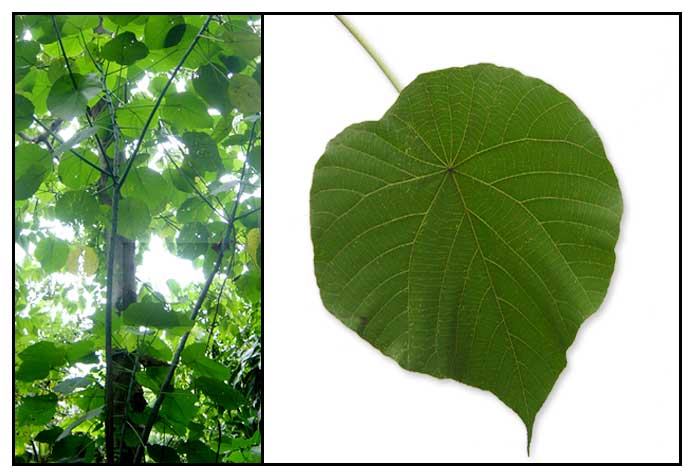
• Binuñga is a small, dioecious tree,
growing to a height of 4 to 8 meters. Leaves are peltate, ovate to oblong-ovate, 10 to 25 centimeters
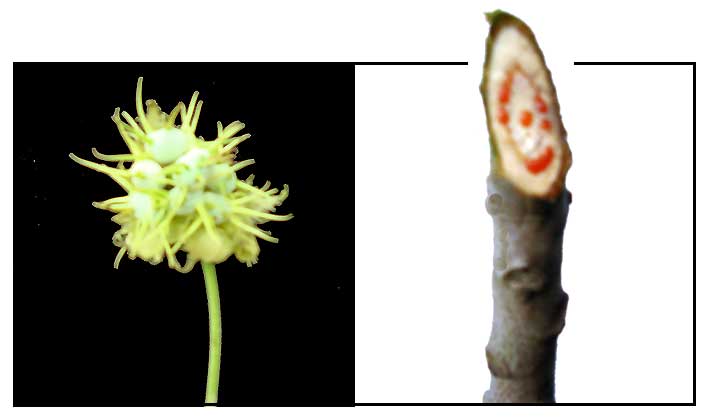
long, with entire or toothed margins, with a rounded base and pointed apex. Male flowers are small and born on slender, branched
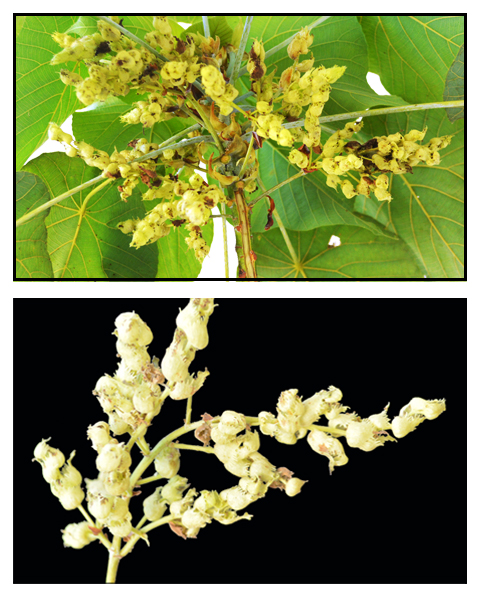
peduncles which are shorter than the leaves. Female flowers are usually found in simple panicled spikes or
racemes. Capsules are 10 to 12 millimeters in diameter, of 2 or 3 cocci, covered with pale,
waxy glands and with soft, scattered, elongated spinelike processes.
• Macaranga tanarius is a shrub or bushy tree, sometimes reaching 12 meters tall and with a stem diameter of 40 cm. Trunk is short and crooked, bark being grey-brown, with bumps and irregularities. Branchlets are smooth, bluish grey with prominent leaf scars. Leaves are alternate, and round with a tip, 8 to 23 cm long, greyish or white on the underside. It has prominent leaf stalks 8 to 20 cm long which connect within the leaf itself. Nine main veins radiate from the leaf stalk, easily noticed on the upper and lower leaf side. Yellow-green flowers form on panicles in the months of October to January (in NEW South Wales). Female and male flowers grow on different trees. Fruit is a prickly three-celled yellow capsule, 9 mm in diameter, maturing in January to February (in New South Wales). There is one black seed in each of the cells. (20)
 Distribution Distribution
- Native to the Philippines.
-
In thickets and secondary forests,
at low and medium altitudes throughout the Philippines.
- Also native to Andaman Is., Bismarck Archipelago, Borneo, China Southeast, Christmas I., Jawa, Lesser Sunda Is., Maluku, Marshall Is., Myanmar, Nansei-shoto, New Guinea, New South Wales, Nicobar Is., Northern Territory, Queensland, Solomon Is., Sulawesi, Sumatera, Taiwan, Thailand, Vanuatu, Vietnam. (13)
C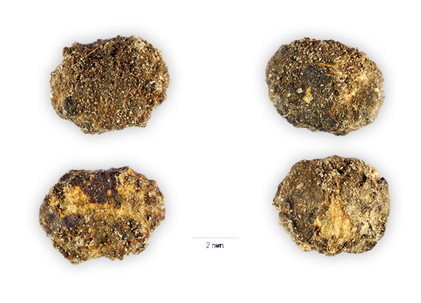 onstituents onstituents
• Phytochemical studies of leaves
yielded three new constituents: tanarifuranonol, tanariflavanone, and tanariflavanone D with seven known compounds. (see study below) (4)
• Chemical study on the bark isolated 10 known tannins:
corilagin, mallotinic acid, geranilin, macarinin A, putranjivain B,
putranjivain A, mallotunin, mallophilnin, repandusicnic acid A and phyllanthusiin
C.
(5)
• Bark yields a resin-glue.
• Two new prenylflavanones, tanariflavanones A and B, and one known compound, (–)-nymphaeol-C were isolated from the fallen leaves. The flavonoids exhibited phytotoxic activity.
• Stems yielded diterpene ketol, macarangonol, terpenoids and steroids.
• Study of ethyl acetate fraction of leaves yielded four flavonoids: nymphaeol C (1), solophenol D (2), nymphaeol A (3), and nymphaeol B (4). (see study below) (19)
• An ethanol extract of fruits yielded seven new prenylated stilbenes, schweinfurthins K-Q (7-13), along with vedelianin (1), schwenfurthins E-G (2-4), mappain (5), and methyl-mappain (6). (see study below) (20)
• Study of ethyl acetate extract of M. tanarius isolated four stilbenes from fruit glandular trichomes, namelyt: vedelianin (1) and schweinfurthins E-G (2-4). (see study below) (30)
Properties
• Easily recognized by its large veiny leaves.
•
Considered emetic, antidysenteric, antioxidant, antibacterial.
• Studies have suggested anti-inflammatory, antioxidant, cytotoxic, antidiabetic, alpha-glucosidase inhibiting, ferrous-ion chelating, analgesic, antimicrobial, antiplasmodial, nephroprotective, anticancer, anti-angiogenic, hepatoprotective, antihyperlipidemic properties.
Parts utilized
Bark, leaves, stems, roots.
 Uses Uses
Edibility
· Fruits are added to palm juice, then boiled to crystallize, and used to improve the quality of sugar. (16)
- In the Philippines, especially in the Ilocos region and Apayao, the bark and leaves of samak are use in making the traditional fermented drink, basi (a sugarcane-based rum) and local vinegar. (16)
Folkloric
· Powdered roots used as emetic;
decoction for hemoptysis.
· Decoction of bark and roots used for dysentery and hemoptysis.
· Decoction of roots used for fever and to suppress coughing.
· Decoction of sliced young leaves used for diarrhea.
· Glue from stems applied to toothaches.
· Glue from stems applied to aphthous stomatitis.
· Leaves used for wound healing and inflammation.
- Powdered leaves used as poultice for wound healing.
· Bush medicine in Australia
records the use of the sticky and waterproof latex as sutureless stitching
for deep cuts.
· In Thailand decoction of root is drunk as antipyretic and antitussive. Dried root used as emetic. Fresh leaves used to cover wounds as anti-inflammatory.
· In Malaysia, used to treat diarrhea and dysentery.
· In Indonesia, plant used to treat diarrhea, injuries, and inflammation.
Others
· Glue: Glue from the tree bark used
for fastening parts of musical instruments.
· Wood: Soft and light; about 500 kg/cu m air-dry. Not durable or resistant to termite attack, but fairly tough. Grain is straight or only shallowly interlocked, with moderately fine and even texture. In southern Sumatra, used by pepper growers to make temporary ladders for crop harvesting. (28)
· Basi: Bark and leaves used in making "basi," a fermented
drink.
· Crafts: In Sumatra, bark material used to make containers.
· Pulp / fiber: Yields a high quality pulp and produces a high quality particle board.
· Tannin: Bark contains tannin used for toughening fishing nets and as leather preservative.
· Dye: Bark tannins used as colorant to dye nets, mats, and house paint.
· Food wrap: In Sabah, Malaysia, leaves are used by the Rungus indigenous people to pack cooked rice into bundles to preserve it and to impart a pleasant aroma. (10)
· Food additive: In Sumatra, fruit is added to palm juice when it is boiled down into crystals, improving the quality of the sugar produced. (28)
· Fuel: Wood provides for a good firewood.
· Agroforestry: Plant has been recommended as a shade or shelter tree to promote natural regeneration on deforested land. (28)
Studies
• Prenylflavanones / Cytotoxicity: Macaflavanones A-G, Prenylated
Flavanones from the Leaves of Macaranga tanarius: The
study isolated seven new prenylated flavanones, macaflavanones A-G,
along with two known compounds. The cytotoxic activities of the isolated
flavanones were assayed, with macaflavanone being the most active. (1)
• Radical-Scavenging Activities:
Four new megastigmane glucosides were isolated. Manganoside A-C and
mallophenol B possessed a radical-scavenging activity. (2)
• Leaf Constituents / Anti-Inflammatory / Antioxidant / Cytotoxic: Study yielded three new constituents from the leaves of M tanarius: tanarifuranonol, tanariflavanone C and tanariflavcanone D, together with seven other known compounds. Compound 5 showed inhibitory effect in the COX-2 inhibition assay. Compounds 3 and 4 showed weak cytotoxic activities. A few compounds showed radical scavenging activity. (4)
• Ferrous-Ion Chelating Activity: In a study of 4 Macaranga species, M. tanarius showed the lowest TPC, AEAC, FRAP and LPI activity, but exhibited the best ferrous-ion chelating activity. (6)
• Anti-Diabetic / α-Glucosidase Inhibitor / Leaves: Study of an ETOAc-soluble extract of M. tanarius leaves showed potent a-glucosidase inhibitory activity. a-Glucosidase inhibition is one of the hyperglycemic remedies through reduction of glucose absorption by suppression of carbohydrate digestion through a-glucosidase inhibitors. Results suggest a novel alternative for diabetes treatment management. (7)
• Propolis / Radical Scavenging / Antibacterial Activity: Study showed for the first time, M. tanarius and M. indica as plant sources of Indonesian propolis. From the biologically activity extract of propolis, 11 compounds were isolated: four alk(en)resorcinols along with four prenylflavanones and three cycloartane-type triterpenes. All the prenylfavanones demonstrated radical scavenging activity. One compound showed significant activity against S. aureus. (8)
• Analgesic: Study of an aqueous extract of leaves of M. tanarius in mice using a writing method using acetic acid as inducing agent, showed analgesic effect. (11)
• Antioxidant Prenylflavonoids: Study analyzed the antioxidant phenylflavonoids in different parts of M. tanarius—leaf, petiole, stem, leaflet, flower and fruit. Results showed different parts of M tanarius contained antioxidant prenylflavonoids—not only the glandular trichome but also the leaf—suggesting M. tanarius can be developed as a functional plant. (12)
• Antimicrobial Potential / Tutup Flowers Extract: Sugar produced from the sap with liquid of "tutup" flowers preservative showed better quality than other sap preservatives, with a longer shelf life and few number of total microbes. Study evaluated the antimicrobial potential of tutup flowers extract. Results showed tutup plant extracts with a concentration of at least 20% can inhibit the growth of Staphylococcus aureus, Pseudomonas fluorescens, and Saccharomyces cereviceae. (15)
• Antioxidant Prenylflavonoids: Study evaluated the antioxidant prenylflavonoids of different parts of M. tanarius (leaf, petiole, stem, leaflet, flowers and fruits). The leaves yielded two prenylflavonoids as main components in both male and female plants. Flowers yielded five kinds of prenylflavonoids. Prenylflavnoids were very low or undetected in stem, petioled and leaflet of both male and female plants. The glandular trichome yielded the highest level of total prenylflavonoids (235 mg/g of fresh plant). DPPH radical scavenging activity of all parts was more than 30%. (17)
• Tree Sap / Test for Insect Repellency: Study evaluated the effect of temperature and light intensity on the rate of color change of elephant's ear and insect repelling properties. Results showed: (1) Light intensity was not a factor, (2) Temperature directly affects the rate of color change; 20 C showed fastest reaction rate, and (3) the sap does not repel insects. (18)
• Antiplasmodial / Flavonoids / Leaves: Study evaluated the antiplasmodial activity of an ethyl acetate fraction and four flavonoids isolated from the leaves of M. tanarius leaves. The four flavonoids characterized by NMR analysis were nymphaeol C (1), solophenol D (2), nymphaeol A (3), and nymphaeol B (4). The EAF and four isolated compounds were evaluated for antiplasmodial activity against Plasmodium falcifarum strain 3D7 with IC50 values of 0.30, 0.24, 042, 0.06, and 0.05 mg/ml, respectively. Results suggest potential for development of antiplasmodial agents. (19)
• Cytotoxic Prenylated Stilbenes /
Fruits: Macaranga tanarius was chosen for detailed phytochemical evaluation among 21 Macaranga species. An ethanol extract of fruits yielded seven new prenylated stilbenes, schweinfurthins K-Q (7-13), along with vedelianin (1), schwenfurthins E-G (2-4), mappain (5), and methyl-mappain (6). Cytotoxic activities of compounds 1-13 were evaluated against human glioblastoma (U87) and lung (A549) cancer cell lines. (20)
• Propolins / Antibacterial / Antioxidant /
Fruits: Taiwanese green propolis (TGP) is a widely used traditional medicine with a broad spectrum of biologic activities, including anti-inflammatory and anticancer activities from abundant level of functional propolins prenylated flavonone) in the TGP. Propolis, a resinous substance collected by honeybees (Apis mellifera) from leaves and buds of plants, is used to seal holes and cracks for making the hive more weathertight and to embalm dead insects and invaders. Study confirmed the plant source of TGP is M. tanarius. Tanarius fruit extract was found enriched in propolins (C, D, F, and G) and effectively inhibited growth of Gram(+) strains. Propolins, TGP, and M. tanarius fruit extract showed powerful free radical-scavenging and ferrous-reducing activity. Study suggests the plant has enormous potential as a pharmaceutical plant due to its potent biological activities and high amount of functional propolins. (21)
• Amelioration of Diabetic-Induced Nephropathy / Phenylflavonoids: Prenylflavonoid (PF) compounds extracted from M. tanarius (MTE) exhibit anti-inflammatory, antioxidant, and antibacterial properties. Study evaluated the in vitro effects of MTE on diabetic nephropathy using mouse renal mesangial cells and invivo using a db/db knockout mouse model. Western blot analysis showed MTE dose-dependently attenuated expression of fibronectin, α-smooth muscle actin, and collagen IV. Administration of MTE ameliorated renal albumin loss in db/db mice. Studiers showed MTE mitigated diabetes-induced fibronectin and collagen IV expression and reduced renal fibrosis phenomenon. Results showed MTE significantly ameliorated diabetes-induced nephropathy. (22)
• Electron-Mediated Anti-Inflammatory / Leaves: Study evaluated the electron-mediating and bioenergy-extracting potentials of M. tanarius leaves extract using dual chamber microbial fuel cells (MFCs) to unveil correlations of anti-inflammatory potential for value-added applications. M. tanarius leaves extract showed significant bioenergy generation properties implying electron-mediated anti-inflammatory activity. Pharmacologic potential is associated with electron-shuttling capabilities. Nymphaeol C and isonymphaeol B exhibited potential against kidney nephropathy. The leaves extract possess key factors dealing with multiple inflammation pathways. It showed nigh binding affinity with inflammation receptors, suggesting targeting of specific proteins to inhibit potential diseases. (23)
• Fermenting and Coloring Properties / Leaves and Bark: Study evaluated the fermenting and coloring properties of Samak (Macaranga tanarius) using leaves and bark in the production of home-made vinegar. Study showed samak leaves are good catalyst and coloring agents for vinegar due to contents of sterols, flavonoids, glycosides, and tannins. Both leaves and bark can be made into vinegar. The bark produced the most desirable aroma, in contrast to commercial "Datu Puti", which was categorized as "most sour". Samak leaves showed to be better coloring agents than bark, attributed to higher tannin content. (25)
• Effect on Cancer Cells, Angiogenesis, Early Implantation and Embryogenesis / Leaves: Study of crude methanolic leaf extract by MTT assay showed cytotoxicity against HCT116 at concentration of 18.93 µg/mL. CAM (chorioallantoic membrane) assay showed anti-angiogenic potential evidenced by reduced percent area of blood vessels. In mice implantation assay, the ME did not significantly decrease the number of embryo implantations in the uterus. CD31 staining showed uterus treated with M. tanarius exhibited significant reduction of blood vessels. Results showed leaves possess bioactive compounds with potential for anticancer and anti-angiogenic therapy that does not interfere with normal biological processes such as pregnancy. (26)
• Hepatoprotective / Antihyperlipidemic / Leaves: Study evaluated the antihyperlipidemic and hepatoprotective effects of hexane-ethanol fraction of methanol extract of Macaranga tanarius leaves in Wistar rats. Acute toxicity study showed no toxic effect. The TG, LDL-c, and fasting glucose levels were significantly reduced (p<0.05) after treatment with hexane-ethanol fraction and unsolved HEM. Administration of hexane-ethanol fraction at 68.6 mg/kbw significantly (p<0.05) prevented elevation of SGOT, SGOT, LDH, ALP, and decreasing of albumin level. Study showed antihyperlipidemic and hepatoprotective activities. (27)
• Potential as Biomass Feedstock for Sugar Production: Macaranga tanarius has potential for utilization as biomass feedstock for biorefinary. Average productivity of biomass was estimated at ~19.2 ton/ha if above-ground biomass is harvested bi-annually. No pretreatment was required for foliage biomass while sequential acid/alkali pretreatment was necessary for the woody biomass before enzymatic hydrolysis. Fermentability of both hydrolysates was verified by lactic acid fermentation. Results suggested M. tanarius could be a potential feedstock for biorefinery. (29)
• Stilbenes / Cytotoxicity / Fruit: Study of ethyl acetate extract of M. tanarius isolated four stilbenes from fruit glandular trichomes, namely: vedelianin (1) and schweinfurthins E-G (2-4). Study of isolated compounds showed cytotoxicity against KB cancer cell line. (30)
Availability
Wild-crafted.
|