|
Gen info
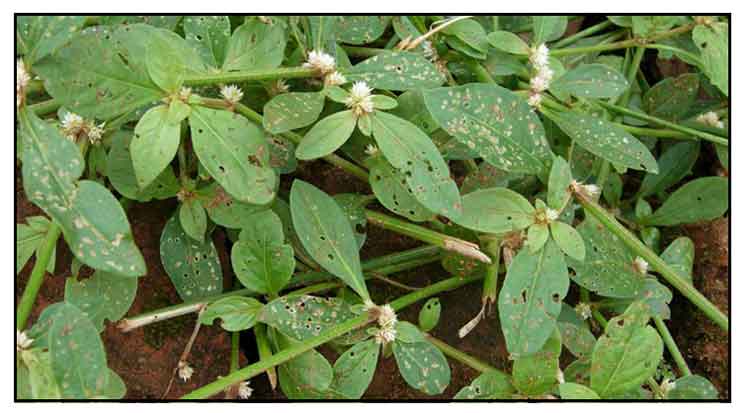
- Alternanthera is a genus of flowering plants in the family Amaranthaceae. The genus is generally known as joyweeds, or Joseph's coat. Some species are notorious noxius weeds. It remains unclear how many species belong in the genus—estimates range between 80 and 200. POWO accepts 106 species. (69)
 Botany Botany
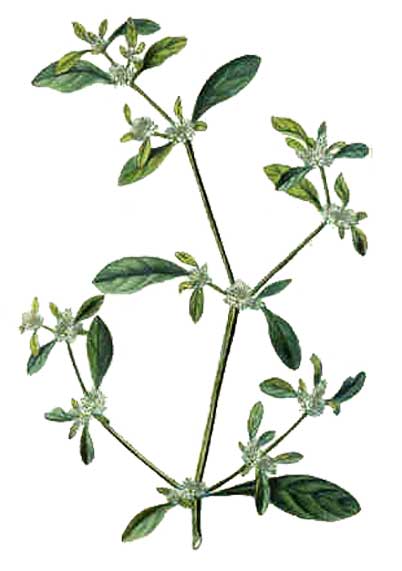
• Bunga-bunga is a spreading or prostrate, erect, more or less branched, glabrous, succulent
herb, 0.4 to 1.4 meters high. The ultimate branches are covered with two lines of hairs on the internodes, and the flowering ones are ascending. Leaves are stalkless, simple or pinnately compound, the leaflets elliptic,
crenate or obscurely toothed, usually about 2.5 to 7 centimeters long, thick and succulent. Flowers are minute, 5 to 7 millimeters long, paniculate, pendulous, white, and crowded in very short, axillary heads. Sepals are lanceolate, 2 to 2.5 millimeters long. Fruit is dry and flattened, broadly obcordate utricle, containing one seed.
• Growth form: Perennial herb up to 10-45 cm tall with a prostrate growth habit. Foliage: Elongated leaves are oblong to lance-shaped (1-8 x 0.2-2 cm). Flowers: Small, white, stalkless flowers are nestled in the leaf axils in clusters of 1-4; initially sphere-shaped, but later becoming cylindrical. Fruit: Dark brown, egg-shaped fruits (2-2.5 mm wide). (70)
Distribution
- Native to the Philippines.
-
Very common weed in open, usually wet places throughout the Philippines, in settled areas at low and medium altitudes.
- Also native to Andaman Is., Assam, Bangladesh, Belize, Bolivia, Borneo, Brazil North, Brazil Northeast, Brazil South, Brazil Southeast, Brazil West-Central, Cambodia, Cayman Is., China South-Central, China Southeast, Colombia, Costa Rica, Cuba, Dominican Republic, East Himalaya, El Salvador, French Guiana, Guatemala, Guyana, Haiti, Honduras, India, Iran, Iraq, Jamaica, Japan, Jawa, Laccadive Is., Laos, Lebanon-Syria, Leeward Is., Lesser Sunda Is., Malaya, Maluku, Mexico Gulf, Mexico Northeast, Mexico Southeast, Mexico Southwest, Myanmar, Nansei-shoto, Nepal, New Guinea, New South Wales, Nicaragua, Northern Territory, Ogasawara-shoto, Pakistan, Panamá, Paraguay, Peru, Puerto Rico, Queensland, Saudi Arabia, Solomon Is., Sulawesi, Sumatera, Suriname, Taiwan, Thailand, Transcaucasus, Trinidad-Tobago, Venezuela, Vietnam, West Himalaya, Western Australia, Windward Is., Yemen. (25)
 Constituents Constituents
- High in antioxidant carotene.
- Phytochemical studies yielded B-carotene, ricinoleic acid, myristic,
palmitic, stearic, oleic and linoleic acids, α-spiraterol, uronic acid,
and ß-sitosterol.
- Study of phenolic and flavonoid content revealed: total crude phenolic content, 1.529; total phenolic acid, 1.404; and flavonoids, 0.370 (values in mg/g dry wt.).
- Aqueous extract yielded alkaloid, tannins, ascorbic acid, carbohydrates and proteins. (see study below)
(19)
- Various extracts of leaves yielded alkaloids, flavonoids, glycosides, terpenoids, carbohydrates, anthraquinones, saponins, tannins, steroids. (21)
- Nutrient analysis yielded moisture 15.28%, ash 13.5%, protein 19.56%, crude fat 4.95%, crude fiber 23.52%, carbohydrate 38.46%, and nutritive value 306.97%.
Mineral content yielded (mg/kg) Fe 527.8, Cu 14.5, Zn 45.0, Mn 87.1, Ca 2866.0, Mg 294.1, Na 3580.0, and K 6240.0. (34)
- Aqueous leaf extracts yielded phenols, flavonoids, tannins and saponins.
Stems and leaves yielded the presence of calcium oxalate crystals. (38)
- Phytochemical screening of ethanol extract of whole plant yielded reducing sugars, steroids, terpenoids, saponins tannins, and flavonoids. (see study below)
(58)
- Photochemical screening yielded alkaloids +++, steroids +, phenolics +++, flavonoids +++, tannins +++, coumarins +++, phlobatannins ++, terpenoids ++, cardenolins +, and saponins ++, and negative for leucoanthocyanins, iridoids emodins, aucumbins polyoses, polyurenoids, anthraquinone, and juglone.
(see study below) (60)
- GC-MS analysis of of methanol and hexane extracts of leaves and stems yielded low and high molecular weight compounds of carbohydrates, fatty acids and vitamins. The methanol extract of leaves showed higher total flavonoid and total phenolic contents at 142.7±0.0003 mg QE/g and 279.6±0.0002 mg GAE/g, respectively.
(see study below) (61)
Properties
- Slightly tart tasting, cooling, antiphlogistic-analgesic , antidermatosis, antiseptic.
- Considered febrifugal, galactagogue, abortifacient.
- Studies have shown antimicrobial, wound healing, hepatoprotective, antioxidant, antidiabetic, hematinic, antipyretic, anti-inflammatory, antidepressant, antihyperlipidemic, phytoremediative, wound healing, nootropic, analgesic, antidepressant, antigenotoxic, antiangiogenic, antiasthmatic, anti-allergic, antiurolithiatic, mosquito larvicidal, antitussive, anthelmintic, xanthine oxidase inhibitory properties.
Parts utilized
- Entire plant; use fresh.
- May be collected the whole year round.
 Uses Uses
Edibility
• In the Philippines, young leaves mixed in sautéed mungbean and fish soup (sinabawang isda). (37)
•
Some places, leaves and young shoots eaten as vegetables.
• In Ceylon, largely eaten as vegetable.
• In Africa, used
for relishes, sauces and soups.
• Considered a famine food plant.
Folkloric
• Poultice of pounded fresh
material to sprains, burns and eczema.
• Used for carbuncles and erysipelas.
• Used as a wash for eyes.
• Used for treating acne vulgaris, dyspepsia,
liver problems.
• Decoction used for nausea, vomiting, diarrhea, dysentery, cough,
bronchitis and diabetes.
• In West Tropical Africa, used as poultice for boils.
• In Bangladesh, used for the treatment of severe pain.
• In Sri Lanka,
used for cystitis, gonorrhea, snake bite. Also, used by mothers to increase flow of milk.
• In Ghana, salted
decoction used for hematemesis.
• In India, used
for gastrointestinal problems; also as cholagogue, abortifacient and
febrifuge. Also, used for snake bites.
• In Surinam, leaf decoction drunk for treatment of itching and overheated skin. (32)
• In Ayurveda, used for diseases due to vitiated blood.
• In Nigeria, for
headaches and vertigo. Leaf sap sniffed for treating nerve pains.
• In Taiwan, for
hepatitis, bronchitis, asthma.
• In Assam, India, fused for the treatment of jaundice. (54)
• In Pakistan, used for treatment of diarrhea, asthma and hypertension.
(52)
• In Nepal, roots used by the Bantar of Morang for stomachache.
(28)
• In the Sivagangai district of Tamil Nadu, India, cooked leaves are eaten with a normal diet for 20 to 30 days to cure night blindness. (36)
Others
• Fodder: Used as animal feed supplement.
Studies
• Antimicrobial / Wound Healing
Activities / Leaves: Study
on extract of leaves showed significant results in different models
of wound healing: incision, excision, and granuloma studies. The presence of sterols was also confirmed. (2)
• Hepatoprotective: A study evaluated the hepatoprotective effects of Taiwanese herb Alternanthera sessilis using three experimental animal models. Acute hepatitis was induced by various hepatotoxins ie., carbon tetrachloride, acetaminophen, and D(+)-galactosamine. Results showed hepatoprotective
effects with a reduction of elevation of SGOT and SGPT. Toxin induced histopathological changes i.e., centrilobular necrosis, eosiinophlic bodies, pyknotic nuclei, microvascular degeneration and others were improved in groups receiving A. sessilis. (3)
• Ionone Derivatives / Antimicrobial: Chloroform extract of dried leaves yielded
a mixture of diasteromers of a new ionone derivative with low activities
against Pseudomonas aeruginosa and Trichophyton mentagrophytes. (4)
• Antioxidant: Study
showed ethanol extract to have 70% free radical scavenging activity.
(•) Study concludes Alternanthera sessilis showed potent radical-scavenging activity and metal ion chelating activity. (•)
• Antidiabetic / Aerial Parts: Study
of aqueous extract of aerial parts showed significant dose-dependent antidiabetic activity
with lowering of blood glucose concentration, glycosylated hemoglobin, LDL, total cholesterol. (6)
• Antibacterial: The antibacterial effect of leaves and internodal-segments derived calli of A. sessilis was evaluated against Proteus vulgaris, Strep pyogenes, B subtilis and Salmonella typhi. the ethanolic extracts of leaves and leaves-derived calli were more effective against the selected bacterial than other solvents. Plants extracts showed antibacterial activity against Gram negative P. aeruginosa and Gram positive Staph epidermis. (7)
• Hematinic Activity: Study
showed that Lupo (A. sessilis) has hematinic activity particularly in iron deficiency anemia.
Results suggest AS is a potential drug for augmentation of hemoglobin and serum ferritin in iron deficiency anemia. (8)
• Antipyretic Activity: Study
showed
the ethanol extract of aerial parts of Alternanthera sessilis has dose-dependent antipyretic activity. (9)
• Antibacterial / Antifungal: Plants extracts showed antibacterial activity against Gram negative P. aeruginosa and Gram positive Staph epidermis.
Plant also showed antifungal activity against yeasts S. cerevisiae and Candida albicans.
• Nootropic / Memory Enhancing / Leaves / Aerial Parts: Study evaluated the nootropic potential (memory enhancing effects) of methanolic extracts of leaves of A. sessilis and Clerodendrum infortunatum. The higher doses of both extracts exhibited promising nootropic potential, with C. infortunatum showing greater memory enhancing effect. (14)
Study evaluated the nootropic activity of extracts of aerial parts of A. sessilis in albino mice. Results showed significant improvement in the retention ability of normal and amnesic mice compared to controls. Results suggest the nootropic activity was due to improvement of the cholinergic system or inhibition of acetyl choline esterase enzymes.(48)
• Antidiabetic: Study
investigated the antidiabetic potential of three fractions of crude ethanol extracts in high fat diet and STZ-induced diabetic rats. The red ethyl acetate fraction showed the most potent antihyperglycemic effect with higher pancreatic insulin content and pancreatic total dismutase activity. Results suggest a potential antidiabetic agent for T2DM. (16)
• Anti-Inflammatory: Study
investigated leaf extracts for anti-inflammatory activity by carrageenan-induced rat paw edema method. Extracts showed considerable dose-dependent activity, with the chloroform extract showing higher activity. (17)
• Toxicity Study / Antidiabetic: Study
on extracts from A. sessilis, S. cumini and A. bilimbi appeared safe, with no untoward effects on the kidney and liver when used as treatment for diabetes. (18)
• Silver Nanoparticles Biosynthesis / Antimicrobial / Antioxidant: Study
evaluated the use of aqueous extract in producing silver nanoparticles from silver nitrate aqueous. Phytochemical analysis yielded alkaloid, tannins, ascorbic acid, carbohydrates and protein which served as effective reducing and capping agents for converting silver nitrate into nanoparticles. Study investigated the antimicrobial and antioxidant activities of green synthesized AgNPs. (19)
• Antioxidant: Comparative study of stem and leaf fractions of Alternanthera sessilis and Amaranthus tristis. Results showed A. sessilis have relatively more phytochemicals and radical scavenging activity, and the leaf fraction has more flavonoid and phenolic content than the stem fractions in both vegetables. Results suggest a potential for an ideal dietary antioxidant supplement.
(20)
• Antioxidant: Study evaluated various extracts of leaves for phytoconstituents, antioxidant activity and thrombolytic potential. Antioxidant activity increased with concentration of the leaf extract. Study also showed moderate clot lysis with increase in the percentage of lysis with concentration of the plant sample. Results suggest a chemopreventive potential for cardiovascular disease. (21)
• Central Stimulating / Analgesic / Whole Plant: Study evaluated the neuropharmacologic and analgesic activity of an ethanol extract of A. sessilis whole plant in mice models. Results showed central stimulating activity with significantly increased onset of sleep and decreased duration of sleep, with increased movements of mice during the study period. On hot plate test, the extract significantly increased pain threshold. (22)
• Antidepressant / Leaves: Study of leaf extract showed antidepressant activity on Swiss albino mice using the Tail Suspension Test and Forced Swim Test. At higher doses, there was significant reduction of duration of immobility. (23)
• Inhibition of IgE-Mediated Allergic Response: Study evaluated an ethanol extract of A. sessilis in rat basophilic leukemia (RBL-2H3) cells. Results showed significant reduction of ß-hexosaminidase release from anti-DNP-IgE sensitized RBL2H3 cells. There was also inhibition of IgE antibody-induced increase in interleukin-6 (IL-6), TNF-α-, IL-13 and IL-4 production in the cells. Results suggest decreased intracellular Ca++ is involved in the inhibitory effect on ß-hexoaminidase release. Study suggests a potential therapeutic application in allergic disease. (24)
• Antihyperglycemic / Analgesic / Aerial Parts: Study evaluated aerial parts for antihyperglycemic activity and analgesic (non-narcotic) property in an acetic acid-induced pain model in mice. Results showed dose-dependent and significant reductions in blood glucose levels in glucose-loaded mice. In analgesic testing, there was reduced number of abdominal writhing. (27)
• Chitin Binding Property of Novel Cysteine-Rich Peptides: Study reports on the isolation and characterization of six hevein-like peptides which make up a family of cysteine-rich peptides (CRP), aSG1-G3 and aSR1-R3, collectively called altides from red and green varieties of Alternanthera sessilis. CRPs play a role in plants' defense against insects and fungal pathogens. (29)
• Mosquito Larvicidal: In a study of crude extracts of four plants, viz., Alternanthera sessilis, Trema orientalis, Gardenia carinata, and Ruellia tuberosa for larvicidal activities against Culex quinquefasciatus, A. sessilis showed the highest mortality (76.7%) at 1.5% crude extract against 2nd instar larvae with LC values of 0.35%. At studied concentrations, there were no harmful effects on non-target organisms. (30)
• Anti-Allergic Effect / Inhibition of IgE-Mediated Allergic Response: Study investigated the anti-allergic effects of ethanolic extract of A. sessilis (AS-1) in rat basophilic leukemia (RBL-2H3) cells. It significantly reduced the ß-hexosaminidase release from anti-DNP-IgE sensitized RBL-2H3 cells and also inhibited IgE antibody-induced increase in interleukin-6 (IL-6), TNF-α, IL-13 and IL-4 production. The anti-allergic effects suggest potential application of the extract in allergic diseases. (31)
• Silver Nanoparticles / Protective Role Against Rotenone Induced Parkinsonism: Study reports on the green synthesis of silver nanoparticles using an ethanolic extract of A. sessilis and silver nitrate. The ethanol extract and its silver nanoparticles caused significant protection in an oxidative stress model of Parkinsonism using Rotenone. The protective effect was evidenced by decrease in catalepsy and muscle rigidity along with a significant increase in locomotion. The reduction in lipid peroxidation and increase in GSH indicated reduction in oxidative stress in the brain of the animals. (33)
• Hepatoprotective / Paracetamol Induced Toxicity / CCl4-Hepatotoxicity: Study evaluated an ethanol extract of A. sessilis aerial parts for in vitro and in vivo antioxidant and hepatoprotective effects. Results suggest the EE could protect the liver cells from paracetamol induced liver damage by its antioxidant effect on hepatocytes to eliminate the deleterious effects of toxic metabolites of paracetamol. (35) Study evaluated the hepatoprotective property of A. sessilis in CCl4-induced hepatotoxicity in Wistar rats. Histopathological examination showed the hepatic damage wrought by CCL4 toxicity was significantly thwarted in the aqueous extract treated group. (47)
• Antimicrobial / Aerial Parts: Study evaluated an ethanolic extract of aerial parts for antimicrobial activity against medically important gram-negative (P. aeruginosa, S. typhii, S. dysenteriae, E. coli) and gram-positive bacteria S. aureus, B. subtilis, B. polymexia and S. faecalis) and fungi (P. notatum, A. niger, C. albicans). Results showed concentration dependent activity with better effectiveness against gram-negative bacteria. (39)
• Haemoglobin Augmentation in Anemia / Clinical Trial: Study evaluated the potential of A. sessilis for augmentation of haemoglobin in the clinical setting. Preclinical studies in rats and mice for effects on levels of iron and haemoglobin were all positive with no adverse effects. On human trials using Lupo capsules with average iron content of 0.024 mg/cap (lower than recommended daily intake), an increase in haemoglobin was still observed. The effect was attributed to synergistic effects of other compounds in A. sessilis. (40)
• Effect on Hot Flushes: Cutaneous vasodilatation and increase in peripheral blood flow are hallmarks of the hot flush. Study screening for compounds that can relieve hot flush in change of tail skin temperature in a rat model using calcitonin gene-related peptide (CGRP) and leuprorelin acetate. All doses of AS extract and CEE (conjugated equine estrogen) inhibited the effects of αCGRP-induced increasing of TST (tail skin temperature) in female rats and inhibited the effects of leuprorelin acetate-induced elevation of TST in male rats. Results suggest AS has potential as alternative treatment for hot flushes. (41)
• Gallic Acid: Gallic acid is a strong antioxidant, an organic compound found in foods and medicinal plants (herbs, teas, nuts, etc.). The concentration of gallic acid in leaves of A. sessilis was 8.022 µg/ml. (42)
• Antioxidant / Cytotoxicity / Leaves: Study evaluated the antioxidant and cytotoxicity activity of leaf extracts of A. sessilis and Ipomoea carnea. Both showed significant antioxidant and cytotoxicity properties. The antioxidant property of A. sessilis was higher, and a better candidate as a source of natural antioxidants than I. carnea. (43)
• Diuretic: Study evaluated a hydroalcoholic extract of A. sessilis for diuretic activity in rats. Results showed diuretic activity with marked increase in Na+ Cl-. and decrease K+ level in the urine. (44)
• Antidiabetic / Alpha-Glucosidase Inhibitory / Antioxidant / Leaf and Callus: Study evaluated the anti-glucosidase and antioxidant activity of solvent fractions of A. sessilis leaf and callus. Leaf ethyl acetate (LEF) showed the strongest antiglucosidase (EC50 0.55 mg/mL) and radical scavenging (EC50 10.81 µg/mL) activity among the leaf fractions. Callus ethyl acetate fraction (CEF) showed highest antiglucosidase activity among all the fractions. (45)
• Antiasthmatic / Leaves / Stems: Study evaluated the antiasthmatic activity of ethanolic extract of A. sessilis leaves in histamine aerosol-induced bronchospasm in guinea pigs and bronchial hyperreactivity in BALF egg albumin sensitized guinea pigs. Results showed antiasthmatic activity possibly due to inhibition of antigen induced histamine release or reduction in leucocyte count. (46)
• Phytoremediation / Removal of Chromium from Industrial Waste Water: Study evaluated the ability of leaves of A. sessilis and Tagetes erecta for reduction and removal of Cr from industrial waste water. Antioxidant activity of both plants were found to be almost similar. Remediation efficiency was approximately 908%. Both plants proved to be both cost effective and environment friendly. (47)
• Wound Healing / Stems: Study evaluated the wound closure properties of stem extract of Alternanthera sessilis. Results showed remarkable antioxidant, proliferative, and migratory rate in human dermal fibroblast, keratinocytes, and diabetic human dermal fibroblast in a dose-dependent manner, suggesting a wound healing process which was attributed to phytochemical compounds such as hexadecanoic acid. (49)
• Antidiabetic / Antihyperlipidemmic: Study evaluated an ethanolic extract of whole plant of A. sessilis for antidiabetic and antihyperlipidemic activity in STZ-induced diabetic rats. Results showed significant reduction in blood glucose and lipid profiles compared to control group. (50)
• Anti-Inflammatory / Suppression of Pro-Inflammatory Cytokines and Mediators / Stems: Inflammation is a natural process of the innate immune system, accompanied by increase in proinflammatory mediators like NO, prostaglandin (PGE2), cytokines (IL-6, IL-1ß) and tumor necrosis factor-alpha (TNF-α) and enzymes like iNOS, COX-2, Prolonged inflammation can be a cause of delayed wound healing, cardiovascular disease, arthritis, and autoimmune disorders. Study evaluated the suppression activity of proinflammatory cytokines and mediators using a stem extract of A. sessilis in LPS-activated RAW 264.7 macrophage cell line. The extract significantly inhibited the production of proinflammatory mediators,cytokines, and enzymes by preventing the degradation of Ik-Bα to inhibit the nuclear translocation of NF-kB subunit p65 to hinder the inflammatory pathway activation. Results suggest potential for A. sessilis in ameliorating inflammatory-associated complications. (51)
• Mechanistic Basis for Antidiarrheal, Antiasthma and Antihypertensive Effects: The crude ethanolic extract of A. sessilis and its fractions were tested on isolated rabbit tissue preparations and in-vivo in ketamine-diazepam anesthetized normotensive rats. Results showed the presence of Ca++ channel blocking (CCB) activity in the crude ethanolic extract, thus rationalizing the medicinal use of A. sessilis in diarrhea, asthma, and hypertension. (52)
• Anticancer / HT-29 Human Colon Cancer Cells / Leaves: Study evaluated the cytotoxicity potential of A. sessilis extracts from aerial parts, leaves, and stems on HT-29 colon cancer cell lines. The leaf extract showed credible cytotoxic, antiproliferative, and apoptotic activity. (53)
• Hepatoprotective / Carbon Tetrachloride Toxicity: Study evaluated he hepatoprotective activity of A. sessilis methanol extract in carbon tetrachloride induced liver injury in Wistar albino rat. The extract was highly effective in controlling liver enzymes, serum cholesterol and serum bilirubin level as compared to silymarin. The extract also significantly lowered the lipid profile. (54)
• Antiulcer / Antioxidant / Whole Plant: Study evaluated the in vitro antioxidant and in vivo antiulcer activities of a chloroform insoluble fraction of defatted ethanolic extract of whole plant of A. sessilis. Using DPPH, H2O2 scavenging and reducing power, the extract exhibited significant (p<0.001) and dose dependent radical scavenging and reducing power. Extract treated animals exhibited protective effect on ulceration induced by pylorus ligation, aspirin induced and cold restraint stress in rats. There was reduction in ulcer index in all three models in a dose dependent manner, with significantly reduced (p<0.001) volume of gastric acid secretion and reduced free acid and total acid, comparable to standard drug famotidine. Results suggest antisecretory and cytoprotective effects, which were attributed to various phytochemicals in the extract. (55)
• Gold Nanoparticles / Molecular Imaging Application: Study reports on the synthesis of gold nanoparticles using Alternanthera sessilis. The plant constituents present in A. sessilis were found to act as a good reductant and capping agent. Cell viability testing by MTT assay on MCF-7 c4ll lines revealed the AuNPs to be non-toxic to an array of cells tested. The non-toxic nature of the biogenic gold NPs provides potential for safe applications in molecular imaging and therapy. (56)
• Gold Nanoparticles / Anticancer / Leaves: Cervical cancer is the third most common cause of death in women worldwide. Study reports on the green, easy, large-scale and eco-friendly synthesis of gold nanoparticles using leaf aqueous extract of A. sessilis. The AuNPs induced cytotoxicity in cervical cancer cells and induced apoptosis through modulation of intrinsic apoptotic mechanisms. (57)
• Anthelmintic / Ellagic Acid: anthelmintic activity of an ethanol extract of A. sessilis and ellagic acid, one of its major constituent, against cattle nematode Haemonchus contortus by adult motility test and egg hatch assay. Results showed anthelmintic activity which was attributed to ellagic acid. EA rich food can be can be a good choice for control and prevention of helminthiasis. Study also suggests an economical source of EA from a plant considered an obnoxious weed. (58)
• Antitussive / Whole Plant: Study evaluated the antitussive activity of ethanol extract of A. sessilis whole plant by sulfur dioxide gas-induced model in mice. Results showed significant dose dependent antitussive activity when compared to control and codeine phosphate. (59)
• Underutilized Leafy Vegetable: Alternanthera sessilis leaves and young shoots are eaten as vegetables. Study reports on the proximate analysis of leaves: moisture 8.25%, carbohydrates 36.15% proteins 16.6%, etc. Phytochhemical screening yielded alkaloids +++, steroids +, phenolics +++, flavonoids +++, tannins +++, coumarins +++, phlobatannins ++, terpenoids ++, cardenolins +, and saponins ++, and negative for leucoanthocyanins, iridoids emodins, aucumbins polyoses, polyurenoids, anthraquinone, and juglone. The study revealed bioactive compounds, its edible and nutritive value, and an underutilized leafy vegetable. (60)
• Antioxidant / Phenolic and Flavonoid Content / Leaves and Stems: Study evaluated the antioxidant activity and chemical composition of leaves and stems of Alternanthera sessilis. A methanolic leaf extract showed highest DPPH radical scavenging activity with IC50 0.194±0.003 mg/ml, followed by methanol stem extract with IC50 0.470—0.006 mg/ml. GC-MS analysis of of methanol and hexane extracts of leaves and stems yielded low and high molecular weight compounds of carbohydrates, fatty acids and vitamins. The methanol extract of leaves showed higher total flavonoid and total phenolic contents at 142.7±0.0003 mg QE/g and 279.6±0.0002 mg GAE/g, respectively. (61)
• Analgesic / Whole Plant: Study evaluated the analgesic activity of hydroethanolic extract of whole plant of Alternanthera sessilis in mice using chemical method (acetic acid induced writhing) for peripheral antinociceptive activity and Eddy's hot plate method for central antinociceptive activity. Results showed significant analgesic activity in both methods. (62)
• Xanthine Oxidase Inhibitory Activity / Antihyperuricemic: Study evaluated a hydromethanolic extract of red and green sessile joyweed for in vitro XO inhibitory potential. The methanolic extract of green sessile joyweed (IC50 557.77± 56.47 µg/mL) showed higher XO inhibition compared to red sessile joyweed. Results suggest a potential source for a natural XO inhibitor for the treatment of hyperuricemia or gout. (63)
• Sodium Alginate Membrane / Antibacterial / Potential for Wound Management: Study evaluated the biocomposite membrane of A. sessilis sp. with sodium alginate for biomedical applications. Results showed the ethanol extract possessed high levels of antioxidant and antibacterial activity with no cytotoxic activity under in vitro conditions. The biocomposite membrane of alginate with A. sessilis showed high antibacterial activity with hemocompatibility and swelling characteristics. (64)
• Antigenotoxic / Antiangiogenic / Leaves: Study evaluated the biologic properties of Alternanthera sessilis, Alstonia scholaris, and Anogeissus acuminata. Cytotoxic and genotoxic effects were evaluated in peripheral blood lymphocytes in vitro. Pro/antiangiogenic activity of the extracts were evaluated in chick embryo chorioallantoic membrane. Results showed the extracts possess potential antiangiogenic properties. The plants are not cytotoxic and not genotoxic from analysis of Mitotic Index and Chromosomal aberration analysis. (65)
• Antiasthmatic / Stems: Study evaluated the antiasthmatic activity in vitro and in vivo models in guinea pigs
Preliminary screening of hydroalcoholic and acetone extracts of stems yielded alkaloids, glycosides, terpenoids, tannins, flavonoids, steroids, amino acids, and proteins. On acute toxicity testing, dose up to 2000 mg/kbw was well tolerated, safe, with no signs of toxicity or mortality. Results showed the extracts can relieve bronchoconstriction as evidenced by inhibition of contractions produced by histamine and acetylcholine in guinea pig bronchi and ilei. The extracts can relieve airway constriction by countering excessive stimulation of the H1 histaminergic and/or the M3 muscarinic receptors on the smooth muscle cells of the airways. (66)
• Anthelmintic / Leaves: Study evaluated the in-vitro anthelmintic activity of aqueous, methanol, and acetone extracts of leaves of A. sessilis against Pheretima posthuma using parameters of time of paralysis and time of death. Results showed all extracts possessed significant anthelmintic activity at 25m 50, 75, and 100 mg/ml compared to standard albendazole (15 mg/ml). The methanolic extract showed greater activity at all concentrations. (67)
• Anti-Uroliithiatic / Larvicidal / Whole Plant: Study evaluated the anti-urolithiatic and larvicidal activity of A. sessilis whole plant. Phytochemical screening yielded phenols, flavonoids, tannins, sterols, saponins. The plant exhibited antiurolithiatic activity as evidenced by ability to effectively mineralise calcium oxalate in a dose dependent manner. The plant also exhibited larvicidal activity with dose dependent mortality by larvicidal assay method. (68)
• Embryotoxicity Testing of Anti-Anemia Drug: In the Philippines, the plant is considered a natural product for treatment of anemia. Study evaluated the safety of S. sessilis as a supplement for pregnant mothers by testing its embryotoxic and possible teratogenic effects on pregnant mice. Administration of low dose (7.3 mg/mL) showed no significant changes in reproductive performance of dams and embryo development. A higher dose (73 mg/mL) showed slight reduction in reproductive performance and embryo growth compared to negative control group. Immunohistochemistry analysis of high dose of A. sessilis showed significant increase in expression of BCL-2 anti-apoptotic protein in the embryonic liver. Results suggest use of low dose as supplement can be beneficial during pregnancy. (71)
• Colloidal Silver Nanoparticles / Textile Application / Wound Healing / Leaves: Study reports on the green, cheap, and eco-friendly synthesis of silver nanoparticles using aqueous extract of A. sessilis as precursor for reduction of silver ions. Fabric tested with novel AS-AgNOP showed inhibitory action of 12 mm mixed with cotton against K. pneumoniae. Results suggest potential for nanotechnology conjoined with herbal therapeutics as an alternative approach for curing infectious ulcers on the floor of the stratum corneum. (72)
Availability
- Wild-crafted.
- Extracts in the cybermarket. |