Botany
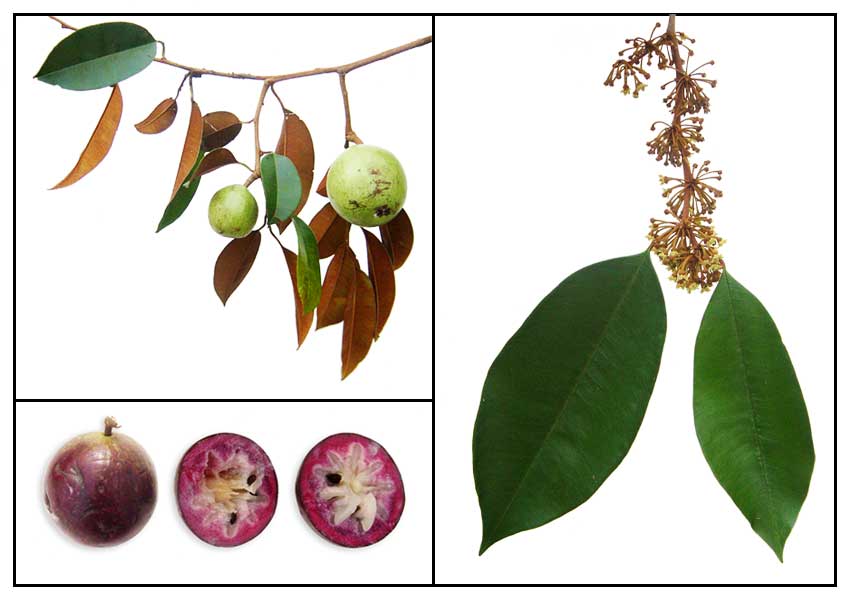
Caimito is a tree with a spreading
crown, growing to a height of 15 meters. Branches are numerous and slender, the
young tips are copper-colored and covered with appressed hairs. Leaves are leathery,
ovate or oblong, 7.5 to 13 centimeters long, pointed at the tip, blunt or rounded at the base and covered underneath with silky,
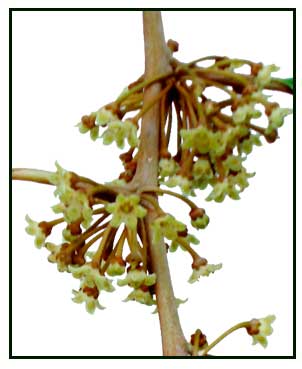
golden-brown, soft hairs. Flowers are purplish-white, small and clustered
in the axils of leaves, with 5 sepals, and a tubular corolla with 5 lobes. Fruit is large and rounded, 6 to 10 centimeters in
diameter, shiny and smooth, purplish or light-green skin, with a
translucent whitish or purplish, soft pulp surrounding flattened seeds about
1 to 1.5 centimeters long. The flesh, contains a small amount of milky juice, somewhat fibrous, sweet, mild and pleasant tasting.
 Distribution Distribution
- Cultivated for its edible
fruit and as an ornamental tree.
- Recently introduced from tropical America.
Constituents
- Seed contains saponin,
0.19%; pouterin, 0.0037%; a bitter principle (lucumin), 1.2%; a fixed oil, 6.6%; and dextrose, 2.4%.
- Leaves contain an amorphous bitter principle, some alkaloids, and no
saponin.
- Bark is rich in tannin.
- Analysis for volatile constituents yielded 104 compounds in the aroma concentrate. Major constituents were: (E)-2-hexenal, 1-hexanol, limonene, linalool, α-copaene and hexadecanoic acid. (8)
- Various extracts of fresh fruits yielded nine known polyphenolic antioxidants viz. (+)-catechin (1), (−)-epicatechin (2), (+)-gallocatechin (3), (−)-epigallocatechin (4), quercetin (5), quercitrin (6), isoquercitrin (7), myricitrin (8), and gallic acid. (see studies below) (2)
-Study of pulp and seed yielded varying concentrations of saponin, flavonoids, tannin,steroid and cardiac glycoside. Study also yielded vitamins (vitamin A, 0.027to 0.089 mg; vitamin C 10.00 to 43.54 mg) and minerals (calcium 37.0, magnesium 5.0, phosphorus 8.0, potassium 38.0 and sodium 21.0 mg). Proximate analysis yielded protein 1.96 to 4.63 g, moisture 56.04 to 75.90g, fat 0.88 to 15.81 g, fiber 2.31 go 4.19 g, ash 0.56 to 0.84 g, and carbohydrate 18.39 to 79.90 g. (see study below) (16)
- Phytochemical fractions of leaves yielded (% content): fats and waxes 0.934 ± 0.045, terpenoids and phenolics 4.004 ± 0.122, alkaloids 0.166 ± 0.068, quaternary alkaloids and n-oxides 10.678 ± 0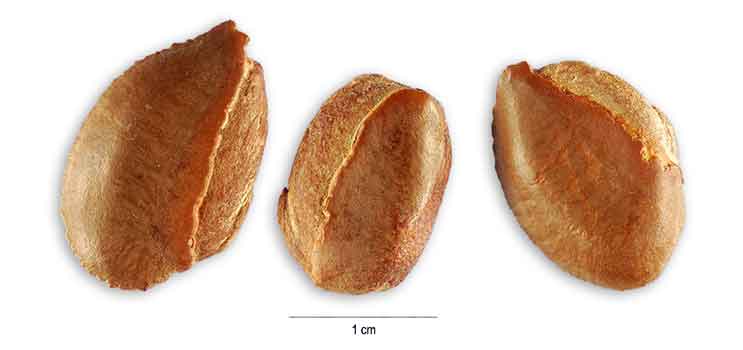 .035, and fibers 71.122 ± 0.136. (18) .035, and fibers 71.122 ± 0.136. (18)
- Nutrient analysis per 100 gm of edible portion yielded
2.33 gm, carbohydrates 14.65 gm, water 73.23 gm, fiber 3.30 gm, calories 67.2; vitamins: riboflavin 0.4 mg, thiamine 0.08 mg, niacin 1.340 mg, ascorbic acid 15.2 mg, vitamin B6 0.200 mg; minerals: iron 2.33 mg, calcium 14.65 mg, phosphorus 73.23 mg, magnesium 3.30, potassium 67.2 mg. (21)
- Crude methanolic extract of leaves yielded phytoconstituents such as gallic acid (1), along with six flavonoids: 3'-galloyl myricetrin (2), rutin (3), quercetrin (4), myrecetrin (5), myricetin (6), and quercetin (7), and two triterpenoids, ß-amyrin (8) and lupeol (9). (see study below) (36)
Properties
- Seed is tonic, diuretic and febrifuge.
- Pectoral, tonic, stimulant.
- Studies have suggest antioxidant, antidiabetic, antimicrobial, anti-inflammatory, hypotensive, vasorelaxant , analgesic, anti-osteoporosis, antidiabetic, antiprotein glycation, anti-aging, immunosuppressive, anticancer properties.
Parts used
Seeds, leaves, bark, fruit.
Uses
Edibility
• Fruit eaten ripe, with a sweet and flavorful pulp.
• Used as ice cream and sherbet ingredient
• In Jamaica, made into preserves.
Folkloric
• Ati Negrito use decoction of leaves as wash or hot compress for postpartum needs. Decoction of leaves drunk for abdominal pain. (26)
• The Aytas burn dried leaves for insect repellency. (17)
• Used by Ifugao migrants of the Sierra Madre for diarrhea.
(30)
•
In Mexico, decoction
of the bark given for dysentery.
• In Costa Rica, infusion of bark is tonic and refreshing.
• Tonic: Infusion of the bark is tonic and refreshing.
• Latex is used for abscesses.
• Dried latex used as anthelmintic.
• In some countries, the fruit is used for diabetes.
• Bitter seed sometimes used as tonic, for diarrhea and fevers.
• Fruit eaten for inflammation in laryngitis and pneumonia.
• Used for diabetes.
• Decoction used for angina.
• In the Ivory Coast, decoction of leaves used for hypertension. Leaf decoction also used for diabetes.
• In Venezuela, unripe fruit used
for intestinal problems.
• In Puerto Rico, fruit used in treatment of diabetes.
• Decoction of bark used as tonic and stimulant; used for diarrhea,
dysentery, hemorrhages and treatment of gonorrhea.
• Cubans in Miami reported to use
the leaf decoction for cancer treatment.
• In Brazil, bark latex used resolutive on abscesses;
and as a potent vermifuge when dried and powdered.
• Poultice of grated leaves applied to wounds. Leaf decoction used for hypoglycemia. Fruit used for treating fever and hemorrhage. (13)
Others
• Timber: Yields a brown and hard, but no durable wood. Used for indoor construction: planking, light framing, interior trim, shelving, paneling, etc.
(13)
• Dye: Bark yields tannin and dyestuff. (13)
• Paper: Good quality paper can be obtained from the wood. (13)

Studies
• Polyphenolic Antioxidants / Fruits:
Study on various fruit extracts yielded nine known phenolic antioxidants. The ethyl acetate soluble fraction displayed the highest antioxidant activity, and of the compounds, compound 5 (quercetin) showed the highest antioxidant activity. (see constituents above)
(2)
• Anthocyanin Antioxidant: Study of extracts of 12 edible fruits showed nine to exhibit
high antioxidant activity; C cainito yielded cyanidin-3-O-ß-glucopyranoside,
an anthocyanin antioxidant. (3)
• Vasorelaxant: A preliminary
study on the relaxant effect of the crude extract and fractions of the
bark of Chrysophyllum cainito L. in isolated rat thoracic aorta:
Methanolic bark extract study on rats showed vasorelaxant activity on
the smooth muscle. (5)
• Lectin Activity: Plant
samples of 178 species and 62 families were studied for lectin activity.
Potent lectins possessing more than 100,000 unites per gram were found
in the fruits extracts of C arabica and Chrysophyllum cainito. (4)
• Antidiabetic Activity / Leaves: Study of the aqueous decoction of C cainito leaves showed hypoglycemic activity at doses of ≥ 20 g/l. From 30 g/l, the plant would exert a toxic effect. The hypoglycemic effect was mainly attributed to alkaloids, sterols, or triterpenes. (6)
• Hypotensive Effect: Phytochemical study attributes the hypotensive effect flavonoids with vasodilation effect and inhibition of adrenergic receptors. (7)
• Glue Effect: Study explored the potential of star apple extract as glue. Results showed the glue from the star apple extract can be used as a substitute for commercial glue. (12)
• Anti-Inflammatory / Anti-Hypersensitivity Effects / Leaves: Study of crude methanolic extract of leaves demonstrated anti-inflammatory and anti-hypersensitivity effects on carrageenan-induced paw edema and hypersensitivity. Reduction of hypersensitivity attributed to isolated compound Lup-20(29)-en-3β-O-hexanoate > than 3β-Lup-20(29)-en-3-yl acetate. (14)
• Antimicrobial / Pulp and Seed Extracts: Study showed C. cainito has great potential as antimicrobial agent against selected pathogens and use in the treatment of enteric bacterial infections. (see constituents above) (16)
• Antihypertensive / Pulp and Seed Extracts: Study evaluated pulp extracts and fractions for in vitro (inhibition of angiotensin I converting enzyme/ACE assay), ex vivo (isolated aorta relaxation assay), and in vivo (salt induced hypertensive rat assay). An ALE-EAF reduced the elevated arterial pressure of salt induced hypertensive rat significantly to the level of normotensive animal group. (19)
• Silver Nanoparticles / Leaves: Study reports on the synthesis of environmentally friendly silver nanoparticles using C. cainito leaves. (20)
• Palladium Nanoparticles / Catalytic Activity / Leaves: Study reports on a simple and green synthesis of palladium nanoparticles (PdNPs) using a leaf extract of C. cainito. The synthesized PdNPs have been utilized as a green catalyst for C-C coupling reactions. The PdNPs can retain catalytic activity for several months. (25)
• Antidiabetic / Lipid Effects / Fruits: Study evaluated the antidiabetic activity of a hydroalcoholic extract of C. cainito fruits against experimentally induced diabetes using alloxan and STZ. Acute toxicity study using the hydroalcoholic extract showed safety at dose of 2000 mg kbw. Results showed a dose dependent significant decrease in blood glucose, triglyceride, cholesterol, and LDL levels with an increase in HDL. Results were comparable with standard drug glibenclamide. (22)
• Effect on Intestinal Motility / Leaves:Study evaluated a leaf extract of C. cainito on intestinal motility of white mice. Results showed the test drugs were not statistically different from the positive control in terms of antimotility effect but the effective antimotility dose were seen in medium and high doses (p=0.0029 and p=0.0099) respectively. (23)
• Immunosuppressive on Macrophage Functions / Leaves: Study evaluated the immunomodulatory effect of methanol extract of C. cainito leaves on macrophage functions. Results showed significant dose dependent inhibition of phagocytosis and decreased IL-6 and TNF-α as well as NO and H2O2 release by the macrophages. Study showed an immunosuppressive effect on murine macrophages, without effects on cell viability. GC-MS analysis showed lupeol acetate and alpha-amyrin acetate as principal components. (24)
• Cosmetic Application / Anti-Protein Glycation / Anti-Aging: Patent applied for an invention in the fields of cosmetic, relating to products for controlling skin aging and a cosmetic composition that includes an aqueous fruit extract of C. cainito. The application demonstrated that an extract of CC inhibits the glycation of proteins which protects the functionality of the skin cells. (27)
• Induction of Cell Death
In Osteosarcoma Cells / Polyphenolic Fraction: Study evaluated a polyphenolic fraction from C. cainito fruits for its effect on U-2 osteosarcoma (ATCC HTB-96) cell line of human osteosarcoma. The highest effect as increased caspase specific activity was observed at extract concentration of 300 µg GAE/mL. The effect of extract concentration on production of ROS can be related with apoptosis. Study suggested that apoptosis by ROS is the mechanism used by the compounds in the extract. Results suggest C. cainito has great potential and can be source of lead novel molecule for allopathic medicines for the treatment of osteosarcoma. (28)
• Wound Healing / Leaves: Study evaluated C. cainito leaves
for wound healing potential in male albino Wistar rats using an excision wound model. Topical application of standardized ethanolic extract on excision wounds showed significant faster reduction in wound area and significant increase in tissue biochemical parameters such as hydroxyproline, hexosamine and protein compared to untreated control. (29)
• Gastroprotective / Anti-Ulcer /
Fruit: Study evaluated methanolic extracts of peels, seeds, and pulp of Chrysophyllum cainito fruit and fruit flour for gastroprotective potential in mice using ethanol/HCl- and indomethacin-induced ulcer. All the extracts increased mucin production. However, the extracts did not reduce gastric acid secretion. Supplementation with C. cainito fruit flour displayed gastroprotective potential. Results suggest an antiulcer effect by favoring of mucosal protective mechanisms, together with complementary protective effects of the flour from C. cainito fruit. (31)
• Haemostatic Effect: Study evaluated the haemostatic effect of an aqueous extract of C. cainito on blood of albino rats. The administration of AECc caused a reduction in the time of bleeding. The presence of polyphenols and flavonoids in AECs make the substance antihemorrhagic. (32)
• Antidiabetic / Leaves: Study evaluated the effect pf an aqueous decoction of leaves on alloxan induced diabetic rabbits. Results showed a glucose lowering effect at doses > 10 g/L. It showed to be toxic and lethal at 30 g/L. The hypoglycemic effect was attributed to alkaloids, sterols, and triterpenes. (33)
• Antidiabetic / Glucose Uptake Stimulation / α-Glucosidase Inhibition / Stem Bark: Study evaluated the antidiabetic activity of C. cainito stem bark extract and possible mechanism of activity in alloxan induced diabetic mice. Effect on glucose absorption and glucose uptake were conducted using jejunum and abdominal muscle respectively. The extract showed strong antioxidant activity comparable to ascorbic acid and butylated hydroxytoluene. There was significant reduction of blood glucose in the OGTT in normal mice, and significantly decreased fasting blood glucose in the alloxan diabetic model, similar to glibenclamide. The extract produced stronger inhibition of α-glucosidase activity than acarbose. Results suggest potential use of the plant for the treatment of diabetic patients. (34)
• Anticancer / Hepatocellular Carcinoma / Stem Bark: Hepatocellular carcinoma is the most common type of primary liver cancer in humans. Study evaluated the anticancer properties of an aqueous extract of C. cainito stem bark, MTT assay showed CE significantly reduced human hepatocellular carcinoma (HepG2) cell viability with IC50 of 100 µg/mL. CE reduced procaspase-3, suggesting apoptosis by activating caspase-3 cleavage. Study suggests CE induces apoptosis and cell death in human hepatocellular carcinoma via generation of intracellular ROS and reduced mitochondrial membrane potential. (35)
• Modulatory Effect of Gamma Radiation Induced Oxidative Stress / Leaves: Study evaluated crude methanolic extract of leaves for antioxidant compounds and effect on oxidative stress induced by ionizing radiation exposure in male rats. Phytochemical study yielded gallic acid, along with six flavonoids and two triterpenoids. The compounds could have been beneficial to the ameiioration of alterations induced by gamma irradiation via antioxidant effects, decreasing MDA level, and improvement in liver and kidney functions and liver profile and reduction of histological alterations of the liver. (see constituents above) (36)
• Antinociceptive / Antihyyperalgesic / Herbal Mix: Study evaluated the antinociceptive and antihyperalgesic properties of an herbal mixture of four vegetal species: Pouteria campechiana, Citrus liimonum, Chrysophyllum cainito, and Annona muricata, commonly used in traditional Mayan medicine for treatment of diabetes and pain. The ethanolic extract of PCA was prepared at a ratio of 1:1:1:1. Results showed dose-dependent systemic antinociceptive effect in rat formalin with a 66% antinociceptive response. In rat capsaicin test there was also a dose dependent antinociceptive effect. The extract also showed antihyperalgesic effect in alloxan diabetic rats. (37)
• Amelioration of Diabetes and Its Complications / Antiglycation Activity / Leaves and Stems: Study evaluated the antidiabetic, antioxidant, and antiglycation potential of C. cainito. Leaf extract (CCE2) showed highest DPPH scavenging activity, while stem (CSE2) extract showed highest ABTS scavenging activity and ferric reducing power. CCE3 showed most effective inhibition of α-amylase and α-glucosidase activity. Advanced glycation end products formation was effectively inhibited by CCE2 with myrcetin 3-O-rhamnoside as the main constituent. CCE-3 exhibited highest protection effect against L02 cell line oxidation damage. (38)
• Cytotoxicity by Brine Shrimp Lethality Bioassay / Leaves: Study evaluated the cytotoxicity of C. cainito leaves using Brine Shrimp Lethality Bioassay. The ethanolic and hydroalcoholic extracts showed toxicity effects after 24h exposure. All prepared extracts exhibited active biological activities with the ethanolic and hydro-ethanolic extracts showing greater activities compared to the decoction. (39)
• Effect in Increasing Vertebral Trabecular Bone Density / Leaves: Study evaluated the effect of 79% ethanol extract of leaves on a model of dexamethasone induced osteoporosis in mice. Alendronate was used as positive control. Results showed increased trabecular vertebral bone density in female mice. Optimum dose was 400 mg/kbw per day. Results suggest phytoestrogens content in the 70% ethanol extract of leaves may replace the function of estrogen in its bond with ER. (40)
• Anti-Hypersensitivity Effects / Pre-Clinical Chronic Pain Model / Leaves: Study evaluated the anti-hypersensitivity effects of a crude methanol extract (CME), CHCl3, fraction, and isolated compounds from C. cainito. Study isolated two triterpenes: 3ß-Lup-20(29)-en-3-yl acetate (1) and Lup-20(29)-en-3ß-O- hexanoate (2), which were evaluated fr effects using clinical pain models, such as postoperative pain, inflammatory and neuropathic pain. The CME enhanced the mechanical withdrawal threshold of mice in the post-operative pain model. The CHCl3 fraction showed anti-hypersensitivity effect against epinephrine- or LPS-induced hypersensitivity, with more prominent effect in neuropathic pain models. The CME effect seems involved in interference in production, release, or action of some chemical mediators, such as PGE2m sympathetic amines, cytokines, etc. The CME effects may all be due, in part to the presence of triterpenes 1 and 2, or other compounds acting in synergism. (41)
• Anti-Osteoporosis / Increase in Vertebrae Trabecular Osteoblast Cell Number / Leaves: Study evaluated the anti-osteoporosis effect of a 96% ethanol extract from C. cainito leaves in trabecular vertebra bone of dexamethasone induced male mice. Results showed significant increase of osteoblast number in trabecular vertebrae bone of male mice. The effective dose (ED50) was 9.5 mg/20g BB mice/day. Effect may be due to phytoestrogen content, which can also act as phytotestosterone in 96% ethanol extract of C. cainito. (42)
• Anti-Inflammatory / LPS-Stimulated Peritoneal Macrophages / Fruits: Study evaluated the invitro and invivo anti-inflammatory effects of a methanolic extract (ME) and fraction E (FE) found in fruits and lupeol acetate (LA) from FE on LPS=stimulated mouse peritoneal macrophages. Results showed the ME, FE, and LA were able to trigger inhibition of NO and H2O2 levels, as well as IL-1ß, IL-6, and TNF-α released by macrophages in a concentration dependent manner. The LA was able to to significantly attenuate carrageenan-induced paw edema and TPA-induced ear edema Results suggest anti-inflammatory effects without affecting cell viability. (43)
• Antidiabetic / Leaves: Study evaluated the effect of ethyl acetate extract of leaves in decreasing blood sugar level in alloxan-induced male wistar rats. Metformin was used as positive control. Results showed significant decrease (p<0.05). The optimum dose in decreasing blood sugar was 75 mg/kbw. (44)
• Prediction of Compounds with Anti-Osteoporotic Activities / In Silico Study / Leaves: Estrogen deficiency is a cause of osteoporosis in postmenopausal women. Study evaluated the metabolite profiling results of various extract of C. cainito leaves, which contain phytoestrogen, through in silico study against 3OLS protein, an X-ray protein of ERß to predict types of phytoestrogen contents with antiosteoporotic property. In silico studies have shown 11 compounds in C. cainito leaves predicted as phytoestrogens with ERß agonist properties against 3OLS protein. The ERß agonist compound has parameters similar to 17ß-estradiol int its interaction with 2OLS protein.
(45)
• CDK-1 Inhibitors / Anticancer / Leaves: Oral squamous cell carcinoma (OSCC) is the 6th most common cancer, associated with high mortality and low 5-year survival rate. Dysregulation of CDK1 is frequently observed in many cancers, including OSCC patients. Data shows that molecules such as 8-(dimethylamino)-7-(3-(4-ethylphenoxy)-2d, ethyl 6-oxo-5-propylheptanoate, 2,3-dihydro-3, 5-dihydroxy-6-methyl-4h-pyran-4-one, 1,2,3- benzenetriol and 1,4-benzenediol 2,5-bis (1,1-dimethylethyl) identified in methanol extract of C. cainito leaves have binding features with CDK1. (46)
• Corrosion Inhibition of Pipeline Steel / Cotyledon: Study evaluated the corrosion inhibition characteristics of Chrysophyllum cainito aqueous extract on corrosion of pipeline steel in 0.5 M HCl. Scanning electron micrograph showed a smoother corrosion surface morphology. Data showed corrosion inhibition mechanism to be through adsorption. (47) Availability
- Wild-crafted.
- Cultivated for its edible fruit.
- Seasonal market produce.
- Tinctures of bark, leaves and fruits in the cybermarket. |