|
 Botany Botany
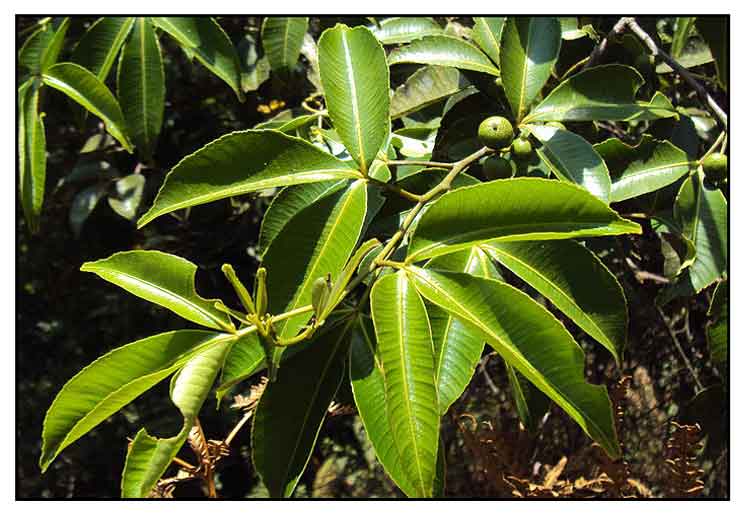
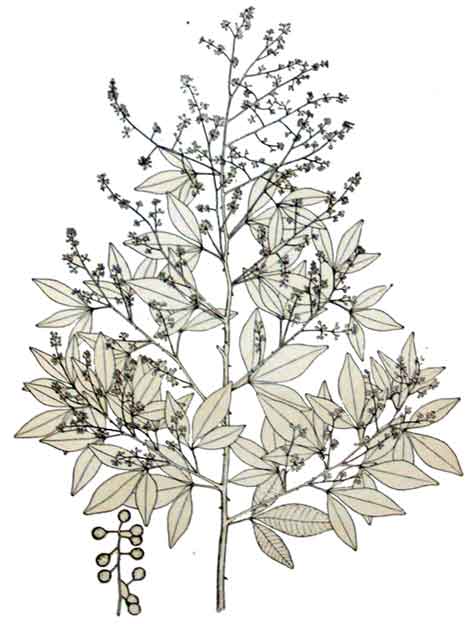
Dawag is a rather large, spiny woody vine which is pungent in all its
parts and provided with sharp, recurved prickles. Leaves are 3-foliate. Leaflets are stalkless, sessile, ovate-elliptic,
obovate or obovate-oblong, 3 to 8 centimeters long, 5 to 25 millimeters wide, and
rounded at the base, pointed at the apex. Flowers are small, greenish-white, 5 millimeters across, and borne
on terminal cymes or from the upper leaf axils. Fruit is small, nearly spherical, less than 1 centimeter in diameter,
borne in fairly large clusters, 3- to 5- grooved, and with as many
cells, and orange-red when ripe. Seeds solitary in each cell.
 Distribution Distribution
- In thickets at
low and medium altitudes, ascending to 1,700 meters, only in Benguet, Bontoc, Rizal, Laguna, and Nueva Viscaya Provinces in Luzon; and in Palawan.
- Also reported in India to southern China and Malaya.
Constituents
- Volatile oil, 0.08%
- toddalolactone, citronella, linalool.
- Stem bark - aculeatin; aculeatin hydrate; colorless substance,
m.p.239.
- Yields 0.08% oil by steam distillation, largely linalool. Oil has an odor suggesting a mixture of camphor and lemon grass.
- Study of twigs yielded two new
geranyloxycoumarins, 7-geranyloxy-5-methoxycoumarin (1) and 8-geranyloxy-5,7-dimethoxycoumarin (2). (9)
- Various extracts of stems yielded sugar, protein, alkaloids, flavonoids, sterols, coumarins, and glycoside.
(16)
- Stems yielded four new triterpene acids: (1) 2α,3α, 19α-trihydroxy-11-oxo-urs-12-en-28-oic acid, (2) 2α,3α, 11α, 19α-tetrahydroxy-urs12-en-28-oic acid, (3) 2α, 3α-dihydroxy-19-oxo-18, 19-seco-urs-11, 13 ( 18)-dien-28-oic acid, and (4) 2α, 3β, 19α-trihydroxyolean-11, 13( 18)-dien-28-olic acid, along with the known compounds euscaphic acid, arjunic acid, toddaculin, toddalolactone and β-sitosterol. (19)
- Preliminary screening of solvent extracts of leaves yielded the presence of alkaloids, phenols, flavones, tannins, coumarins, reducing sugars, xanthoproteins, and glycosides. (26)
- Study of essential oil of leaves yielded 42 compounds. The major compound was ß-phellandrene (21.35%). (see study below)
(28)
- Leaves yielded major phytoconstituents viz. 2,2,6- Trimethyl- 2H, 5H pyrano (3,2-C) quinolin-5-one; Butylated hydroxytoluene; Cycloheptasiloxane tetradecamethyl; Nerolidyl acetate; Spathulenol; Acetic acid, dodecyl ester; 2-Napthalenemethanol, decahydro alpha; n-Hexadecanoic acid and Dibutyl phthalate. (30)
- Ethanolic extract of roots isolated seven new prenylated coumarins (1-7) and 14 known analogues (8-21). Compounds 1-5, named toddalin A, 3‴-O-demethyltoddalin A, and toddalins B–D, represent an unusual group of phenylpropenoic acid-coupled prenylated coumarins.
(see study below) (35)
- Study of stems yielded carbohydrates, proteins and amino acids, flavonoids, alkaloids, tannins and phenols, phytosterols
, glycosides, and coumarins. GC-MS analysis yielded 25 compounds, major compounds were 2,3-diphenyl-4- acetoamidothiophene (39.80 %), 2-(4-Pyridyl)-4-methylquinoline (19.14%) and Pyrido[2,3-b]indole (16.48%). (38)
- Methanolic extract of stem yielded carbohydrates, proteins and amino acids, alkaloids, flavonoids, saponins, steroids, glycosides, tannins, and coumarins. (see study below) (41)
- GC-MS study of essential oil of leaves yielded 45 components. The main constituents were
linalool (10.67%), β- sesquiphellandrene (9.86%), spathuleno (8.37) and caryophyllene oxide (6.29%). (see study below) (44)
Properties
- Bitter-tasting, minty, warming-natured.
-
Activates blood, dissipates
contusions.
- Considered
antiphlogistic, analgesic.
- Root bark considered antimalarial, antiperiodic, antipyretic, tonic and carminative.
- Volatile oil from the leaves have a pleasant odor resembling verbena of basilicum.
- Studies have shown antiplasmodial, antimicrobial, antiviral, analgesic, anti-inflammatory, cytotoxic, repellent, antioxidant, anti-diarrheal, antihyperglycemic properties.
Parts
utilized
· Root bark, roots, leaves, fruits.
· May be collected the whole year round.
· Rinse, cut into sections, sun-dry.
Uses
Edibility
· Fruit is edible with a taste between an orange and a lemon.
Folkloric
· In the Philippines, decoction of root used as antidiarrhetic and dynamogenic during convalescence from fevers.
· Infusion of root bark used as bitter stomachic, tonic and febrifuge.
· Leaves chewed for stomach disorders.
· Used for rheumatic arthritis, sprains, contusions, intercostal neuralgia, cough, malaria, dysentery and gastralgia.
· Used for poisonous snakebites, nausea, bronchitis, wounds, contaminated ulcers, epilepsy, gonorrhea and general debility.
· Root bark used as antimalarial, antiperiodic and antipyretic. Fresh root bark, as infusion or fluid extract, used as stimulating tonic and carminative.
· Pounded fresh leaves applied as poultice on furuncles.
· Dosage: 6 to 9 gms dried material in decoction. Pounded fresh
leaves or bark may be used as poultices over afflicted areas.
· In East Africa, used most often
for stomach problems. Also used for malaria, cough, chest pains, food
poisoning and sore throat. (1)
· In India, used in treatment of various ailments: cough, malaria, indigestion, influenza, rheumatic fever cholera, diarrhea, and stomach ailments. (15)
· In East Africa, used in treatment of pain and inflammatory conditions.
· In Siddha herbal medicine, the root of Toddalia asiatica (Milagaranai Ver Chooranam) is used for its antimcrobial properties. (see study below) (27)
Others
· Perfume: Oil used in making low-grade perfume.
· Dye: Root bark yields a yellow dye.
Studies
• Antiplasmodial: A
new antiplasmodial coumarin was isolated from Toddalia asiatica roots – 5,7-dimethoxy-8-(3'-hydroxy-3'methyl-1'butene)-coumarin. The finding supports the traditional use of the plant for treatment
of malaria. (2)
• Antiviral: More than 200 Chinese medicinal herbs for antiviral activity against influenza A/PR/8/34 (H1N1) virus. Results suggest T. asiatica extract can be a
candidate for anti-H1Ni virus agent for treatment of influenza. (3)
• Antimicrobial:
Antimicrobial activity of the hexane and methanol extracts of collected
ethnomedicinal plants: Methanol and hexane extracts
of Toddalia asiatica showed antimicrobial activity. The essential oils
from the leaves were most active against E. coli, K. pneumonia, P. aeruginosa
and S. aureus. • Antimicrobial: In a study of 18 ethnomedicinal plants for antimicrobial activity, T asiatica was one of the six that showed most activity against nine bacterial strains: B subtilis, S aureus, S epidermis, E faecalis, E coli, K pneumonia, P aeruginosa, Ervinia sp,, P vulgaris. (7)
• Antibacterial / Chemical Composition:
A. marmelos, T. asiatica and Z. budrunga were hydrolyzed
for its essential oils. The essential oils exhibited antibacterial activity
against S. aureus, B. subtilis, E. coli, P. aeruginosa. Todalia asiatica
showed strongest activity against E. coli and P. aeruginosa. Results
suggest a potential for large scale production and development of a
medicinal essential oil industry.
• Analgesic / Anti-Inflammatory: Study showed anti-inflammatory and analgesic effects of the crude alklaloids of T asiactica. Furthermore, there was no long-term effects to the liver. (8)
• Tumor Selective Cytotoxicity: Study isolated three benzo[c]phenanthridine derivative: DHN (dihydronitidine) NTD (nitidine), and DMN (demthylnitidine). NTD and DHN selectively reduced the growth of murine and human lung adenocarcinoma in vitro. (10)
• Larvicidal / Smoke Repellency Effect Against Dengue Vector, A Aegypti: The LC50 of T asiatica was 47.893, 50.992, 54.461 and 61.278 on first to fourth instars. Smoked exposed gravid females hatched a lower percentage of eggs compared to unexposed females. (11)
• Antioxidant: Alcoholic and aqueous extracts of Toddalia asiatica exhibited significant in vitro and in vivo antioxidant activity. (12)
• Larvicidal: Hexane extract of fruits of T. asiatica showed highest larvicidal activity against fourth instars larvae of Dengue vector, Aedes aegypti and Filarial vector, Culex quinquefasciatus. Results show TA as a promising larvicide against both targeted mosquitoes. (13)
• Ulopterol / Antimicrobial: Study of various extracts of leaves isolated a coumarin, ulopterol, besides Flindersine, a major active antimicrobial principle. Ulopterol showed activity against bacteria viz. S. epidermis, E. aerogenes, S. flexneri, K. pneumonia, E coli and fungi viz. A. flavus, C. krusei and B. cinerea. (15)
• Radical Scavenging Activity / Antimicrobial: Study evaluated the antioxidant activity through inhibition of hydroxyl radical of Toddalia asiatica polysaccharides. Results showed that TA polysaccharides hydroxyl radical scavenging was positively correlated with its concentration. TA is a promising natural source of antioxidants. (17)
• Antinociceptive / Anti-Inflammatory: Study in a mice model showed significant antinociceptive and anti-inflammatory effects using the carrageenin-induced paw edema and formalin-induced pain tests, and supports the anecdotal use for painful and inflammatory conditions. (18)
• Larvicidal Against Two Mosquito Vectors: Study of various extracts of mature fruits and leaves was studied for bio-control potentiality against fourth instars larvae of Dengue vector, Aedes aegypti and Filarial vector, Culex quinquefasciatus. Hexane, acetone and methanol extracts of leaves showed potency against Aa and Cq. Results were promising for T. asiatica as larvicide against both targeted mosquitoes. (20)
• Anti-Malarial: An ethyl acetate extract of fruits was active against chloroquine resistant Plasmodium falcifarum as well as Plasmodium berghei. Studies suggest the potential of TA for further testing for a prototype antimalarial medicine. (21)
• Antibacterial / Antifungal: In a study of various plant extracts, Todavia asiatica stem bark methanol extract showed the highest activity against Methicillin Resistant Staphylococcus aureus and an ethyl acetate extract against Microsporum gypseum. (22)
• Anti-Diabetic / Antioxidant: Study of ethyl acetate extract of leaves showed significant antidiabetic and antioxidant effects in STZ-induced diabetic rats. Histopathology of pancreas in the treated group showed regeneration of ß-cells. (23)
• Larvicidal / Anopheles gambiae: Study evaluated extracts of T. asiactica and Ekebergia capensis for potential larvicidal activity. Extracts showed larvicidal activity. Fractionation isolated several compounds. Sibricin from T. asiatica showed the highest level of larvicidal activity. (24)
• Antimicrobial / Roots : Study sought to validate the antibacterial and antifungal activity of Milagaranai Ver Chooranam extract against various microorganisms (gram negative and gram positive bacterial activity and antifungal activity against Candida albicans). Results showed the minimum inhibition of growth of all microorganisms at 100 µg/ml concentration, confirming its use as an antimicrobial agent. Activity may be due to the presence of constituents such as alkaloids, flavonoids, isoflavonoids, tannins, coumarins, glycosides, terpenes and phenolic compounds. (27)
• Antigenotoxic / Cytotoxic / Antioxidant / Essential Oil / Leaves: Essential oil of leaves of Toddalia asiatica showed DNA protecting activity against H2)2 induced genotoxicity in human lymphocytes. It showed cytotoxicity against breast (MCF-7) and colorectal (HT-29) cancer cells and considerable DPPH free radical, hydroxyl radical scavenging, iron chelation and inhibition of lipid peroxidation activities. Results suggest potential use in food and drug preparation. (see constituents above) (28)
• Ulopterol / Antimicrobial / Leaves: Study of leaves of T. asiatica yielded the coumarin Ulopterol, and the quinolone alkaloid Findersine. Ulopterol exhibited antimicrobial activity against bacteria ciz. Staphylococcus epidermis Enterbobacter aerogenes, Shigella flexneri, Klebsiella pneumonia and E. coli and fungi viz. Aspergillus flavus, Candida krusei and Botrytis cinerea. (29)
• Antiviral / Influenza type A Virus: Study investigated the antiviral activity of Toddalia asiatica against Influenza virus type A in vitro. Results showed TA compound could be a candidate for anti-H1N1 virus agent in the treatment of influenza. (31)
• Anti-Diarrheal / Leaves: Study investigated the anti-diarrheal effects of an ethanolic extract of leaves of Toddalia asiatica against castor oil-induced diarrhea model in rats. Results showed an anti-diarrheal effect with reduction in number of diarrheal stools and reduction in weight and volume of intestinal contents and reduction of intestinal transit. (32)
• Toddaculin / Osteoporosis Benefits: Study showed toddaculin derived from Toddalia asiatica not only inhibited the differentiation of osteoclasts via activation of the NP-kB, ERK 1/2, and p38 MAPK signaling pathways, but also induced differentiation and mineralization of osteoblasts by regulating differential factors. Results suggest potential benefits for the prevention and treatment of osteoporosis. (33)
• Antiplasmodial / Larvicidal / Root Bark: Study of extracts of root bark isolated 8 compounds. The compounds showed moderate in vitro antiplasmodial activity against D6 (chloroquine sensitive) and W2 (chloroquine-resistant) strains of Plasmodium falcifarum and larvicidal activities against Aedes aegypti. Coumarins were identified as active compounds. (34)
• Phosphodiesterase-4 Inhibitors / Prenylated Coumarins / Roots: Study of roots yielded seven new prenylated coumarins and 14 known analogues. Compounds were tested for inhibitory activity against phosphodiesterase-4, the drug target for treatment of asthma and COPD. Compound 8, Toddacoumatone was the most active compound. (see constituents above) (35)
• Insecticidal / Repellent / Fruit: Study showed a diethyl ether fruit extract of Toddalia asiatica showed mortality and repellency against three insects viz. Callosobruchus maculatus, Sitophilus oryzae, and Tribolium castaneum adults. Results suggest the fruit extract can be an ecofriendly fumigant and repellent against the three major stored product pests. (36)
• Antihyperlipidemic / Antioxidant: Study evaluated the in vitro antioxidant and antihyperlipidemic activity of Toddalia asiatica leaves in Triton WR-1339 and high fat diet-induced hyperlipidemic rats. On DPPH, hydroxyl and NO assays, the leaf extract showed very good scavenging activity. An ethyl acetate extract showed significant reduction in total cholesterol, triglycerides, LDL, with significant increased in HDL-C in comparison with hexane and methanol extracts. (37)
• Antinociceptive / Models of Central and Peripheral Pain:Study evaluated various extracts of T. asiatica for antinociceptive activities in Swiss albino mice in acetic acid-induced writhing, tail-flick, and hot plate tests. A root bark extract showed greater potency than leaf extract, with highly significant activity (p<0.001) in the hot plate and tail flick tests. (39)
• Analgesic Property / Toxicity: A crude extract of T. asiatica showed better analgesic effect (28.2±13.16) than acetylsalicylate as control (4±0.31). However, the crude extract induced nephrotoxicity and liver enzymes modulation and elevated total cholesterol in test organisms compared to untreated negative control. (40)
• Antimicrobial / Stems: Study evaluated a methanolic extract of stem for antimicrobial activity against various microorganisms viz. S. aureus, K. pneumonia, E. coli, P. vulgaris, P. aeuriginosa, B. anthracis, and B. subtilis and fungi viz. F. oxysporum, A. flavus, Penicillium sp. and C. albicans. (see constituents above). (41)
• Antihyperglycemic / Leaves: Study evaluated methanolic and PE extracts of leaves for antihyperglycemic activity in STZ-induced hyperglycemic rats. Results showed increased utilization of glucose by a-amylase inhibition assay suggesting inhibition of digestion and absorption of glucose through the intestine. (42)
• Germicidal / Herbal Antiseptic Detergent: In the background of skin dryness and irritation caused by alcohol-based sanitizers, study evaluated a T. asiatica stem-bark extract formulated into a germicidal herbal antiseptic detergent. Results showed high antimicrobial activity with inhibition zones of 24 mm (S. aureus) and 22 mm (M . gypseum) compared to 22 mm and 14 mm respectively by commercial hand wash. The remarkable potency showed promising potential for use of the non-synthetic germicidal ingredients for formulation of antiseptic ingredients. (43)
• Essential Oil / Fumigant / Repellent / Leaves: Study
of essential oil of leaves of Todalia asiatic showed fumigant toxicity and repellency against Callosobruchus maculatus, Sitophilus oryzae, and Tribolium castaneum. (see constituents above) (44)
Availability
Wild-crafted. |