|
Gen info
- Zingiberaceae, the ginger family, is a family of flowering plants containing 58 genera and about 1600 described species globally in the tropics and subtropics. (46)
- Ancient fossils and phylogenetics indicate Zingiberaceae evolved in Africa during the mid-Cretaceous period. (46)
- As of June 2025, Plants of the World Online lists 58 genera.
- Hedychium is a genus of flowering plants in the ginger family Zingiberaceae. There are about 70-80 known species, native to India, SE Asia, and Madagascar. Some are widely naturalized; some, considered invasive.
(49)
- Etymology: The genus name Hedychium derives from two ancient Greek words, hedys meaning "sweet and chios meaning "snow", referring to the fragrant white flower of the type species, Hedychium coronarium.
- National flower: H. coronarium is the national flower of Cuba, where it is known as mariposa (butterfly) due to its shape. (47)
- In the UK, it has received the Royal Horticultural Society's Award of Garden Merit. (47)
Botany
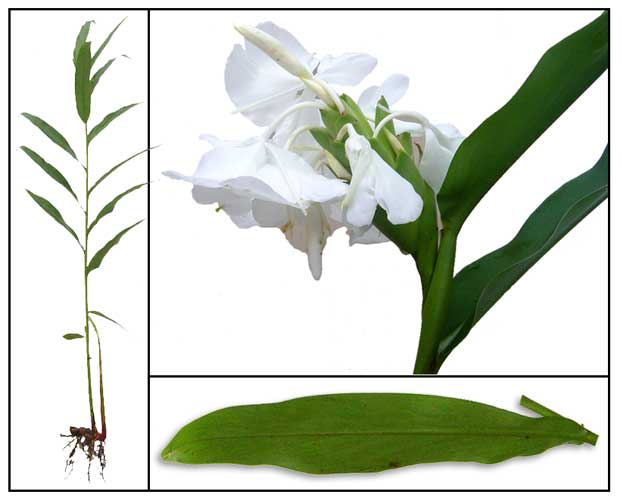
• Kamia is an erect shrub with a stout rootstock, growing 0.5 to
1.5 meters high. Leaves are smooth or the lower surfaces moderately hairy, lanceolate
to oblong-lanceolate, 10 to 50 centimeters long, 3 to 11 centimeters wide, with slender pointed
tip. Ligule is prominent, 1 to 3 centimeters long. Ellipsoid spike is at the top of
the stem, 5 to 12 centimeters long. Bracts are green, ovate to obovate, about 4
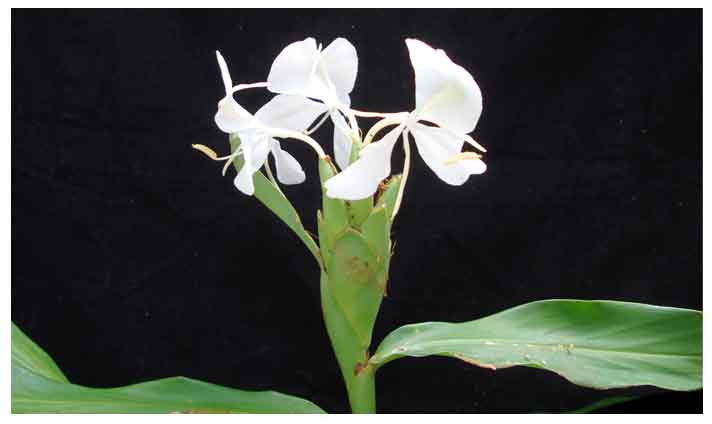
centimeters long, and each with 2 or 3 very fragrant flowers, with a fragrance that is more
pronounced in the evening. Calyx is tubular, clefted on one side, and
about 4 centimeters long; lobes are narrow, involute, and about 4 centimeters long. Lip
is obcordate or obovate, 5 to 6 centimeters in diameter, white and pale yellow in the center.
Staminodes are white, oblong-elliptic, obtuse, narrowed at the base, 4 to 5 centimeters
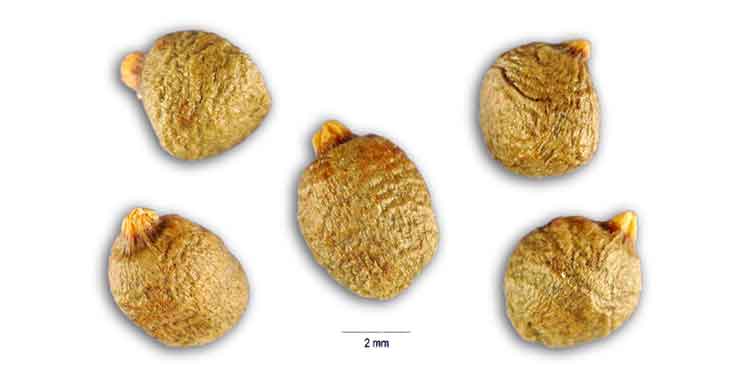
long and 2 to 2.5 centimeters wide. Capsule is oblong, smooth, many seeded, with orange-yellow valves inside. Aril is red.
 Distribution Distribution
- Prehistoric introduction in Mindanao; recent in Luzon.
-
Cultivated for ornamental
use.
-
In some regions of the southern Philippines, naturalized.
- Native to Assam, China South-Central, China Southeast, East Himalaya, India, Myanmar, Nepal, Taiwan, Thailand, Vietnam. (20)
- In many parts of India, the plant is becoming rare because of complete uprooting, early harvesting, and increase market demand for rhizomes and Ark (juice) extracted from the flowers. (26)
- Invasiveness: Beyond its native range, it may be invasive in shallow water systems, along strreams and in waterlogged areas. Once established, it is difficult to control due to vegetative reproduction through the underground spread of rhizomes. Introduced as an ornamental by the Chinese in 1888, it is now considered a serious invader in mesic to wet areas of Maui and Hawaii island. It is also invasive in South Africa, where it is declared a weed and prohibited to propagate. (47)
 Constituents Constituents
- GC-MS study of essential oil from fresh and dried rhizomes yielded 44 and 38 constituents, representing 93.91% and 95.41%, respectively. Major components of EO from fresh and dried rhizomes were 1,8-cineole (41.42%, 37.44%), ß-pinene (10.39%, 17.4%), and α-terpineol (8.8%, 6.7%). (see study below) (1)
-
Dried rhizome contains: starch, 3 %; glucose, 4.58 %; albumen, 1.65 %;
fats, 0.33%; resinous acid, 3.
6%; resinous acid, 3.66%; resin, 5.93 %; extractive matter, 0.91%; essential oil; gum, 13.75 %; organic
acids, 5.5%; cellulose, 29.68%.
-
The flower yields a fragrant essential oil; the
rhizome, a volatile oil.
- GC-MS analysis of flowers for essential oil identified a total of 29 components. Main constituents included ß-trans-ocimenone (28.05%), linalool (18.52%), 1,8-cineole (11.35%),
α-terpineol (7.11%), 10-epi-γ-eudesmol (6.06%), sabinene (4.59%), and terpinen-4-ol (3.17%). (see study below)
- Study on rhizomes yielded coronarin -D, coronarin -D ethyl ether, coronarin -E, and a new diterpene identified as (+)-14β-hydroxylabda-8(17),12-dieno-16,15-lactone, assigned the trivial name of isocoronarin-D.
- Several labdane-type diterpenes--coronarin A, B, C, D, E, and F have been isolated from the rhizome.
- Water extract of H. coronarium yielded carbohydrates, proteins, flavonoids, phenolic compounds, tannins, steroids and terpenoids, saponin, cardiac glycosides, and oil. (see study below) (15)
- Study of leaf and rhizome essential oils yielded β-Pinene (33.9%), α-pinene (14.7%), 1,8-cineole (13.3%), r-elemene (11.0%) and carotol (9.1%) as main components in the leaf oil, including 82.0% terpenoid compounds; and 1,8-cineole (37.3%), β-pinene (23.0%), α-terpineol (10.4%) and α-pinene (9.9%), comprising 80.6% as major constituents of the rhizome oil. (see study below) (18)
- Rhizomes yielded
carbohydrates, flavonoids, saponins, steroids, and alkaloids. (see study below) (21)
- Study of flowers isolated a new labdane-type trinorditerpene, coronadiene (3), along with 8 known compounds. The principal constituents, were coronaririn C and 15-hydroxylabda-8(17).11.13-trien-16,15-olide, (see study below) (27)
- Methanolic extract of rhizome yielded three new labdane-type diterpenes, hedychilactones A, B, and C, along with six known diterpenes. (see study below) (29)
- Study of rhizomes isolated cytotoxic principles: four new labdane-type diterpenes, coronarin A, B, C, and D. along with one known labdane-diterpene, (E)-labda-8(17)- 12-diene-15, 16-dial. (34)
- Study of essential oil hydrodistilled from rhizome parts of four Hedychium species varied from 0.05 to 0.47% (v/w). GC-FID and GC-MS studies identified a total of 44 components accounting for 86.18-99.94% of the EO. The EOs were grouped into four chemotypes: eucalyptol (1), linalool (2), coronarin-E (3) and ß-pinene (4). The leaf oil of H. coronarium was characterized by α-pinene (20%), linalool (15.8%), 1,8-cineole (10.7%), α-terpineol (8.69%), while the root yielded α-pinene (23.6%), α-humulene (17.1%), and ß-caryophyllene (17.0%). (35)
-
DBE (dry rhizome benzene extract) yielded carbohydrates, proteins, amino acids, alkaloids, tannins, fixed oils, and fats. Extract showed higher contents of total soluble carbohydrates (5.5 mg GE/g), total proteins (50.51 mg BSAE/g), total starch (30.03 mg GE/g), and total free amino acids (408.24 mg LE/g). (see study below) (50)
- GC-MS analysis of H. coronarium oleoresins from four locations identified key constituents, including n-Hexadecanoic acid (8.3-9.8%), photocitral B (4.8-27.6%), (Z)-9-eicosenoic acid (0.7-6.5%), α-pinene (2.5-3.5%), and trans-13-octadecenoic acid (7.5%). (51)
- GS-MS screening of flower extract for potential compounds yielded 4-ethyl-2-methoxyphenol (8.41%), 1-methyl-4-propan-2-ylidenecyclohexene (2.64%), 4-(2-hydroxypropan-2-yl)-1-methylcyclo-hexan-1-ol (1.9%), Creosol (1.63%), 1h-purin-6-amine, [(2-fluorophenyl) methyl]- (1.45%), Isoborneol (1.36%), (+)-alpha-terpineol (p-menth-1-en-8-ol) (1.24%), Dodec-11-enyl acetate (1.17%), 1, 8-cineol (1.13%), among others. (see study below) (55)
 Properties Properties
- Its fragrance is reminiscent of jasmine.
-
Decoction of the rhizome is anti-rheumatic, tonic and excitant.
- In Ayurveda, considered febrifuge, tonic,
stimulant and antirheumatic. (26)
- Powdered rhizome and essential oil considered anti-infective; roots essential oil considered anthelmintic and carminative. (26)
- Studies have suggested antimicrobial, anti-inflammatory, antioxidant, antinociceptive, cytotoxic, antimycobacterial, anticancer, trypanocidal, antidiabetic, leishmanicidal, antiurolithiatic, mosquitocidal, hepatoprotective, CNS depressant, antihypertensive, diuretic, antiangiogenic, antivenom, nutrient, nematicidal, insecticidal, herbicidal, antiplatelet, anti-wrinkle, collagenase inhibitory, anti-cataract properties.
Parts
utilized
Rhizome, stems, seeds, leaves.
Uses
Edibility
- Young buds and
flowers are edible. Used as flavoring.
- Roots used as famine food.
Folkloric
- Decoction of stems near
the rhizome used as a gargle for tonsillitis; or the raw stem chewed
for same purpose.
- In the Moluccas the base of the stem is chewed and the juice applied to swellings.
- In Brazil decoction of rhizome is antirheumatic, tonic and excitant.
- In India, sold in bottles of extract called
Gulbakawali Ark; used as eye tonic and for to prevent eye cataracts. Certain tribal groups of Bihar use the rhizome of the plant as febrifuge.
- In Bangladesh plant rhizome used for diabetes.
- In Chinese medicine, used for headache,
inflammatory pains, rheumatism.
- In the Moluccas used as antirheumatic, tonic, and excitant.
- In Hawaii juice of mature seeds use as treatment for hair and skin afflictions.
- In Thailand, boiled leaves are applied to relieve stiff and sore joints.
- In India, used used as febrifuge, eye tonic, anthelmintic, antirheumatic, tranquilizer in various Ayurvedic medicines. (26)
Others
- Fragrant bouquets: In the provinces, the
fragrant flowers popular in the making of wreaths and bridal bouquets.
- Wreaths: Stems are 45% cellulose, used in making paper.
- Culture: In India, H. coronarium is regarded as sacred and is mentioned in folk tales of the Tripuri people. (47)
Studies
• Antifungal / Antimicrobial / Essential Oil: The
essential oil from fresh and dry rhizomes yielded 44 and 38 constituents
and was shown to have antifungal and antibacterial effects. Antibacterial
effects were higher in the fresh sample than the dried; both showed
activity against Trichoderma sp. and C. albicans, B. subtilis and P
aeruginosa. (1)
• Analgesic
/ Anti-inflammatory: Different
extracts of HC exhibited significant analgesic and anti-inflammatory
activities. The effects could be due to inhibition of prostaglandin
synthesis, inhibition of histamine and/or serotonin. (2)
• Antibacterial
/ Cytotoxicity: Study of methanol and dichlormethane extracts exhibited antibacterial activity against Gram positive (S aureus, B subtilis, B megaterium, Sarcina lutea) and Gram negative (E coli, S sonnei, S shiga, P aeruginosa and S typhi) bacteria. Cytotoxicity was evaluated against brine shrimp nauplii. (4)
• Antioxidant
/ Anti-inflammatory: Five
genus of Zingiberaceae plants from Taiwan, including Hedychium, were
studied for their functional properties. Hedychium sp. were found to
have antioxidant properties. Most Zingiberaceae plant extracts exhibited
antimicrobial activity against all food microorganisms; Hedychium did
not show activity against E. coli and Vibrio parahemolyticus.
• Flower Essential Oil
/ Anti-inflammatory: GC-MS study of flowers for essential oil identified a total of 29 components. The oil exhibited significant inhibition of paw edema but showed poor antioxidant activity with DPPH. There was no direct correlation between inflammatory and antioxidant activity of the essential oil. (see constituents above) (5)
• Phenolics
/ Antioxidant: Study showed HC to have the highest phenolic content and ascorbic acid equivalent antioxidant capacity of leaves of 26 ginger species.
• Anticancer
/ Cytotoxic Labdane Diterpenes: Study of hexane extract isolated two new labdane diterpenes, 1 and 2, along with 10 other known metabolites. Isolates were studied for cytotoxic activity against lung cancer, human neuroblastoma, breast cancer and cervical cancer cell lines. (8)
• Labdane-type Diterpenes /
Anti-Inflammatory: Study yielded three new labdane diterpenes 1-3, named coronarins G, H, and I, together with 7 known coronarin D. Compounds 1, 2, and 6 (hedyforrestin C) showed to be potent inhibitors of LPS-stimulated TNF-α, IL-6, and IL-12 p40 productions. (9)
• Trypanocidal / Essential Oils: Study of essential oil of leaves and rhizomes of H. coronarium. Caryophyllene was the major component in rhizomes, which showed a remarkable activity against T. brucei strains, with highly increased trypanocidal activity in synergism with caryophyllene oxide plus pentamidine. (13)
• Antiurolithiatic / Roots: Study evaluated the antiurolithiatic activity of roots of Hedychium coronarium on experimental kidney stones. Alcoholic root extracts showed the highest dissolution of calcium oxalate stones. (14)
• Phenolic Contents: Study evaluated the water extracts of three different species of genus Hedychium i.e., H. spicatum, H. coronarium and H rubrum. Results showed all three contained a good quantity of phenolic compounds. (see constituents above) (15)
• Anti-Venom / Essential Oil: Study evaluated the potential inhibitory effects of H. coronarium essential oil of leaves on the coagulant and fibrinogenolytic activities induced by venoms of Lachesia muta, Bothrops atrox and Bothrops moojeni. Results showed the oils interact with venom proteases and plasma constituents, with inhibition of clotting effect when the oils were previously incubated with venoms. Results showed the essential oil can be used as alternative to complement serum therapy. (16)
• Mosquitocidal / Dengue Vector Aedes aegypti: Study evaluated the larvicidal activity of 3 different solvent extracts of H. coronarium against dengue vector Aedes aegypti. Results showed the methanol extract of HC to be more effective than other extracts. (17)
• Antimicrobial / Mosquitocidal / Antioxidant / Leaf and Rhizome: Study evaluated the essential oil, methanolic and aqueous extracts of leaves and rhizomes of H. coronarium. Leaf and rhizome oil exhibited significant antimicrobial activity against all five fungal and four bacterial strains tested, attributed to its high terpenoid contents. Both oils showed mosquito larvicidal activity, with β-Pinene, α-pinene and 1,8-cineol as the principal larvicidal components of both oils. Polar extracts showed antioxidant activity. (see constituents above) (18)
• Ink Source / Flowers: Study evaluated if H. coronarium flower extract is a feasible marker ink. Results showed the camias flower extract is a feasible color-changing marker ink for papers. (19)
• Hypoglycemic / Rhizome: Study evaluated the hypoglycemic effect of ethanolic extract of H. coronarium rhizome in alloxan induced diabetes rat model. Results showed significant reduction in blood glucose, serum insulin, serum catalase and haemoglobin in alloxan induced diabetic rats. (21)
• Cytotoxicity / Phytochemicals / Rhizome: Study evaluated a methanolic extract of rhizomes for phytochemicals and cytotoxicity activity by brine shrimp lethality bioassay. Screening yielded carbohydrates, flavonoids, saponins, steroids, and alkaloids. It showed potent cytotoxic activity on brine shrimp lethality assay with an LC50 value of 0.39 µg/ml, compared to LC50 of reference drug vincristine sulfate at 0.52 µg/ml. (22)
• Floral Scent / Headspace Volatile Compounds: Study of headspace volatile compounds of flowers yielded monoterpene hydrocarbons (34.9%), oxygenated monoterpenes (34.4%) and sesquiterpenes hydrocarbons (13.2%). Major components and major contributors to the flower scent were (E)-ß-ocimene (28.7%), linalool (19.3%), and 1,8-cineole (14.5%). (23)
• Thiamethoxam: Study evaluated the presence of thiamethoxam from water, soil, and rhizomes and leaves of H. coronarium. Thiamethoxam® (4-[(2-chloror-5-thiazoly)methyl]tetrahydro-5-methyl-N-nitro-4H-1,3,5-oxadiozin-4-imine) belongs to a new class of insecticides known as neonicotinoids, which act as agonists of the post-synaptic nicotinic acetylcholine receptors. Study showed the presence of thiamethoxam in leaves, but not in rhizomes. (24)
• Antinociceptive / Rhizomes: Study in mice evaluated the antinociceptive activity of a methanolic extract of H. coronarium rhizomes. Results showed substantial rise in pain threshold with the tail immersion method and writhing inhibition in acetic-acid induced writhing test. Diclofenac was used as standard. (25)
• Hepatoprotective / D-Galactosamine Toxicity / Flowers: Study on 80% aqueous acetone extract pf Hedychium coronarium flowers showed hepatoprotective effect on D-galactosamine-induced cytotoxicity in primary cultured mouse hepatocytes. Study isolated a new labdane-type trinorditerpene, coronadiene (3), along with 8 known compounds. The principal constituents, coronaririn C and 15-hydroxylabda-8(17).11.13-trien-16,15-olide, displayed hepatoprotective properties, with effects stronger than hepatoprotective agent, silybin. (27)
• Analgesic / Central Nervous System Depressant Activity / Rhizome: Study investigated the analgesic and neuropharmacological activities of a methanolic extract of rhizomes of Hedychium coronarium. Extract at doses of 100, 200, and 400 mg/kbw produced increase in pain threshold in tail immersion methods in a dose dependent manner. At 400 mg/kg dose, there was maximum of 72.12% writhing inhibition (p<0.001) comparable to inhibition by standard drug diclofenac sodium. On neuropharmacological testing using hole-cross and open field test in mice, the extract showed dose-dependent suppression of motor activity. (28)
• Inhibition of Increase Vascular Permeability and Nitric Oxide Production / Rhizome: Study of methanolic extract of rhizome was found to inhibit the increase in vascular permeability induced by acetic acid in mice, and nitric oxide production in lipopolysaccharide-activated mouse peritoneal macrophages and iNOS induction. (see constituents above ) (29)
• Antihypertensive / Leaf Blade: Study evaluated 32 medicinal plants popularly used for diuretic and/or antihypertensive properties in conscious unrestrained rats. All extracts were made in aqueous ethannol (50:50 by volume) and administered per os. Antihypertensive effects in SHR rats were observed after administration of Allium sativum bulb, lea europaea leaf and Hedychium coronarium leaf blade. (30)
• Leishmanicidal: In a study of 94 ethanolic plant extracts used medicinally by the Yanesha, an Amazonian Peruvian ethnic group for affections related to leishmaniasis and malaria, eight species, including Hedychium coronarium, showed invitro activity against Leishmania amazonensis amastigotes with IC50s < 10 µg/ml. (31)
• Antidiabetic / α-Amylase and α-Glucosidase Inhibitory Activity / Rhizome: Study evaluated the antidiabetic effect of rhizomes by α-amylase and α-glucosidase inhibition assay. Among six different extracts, the EA extract showed highest inhibition. Subfractions yielded major compounds of fatty acids such as suberic acid and terpenes such as triparanol, ginkgolide C, and swietenine. Results suggest the rhizome extract and its active constituent has potential as natural inhibitor of the two carbohydrate metabolizing enzymes. (32)
• Diuretic Effect / Leaf Blade: Study evaluated 32 medicinal plats popularly used for presumed diuretic property in conscious unrestrained rats, using aqueous ethanol (50:50, v/v) given orally. The most significant diuretic effect was observed with Hedychium coronarium sheath and leaf-blade extracts. (33)
• Essential Oil ./ Antimicrobial / Antioxidant / Rhizome Parts Study: Study of essential oil hydrodistilled from rhizome parts of H. coronarium yielded 44 components accounting for 86.18-99.94% of the EO. Major components are ß-pinene (11.07-42.74%), eucalyptol (11.48-40.59%), linalool (1.56-45.11%),coronarin-E (1.01-39.57%). α-pinene (3.80-16.60%), p-cymene (1.05-8.89%), y-terpinene (1.73-5.82%) and 10-epi-y- eudesmol (1.11-4.86%). The EO exhibited considerable levels of reducing power activity (IC50 0.39--1.66 mg/ml), DPPH (IC%) 0.57-2.19 mg/ml), ABTS *IC500.12-0.67 mg/ml) radical scavenging activities. The EO showed good antimicrobial activity against Candida albicans and Fusarium oxysporum. (see constituents above) (35)
• Anticancer / Antiproliferative and Apoptotic / HeLa Cervical Cancer Cells: Study evaluated the cytotoxicity of ethanol extract of H. coronarium by MTT and clonogenic survival assay. The HCEE significantly inhibited the survival of HeLa cells without affecting the viability of normal human umbilical vein endothelial cells and induced apoptosis in HeLa cells in a dose-dependent manner. Results showed Hedychium coronarium exerts antiproliferative and apoptotic effects against HeLa cells and has potential for use against cervical cancer. (36)
• Cytotoxic Labdane Diterpenes/ / Anticancer / Rhizomes: Study of hexane extract of rhizomes isolated two new labdane diterpenes along with 10 known metabolites. The cytotoxic isolates were studied against the A-549 (lung cancer), SK-N-SH (human neuroblastoma), MCF-7 (breast cancer), and HeLa (cervical cancer) cell lines. (37)
• Labdane Diterpenes / Cancer Chemoprevention / Rhizomes: Study of rhizomes isolated three labdane diterpenes, isocoronarin D (1), methoxycoronarin D (2), ethoxycoronarin D (3) and benzoyl eugenol (4). Chemopreventive potential was evaluated using in vitro assays i.e. inhibition of NF-kB, COX-1 and -2, and induction of antioxidant response element (ARE) and inhibition of cell proliferation. Results support the chemopreventive potential of H coronarium rhizome constituents (38)
• Glucose Lowering Effect / Leaves: Study evaluated the effect of an aqueous extract of H. coronarium leaves on type 2 diabetes in two types of animal models: streptozotocin (STZ)-induced T2DM in Wistar rats and C57BKSdb/db mice. Results showed improved glucose tolerance in both models. There was significant improvement of lipid profile in the STZ-induced T2DM model. Islet ß-cells lesions were decreased after extract treatment. Insulin level increased and aldosterone level decreased. Results suggest HC is a natural product worth exploring for its effect on T2DM. (39)
• Antibacterial / Rhizome Oils: Study of rhizome oil of H. coronarium yielded 46 compounds representing 98.7% of the oil identified. Main components were linalool (29.3%), limonene (20.3%), trans-meta-mentha,2,2diene (12.0%), y-terpinene (8.9%) and 10-epi-y-eudismol (3.8%). The oil showed antibacterial activity against five pathogenic bacteria viz. E. coli, S. aureus, S. typhi, P. aeruginosa, and P. vulgaris. (40)
• Antiangiogenic / Cytotoxic / Diterpenoids and Diarylheptanoid / Rhizomes: Study of rhizomes isolated two new labdane diterpenoids, hedycoronals A and B (1 and 2), along with eight known diterpenoids (4-11), and a known diarylheptanoid (3). Most of the metabolites showed moderate or potent cytotoxic activities against four cancer cell lines. Compounds 3 and 8 exhibited promising inhibitory activities against HUMECs (human umbilical vein endothelial cells) with IC50s of 6.4 to 3.3 µM. (41)
• Silver Nanoparticles / Synergism with Copepods Against Zika and Dengue Vector Ae. aegypti: Study assessed the toxicity of H. coronarium rhizome extract and H. coronarium-synthesized AgNPs against larvae and pupae of the dengue vector, Aedes aegypti, as well as against adults of non-target copepod Mesocyclops formosanus. Control of A. aegypti larval population was attempted using the predatory copepod M. formosanus in synergy with H. coronarium-synthesized AgNPs. In the presence of both copepods and nano-larvicides high control of larval population was obtained. Study highlighted the potential of synergizing copepod-based control programs with highly effective green-nano larvicides in the fight against dengue and Zika virus vectors. (42)
• Monoterpene Synthases Involved in Floral Scent: Flowers emit a fresh and inviting scent attributed to monoterpenes present in the profile of floral volatiles. Study yielded two novel terpene synthase (TPS) genes viz. HcTPS7 and HcTPS8, and used to study the biosynthesis of monoterpenes in H. coronarium. Results showed the HcTPS7 and HcTPS8 genes were highly expressed in petals and sepals, and expression levels in petals were positively correlated with the emission patterns of sabinene and linalool, respectively, during flower development. (43)
• Antitubercular / New Labdane-Type Diterpenes / Rhizome: Study isolated two new labdane-type diterpenes, hedychicoronarin A (1) and hedychicoronarin B (2), and ten known compounds (3-12) from the rhizome of H. coronarium. Compounds (+)-coronarin A (3) and coronarin D methyl ester (4) exhibited antitubercular activities with MICs of 80 and 50 µg/mL, respectively, against Mycobacterium tuberculosis H37Rv in vitro. (44)
• Silver Nanoparticles / Antibacterial / Rhizome: Study reports on the green synthesis of silver nanoparticles using rhizome extract of H. coronarium as capping, reducing, and stabilizing agent. The AgNPs showed high antibacterial activity against gram negative organisms. The antibacterial property of the silver nanoparticles has potential beneficial application in the field of medical nanotechnology. (45)
• Anti-Tuberculosis Activity / Rhizome: Study evaluated the anti-mycobacterial activity of ethanolic extract of H. coronarium rhizomes against respiratory pathogen Mycobacterium tuberculosisd (Mtb). H. coronarium exhibited promising antimycobacterial activity against multidrug resistant MDR) clinical isolates of Mtb with MICs ranging from 15.62 to 31.25 µg/mL. The extract exhibited intracellular killing of bacilli inside the affected macrophages. Hc also produced morphological altereation of the bacilli after 48 and 72h of treatment. Results suggest promising in-vitro and ex-vivo intracellular activity against Mtb and activity against rifampicin and isonizid resistant clinical isolates of Mtb without affecting eukaryotic cells. (48)
• Antioxidant / Nutrient / Anti-Arthritic Activity / Rhizome: In vitro antioxidant studies showed FAE (fresh rhizome acetone extract) showed highest ferric reducing ability (26.82Fe(II)equivalents/g and higher total antioxidant activity by reducing molybdenum VI to molybdenum V complex. DWE (dry rhizome water extract) showed remarkable ABTS cation radical scavenging activity (2.68 mM TE/g extract). DHCR (dry H. coronarium rhizome) benzene extract showed high superoxide anion radical scavenging activity (42.32%). In vitro anti-arthritic activity was higher in DHCR benzene extract (87.92%). (see constituents above) (50)
• Nematicidal, Insecticidal, herbicidal / Rhizome Oleoresins: GC-MS analysis of H.coronarium oleorosins from four locations identified key constituents, including n-Hexadecanoic acid (8.3-9.8%), photocitral B (4.8-27.6%), (Z)-9-eicosenoic acid (0.7-6.5%), α-pinene (2.5-3.5%), and trans-13-octadecenoic acid (7.5%). The oleoresins showed potent nematicidal, insecticidal, herbicidal, and antifungal activities against Meloidogyne incognita, Spodoptera litura, Raphanus raphanistrum subsp. sativus, Fusarium oxysporum, and Curvularia lunata. Results high-light the potential of H. coronarium oleoresins for pest and pathogen management. (51)
• Antiplatelet and Antibacterial / Essential Oil of Rhizomes and Leaves: Study evaluated the antiplatelet properties and antibacterial activities of essential oils from rhizomes and leaves. High content of oxygenated monoterpenes were found in the EO of leaves and 20 compounds were identified in EO of rhizomes. the HCL EO showed antiaggregant activity with collagen and HCR EO showed concentration dependent activity against ADP and collagen. Only the HCR EO showed antibacterial activity against E. faecalis and S. aureus. (52)
• Anticancer Activity / Colon Cancer Cells / Rhizome: Study evaluated the anticancer, antioxidant, and antibacterial activity of petroleum ether and ethanol extracts of H. coronarium rhizome using in vitro models against human colon cancer cells (HCT-116). Both PE and AE extracts revealed good amount of total phenolics and flavonoids. EE showed higher total antioxidant capacity than PE extract. PE extract strongly reduced DPPH while the EE significantly inhibited hydroxyl radicals. Cytotoxic study showed both extracts strongly suppressed HCT-116 cell lines in a concentration dependent manner. ELISA and TUNEL assays showed PE enhanced caspase-3 mediated DNA fragmentation in HCT-116 cell lines. Results suggest H. coronarium is a potential source of plant-based anticancer, antibacterial and antioxidant compounds. (53)
• Anti-Wrinkle / Anti-Aging / Rhizome, Leaf Sheaths and Leaves: Study evaluated aromatic compounds extracted from rhizomes, leaf sheaths, and leaves of H. coronarium for chemical composition, cosmeceutical, cosmetic activities and irritation potency. Eucalyptol was detected as major component in the rhizomes and leaf sheaths, and ß-caryophyllene in the leaves. Rhizome absolutes were strongest antioxidants, with ABTS scavenging similar to L-ascorbic acid. Rhizoime-derived absolute was most effective against collagenase, while concretes from rhizomes and leaf sheaths showed promising anti-hyaluronidase activity with 90.5% and 87.4% inhibitions, respectively. Irritability of aromatic extracts was not different from vehicle control, suggesting safety. Results suggest rhizome-derived absolute was an attractive and potent antioxidant with anti-collagenase activities, and with potential for use in anti-aging formulations. (54)
• Anti-Cataract / Diabetic-Induced Cataract / Flower: Study evaluated H. coronarium flower extract for diabetic cataract management using in silico and ex vivo methods. Extract contained significant phenolic and flavonoid compounds and antioxidant activity with DPPH and ABTS IC50s of 139.67 and 43.87 µl/mL, respectively. Therapeutic potential against diabetic cataracts were confirmed via molecular docking with γ-crystallin and aldose reductase inhibitor proteins. Ex vivo results showed flower extract restored reduced glutathione (GSH) level, catalase activity (CAT), and total soluble protein and decreased MDA level in isolated goat lenses, confirming it could protect from diabetic cataract. (see constituents above) (55)
Availability
- Cultivated and wildcrafted.
- Rhizomes, plant roots, essential oil in the cybermarket.
|




_1.jpg)
