|
 Gen info Gen info
- Radish is an edible root vegetable of the family, Brassicaceae, domesticated in Asia prior to Roman times.
-
Radish was the most prized root crop in ancient Greece; a common food in Egypt, long before the pyramids; popular in ancient Rome as well. (58)
- Said to be the most consumed vegetable worldwide.
- Word "radish" is derived from Latin "radix," meaning root. (58)
- Radish can sprout from seed to small plant in as little as 3 days. (58)
- Crop is harvested within 30-50 days of sowing, pulled out of soil when it reaches edible size. (58)
- Usually consumed raw as a crunchy salad vegetable or a side-dish spice, with a pungent, slightly spicy flavor of varying intensity.
The radishes owe the sharp flavor to various chemical compounds, including glucosinolate, myrosinase, and isothiocyanate.
Botany
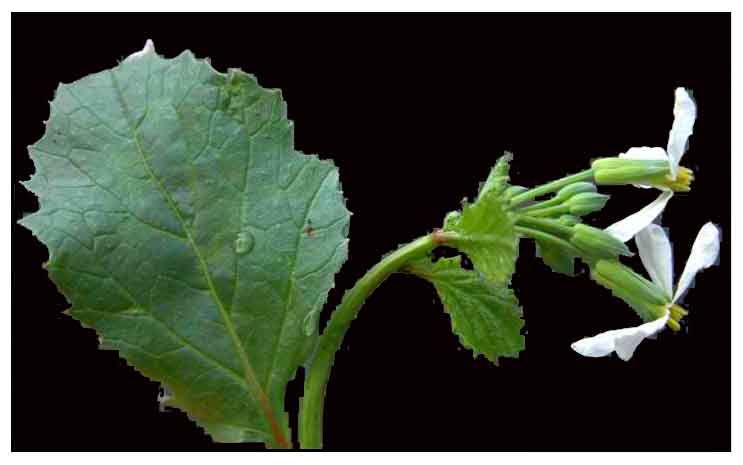
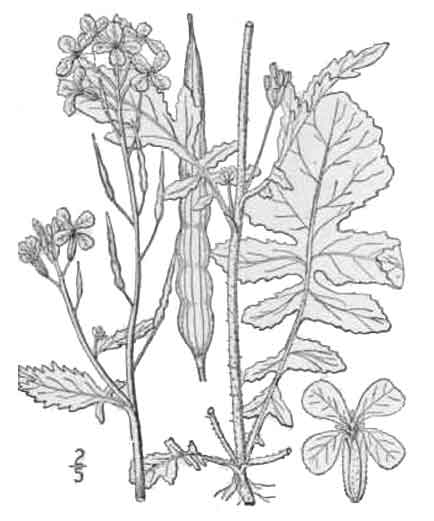
• Labanos is a coarse, annual crop plant. Roots are fleshy, pungent
and variable in size and form. Leaves are roughly hairy, the lower ones lyrate. Flowers are variable, about 1.5 centimeters long, usually white
or lilac, with purple veins, sepals erect, lateral ones saccate
at the base. Pod is indehiscent, lanceolate, cylindrical, and 2 to 2.6 centimeters in length, and terminates in a long beak. Seeds are separated by pith.
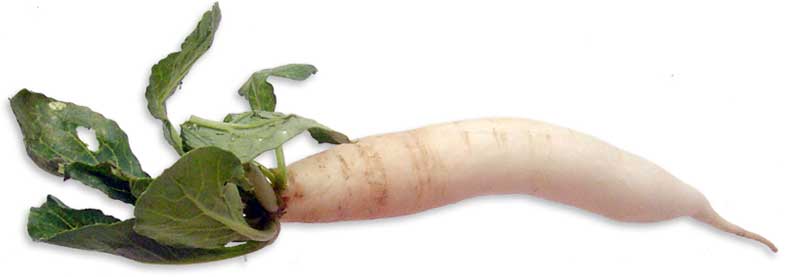
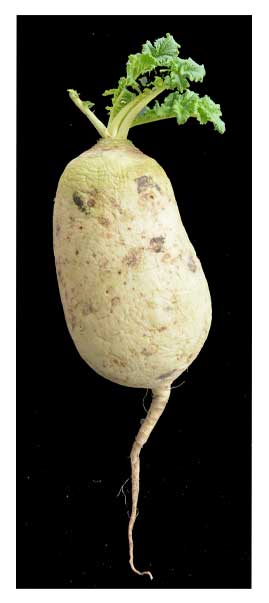
• Erect annual herb up to 1 m tall. Roots: Roots vary widely in terms of shape and size. In Southeast Asia, the Chinese Radish cultivar group is most common. The upper part of the taproot and the hypocotyl (the portion of the stem below the cotyledons) becomes swollen and forms a white, cylindrical tuber. It has a mild flavor and a crisp texture. Southeast Asian cultivars within the Chinese Radish cultivar group tend to be smaller than those found in China and Japan (10-25 cm long, 4-5 cm wide). Foliage: Leaves are either glabrous or have a few stiff hairs. The lower leaves are larger than the upper ones and arranged in a rosette instead of alternate leaf arrangement. Lower leaves are oblong (elongated), oblong-ovate (elongated to egg-shaped) to lyrate-pinnatifid (leaf blade divided into lobes that create a feather-like pattern with the largest lobe at the tip). Flowers: White to light purple, fragrant flowers (1.5 cm wide) are arranged in a raceme (a spike-like inflorescence composed of flowers mounted on stalks up to 2.5 cm long). The raceme occurs near the stem tip. (64)
Distribution
- Widely cultivated in the Philippines at all altitudes.
- Not naturalized.
- Native to Greece, Italy, Sicilia, Yugoslavia. (
Properties
· Considered anthelmintic,
antifungal, antibacterial, antiscorbutic, diuretic, laxative, tonic,
carminative, corrective, stomachic, cholagogue, lithotriptic, emmenagogue.
· The juice of the fresh root is considered powerfully antiscorbutic.
· Roots considered carminative and corrective.
· Flowers considered becnic and cholagogue.
· Seeds considered diuretic, laxative, stimulant, and lithotriptic.
· In Iranian traditional medicine, seeds are considered diuretic
carminative, anti-fever, antitussive and gastric tonic.
· Studies have suggested histaminergic, spasmolytic, antiurolithiatic, hepatoprotective, choleretic, lipid peroxidation inhibitory, antioxidant, anthelmintic, antihyperglycemic, gastroprotective, anti-inflammatory, antinociceptive, laxative, antidiabetic, anticancer, antifertility, phytoremediative, antinociceptive, cardioprotective, anticarcinogenic, insecticidal properties.
 Constituents Constituents
• Phytochemical screening shows presence of alkaloids, reducing sugar, flavonoids, glycosides, cardiac glycosides, tannins, saponin, protein, amino acid, terpenoids, steroids, coumarins, etc. (54)
• Phytochemical screening of methanolic extract of roots yielded carbohydrates, proteins, amino acids, steroids, glycosides, alkaloids, flavonoids, tannins and polyphenols. Aqueous extract of roots yielded alkaloids, glycosides, triterpenoids and steroids, with absence of carbohydrates, reducing sugars, flavonoids, tannin, phenolic compounds, saponin, proteins and amino acids. (54)
• Study for volatile constituents yielded 10 isothiocyanates, seven aliphatic hydrocarbons and some other volatile substances.
• Root yields raphanol, rettichol, volatile oil, methylmercaptan, vitamins B1, sinapin and oxydase.
• Seeds yield fatty oil (30%), ash (3.5%), volatile oil, sulphuric acid, erucic acid and C8H15NS2.
• Methanol extraction yielded two new compounds identified as β-sitosterol and 1-O-(β-D-glucopyranosyl)-(2S, 3S, 4R, 8E)-2-[(2'R)-2'-hydroxyltetracos-15'-enoylamino]-8-octa-decene-1, 3, 4-triol. (28)
• Fractionation of methanol extract of seeds yielded seven 4-methylthio-butanyl derivatives, viz., sinapoyl desulfoglucoraphenin (1), (E)-5-(methylsulfinyl)pent-4-enoxylimidic acid methyl ester (2), and (S)-5-([methylsulfinyl)methyl]pyrrolidine-2-thione (3), together with four known compounds, 5-(methylsulfinyl)-4-pentenenitrile (4), 5-(methylsulfinyl)-pentanenitrile (5), sulforaphene (6), and sulforaphane (7). (see study below) (31)
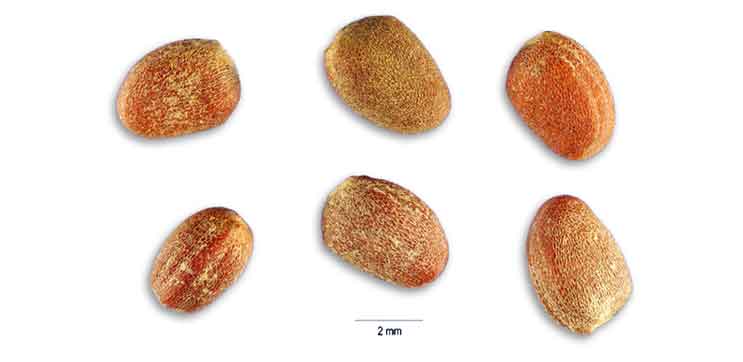 • Fresh vegetable yields 91.00% moisture; seeds on extraction with petroleum ether yield albuminoids 18.00%, soluble carbohydrates 52.66%, woody fiber 9.34%, and ash 16.00%. (Nadkarni, 1954) (32) • Fresh vegetable yields 91.00% moisture; seeds on extraction with petroleum ether yield albuminoids 18.00%, soluble carbohydrates 52.66%, woody fiber 9.34%, and ash 16.00%. (Nadkarni, 1954) (32)
• Roots yield alkaloid and nitrogen compounds: pyrrolidine, phenethylamine, N-methylphenethylamine, 1,2- pyrrolidin-tion-3-il-3-acid-caroxilic-1,2,3,4-tetrahydro-ß-carbolin, and sinapine[3,4,5]. Total amino acids were 0.5% of dry weight; proline (0.5%) was the major constituent, while methionine and cystine were present in trace amounts (0.02%). (39)
• Roots yielded four major organic acids: oxalic, malic, malonic, and erythorbic acid. Lipid total was 1.23%. Major fatty acids in seed lipids were erucic, oleic, linoleic, and linolenic acids. (39)
• Study of seed oil by Soxhlet extraction yielded oil percentage of 33.4% by weight. GC-MS analysis yielded nine major components viz. palmitic acid (5.52%), oleic acid (25.22%), linoleic acid (12.02%), 11-eicosenoic acid (10.66%), eicosanoic acid (1.90%), erucia acid (32.79%), heneicosanoic acid (2.68%), nervonic acid (2.91%) and tetracosanoic acid (1.84%). (41)
• Leaf extract yielded photosynthetic pigments (3.40 mg/g fresh weight), ascorbic acid (0.000429 mg/g fw) and foliar phenol content (0.0270 mg/g fw), together with alkaloids, flavonoids, glycosides, tannin, phenolic compounds, triterpenoids and steroids. Root extract yield photosynthetic pigments (0.38 mg/g fw), ascorbic acid (0.0000825 mg/g fw) and foliar phenol (0.0375 mg/g fw) along with alkaloids, glycosides, triterpenoids and steroids. (see study below) (49)
• Ten flavonoid compounds were isolated by chromatographic techniques and identified as kaempferol (1), kaempferol 3-O-α-arabinopyranoside (2), kaempferol 3-O-α- rhamnopyranoside (3), kaempferol 3-O-β-glucopyranoside-7-O-α-rhamnopyranoside (4), kaempferol 3-O-α-rhamnopyranoside-7-O-β-glucopyranoside (5), kaempferol 3,7-di-O-α-rhamnopyranoside (6), kaempferol 3-O-(2′′−β-glucopyranosyl)-α-rhamnopyranoside-7-O-α-rhamnopyranoside (7), quercetin 3-O-α- rhamnopyranoside-7-O-α-arabinopyranoside (8), quercetin 3-O-β-glucopyranoside-7-O-α-rhamnopyranoside (9), quercetin 3-O-α-rhamnopyranoside-7-O-β-glucopyranoside (10). (see study below) (55)
• Nutritional analysis per 100 g (3.5 oz) of radish root (R), top (T) and fruit (F) yielded: edible matter % 99R, 88F; moisture % 94, 90.3, 90.5; protein% 0.7, 2.7, 2.3; fat% 0.1, 0.6, 0.3; fat% 0.1, 0.6, 0.3; fiber% 0.8, 0.9, 1.4; other carbohydrates 3.4, 3.4, 4.7; minerals% 0.6, 2.1, 0.8; calcium mg/100g 50, 310, 80; phosphorus mg/100g 22, 60, 100; iron mg/100g 0.4, 16.1, 2.8; vitamin A IU/100g 5.0, 18,660, 50; thiamine mg/100g 0.06, 0.03, 0.07; riboflavin mg/100g 0.02, 0.16, 0.05; nicotinic acid mg/100g 0.5, 0.3, 0.3; vitamin C mg/100g 15.0, 103, 60. (58)
Parts utilized
· Whole plant.
· When seeds are ripe, harvest the whole plant, sun-dry, remove
the seeds and dry again. Crush on use. Roots can also be sun-dried for
use.
 Uses Uses
Edibility / Nutrition
-
Leaves, flowers, roots,
and seeds are edible.
- A popular, common, and inexpensive vegetable, eaten raw or cooked.
- Young leaves are also eaten raw or cooked.
- Excellent source of iron, ascorbic acid, folic acid, and potassium; a good source of vitamin B6, riboflavin, magnesium, copper and calcium.
Folkloric
· For diarrhea: boil
the fresh leaves to concentrated decoction and drink.
· Juice of leaves increases the flow of urine and promotes bowel
movements.
· Juice of fresh leaves also used as laxative; also for dropsy and general anasarca.
· Root considered stimulant; also used for piles and stomach pains.
· Juice used to expel wind from the bowels.
· Juice of fresh roots considered antiscorbutic.
· Roots are crushed and applied locally as dressing or poultice for burns, scalds, ecchymoses, or fetid or smelly
feet.
· Decoction of root used for fevers.
· Decoction of roots used to bring out the rash in eruptive fevers.
· Coughs: Decoction of flowers; or, boil 6 to 15 gms seed preparation
to decoction and drink.
· Seeds promote the flow of urine, bowel movements, and menstruation.
· Seeds used for cancer of the stomach.
· Seeds, leaves, and old roots used in treatment of asthma and other chest complaints. Juice of fresh leaves is diuretic and laxative. (53)
· For patients with edema, bloated belly (ascites), pale yellowish
face, and oliguria: used dried root preparation with citrus rind preparation
(5:1 proportion). Boil to a concentrated decoction and drink.
· In Mexico, black radish has been used for treatment of gallstones and for decreasing blood lipids.
· In India, plant used as purgative, stimulant, antiscorbutic, diuretic and lithotryptic. Roots used for piles, gastric pains, dysuria and strangury. Seeds used as expectorant, diuretic, laxative, and carminative. (32)
· In Iranian traditional medicine used as laxative, antitumor, antiproliferative, and abortifacient. (42)
· In Sulaymaniya Province, Kurdistan, Iraq, used to cure kidney stones and gallstones; for increasing breast milk, and as diuretic. (57)
Others
· Used as forage crop, or as cover or catch crop in winter. Some radishes are grown for the seeds; others, such as daikon, for oil production. Others used for sprouting. (65)
Studies
• Histaminergic
/ Spasmolytic:
Pharmacological basis for the gut stimulatory activity of Raphanus sativus
leaves: A study on the crude extract of RS leaves showed the presence
of a histaminergic component plus a weak spasmolytic factor supporting
its traditional use for constipation. (1)
• Toxicity Report: Severe Toxic Hepatitis Provoked by Squeezed Black Radish
(Raphanus Sativus) Juice - Case Report: Cited in phytotherapy
literature as a plant with hepatoprotective properties, this reports
a severe toxic hepatitis from use of black radish extract to dissolve
bile duct stone. (2)
• Hepatoprotective: Studies on Raphanus sativus as Hepatoprotective Agents (Thesis): Results
showed the ethanolic extract of RS contain hepatoprotective constituents.
(3)
• Antiurolithiatic
Activity / Diuretic: Study of aqueous extract
of the bark of RS on rats showed a significant decrease in the weight
of stones. Study also showed an increase in 24 hour urine volume compared
to control. (4)
• Water Phenol
Decontamination: Decontamination of Water Polluted with
Phenol Using Raphanus sativus Root: Plant materials have been used in
decontamination of water polluted with phenolic compounds. The study
used RS roots (root juice and pieces). Results showed good phenol removal
from aqueous solutions with cut R sativus root and juice. (5)
•
Antioxidant / Lipid Peroxidation Inhibition:
Study of methanol extract of RS showed inhibition of lipid peroxidation
in vivo and in vitro, providing protection by strengthening antioxidants
like glutathione and catalase. Results suggest inclusion of the plant
in every day diet may be beneficial. (6)
•
Phytochemicals / Toxicity Study / Hepatoprotective Activity:
Study of showed carbon tetrachloride induced hepatotoxicity
was reduced by the plant as showed by inhibition of increased liver
enzyme activities and bilirubin concentration together with histopath
changes. Toxicity study showed no adverse effect on livers. Phytochemical
studies yielded triterpenes, alklaoids, flavanoids, tannins, saponins
and coumarins. (7)
•
Phytochemicals / Gastroprotective: Study of
the freshly squeezed radish juice for its anti-gastric ulcer activity
in experimental models showed it possessed gastroprotective potential
related to mucus secretion stimulation and an increase in nonproteinsulfhydryl
(NP-SH) concentration, probably due to prostaglandin-inducing abilities
mediated through antioxidant activity. Phytochemicals study yielded
flavonoids, anthocyanins and sulfurated constituents. (8)
• Antioxidant / Choleretic: Study of extract from radish sprouts in rats showed antioxidant properties and significantly induced bile flow. (10)
• Anti-Diabetic: Study showed that the sprouts of Japanese radish has the potential to alleviate hyperglycemia and may serve i the primary prevention of diabetes mellitus. (13)
• Spasmogenic Effect: In vitro study was done to evaluate the effects of crude extracts of roots on isolated rat trachea. Results showed significant cholinergic spasmogenic effects.
• Hepatoprotective / Carbon Tetrachloride Toxicity: Study of a crude extract of seed showed hepatoprotective effect against liver damage induced by CCl4. (16)
• Antilithiasic / Hypolipidemic Effect: Study evaluated the effect of juice squeezed from black radish root in cholesterol gallstones and serum lipids in mice. A lithogenic diet induced cholesterol gallstones and increased cholesterol and triglyceride levels. Juice treatment caused significant eradication of cholesterol gallstones, together with decrease in cholesterol and triglycerides., with an increase in HDL. (17)
• Antimicrobial / Root Juice: Study evaluated R. sativus root juice for antimicrobial potential against five bacterial strains, viz. Klebsiella pneumonia, Staphylococcus aureus, Pseudomonas aeruginosa, Enterococcus faecalis, and Escherichia. Results showed considerable antimicrobial activity against all tested microorganisms. (18)
• Antibacterial / Seed Extract: Study evaluated the potentiality of different solvent extracts against various pathogenic strains, viz. E coli, K pneumonia, P vulgaris, P aeruginosa, Shigella sonnie, S typhi and S paratyphi. The highest activity was seen in ethanol and methanol extracts. The effect could be secondary to extracted active compounds like flavonoids, phenolic compounds, saponins, and other secondary metabolites. (19)
• Anti-Inflammatory / Root Extract: Study evaluated the effect of a root extract on anti-inflammatory activity in rats using a carrageenan induced paw edema model. The hydroalcoholic extract showed potent anti-inflammatory activity which may be due to the presence of flavonoids, phytosterols, and tannins and also inhibition of inflammatory mediators ( histamine, serotonin, prostaglandins, bradykinin, substance P, etc.) (20)
• Hepatoprotective / CCl4-Induced Toxicity: Study evaluated the hepatoprotective activity of radish enzyme extract in vitro and in vivo test. Results showed the enzyme extract can significantly diminish hepatic damage by toxic agents such as tacrine or CCl4. (21) Study of crude extract of seeds in doses of 600 and 800 mg/kg may be protective against liver damage caused by CCl4. (22)
• Antidiabetic / Root Juice: Study of R. sativus root juice for glycemic attributes showed good hypoglycemic potential coupled with antidiabetic efficacy. (23)
• Laxative / Leaf: Study evaluated aqueous extract and fresh juice for laxative action using wistar albino rats in various experimental models such as loperamide induced constipation, laxative activity test, gastrointestinal motility test and water and electrolyze secretion test. Results showed significant laxative activity at higher dose of 750 mg/kg. (24)
• Anti-Inflammatory / Leaf and Root Juice: Study evaluated freshly squeezed leaf and root juice in for anti-inflammatory activity in albino rats. While both leaf juice and root juice significantly reduced carrageenan and formalin induced paw edema in rats, the root juice produced more significant anti-inflammatory effects in both acute and chronic models of inflammation. However, the effect was less than standard drug diclofenac sodium. (25)
• Antinociceptive / Roots: Study evaluated the antinociceptive potential of methanolic extract of roots in intraperitoneally administered acetic acid induced pain model in mice. Results showed significant antinociceptive activity, with the highest extract dose nearly comparable to the highest dose of aspirin. (26)
• Triglyceride Effect: Study of aqueous extract showed lowering of plasma triglyceride, but had no effect on plasma glucose or cholesterol. (27)
• α- Amylase and α- Glucosidase Inhibitory Activity: Study of ethanolic extract and fractions showed dose dependent inhibition of α-amylase and α-glucosidase enzyme, exhibiting lower inhibitory activity than acarbose. Results suggest potential for antidiabetic therapy and development of medicinal preparations, nutraceuticals, and function foods for diabetes. (29)
• Glucocerebroside / Anti-Cancer: Methanol extraction yielded two compounds determined to be 1-O-(β-D-glucopyranosyl)-(2S, 3S, 4R, 8E)-2-[(2'R)-2'-hydroxyl-tetracos-15'-enoyl amino]-8-octa-decene- 1, 3, 4-triol (glucocerebroside). The glucocerebroside could inhibit the growth of BEL-7402 cancer cells and induce apoptosis in these cells. (30)
• 4-Methylthio-butanyl Derivatives / Seeds / Anti-Cancer / Anti-Inflammatory: Study evaluated seed extracts for anti-inflammatory and antitumor activities. Fractionation yielded seven 4-methylthio-butanyl derivatives. Compound 1 (sinapoyl desulfoglucoraphenin) inhibited nitric oxide production. All compounds showed antiproliferative activities against four human tumor cell lines. (see constituents above) (31)
• Cardioprotective / Antioxidant: Study evaluated water and ethanolic extracts of fruit powder for cardioprotective activity in Cyclosporin-induced ischemia in rabbits. The powder and aqueous extract significantly decreased (P<0.001) the uric acid and activity of enzymes (SGOT and LDH) in treated rabbits. Both fruit powder and aqueous extract showed dose-dependent in vitro free radical scavenging effect on DPPH assay. (33)
• Antifertility Effects: Study on R. sativus showed antifertility activity. In male rates, study showed a decrease in sperm count, motility, and weight of testis and epididymis. In female rats, it disturbed the estrous cycle and decreased the number of implantation, average number of pups delivered, average weight of the pups, number of corpus lutea, and weight of ovary. Results suggest a potential as antifertility agent. (34)
• Phytoremediation / Copper: Based on bioaccumulation coefficient (BAC) analysis, mustard and radish can be considered high accumulator plants for Cu. Radish has been shown to produce 10 times more biomass than the other three plant studies, and accumulation of copper was higher in the root tissue of radish and mustard. (35)
• Analgesic / Anti-Inflammatory / Leaves: Study evaluated the analgesic (hot plate and tail immersion) and anti-inflammatory (carrageenan) activities of R. sativus leaves in animal model. Results showed significant (p<0.05) dose-dependent analgesic and anti-inflammatory activities. (36)
• Phytoremediation / Lead: Pot culture experiments using radish investigated lead (Pb) phytotoxic effects on antioxidant enzymes and other early warming biomarkers of soil Pb exposure. Results showed radish is a hyperaccumulator plant that can concentrate heavy metals in different parts, with potential use for remediation of polluted areas. (37)
• Anticarcinogenic / Galactan / Colon Cancer: Study evaluated the anti-carcinogenic effect of Raphanus sativus in combating chemically (DMH) induced colon cancer. Results showed RS significantly reduced serum CEA (p<0.01) and CA19-9 (p<0.01) as evidence of anticarcinogenic effect. Results showed the galactan polysaccharide of RS has pronounced cytotoxic effects on colon cancer cell line and might be a suitable candidate as chemopreventive and adjuvant therapy for colon cancer. (38)
• Insecticidal: Study evaluated four medicinal plants, Peganum harmala, Ajuga iva, Aristolochia baetica and Raphanus raphanistrum (aerial parts) for insecticidal effects on stored grain pest Tribolium castaneum. Results showed all extracts disrupted the development cycle of the insect and suggests potential for managing populations of T. castaneum. (40)
• Comparative Extraction of Quercetin from Leaves: Quercetin is the most important flavonoid in the plant. Study reported on the optimized condition for quercetin extraction from leaves, which is due to promoting larger agitation (cavitation) in UAE (Ultrasonic Assisted Extraction) method. (42)
• Antidiabetic / Leaves: Study evaluated different solvent extracts of R. sativus leaves for antidiabetic activity using alloxan induced diabetic rats. The aqueous extracts showed statistically significant protective activity and maximum reduction in blood glucose (p<0.001) in comparison to standard glibenclamide. (43)
• Green Synthesis of Silver Nanoparticles / Peels: Study reports on the economic, eco-friendly, and clean synthesis of silver nanoparticles using Raphanus sativus peel extract as reducing and stabilizing agent. (44)
• Effect on Enterophathogenic E. Coli In Vitro and In Vivo / Lactobacillus acidophilus and Seeds: Study evaluated the antibacterial activity of ethanol extracts of radish seeds and L. acidophillus against Enteropathogenic E. coli in vitro and in vivo mice model. Results showed inhibition of E. coli growth by ethanol extract of L. acidophilus. Results confirm the beneficial effects of L. acidophilus as probiotic and the ethanol extract of radish seeds as treatment compound for diarrheal diseases caused by bacterial pathogens. (45)
• Silver Nanoparticles / Peels / Antifungal / Insecticidal: Study evaluated the antifungal and insecticidal activity of biologically synthesized silver nanoparticles using peel extracts. Peel extracts were used for reduction of Ag ions and capping the synthesized nanoparticles to avoid further agglomeration. Results showed significant toxicity (LC50 of 7.61 ppm/48h) over mango leafhopper, Amritodus brevistylus. It was also effective against fungal pathogen, Aspergillus niger, with a strong inhibitory zone of 80mm. (46)
• Hepatoprotective / Paracetamol Toxicity / Roots: Study of methanolic extract of R. sativus roots showed a protective effect on paracetamol-induced hepatotoxicity in a dose-dependent manner. Results suggest the involvement of antioxidants like glutathione and catalase in the root extract providing protection against paracetamol-induced lipid peroxidation and hepatotoxicity. (47)
• Prevention of Cholesterol Gallstone Formation: Study showed Raphanus sativus L. var. niger may have antilithogenic properties for the prevention of cholesterol gallstones, regulating components in bile through modulation in expression of biliary transporters. (48)
• Antioxidant / Leaves / Roots: Study showed the leaf to have potent antioxidant ability of 78.17% at 200 µg/ml concentration and IC50 value at 122.33 µg/ml concentration while the roots showed maximum % inhibition of 58.38 at 200 µg/ml aqueous extract with IC50 of 166.79 µg/ml concentration. (see constituents above) (49)
• Cardiotoxicity / Leaves: Study in adult male albino rats investigated the cardioprotective effect of R. sativus leaf extracts against myocardial injury induced by isoproterenol (ISO) based of biochemical and histological parameters. Results showed R. sativus leaf extract increase the cardiotoxicity alone and in ISO treated rats. Effect could be due to the histaminergic activity leading to increased myocardial biomarkers. (50)
• Antiurolithiatic / Leaves: Study evaluated the dried powder of leaves of R. sativus for antiurolithiatic activity on urolithiasis experimentally induced by ethylene glycol in male Wistar albino rats. Results showed treatment reduced and prevented urinary stone formation. The mechanism might be related to a diuretic effect and lowering of urinary concentrations of stone forming constituents. Also, the protective effect against oxalate induced lipid peroxidation may contribute to recovery of renal damage. (51)
• Degradation of Methylene Blue by Nanoparticles / Leaves: Study showed silver nanoparticles synthesized by using the plant leaf of R. sativus showed magnificent photocatalytic activity against methylene blue dye molecules and has potential for utilization in water purification systems. (52)
• Pharmacological Activities / Leaves / Review: Review focus on pharmacologic activities: hepatoprotective, cardioprotective, anticancer, and antimicrobial activity of R. raphanistrum subsp. sativus. Methanolic extract of leaves have showed hepatoprotective activity against paracetamol induced hepatotoxicity. Insoluble ethyl acetate fraction of methanol extract was most active against A. salina. Soluble EA fraction exhibited strong inhibitory activity against S. aureus. Aqueous extract of bark has shown significant decrease in weight of stones in urolithiasis experimentally induced by implantation of zinc disc in the urinary bladder of rats. The plant has exhibited inhibition of lipid peroxidation by increasing the activity of enzymatic antioxidants like catalase, and by increasing or maintaining levels of glutathione. Radish juice possesses antigastric ulcer effect, attributed to its phenolic, terpenoidal, and sulphurated constituents by prevention of accumulation of free radicals and protective gastric tissue against noxious chemical challenges.(53)
• Flavonoid / Cytotoxicity: Study yielded ten flavonoid compounds. Study showed moderate cytotoxic activity for R. raphanistrum extract against HEPG2 and MCF-7 at 100 mg/mL with cell viability of 62.4% and 57.9%, respectively. (see constituents above) (55)
• Anti-Inflammatory / Fresh Leaf and Root Juice: Study evaluated the anti-inflammatory effect of freshly squeezed R. sativus leaf and root juice in acute and chronic experimental models in albino rats using carrageenan induced hind paw edema in albino rats and formalin induced edema model in rats.. Diclofenac was used as standard drug. Results showed significantly (p<0.01) reduced carrageenan and formalin induced paw edema in rats. The leaf juice produced more significant anti-inflammatory effect in both acute and chronic models of inflammation. However, the anti-inflammatory effect of the leaf juice was less than diclofenac. (56)
• Antimicrobial against Foodborne Bacteria in Milk Products / Potential as Biopreservative: Study evaluated the antimicrobial action of ethanol extract of R. raphanistrum subsp. sativus powder against six different foodborne pathogenic bacteria. Study demonstrated potential for inhibiting the growth of Salmonella enteritidis 110, Cronobacter sakazakii KCTC 2949, Bacillus cereus ATCC 10876, and Staphylococcus aureus ATCC 6538. Results suggest potential as natural biopreservative with antimicrobial effects for improving food safety, and as a functional food in commercial food industry. (59)
• Antibacterial / Antioxidant / Tuber and Aerial Parts: Study evaluated the white radish for antioxidant and antibacterial properties. TAS (total antioxidant status) value of tuber extract was 6.698, TOS (total oxidant status) 5.609, and OSI (TOS:TAS ratio) 0.084. Inhibition of tuber extract against bacterial strains was at concentrations varying from 25-100 µg/mL, and 200 µg/mL against fungal strains. Aerial parts showed inhibition at concentrations of 100-200 and 200-400 µg/mL against bacterial and fungus strains, respectively. Results suggest significant antioxidant and antimicrobial activity. (61)
• Anthelmintic Against Ascaris suum / Roots: Study evaluated the anthelmintic activity of crude hexane extract of R. raphanistrum subsp. sativus against Ascaris suum using concentrations of 1200 to 2000 µg/ml. Most toxic effect was observed at 2000 µg/,ml with 53.33 % mortality, mortality increasing as concentration increased. (62)
• Antihyperglycemic / Antioxidant / Against Ascaris suum / Roots: Study evaluated R. raphanistrum whole plant extracts i.e., aqueous ethanol (AEE), dichloromethane (DCME), and defatted aqueous ethanol (DAEE). GC-MS analysis identified 29 compounds from the unsaponifiable fraction and 14 from the saponifiable fraction. DCME showed the most potent antioxidant activity using DPPH and NO scavenging assays with IC50s of 117.68 and 162.31 µg/ml, respectively, compared to ascorbic acid (244.85 AND 117.12µg/mL) and BHT (90.82 and 76.69 µg/ml). DCME showed highest α-amyylase and
α-glucosidase inhibitory activity with IC50s of 150.71 and 123.16 µg/mL, respectively. Among tested compounds, isorhamnetic 3-O-rutnisode showed highest activity on the enzymes. (63)
• Combined Effect of Ultrasound and Lactic Acid on Shelf-Life: Study evaluated the safety and combined effects of ultrasound and lactic acid on quality and in reducing the risk of microbial contamination in fresh radish. Fresh radish samples were inoculated with Listeria moocytogenes, Escherichia coli, Staphylococcus aureus, and Shigella sonnei separately and were treated with lactic acid (L) 1% and 2%, ultrasound (U) with amplitude of 0, 25, 50, and 75% for 15 and 30 mins and their combination. Both treatments showed significant (p<0.05) inhibitory effect on all studied bacteria. Total phenolic content of ultrasound treated samples showed higher amounts. Ultrasound power of 75% for 30 mins significantly (p<0.05) decreased firmness of samples after 24 hours storage. Results suggest treatment with ultrasound and lactic acid can extend shelf life of fresh radish. (64)
Availability
Wild-crafted.
Commercial cultivation; ubiquitous in market places. |