Gen info Gen info
- Tabernaemontana is a genus of flowering plants in the family Apocynaceae. It has a pantropical distribution.
- The genus was described by Carl Linnaeus and published in Species Plantarus in 1753.
- The leaves yield a milky sap; hence, the genus is one of the diverse plant genera referred to as "milkwood".
(55)
- Etymology: The genus name Tabernaemontana commemorates the :father of German botany: Jakob Theodor von Bergzabern, a.k.a. Jacobus Theodorus Tabernaemontanus. Tabernaemontanus is a compressed form of the original Medieval Latin name (Tabernae Montanus) of the botanist's home town of Bergzabern - in Latin and German, meaning "tavern(s) in the mountains". (55) The species epithet divaricata means wide-spreading or divaricate. (58)
- The cultivar T. divaricata cv. 'Plena', with double-petaled flower, is a popular houseplant. (55)
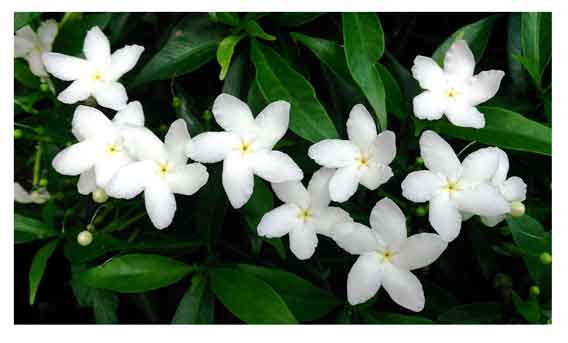
- Two forms are cultivated: the single blossom "Pinwheel" and the clustered blossom Flore Pleno. Both have white flowers.
Single blossoms have white five-petaled pinwheels, without fragrance; the cluster blossoms emit a nice fragrance.
 Botany Botany
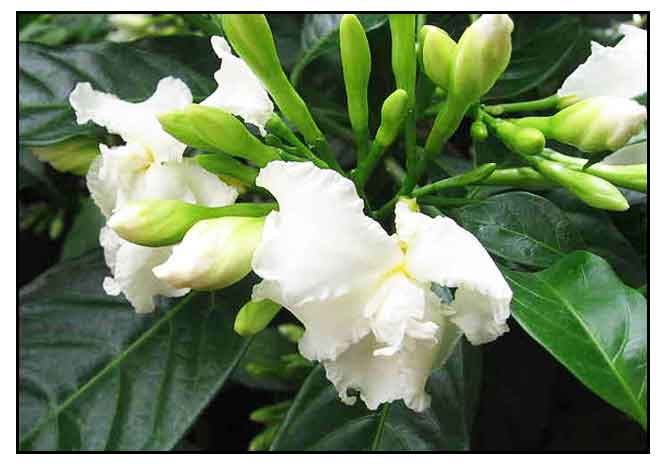
• Pandakaking-Tsina is an erect, smooth, much-branched shrub 2 to 3 meters in height, with abundant, milky sap. Leaves are opposite, each pair unequal, glossy, elliptic-ovate to elliptic-oblong, 6 to 15 centimeters long, pointed at both ends. Flowers are usually double, white, fragrant, and borne singly or in pairs on peduncles at the axils of the leaves. Corolla-tube is about 2 centimeters long and the limb is spreading, about 5 centimeters in diameter, and yellow at the center.
• Growth form: Small shrub or shrubby tree with a broad surface, able to grow up to 0.5-5 m tall. Foliage: Dark green, glossy leaves are oval with a wavy leaf margin, measuring about 15 cm long and 5 cm wide. Stems: Smooth stem. Flowers: White and fragrant 5-petaled tubular flowers are shaped like pinwheels, petal tips are twisted to the left in a counterclockwise direction. Flowers are arranged in clusters known as cymes. Flower buds are oval-shaped. Fruit: Fruit is an inconspicuous dry and hard pod called follicles. (Flora & Fauna Web) (58)
Distribution
- Of recent introduction in the Philippines. Not naturalized.
- Cultivated in Manila and large towns for its flowers.
- Native to Assam, Bangladesh, Cambodia, China South-Central, East Himalaya, India, Laos, Myanmar, Nepal, Thailand, Vietnam, West Himalaya. (24)
 Constituents Constituents
- Roots contain resin, extractive matter and a bitter alkaloid.
- The milky juice contains caoutchouc and resin.
- Studies have yielded alkaloids and non-alkaloid constituents, flavonoids, phenyl propanoids, phenolic acids and enzymes.
- Phytochemical screening of an ethanol extract yielded steroids, tannins, saponins, gums and reducing sugar.
- Phytochemical screening of hydroalcoholic and aqueous extracts of leaves yielded the presence of alkaloids, tannins, resins, proteins, amino acids, flavonoids, saponins, phenols, glycosides, steroids, triterpenoids, fixed oils, and fats. (see study below)
(30)
- Study of ethanol, acetone, and water extracts for amino acids yielded 2-aminobutyric acid (E,W), proline (A,W), cysteine hydrochloride (W), leucine and iso-leucine (W). (31)
- Phytochemical screening of ethyl acetate and methanol extract of leaves yielded alkaloids, flavonoids, carbohydrates, phenolic compounds, glycosides and tannins. Petroleum ether and chloroform extracts yielded steroids and triterpenes. (see study below) (44)
• Study of branches and leaves yielded three new monoterpene indole alkaloids:
3α-hydroxymethyl-ibogamine (1), 3α-acetatemethoxyl-ibogamine (2), 16α-hydroxyl-ibogamine (3) along with six known alkaloids. (see study below) (47)
- Phytochemical screening of methanol and aqueous extracts of leaves revealed carbohydrates, saponins, tannins, alkaloids, glycosides, and flavonoids. In addition,
sterols were found in the aqueous extract.
Properties
- Plants exudes a milky latex when parts are broken.
-
Considered antioxidant, anti-infection, anti-inflammatory, anti-tumor, analgesic.
- Studies have suggested acetylcholinesterase inhibitory, anti-inflammatory, memory enhancing, anti-microbial, antioxidant, cholinergic function enhancing, antifertility, estrogenic, cytotoxic, gastroprotective, antidiabetic, antibacterial, analgesic, anxiolytic, anthelmintic, antineuraminidase, central nervous system depressant, hemostatic, antiobesity, antidiarrheal, anticancer, antiproliferative, hepatoprotective, antiulcer, antitussive, antiasthmatic, anticataleptic, anti-obsessive compulsive, diuretic, hypotensive, anti-cataractogenesis, topoisomerase inhibitory, anti-seizure, anti-HIV, thrombolytic properties.
Toxicity concerns
- All parts of the plant are reportedly poisonous. Tabernaemontana species are known to be rich sources of alkaloids. All vegetative parts contain toxic compounds. Cut leaves and stems exudes indolic alkaloid-containing milky sap,T. divaricata, which are reported to cause toxicity when ingested by humans, pets, or livestock. Symptoms include numbness, fatigue, vomiting, fever, and jaundice. Bitterness makes cases of poisoning rare.
- Note: There are conflicting reports on safety and toxicity. Some sites warn that all plant parts are poisonous, while many sources cite liberal use of various plant parts i.e., roots, leaves, juice and flowers for a wide range of day-to-day maladies. (see toxicity studies below: 64 65)
Parts used
Root, bark, leaves, sap, flowers.
 Uses Uses
Folkloric
- Root or root-bark chewed for relief of toothache.
- Root-bark used as anthelminthic.
- Root, rubbed with water into a thin paste, used as vermicide; also, mixed with lime juice, applied to remove opacities of the cornea and other eye diseases.
- Milky juice, mixed with oil, rubbed into the head to relieve eye pains.
- Juice of flowers mixed with oil used to relieve burning sensation of sore eyes; also used for skin diseases.
- Milky juice of leaves used as drops for ophthalmia; also used as cooling application to irritable surfaces and wounds to prevent inflammation.
- Decoction of leaves used for coughs.
- In India, root used as local anodyne.
- In Ayurveda, Chinese and Thai traditional medicine, used for fever, pain and dysentery.
- In Thailand, used as emetic. (41)
Others
- Dye: Pulp around seed is a source of red dye.
- Wood: Used for making charcoal. Used as incense and in perfumery. (41)
Studies
• Phytochemicals: Study of roots and stems of Tabernaemontana divaricata isolated six compounds: bis(2, 3-dihydroxypropyl) octacosanedioate, tetratriacontanol, palmitic acid, glycerol monopalmitate, ß-sitosterol and ß-daucosterol. (1)
• Acethylcholinesterase Inhibitory Effect / Memory Benefits / Alzheimer Disease: Study demonstrated the T. divaricata extract could be beneficial in slowing the process of memory loss with additional benefits on learning and memory process. Results suggest TDE could be used to develop a new acetylcholinesterase inhibitor for the treatment of Alzheimer's disease.
• Reversible Acethylcholinesterase Inhibitory Effect: Study showed T. divaricata extract is a reversible AChE-inhibitor and could be beneficial as a novel therapeutic agent for AD. (2)
• Potential of Alkaloids / Augmentation of Cholinergic Function: Review presents the ethnobotany and ethnopharmacology of T. divaricata and the potential therapeutic benefits of its alkaloidal and non-alkaloidal constituents, including the characteristics of 66 alkaloids isolated and identified from the plant. Beneficial potentials are antioxidant, anti-infection, anti-tumor, analgesic and enhancement of cholinergic activity in both central and peripheral nervous systems. Augmentation of cholinergic function has potential benefit for many neurodegenerative diseases, in particular myasthenia gravis and Alzheimer's disease. (3)
• Decreased Acethylcholinesterase Activity / Alzheimers: Study suggests subchronic administration of TDE might prevent beta 25-35 peptides-induced memory deficits by decreasing the AChE activity level. It presents a potential nootropic supplement for elderly people with Alzheimer's dementia. (4)
• Cholinergic Alkaloids: At least 66 alkaloids have been isolated from T. divaricata. Possible cholinergic candidate alkaloids are: coronaridine, voacangine, isovoacristine, (19,20) dihydrotabemamine, and (19,20) dihydroervahanine A. (5)
• Anti-Fertility / Estrogenic Activity: Study of ethanolic extracts of TD leaves on immature female rats exhibited estrogenic activity. Enhanced uterine weight and increase in luminal epithelium height and histological changes suggest the TDE may be useful in anti-fertility therapy. (6)
• Antioxidant / Anti-Inflammatory / Flowers: Study evaluated extracts of T. coronaria flowers for antioxidant and anti-inflammatory activity. Ethanol and aqueous extracts showed significant in vitro superoxide hydroxyl radicals, NO scavenging, and lipid peroxidation inhibiting activities. The ethanol extract showed remarkable anti-inflammatory activity in both acute and chromic models of carrageenan-induced and formalin-induced models in mice, comparable to diclofenac standard. The anti-inflammatory activity was attributed to its free radical scavenging properties. (7)
• Gastroprotective / Flowers: Study investigated the anti-ulcer property of T. divaricata flower methanolic extract. Results showed remarkable gastroprotective effect with significant decrease in volume of gastric juice, free and total acidities and ulcer index. (8)
• Antidiabetic / Cytotoxic / Flowers: Study investigated the antidiabetic activity of a methanol extract of flowers on alloxan-induced diabetic mouse model. A 300 mg/kg dose showed maximum reduction of blood glucose at 10th hour from 14.51 ± 0.42 to 8.81 ± 0.27 mg/dl compared to metformin at 14.04 ± 0.36 to 6.13 ± 0.19 mg/dl. Brine shrimp lethality bioassay showed and LC50 of 84.03 µg/ml compared to vincristine sulphate at 10.58 µg/ml. Results showed antihyperglycemic effect and low cytotoxicity, and potential to provide new molecules for the treatment of diabetes. (9)
• Antimicrobial / Antioxidant / Stems: Study investigated the biologic activities of stem extracts. Results showed antimicrobial, anti-inflammatory and antioxidant effects. A crude ethanol extract exhibited inhibition of gram positive and gram negative bacteria, especially Staphylococcus aureus. An ethyl acetate fraction showed the highest antioxidant activities. (10)
• Antinociceptive / Leaves: Crude ethanol extract of leaves of T. divaricata produced significant writhing inhibition in acetic acid-induced mice model at oral dose of 250 and 500 mg/kbw (p<0.05, p<0.01, respectively). (11)
• Antioxidant / Flowers and Leaves: Study of ethanolic extracts of flower and leaves of T. divaricata for antioxidant activity using in vitro assays such as reducing power ability, NBT reduction assay, deoxyribose degradation assay showed significant antioxidant activity. (12)
• Anticonvulsant: An alcoholic extract of flowers of Td tested in animal models showed anticonvulsant property with decreased duration of tonic extensor phase. Results lend pharmacologic credence to the plant's folkloric and ethnomedical use in the treatment of epilepsy. (13)
• Cytotoxic / Antioxidant: A methanolic extract of leaves showed potent dose-dependent antioxidant property in all antioxidant assays. The extract also showed significant cytotoxic effect suggesting the presence of potent bioactive principles with a potential for antiproliferative, antitumor, and pesticidal applications. (14)
• Anxiolytic: Study evaluated the anxiolytic activity of alcoholic extract of Tabernaemontana divaricata on mice models using EPM (Elevated Plus Maze), OFT (Open-Field Test) and LDT (Light-Dark Transition) tests. Results showed significant anxiolytic activity attributed to the presence of alkaloids, flavonoids and other constituents. (16)
• Antidiabetic / Cytotoxic: Study evaluated the antidiabetic activity of a methanol extract of leaves of T. divaricata leaves on alloxan induced diabetic mouse model. The extract was also subjected to Brine shrimp lethality assay. Results showed T. divaricata has potential antidiabetic activity and low toxicity. (17)
• Antibacterial / Bovine Mastitis: Study of dried leaves yielded steroids, tannins, saponins, gums, and reducing sugar. It was evaluated for antibacterial activity against causative organisms of Bovine Mastitis. Ethanol, methanol and aqueous extracts showed maximum potency against infectious pathogens S. aureus, Coagulase negative Staph aureus Streptococcus agalactae, Strep uberis and E. coli. (18)
• Analgesic / Anti-Inflammatory / Flowers: Study of an ethanolic extract of T. divaricata flowers showed analgesic and anti-inflammatory effects on a Wistar rat model evaluated by acetic acid-induced writhing, hot plate reaction time and carrageenan-induced hind paw edema.(19)
• Antiulcerogenic / Prostaglandin Analogous and Antioxidant / Flowers: Study evaluated the antiulcerogenic effect of a methanolic extract of T. divaricata flowers in aspirin and ethanol induced gastric ulcers. All three test doses exhibited gastroprotective function, with the higher doses being more effective, probably through antioxidant mechanism and enhancement of gastric mucus production. (20)
• Antibacterial / Leaves: Study of various extracts of dried leaves showed maximum potency against infectious pathogens viz Staphylococcus saprophyticus, S. aureus, S. pyogenes, Enterococcus faecalis, Salmonella typhi, E coli, Shigella boydii, S. dysenteriae, and Pseudomonas aeruginosa. (21)
• Anthelmintic / Flowers / Leaves: Study evaluated fresh and dried flower extracts for anthelmintic activity using Indian earth worms. Results showed anthelmintic activity at various concentrations compared with standard drug Metronidazole. (22) Study of various extracts of Tabernaemontana coronaria leaves showed potent anthelmintic activity against Pheretima posthuma. Albendazole was as standard. (35) Study evaluated the anthelmintic activity of chloroform and methanol extracts of dried powdered TD leaves against Pheretima posthuma. The extracts exhibited dose dependent paralysis and death of worms. The methanol extract was more effective in promoting paralysis and causing death. (62)
• Anti-Obesity / Leaves: Study evaluated the potential effect of a methanol extract of aerial parts of T. divaricata on obesity and hyperlipidemia on atherogenic diet induced obese rats. Results showed Td exerted significant anti-obesity and anti-hyperlipidemic effects in rats fed an atherogenic diet. (23)
• Hemostatic Potential / Clotting Effects / Latex Proteases: Study evaluated the hemostatic potential of T. divaricata and Artocarpus altilis. Caseinolytic activity by both plants was higher than standard proteases. Crude enzymes exhibited coagulant activity on human platelet poor plasma. T. divaricata exhibited significant reduction in clotting time. Results reveal hemostatic potential that validates use of the latex in the management of fresh cuts and wounds. (25)
• Anti-Inflammatory / Leaves: Study evaluated the in vivo anti-inflammatory of T. divaricata aqueous decoction and methanol leaf extract on male albino mice. The methanol leaf extract dose-dependently inhibited croton oil-induced ear edema in mice. A hexane fraction of the ME showed very high activity of inhibition. (26)
• Bioactive Compounds / Antibacterial / Antioxidant: Study isolated three novel compounds: ethyl-4-n-octyl benzoate (1) and ethyl-4- n-decyl benzoate (2) from the flowers and digalactosyl deconate (3) from the latex of T. divaricata. All compounds showed significant antibacterial activity against S. aureus, S. faecalis, Bacillus species, E. coli and P. mirabilis. Compound 1 and 2 showed better radical scavenging activity on DPPH assay. (27)
• Hepatoprotective / DEN and Fe NTA Induced Liver Necrosis: Study of ethanolic extract of whole plant of T. divaricata against DEN and Fe NTA induced liver necrosis in rat showed a hepatoprotective effect confirmed by histopathological studies. Results suggest a potential use of the extract in the treatment of carcinogen induced hepatic necrosis. (28)
• Anticancer / Flowers: Study evaluated the hydroalcoholic extract of flowers for in-vitro anticancer activity against human cancer cell line (HeLa) by MTT assay on cell growth inhibition. Results showed the flower extract possess moderate anticancer activity with an IC50 greater than 100 µg/ml. (29)
• Antidiarrheal / Leaves: Study evaluated the antidiarrheal activity of hydroalcoholic and aqueous extracts of T. divaricata leaves in rats. Results showed dose dependent protection against castor oil induced diarrhea and marked decrease of gastrointestinal motility. (see constituents above) (30)
• Cardiovascular Effects / Roots: Study evaluated the effect of crude extract of root on cardiovascular activity in anesthetized rats and its possible mechanisms. Results showed dose dependent decrease in systolic pressure, diastolic pressure, and mean arterial blood pressure. In higher doses, there was reduction in heart rate. Results suggest the hypotensive action of the root extract could be through muscarinic cholinergic receptors, in addition to nitric oxide induction. (32)
• Anti-Cataleptic Effects / Leaves: Study evaluated aqueous and ethanolic extracts of leaves on haloperidol induced catalepsy in rats. Both extracts significantly reduced catalepsy (P<0.001) with greater effect at the 150 mg/kg dose. (33)
• Inhibition of Obsessive Compulsive Behavior / Leaves: Study evaluated the effect of ethanolic extract of leaves on obsessive compulsive behavior using marbole-burying apparatus in mice. Results showed dose dependent inhibition of obsessive and compulsive behavior. Fluoxetine, an SSRI, was used as reference drug. (34)
• Biodiesel / Seed Oil: Study reports on the synthesis of T. divaricata seed oil biodiesel. Four fatty acid methyl esters were identified, viz., 27.0 wt.% methyl palmitate (C16:0), 10.54 et.% methyl linoleate (C18:2), 56.23 wt.% methyl oleate (C18:1), and 6.20 wt.% methyl stearate (C18:0). The major fatty acid was oleic acid followed by palmitic acid. Results suggest the oil potential as source of biodiesel and other uses. (36)
• Antifertility Effects on Male Reproduction: Study evaluated the antifertility effect of chronically administered 50% ethanol extract of leaves of TD on male rats. Results showed significant decrease in weight of testes, epididymis, seminal vesicle and ventral prostate. There was dose related reduction in testicular and epididymal sperm count and motility. Results showed dose related effects on male reproduction without alteration of general body metabolism. (37)
• Antiproliferative / Human Laryngeal Carcinoma (HEP2): Study evaluated extracts of aerial parts (leaves, stems, flowers) for inhibitory effects against HEP2 cell line. Results showed the anticancer property of T. divaricata against the human laryngeal carcinoma cell line (Hep 2 cell line). (38)
• Effect on Induced Cognitive Deficits / Decreased AChE Activity: Study investigated the effect of T. divaricata on Abeta25-35 peptides-induced cognitive deficits and acetylcholinesterase activity in mice. Findings showed subchronic administration of TD extract might prevent Abeta25-35 peptides induced memory deficits by decreasing the AChE activity level. Results suggest a potential nootropic supplement for the elderly suffering from dementia such as Alzheimer's disease. (39)
• Molecular Docking Study / Antibacterial Via Interaction with Cell Membrane Protein Targets: Virtual Screening and Docking of 66 Law Molecular Weight compounds of T. divaricata showed physiochemical properties and drug-likeness with potential as antibacterial drug candidates. Coronaridine derivatives with least binding energy has potential as lead molecule for antibiotic design for treatment of bacterial pneumonia and other infections by inhibition of bacterial cell membrane proteins (40)
• Anti-Neuraminidase Study / Leaves: Neuraminidase (NA), also known as sialidase, is a tetramer protein that plays an important role in the lie of influenza virus, and is a target in the development of therapeutic strategies against the viral infection. In a neuraminidase inhibition assay, a ME of T. divaricata leaves showed one of the highest percentages inhibition of neuraminidase. Study focused on extraction, fractionation, and potential anti-neuraminidase activity from T. divaricata. Study isolated voaphylline (0.059 g/kg) from one of 14 fractions. Molecular docking study showed voaphylline, ervayunine, and DANA (standard) had low binding energy of -7.31, -5.52 and -6.29 kcal/mol, respectively. (42)
• Central Nervous System Depressant Effect
/ Leaves: Study evaluated a methanolic extract of T. divaricata leaves on central nervous system effect in mice by open field and hole cross test for depressant activity and tail suspension and force swimming tests for antidepressant activity. The leaf extract showed significant CNS depressant activity with a 400 mg/kbw showing better effect. (43)
• Antiproliferative Activity / Breast Cancer / Leaves: Spectral study yielded two compounds. Compound 1 was characterized as 2-(1,6a,6b,9,9,12a,14b- heptamethyl 1, 2, 4a, 5, 6, 6a, 6b, 7, 9, 10, 11, 12, 12a, 12b, 13, 14b-hexadecahydropicen-3- yl) propan-2-yl nonanoate. Compound 2 was not pure enough and could not be characterized. The isolated compounds showed antiproliferative effect against breast cancer in a synergistic way. (see constituents above) (44)
• Antimicrobial / Cytotoxicity
Against HEK 293 Cell Line / Stem Bark: Study evaluated methanolic extracts of stem bark crude extracts for antimicrobial effect against MDR clinical isolates and invitro cytotoxic effect through MTT assay on normal cell line. GC-MS analysis yielded two active antimicrobial compounds viz. cyclotetrasiloxaneoctamethyl and cyclopentasiloxanedecamethyl. Cytotoxic effect showed IC50 56.52 µg/mL. (45)
• Effect on Neuronal Loss Induced by Amyloid ß25-35 / Dementia Benefits / Root: Oxidative stress is involved in the mechanisms of Aß-peptide induced neurotoxicity by generation of free radical oxidative stress that may lead to neurodegeneration. Study investigated the effects of T. divaricata roots extract on Aß25-35 peptides induced neuronal loss and oxidative stress in mice. Results showed mice pretreated with TDE exhibited prevention of memory loss, neuronal loss and decrease lipid peroxidation. Study suggests potential therapeutic value in dementia through its antioxidant property. (46)
• Monoterpene Indole Alkaloids / No Cytotoxicity on Cancer Cell Lines / Branches and Leaves: Study of branches and leaves yielded three new monoterpene indole alkaloids along with six known alkaloids. All isolated compounds showed no cytotoxicity against gastric cancer, cervical, and lung cancer cell lines (IC50 >20 µM). (see constituents above) (47)
•
Silver Nanoparticles / Cytotoxicity Against Human Lung Adenocarcinoma / Leaves: Study reported on green synthesis of highly stable and dispersed cytotoxic silver nanoparticles from T. divaricata leaves extract. SRB assay showed the AgNPs to have potent cytotoxicity against A549 cells with IC50 of 32.3 µg/ml. Results suggest great potential in development of an efficient anticancer drug against lung cancer with minimal side effects. (48)
• Bisindole Alkaloids / ACh Inhibitors / Roots: Study of roots by bioassay-guided fractionation isolated two bisindole alkaloids, 19,20‐dihydrotabernamine and 19,20‐dihydroervahanine A. The compounds showed higher inhibitory activity on acetylcholinesterase in comparison to galathamine, a well-known acetylcholinesterase inhibitor. The inhibitory effect of 19,20‐dihydroervahanine A was shown to be specific, reversible, and competitive. (49)
• Antidiarrheal / Diuretic / Leaves: Study evaluated the anti-diarrheal and diuretic potentials of methanolic extract of TD leaves. Results showed antidiarrheal effect with
significant reduction in number of defecations in castor-oil induced diarrhea model. The extract also showed significant diuretic effect at dose of 200 mg/kg with diuretic index of 1.55 compared to standard furosemide of 1.70. (50)
• Anti-Ulcer Activity: Study evaluated the antiulcer activity of T. divaricata in rats with gastric ulcers induced by oral ethanol or 0.6 M HCl, indomethacin, or pyloric ligation and duodenal ulcers induced by oral cysteamine HCl. The ulcer index was significantly less in all models of treated animals, and more significant in HCl, indomethacin and pyloric ligation induced ulcer models. The anti-ulcer activity was less than that of omeprazole. Activity was attributed either to cytoprotective action or strengthening of gastric and duodenal mucosal defense mechanisms. (51)
• Silver Nanoparticles / Antibacterial / Flowers: Study reports on the biogenic synthesis of silver nanoparticles using flower extracts of Tabernaemontana divaricata and Polianthes tuberosa. The AgNPs were highly active against Staphylococcus with zones of inhibition of 16 & 11 and 14 & 10 mm, respectively. (52)
• Antitussive / Anti-Asthmatic / Leaves: Study evaluated an ethanolic extract of T. divaricata leaves for antitussive and anti-asthmatic activities by invivo and invitro models. The extract was found safe up to 2000 mg/kbw. The TDEE exhibited maximum bronchial relaxation of 91.55% and 92.83% against acetylcholine and histamine-induced contraction, respectively. At aerosolic dose of 6% (w/v), the TDEE exhibited significant (p<0.001) decrease in average cough frequency (4.83% ± 0.30), as effective as standard drug codeine. Treated group showed reduced inflammatory cell infiltration and restored epithelial damage. (53)
• Anti-nociceptive / Indole Alkaloids / Flowers: Study evaluated the active principles and mechanisms involved in the anti-nociception caused by T. divaricata methanolic extract of flowers (TDFME) in acetic acid induced abdominal writhing and formalin induced paw licking test models. Naloxone, L-arginine, Glibenclamide, and Glutamate were used as inducers while morphine, L-Name, methylene blue and aspirin were used as standard drugs. Phytochemical analysis isolated three indole alkaloids: Vpacangine, Catharanthine, and O-acetyl Vallesamine. Results showed TDFME produced anti-nociception action mediated by opioid, nitric oxide, K+-ATP and glutamate mechanisms, with effects largely related to the indole alkaloids. (56)
• Silver Nanoparticles / Anticataractogenic Activity / Leaves: Study evaluated the putative anticataractogenic efficacy of silver nanoparticles (AgNPs) synthesized using T. divaricata leaves extract in an in-vivo system of selenite-induced cataractogenesis. The AgNPs exhibited potent in-vivo anticataractogenic activity in the eyes of Wistar rat pups. Biosynthesized AgNPs exhibited more potent anticalpain activity in the lenses of Wistar rat pups. Results suggest the AgNPs showed potential to prevent selenite-induced cataractogenesis in-vivo by maintaining normal lenticular calcium homeostasis and calpain cascade activities and preventing alterations in key lenticular proteins. (57)
• Toxicity Against Heteropneustes fossilis / Bark, Leaf, Fruits: Undesirable fishes i.e., predatory fishes are a problem in aquaculture by preying on shrimp or fish of economic variety and affect productivity of fishes. Study evaluated the toxicological effects of various plant extracts (dry leaf, bark, and fruit) of T. divaricata on Heteropneustes fossilis (Asian stinging catfish: species of airsac catfish). Depending on extract and concentration, the % mortality varied between 13.33 - 93.33%. Mortality was concentration dependent. Order of toxicity was absolute ethyl alcohol > 50% ethyl alcohol > distilled water. Based on LC50, relative toxicity of piscicides on H. fossilis was fruit > bark > leaf extracts. (59)
• Cytotoxic / Radical Scavenging / Topoisomerase Inhibitory / Leaves: Study evaluated the cytotoxic, hydroxyl radical scavenging, and topoisomerase inhibitory activities of T. divaricata leaves extract. In in-vitro cytotoxicity assay against various cell lines, the ethyl acetate extract was effective only against 502713 colon cell line at lowest dose of 10 µg/ml, while the chloroform extract was effective against all three colon cancer cell lines i.e., HCT-15, HT-29, and 502713 at 30 µg/ml. All extracts effectively inhibited the unwinding of supercoil3d DNA except the hexame extract. The EA extract also showed selective inhibition of topo II in topoisomerase II relaxation assay. (60)
• Hepatoprotective Against Paracetamol Induced Toxicity / Anti-Inflammatory / Leaves: Study evaluated the protective effects of TD leaf extract against paracetamol-induced acute liver toxicity in rats. Silymarin was used as standard. Results showed pretreatment with TD extract contributed to significant decrease in serum levels of liver biomarkers and inflammatory cytokines. Antioxidant enzyme levels were restored towards normal. Histopathological analysis showed restoration of liver architecture by lowering the necrotic area and inflammatory cell infiltration. Activity was attributed to anti-inflammatory mechanisms. (61)
• Antibacterial Against Ocular Infection / Flowers: Study evaluated the phytochemical and antibacterial properties of T. divaricata against ocular infection. Phytochemical analysis of aqueous, ethanol, hexane, and acetone extracts of flowers revealed alkaloids, carbohydrate, flavonoids, glycosides, phenol, saponin, steroid, and tannins. Concentrations of 25, 50, 75, and 100 µg/ml were used. The 100 µg/ml dose of ethanol extract of flower showed maximum ZOI of 30 mm against Streptococcus sp., 26.2 mm in S. aureus, 26 mm in Pseudomonas sp. and E. coli, 17.1 mm in B. subtilis. (63)
• Anti-Inflammatory / Antiurolithiatic / Acute Toxicity Study / Leaves: Study evaluated crude aqueous and methanolic extracts of T. divaricata leaves for toxicity studies, anti-inflammatory by carrageenan-induced edema and anti-urolithiatic potential against ethylene glycol induced urolithiasis model. Phytoconstituent analysis yielded carbohydrates, flavonoids, alkaloids, glycosides, steroids, saponins, and tannins. Acute ortal toxicity study by OECD guidelines 425 on male wistar rats showed an LD50 cutoff dose of 2000 mg/kbw for both extracts. Therapeutic doses were set at 250 and 500 mg.kbw for both methanol and aqueous extracts. Both extracts showed effective anti-inflammatory and anti-urolithiatic activities. (64)
• Anti-Seizure / Flowers: Study evaluated the anti-seizure potential of T. divaricata flower methanolic extract (TDFME) against maximal electroshock (MES) and pentylene tetrazole (PTZ) induced convulsions in rats and mice respectively, using doses of 250 and 500 mg/kg. Phenytoin and Diazepam were used as standard. Acute toxicity study showed maximum tolerable dose of TDFME is more than 1000 mg/kg. In MES, there was significant decrease (p<0.05) in duration of hind limb extensor phase at 500 mg/kbw i.p. In PTZ, there was delayed onset of myoclonic spasm as well as onset of convulsions (p<0.001 and p<0.01). Incidence of convulsion and mortality rate decreased by 50% in the PTZ group compared to control. Results showed TDFME exhibits significant anti-seizure effect against MES and PTZ induced convulsion models. (65)
• Anti-HIV Activity / Flowers: Study evaluated the in-vitro anti-HIV activity of ethanol and aqueous extracts of T. divaricata leaves using an enzyme pepsin activity inhibition assay and conducted molecular docking analysis to explore potential mechanisms. The extracts exhibited significant dose-dependent anti-HIV effects, with the ethanol leaf extract showing highest inhibitory activity against HIV-1 infection. Molecular docking studies showed strong binding affinities between compounds from T. divaricata and viral proteins, indicating potential as anti-HIV agents. (66)
• Thrombolytic / Leaves and Flowers: Thrombolytic agents are used to dissolve clot and management of thrombosis in patients. Study evaluated the thrombolytic activity of aqueous leaf and flower extracts. Hot water leaf and flower extracts showed in vitro thrombolytic activity of 97% and 98% respectively. Cold water extracts showed in-vitro activity of 77% and 87% respectively. Highest thrombolytic activity was exhibited by hot water flower extract, which can be recommended for treatment of blood clots. (67)
Availability
- Wild-crafted.
- Herbal products in the cybermarket.
|




.jpg)