| 
Gen info
- Crassulaceae family comprises approximately 33 genera and 1500 species distributed worldwide, except for Australia and the Pacific Islands.
-
Kalanchoe is a genus of about 125 species of tropical, succulent plants in the stonecrop family Crassulaceae, mainly in Madagascar and tropical Africa.
- The majority of kalanchoes require around 6-8 hours of sunlight a day; a few cannot tolerate this, surviving only with bright and indirect sunlight to bright shade.
(19)
- Etymology: The genus name Kalanchoe derives from Chinese words 'kalan chau', meaning "that which falls and grows, referring to the plantlets that develop on the leaves, eventually detaching, and rooting to form new plants. The specific epithet laciniata derives from Latin laciniatus, meaning "jagged" or "torn",referring to the deeply lobed or incised shape of the leaves.
 Botany Botany
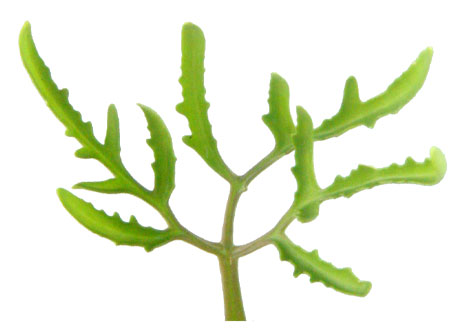
• Siempreviva is an erect, simple, smooth and robust perennial herb,
less than a meter high. Leaves are opposite, fleshy, pinnatisect, 8
to 15 centimeters long, with the lobes distant, spreading, subentire, toothed
or somewhat lobed and lanceolate, and few. Inflorescence is terminal and peduncled.
Flowers are about 1.5 centimeters long. Sepals are green and lanceolate. Limb
of the corolla is spreading, and about 2 centimeters in diameter.
• Kalanchoe laciniata is a succulent plant with reddish erect simple stems, with fleshy green leaves. It grows up to 1 m (3 ft 3 in) in height. The leaves are compound or dissected, up to 140 mm (5.5 in) long and 80 mm (3.1 in) wide. The flowers are greenish-white to light orange in color and grow up to 15 mm (0.59 in) long. (20)
Distribution
- Introduced into the Philippines.
-
Cultivated, not naturalized.
- Native to Angola, Chad, Eritrea, Ethiopia, Kenya, Malawi, Mozambique, Namibia, Rwanda, Saudi Arabia, Somalia, Sudan-South Sudan, Tanzania, Uganda, Zimbabwe. (9)
 Constituents Constituents
- Leaves reported to contain
chlorophyll, fat, a yellow organic acid, cream of tartar, sulphate of
calcium, free tartaric acid and calcium oxalate.
- Leaves also reported to contain malic acid.
- Reported to contain cardiac glycosides.
- Leaf extracts reported to yield flavonoids, triterpenoids, lignins, phenols, saponins, and glycosides. (5)
- Study has reported three toxic bufadienolides, one characterized as hellibrigenin 3-acetate. (Anderson et al., 1983) (5)
- A variety of cardiotoxic bufadienolides are present in all parts, more so in the flowers. The cardiotoxins include bryotoxins, bryophyllins, bersalgenins, flavonoids, and glycosides. (6)
- Phytochemical analysis showed the n-hexane extract to yield tannins and terpenoids, while the aqueous methanolic extract yielded saponins, tannins, terpenoids, flavonoids, glycosides and anthraquinones. (11)
Properties
- Leaves considered styptic, astringent and antiseptic.
- The species adapts to bright light and water scarcity.
- Studies suggest anti-inflammatory, antidiabetic, antitumor, antimicrobial, anti-leishmanial, mutagenic and cytotoxiic properties.
Parts used
Leaves.
 Uses Uses
Folkloric
• No reports found on edibility.
Folkloric
• In the Philippines pulped leaves are
applied to chronic ulcers and sores; also used for headaches.
• In Malaysia poultice of powdered leaves used for colds and coughs, to soothe inflammation, heal boils and wounds; used as lotion in small pox. Decoction of whole plant drunk for gastric pain and heart discomfort. (5)
• In Cambodia, Laos and Vietnam, crushed leaves applied externally for fever and to heal ulcers. (5)
• In India crushed leaves applied to wounds, to soothe inflammation and to cure diabetes. Juice from leaves drunk to treat bilious diarrhea, dysentery, lithiasis and phthisis. (5)
• In Indo-China pounded leaves applied to indolent ulcers. (5)
• In Ambonia, leaves used for poulticing
fevered heads and bodies.
• In traditional Indian medicine, fresh leaves are bruised or
roasted over fire and applied as poultice to bruises and contusions
to relieve inflammation and prevent discolorations.
• Used as a styptic to fresh cuts, abrasions and wounds. Also
used for venomous insect bites.
• Juice mixed with butter, 1:2, taken internally for diarrhea, dysentery, lithiasis,
cholera and phthisis.
• In Indo-China, leaves are used
as topicals for ulcers.
• In the Antilles, used for headaches
and as an emollient.
• In India plant is used for treating common cough and cold, wounds, inflammation, diabetes, etc.
• In southern India leaf extract applied externally for joint pain.
• In Ayurveda leaves use for menorrhagia, hemorrhoids, ulcers, renal stones, abscesses, cuts and wounds, ulcers, diarrhea, vomiting, and inflammation; used to pacify vitiated vata, pitta. (8)
• Ethiopians use fresh root extract intranasally for treatment of tonsillitis.
• In Brazil, used for treatment of ulcers and gastritis; also used as anti-inflammatory and analgesic. (14)
• Leaves used for otitis, skin diseases, bronchitis, flu, ovarian and uterine inflammations, ulcers, gastritis, chilblains, burns and wounds, erysipelas, cough, snake bites, facilitation of pregnancy, post-partum abdominal pain.
Others
• Superstition: Malays place twigs in houses to attract good spirits.
• Ethnoveterinary: In West Ethiopia, fresh or dried roots of K. laciniata, seeds of Capsicum frutescens and Allium sativum, and leaves of Croton macrostachys are powdered together and applied to blackleg affliction in cattle. (15)
Studies
• Cytotoxicity
/ Anticancer: Study
of effects of several plants on in vitro proliferation of hormone dependent
breast cancer and colon cancer lines showed the hexane extract of Kalanchoe
laciniata was effected against cellular proliferations of MCF-7 (hormone
dependent breast cancer cell lines.
(1)
• Secondary Metabolites: Phytochemical screening for secondary metabolites yielded emodins, flavonoids, lignins, triterpenoids, anthraquinones, phenols, saponins, leucoanthocyanins, and glycosides. (7)
• Antiproliferative: Study showed a hexane extract of Kalanchoe laciniata was effective against cellular proliferations of MCF-7 carcinoma cell lines with IC50 of 75.7 µg/ml. The hexane extract inhibited Caco2 cellular proliferation with IC50 of 100 µg/ml.(10)
• Antibacterial / Antioxidant / Gut Modulating: Study evaluated the antibacterial, antioxidant, and gut modulating activities of a 70% crude methanolic extract of K. laciniata. In antibacterial assay, the extract showed effective activity against Staphylococcus aureus and Bacillus subtilis with MIC of 5 and 2.5 mg/mL, respectively. Antioxidant evaluation showed 17.3 ± 3.0% DPPH free radical scavenging, with total phenolic contents of 27.3 ± 1.8 mg GAE/g DW and22.7 ± 2.1 AAE/g DW total antioxidant activity. Gut modulatory activity by in vitro testing on rabbit jejunum showed maximal spasmogenic response of 28.4 ± 4.6% at 3 mg/mL, with EC50 spasmolytic response of 3.2 mg/mL. (13)
• Genotoxic and Mutagenic Potential / Safety Concerns: Study evaluated the genotoxic and mutagenic effect of Kalanchoe laciniata. Study concludes whole plant extracts of K. laciniata were significantly mutagenic and cytotoxic. Both genotoxicity and cytotxicity increased with concentration of aqua-methanolic and n-hexane extracts. Based on in vitro investigation, K. laciniata is not considered safe for use in humans. Study suggests further studies on animal models to assess for pathological lesions and alterations in biochemical parameters. (16)
• Antiproliferative / Anti-Breast Cancer (MCF-7) Cell Line: Study evaluated the effect of Catharanthus roseus, Kalanchoe laciniata and Piper longum on the in vitro proliferation of hormone dependent breast cancer (MCF-7) and colon cancer (Caco2) cell lines. Only the hexane extract of K. laciniata was effective against cellular proliferation of MCF-7. (17)
• Antimicrobial: Study evaluated the antimicrobial activity of 30-70% aqueous-methanol and n-hexane extracts of coarse plant powder using agar well diffusion against Staphylococcus aureus, Escherichia coli and fungi Candida albicans. Results showed greater sensitivity of E. coli, with the n-hexane extract showing largest zone of inhibition of 52 mm. (21)
Availability
Wildcrafted. |