| 
Gen
info
- Pachyrhizus erosus is a native Mesoamerican vine.
-
Etymology: The genus name Pachyrhizus is derived
from the Greek word meaning "thick root." The specific epithet erosus mean 'jagged'.
- Two cultivated forms of P. erosus are jicama de agua and jicama de leche, both names for the consistency of their juice.
- The heaviest jicama roots ever recorded weight 23 kg (51 lb), which was found in 2010 in the Philippines.
- Historical snippet: Jicama originated in Mexico and Central America. It has been found at archaeological sites in Peri in 3000 BC.
Botany
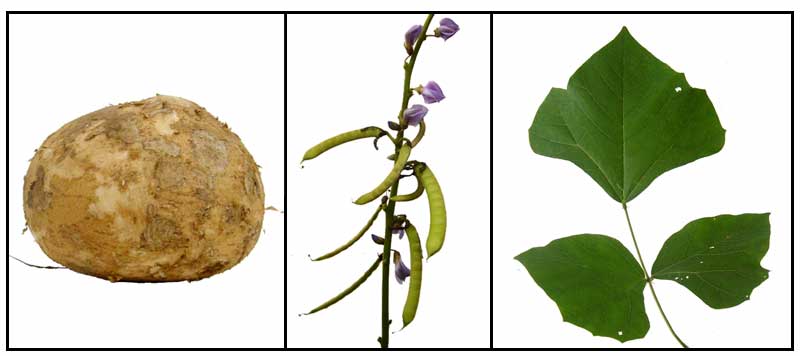
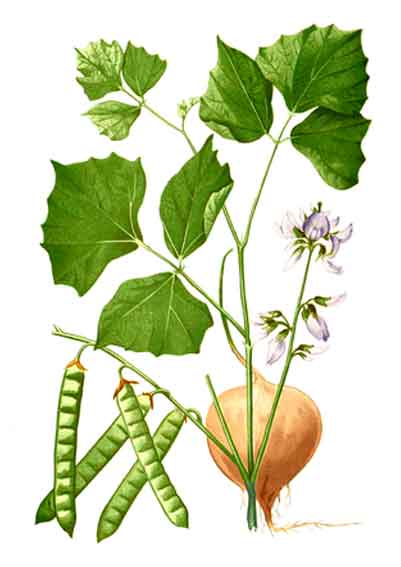
 • Sinkamas is a coarse, climbing,
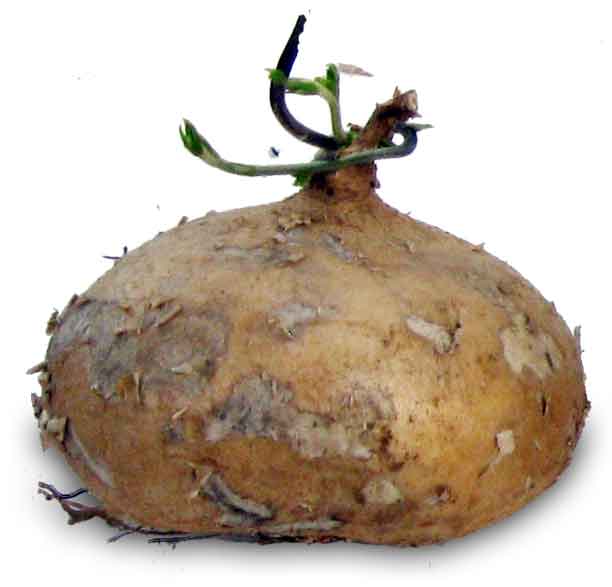
herbaceous vine growing from large, edible, turnip-shaped, fleshy roots.
Leaflets, at least the terminal ones, are broader than long, up to 15 centimeters long and 20 centimeters wide, with
a deltoid base, shallowly lobed upper half, and the lateral leaves inequilateral. Racemes are up to 45 centimeters
in length, while the lower nodes produce short branches and the other nodes several flowers each. Flowers are pale blue or blue and white, 2 to 2.5 centimeters long,
about 1.5 centimeters wide. Pods are about 10 centimeters long, 10-12 millimeters wide, flat and
hairy, containing 8 to 10 seeds. • Sinkamas is a coarse, climbing,
herbaceous vine growing from large, edible, turnip-shaped, fleshy roots.
Leaflets, at least the terminal ones, are broader than long, up to 15 centimeters long and 20 centimeters wide, with
a deltoid base, shallowly lobed upper half, and the lateral leaves inequilateral. Racemes are up to 45 centimeters
in length, while the lower nodes produce short branches and the other nodes several flowers each. Flowers are pale blue or blue and white, 2 to 2.5 centimeters long,
about 1.5 centimeters wide. Pods are about 10 centimeters long, 10-12 millimeters wide, flat and
hairy, containing 8 to 10 seeds.
• Growth form: Vine up to 5 m long. Roots: Tuberous roots resembling turnips, with light brown skin and white flesh. Foliage: Trifoliate, compound leaves with large, stingray-shaped leaflets. Flowers: Purple and white, pea-shaped flowers borne on flower clusters known as racemes. Inflorescence arising at the nodes along the vine. Fruit: Seedpods covered with hairs, hairless when mature. The pods are ribbed. (Flora & Fauna Web)
Distribution
- Introduced.
-
In settled
areas, in thickets and hedges throughout the Philippines, at
low and medium altitudes.
- A native of tropical America.
- Native to Belize, Costa Rica, El Salvador, Guatemala, Honduras, Mexico Central, Mexico Gulf, Mexico Northeast, Mexico Northwest, Mexico Southwest, Nicaragua, Panamá. (13)
- Now pantropic.
- Introduced to Asia in the 17th century by the Spanish.
Constituents
• Roots are high in carbohydrates; good source of calcium and
iron.
• Young pods are also good sources of calcium and iron.
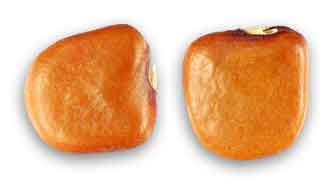
• Seeds yield a colorless and limpid oil, 38.4%
• Seeds also yield a poisonous substance, pachyrrhizid, a glucoside;
toxic to fish if pounded and dropped in water.
• The seeds also contain a toxic resin.
• Nutrient analysis of tubers showed a high level of moisture, appreciable carbohydrates, crude fiber and protein, with negligible lipid, with a caloric value of 39 kcal per 100 g. Micro- and macro-nutrient analysis showed a potential source of potassium, sodium, phosphorus, calcium and magnesium. Tuber also yielded significant ascorbic acid and detected thiamine, riboflavin, pyridoxine, niacin and folic acid. (6)
• Study of 10 accessions of detoxified yam bean seeds (two from P. erosus) yielded 29.2-32.1 g/100 g protein, 31.3-33.0 g/100 g carbohydrates, 24.1-25.6 g/100 g total fat, 7.5-8.1 g/100g crude fiber, and 3.4-4.1 g/100 g ash. Defatted P. erosus seed flour yielded 45.6-48.8 g/100g protein, 32.6-46.5 g/100 g total carbohydrate, 6.7-7.1 g/100 g crude fiber, 6.0-6.4 g/100 g ash, and 5.2/100 g crude fat. (see study below) (24)
• Nutrient analysis of fresh, raw, 100 g of Jicama yielded: (Principle): energy 38 kcal, carbohydrate 8.82 g, protein 0.72 g, total fat 0.19 g, cholesterol 0 mg, dietary fiber 4.9 g; (Vitamins) folates 12 mg, niacin 0.2 mg, pantothenic acid 0.135 mg, pyridoxine 0.042 mg, thiamin 0.020 mg. vitamin A 21 IU, vitamin C 20.2 mg, vitamin E 0.46 mg; (Electrolytes) sodium 4 mg, potassium 150 mg; (Minerals) calcium 12 mg. copper 0.048 mg, iron 0.60 mg, magnesium 12 mg, manganese 0.60 mg, zinc 0.16 mg; (Phytonutrients) carotene 13 ug.
• LC-MS/MS study of 70% ethanol extract of seeds revealed bioactive compounds with potential antibacterial properties such as alkaloids and flavonoids, including hypaphorine, trigonelline, galbridin, and gancaonin.
(see study below) (47)
 Properties Properties
• Pounded seeds are toxic to fish; powdered seeds are reportedly fatal to dogs.
• Seeds considered acaridal and insecticidal.
• Studies have suggested CNS depressant, antiviral, anti-osteoporosis, antifungal, antioxidant, immunomodulatory, diiuretic, antiadiposity, hypoglycemic, oviposition deterrent, platelet inhibitory, phytoestrogenic, insecticidal, melanin inhibitory, skin whitening, hepatoprotective, probiotic, microbiota modulating, pancreatoprotective, anti-osteoporosis, nephroprotective, anti-inflammatory, cytotoxicity, anti-obesity, antibacterial, antibiofilm properties.
Toxicity / Poisoning
- In contrast to the root, the rest of the plant is very poisonous: the seeds contain the toxin rotenone, which is used to poison insects and fish. Mature seeds have a high rotenone content, which has been considered as insecticide source. (34)
- Yam bean
poisoning (see study: 3)
Parts used
Roots, seeds, and stems.
 Uses Uses
Edibility / Nutritional
- Round storage tuber has a crisp, sweet taste; eaten raw or cooked in stir-fies and soups.
- Low in calories, high in fiber and vitamin C. Also a source of calcium and iron.
- Before consumption, skin of tuber should be removed because of toxic compounds, Seeds, flowers, and leaves also contain toxins. (33)
- In Singapore, eaten raw in Rojak by mixing with ground peanuts and Rojak sauce. It is stir-fried and simmered for use as filling in Popiah and ueh pie. In Mexico, slices eaten with lime juice, salt, and chili powder. (33)
Folkloric
- Decoction of the roots
used as a diuretic.
- Warmed poultice of the stem pulp applied to painful areas in the leg.
- Seeds are laxative; and the oil of seeds is purgative in doses of 40
gms.
- Tincture from seeds used for treatment of herpes.
- Seeds used in folk medicine for treatment of insomnia.
- Tuber flour used for treatment of dysentery and hemorrhoids
- In Taiwan, roots used for fever and hemorrhages.
- In Indonesia, storage roots of P. erosus have been traditionally used as a skin whitening agent. (38)
Others
- Green manure: Plant can be used as green manure. (25)
- Cosmetics: Root extract used as ingredient in commercial cosmetic preparations. (25)
- Flour: Flour can be made from tubers by slicing, drying, and grinding.
(34)
Studies
•
CNS Depressant Activity: PE seed is known to contain
rotinoids, flavonoids, phenylfuranocoumarins with antifungal, antisecretory,
antibacterial and spasmolytic activities. Study showed CNS depressant
effect with decreased locomotor activity, muscle relaxation, antianxiety
and antiaggressive activity. (1)
•
Anti Herpes Simplex Virus (HSV): Studies on seeds of
PE isolated 9 known components – 5 rotenoids, two isoflavonoids,
one phenylfuranocoumarin and a monosaccharide. Moderate anti-herpes
simplex virus activity was observed. (2)
• Yam bean seed poisoning: Five patients presented with signs and symptoms mimicking acute cyanide intoxication with perioral numbness, nausea and vomiting after ingesting soup made from yam bean seeds. One patient progressed to severe metabolic acidosis and coma, requiring aggressive therapy. (3)
• Anti-Osteoporosis / Root: Study of the effects of EA extract of root of P. erosus on bone loss in ovariectomized rat model showed significant prevention of bone loss in OVX rats. Significant prevention of uterine atrophy and increased body weight gain were observed. Results suggest a phytoestrogen compound that could be of benefit in postmenopausal women. (4)
• Antifungal / Phytochemicals: A dichlormethane extract yielded rotenone, erosone, paquirrizone, dolineone and paquirrizine. The acetone extract yielded dehydroneotenone. The secondary metabolites significantly inhibited post-harvest fungi. (5)
• Nutrient Analysis / Phytochemicals: Tuber showed a high level of moisture, appreciable carbohydrates, crude fiber and protein, with negligible lipid, with a caloric value of 39 kcal per 100 g. Micro- and macro-nutrient analysis showed a potential source of potassium, sodium, phosphorus, calcium and magnesium. Tuber also yielded significant ascorbic acid and detected thiamine, riboflavin, pyridoxine, niacin and folic acid. (6)
• Antioxidant: Study showed highest Total Antioxidant Status (TAS) for raw jam bean with 50% methanol extract, and lowest with water extraction. (7)
• Immunomodulatory: Study evaluated the immunomodulatory effect of bengkoang fiber extract in vitro and in vivo. BFE facilitated IgM production by human hybridoma cell line HB4C5 cells. Also, BFE dose-dependently facilitated production of IgM, IgG, and IgA by mouse primary splenocytes. Results suggest BFE has positive in vitro and in vivo effects on the immune system. (10)
• Insecticidal: Study evaluated the insecticidal efficacy of mintweed, yam bean and celery seed extracts on Aedes aegypti L. Yam bean (Pachyrhizus erosus) was most toxic to Ae. aegypti 2nd instar larvae and adults. YSE in combinations produced strong synergistic effects to the other extracts. (11)
• Yam Starch as Sunscreen: Yam starch (Pachyrhizus erosus (L.) Urb.) was evaluated in Swiss Webster female mice strains for sunscreen properties. Results showed sunscreen activity in vivo in mice. Increase in concentration showed an increase in viscosity, while color, odor, and homogeneity of the formulation did not change during storage. (12)
• Hypoglycemic Effect: Study evaluated the inhibitory effect of jicama extract on α-glucosidase, α-amylase, and postprandial hyperglycemic in STZ-induced diabetic mice. Results showed decrease in postprandial blood glucose level with high inhibitory activity against α-glucosidase and α-amylase activities. (14)
• Functional Properties of Yam Bean Starch: Study on the functional properties of starch extracted from yam bean showed the starch paste to have a high viscosity profile, high retrogradation tendency and low stability on cooking. Similar to those of cassava starch, yam bean is a potential new source of starch. (15)
• Antioxidant / Skin Whitening / Anti-Tyrosinase Inhibiting Property: In Indonesia, roots have been used as excipient for sun screening and skin whitening paste. Study for active compounds yielded three isoflavonoids: daidzein, daidzein-7-O-ß-glucopyranose, and 5-hydroxy-daidzein-7-O-ß-glucopyranose, and a new pterocarpan (8,9-furanyl-pterocarpan-3-ol, which showed antioxidant activities (SC50 values of 2.11, 11.86, 0.69, and 7.86 respectively, with tyrosinase inhibiting activities with IC50 of 5.35, 22.20, 4.38, and 7.49 mM, respectively. (16)
• Oviposition Deterrent Activity: Study showed the potential of crude extract of yam bean in preventing diamondback moth, Plutella xylostella, from ovipositing on its plant host. (17)
• Rotenone Deterrent Activity: Study evaluated the cytotoxicity of rotenone isolated from P. erosus seeds on K562 human leukemia cells. Rotenone exhibited significant cytotoxic activity (IC50=13.05 µM) by MTT assay. Rotenone induced cell death and caspase-3 activation. (18)
• Diuretic / Hypotensive Effect: Study of methanolic extract of tubers of Pachyrhizus erosus in male Sprague-Dawley rats showed potential blood pressure lowering activity at dose of 200 mg/kg. A diuretic effect was evident only at 50 mg/kg dose. (19)
•
No Effect in Hampering Blood Glucose: Study of bengkoang juice showed no effect in hampering blood glucose increase in 40 alloxan-induced diabetic Wistar rats. (20)
• Platelet Inhibitory Effects / Cardiovascular Benefits / Root: Study evaluated the cardiovascular benefits of juices from two commonly consumed fruits in Thailand--Pachyrhizs erosus (yam bean) and Psidium guajava (guava)--in healthy volunteers. Results showed acute inhibitory effects of yam bean root juice and guava fruit juice on ex vivo collagen-induced platelet aggregation in healthy subjects. Following yam bean root juice ingestion, systemic nitrate converts to nitrite and into NO which may attenuate platelet responses to collagen stimulation. (21)
• Biodiesel
/ Seed Oil Methyl Esters: Study evaluated seed oil methyl esters for fuel properties according to biodiesel standards. The seed oil generally met fuel property specifications with its elevated content of saturated fatty acid methyl esters, high cloud point, and a high cetane number. (22)
• Phytoestrogenic Potential: Study evaluated the phytoestrogenic potential of yam bean on ovarian and uterine tissue structure of premenopausal mice. Results showed both secondary and tertiary follicle proliferation while the endometrial tissue of the uterus showed uterine glandular proliferation. Study showed yam bean to be a natural estrogen source. (23)
• Composition and Functional Properties / Yam Bean Seeds: Although seeds are rich in protein, they are not used due to the high content of toxic rotenone. In the study, yam bean seeds from ten accessions (two from P. erosus) were detoxiri3e and nutritional qualities were determined. Study suggests yam bean seed has potential for use in both food and non-food applications. (see constituents above) (24)
• Daidzein / Potential Effect on Myometrium / Tuber: Study evaluated daidzein compounds yam tuber extract for effects on myometrium rat model. Results showed the level of daidzein in blood and urine of rats administered yam tuber juice is lower than pure daidzein treatment. Results of administration of yam tuber juice showed significant myometrium proliferation in rats. Results suggest the phytoestrogen compounds from P. erosus has potential as natural estrogenic in women. (26)
• Lessening Intestinal Coliforms / Probiotic Potential: Study evaluated the effect of P. erosus in lessening intestinal coliforms compared to prebiotic (positive control) and water (negative control). Stools were evaluated for color, consistency, and growth of colonies. Results showed P. erosus is not only a vegetable, but also a good substitute for probiotic drinks. (27)
• Immunomodulatory / Stimulation of Phagocytic Activity: Study evaluated the effects of bengkoang fiber extract (BFE) on macrophages in vitro and in vivo. The BFE stimulated phagocytic activity of J773.1 cells, and significantly facilitated production of TNF-a and interleukin (IL)-6 and mouse peritoneal macrophages. BFE facilitated gene expression of nitric oxide synthase and cyclooxygenase-2 and stimulated the innate immune response as well as acquired immune responses. (29)
• Prevention of Excessive Blood Glucose and Body Weight: Jicama has been shown to exert immunomodulatory effect both in vitro and in vivo. Study evaluated the tuberous part of Jicama to see if the fiber could prevent the development of diabetes and obesity caused by a high sugar diet. Results showed jicama fiber could effectively sustain blood glucose homeostasis and improved body weight and WAT mass profile against the development of diabetes and obesity cause by high sugar diet. (30)
• Effect on Skin Improvement / Mask Pack Containing Yam Bean: Studies have previously shown anti-oxidant and anti-melanogenic effects. Study evaluated the skin improvement effects resulting from use of a mask pack containing yam bean extracts. Results showed increase in moisture and oil content of facial skin, with improvement in dryness and skin tone. Results suggest potential for use in functional cosmetics. (31)
• Melanin Inhibitory Effect / Antioxidant: Study evaluated the anti-oxidant activity and anti-melanogenic effect of yam bean extract and fractions. The ethanol extract scavenged DPH and ABTS effectively compared to the water extract. The ethyl acetate fraction effectively suppressed melanin accumulation in a dose-dependent manner. Results suggest potential as a cosmetic material with antioxidant and antimelanogenic activities. (32)
• Counteracts Adiposity, Insulin Resistance and Inflammation / Modulation of Gut Microbiota: Study evaluated the potential of yam bean fiber (YBF) against a high-fat diet (HFD)-induced metabolic diseases, inflammation, and gut dysbiosis in adult male mice. Dose of 10% YBF significantly inhibited excessive body weight and white adipose tissue (WAT), prevented malondialdehyde elevation, catalase activity reduction, and expression of IL-5 increment within the WAT. YBF modulated gut microbiota community by increasing health-promoting microbiota (Lactobacillus reuteri, L. johnsonii) and inhibiting pathogenic Mucispirillum sp. YBF also prevented histopathology and inflammation of the colon. (35)
• Pancreatoprotective /Inhibitory Effect / Antioxidant: Study evaluated the pancreoprotective effect of isolated jicama fiber (JF) against glucotoxicity caused by high-sugar diet (HSD) using adult male BALB/c mice. Treatment diets consisted of normal, HSD, and diets supplemented with 10% and 25% of JF. Results showed supplementation improved blood glucose profile and significantly reduced inter pancreatic adiposity caused by HSD. JF25% effectively sustained normal size of the islets of Langerhans and total cell number of islet in pancrease of HSD-fed mice. JF25% also effectively counteracted necrosis of pancreatic acinal cells. Results suggest JF supplementation can counteract the development of diabetes mellitus and associated diseases. (36)
• Hepatoprotective Against High Sugar Dinks / Dietary Fiber: Study evaluated the ability of dietary fiber from jicama tuber in counteracting the development of liver disease induced by high-sugar drinks using adult male DDY stain mice. Mice in the HSD + JF 25% group showed significantly lower body weight (p<0.01), along with fewer histopathological alternations in the liver, lower proportion of degenerated cells and overall lower histopathological score compared to HSD group (p<0.05). Study suggests adding jicama fiber (25% of standard chow) mitigates increase in blood glucose, body weight, and histopathological changes in the liver induced by high-sucrose drinks. (37)
 • Anti-Tyrosinase / Skin Whitening / Flavonoid and Phenolic Contents: Study evaluated the anti-tyrosinase and antioxidant activities of PE extracts and measured total phenolic and total flavonoid contents. The dichloromethane extract showed highest anti-tyrosinase activity with IC50 2.08 mg/mL, total flavonoid content of 9.93 mg QE/g extract, and antioxidant activity with IC50 40 µg/mL. An 80% ethanol extract showed highest total phenolic concentration at 11.97 mg GAE/g extract. Results suggest potential of dichloromethane extract for development in skin lightening products. The PE extracts also present as alternative source of antioxidants and antityrosinase agents. (38) • Anti-Tyrosinase / Skin Whitening / Flavonoid and Phenolic Contents: Study evaluated the anti-tyrosinase and antioxidant activities of PE extracts and measured total phenolic and total flavonoid contents. The dichloromethane extract showed highest anti-tyrosinase activity with IC50 2.08 mg/mL, total flavonoid content of 9.93 mg QE/g extract, and antioxidant activity with IC50 40 µg/mL. An 80% ethanol extract showed highest total phenolic concentration at 11.97 mg GAE/g extract. Results suggest potential of dichloromethane extract for development in skin lightening products. The PE extracts also present as alternative source of antioxidants and antityrosinase agents. (38)
• Nephroprotective / Jicama Fiber Supplement: High-sugar drinks consumption including sugar-sweetened beverages are associated with development of kidney disease. Study evaluated the protective effect of jicama fiber (JF) in the diet against kidney disease caused by HSD (high sugar drinks) in adult male albino mice. Results showed incorporation of JF in the diet at 25% could effectively counteract the elevation of fasting glucose and indicators of kidney damage including plasma creatinine, urine protein, urine SG, and urine refractive index caused by HSD. However, JF failed to prevent HSD-induced mass reduction of the kidney but could ameliorate histopathological alterations in the kidney, prevent tubular atrophy and fibrosis. Study suggests potential in reducing HSD-induced kidney disease. (39)
• Enhancement of Antioxidant Potential / Fermentation: Fermentation is one method to enhance the antioxidant potential of jicama. Study evaluated the growth of lactic acid bacteria (LAB), pH, total titratable acidity (TTA), total phenol content (TPC) and antioxidant activity of jicama extract (P. erosus) using Lactobacillus plantarum B1765 as started culture for fermentation at 37°C for 2-36 hours. Fermentation duration increased the growth of LAB to 108 CFU/mL, reaching optimum at 12 hours. Reducing pH, increasing TTA, increasing TPC, and antioxidant activity still occur up to 36 hours of fermentation. Duration of fermentation increased the growth of total LAB, secreted ß-glucosidase and inulase enzymes, and produced acid as metabolism product, which hydrolyzed the glycoside bond and reduced pH, both act to free phenolic and increased. . . (40)
• Potential of Tablet Formulation for Treatment of Osteoporosis: Exogenous estrogen or Hormone Replacement Therapy (HRT) is potential therapy for osteoporosis, which carries risk for breast and endometrial cancer. Phytoestrogens or estrogen-like compounds, especially isoflavones, are potential safe alternatives to HRT, and Jicama is one such plant that contains many phytoestrogens. Study evaluated physicochemical characteristics of jiicam extract in effervescent tablets with various concentrations of binder and sweetener. The preferred formulation is Formula 4 with 0.75% of PVP40 and 47.75% mannitol. Study suggests the ethanol extract of jicama can be formulated into effervescent tablets with potential as treatment for osteoporosis. (41)
• Effect of Storage on Bioactive and Toxic Compounds / Effects on Thyroid Cancer / Tubers: Jicama tubers contain isoflavones and phenolic acids with potential chemopreventive and anti-inflammatory effects. Study evaluated the the bioactive and toxic compounds in fresh jicama tuber (flesh and peel) and effects of freezing for 3-4 months. Fresh peel showed highest levels of isoflavones (mg/100 g dry weight) - biochanin A; 52.5, daidzein; 23.0, genistein; 2.6) and phenolic acids (chlorogenic; 61.7, isochlorogenic acids; 95.8), which declined significantly after freezing. No rotenone was detected. Peel extracts exhibited strongest cytotoxicity against thyroid cancer cells, particularly FTC133, showing dose-dependent inhibition of cell viability. However, there was also cytotoxicity effects against normal thyroid cells, highlighting potential risks. Flesh extracts showed weaker cytotoxic effects but stronger anti-inflammatory effects than peel extracts. Both reduced effectively reduced TNFα. IL-6, and NO levels in RAW264.7 macrophages. Storage time during freezing showed no significant effect on anti-inflammatory or cytotoxic potency, but significantly reduced antioxidant activity. (42)
• Immunomodulatory / Synergies of P. erosus Inuliin, and Lactobacillus / Review: Review illuminated the potential of synbiotics, specifically highlighting the synergistic relationship between Benkoang inulin and Lactobacillus, elucidating their ability to fine-tune immune responses, mitigate inflammation, and potentially enhance vaccine efficacy. Jicama inulin, an oligosaccharide fructan, has shown potential as a prebiotic. Inulin fermented by gut microbes, particularly Bifidobacterium and Lacto-
bacillus bacteria, lead to synbiotic effects. Inulin enhances the growth of beneficial bacteria in the digestive tract and supports a healthy gut microbiota balance in measures of gut health, nutrient absorption, immune modulation and various therapeutic benefits. (43)
• Anti-Obesity Effect of Daidzein from P. erosus / Roots: Study evaluated ethanol root extracts pf P. erosus for polyphenolic and isoflavone compounds and their potential anti-obesity activity as a natural health resource. The EtOAc fraction exhibited the highest antioxidant activity with IC50 of 531.77 µg/mL for ABTS radical scavenging. α-Glucosidase and lipase inhibition assays showed IC50s of 837.07 µg/mL and 915.02 µg/mL respectively. Daidzein was the most abundant isoflavone isolated. Analysis of protein expression related to adipogenesis and lipogenesis in 3T3-L1 cells, including transcription factors
PPARγ, SREBP, FAS, and ACC, showed concentration dependent reductions for both EtOAc fraction and daidzein. Daidzein showed higher inhibitory effects than the EtOAc fraction. Results suggest P. erosus extracts has excellent carbohydrate-digestive enzyme inhibitory effects, with potential use as functional food ingredient for diabetes and obesity prevention. (44)
• Anti-Inflammatory / Tuber Fiber: Jicama fiber has been shown to exert an immunomodulatory effect and contain bioactive anti-inflammatory compounds. The mechanism of inhibition of the inflammatory signaling pathway is unknown. Study evaluated the anti-inflammatory bioactive compounds by molecular docking. In silico test tethered 8 bioactive compounds with potential as anti-inflammatory ligands with tolll-like receptor-4 (TLR4). Results showed cycloartenold has the lowest binding affinity and highest number of amino acids interacting with TLR4 compared to the other ligands viz. Dexamethasone (a standard ligand), Stemphol, Astaxanthin, Farnesol, Benzoic Acid, 2.6-Dihydroxibenzoic Acid, Nerolidol, and 9-Octadecenoic Acid. Results showed jicama fiber bioactive compounds, particularly Cycloartenol, have potential to inhibit inflammation via activation of TLR4, which is the central signaling system in inflammatory response. (45)
• Effect of Synbiotic Drink (P. erosus and Kefir Grains) in Testicular Hyperlipidemic Rats: There is a correlation between hyperlipidemia and male infertility. Malondialdehyde (MDA) and superoxide dismutase (SOD) are oxidative stress markers, which indicate testicular damage caused by hyperlipidemia. Study showed as a synbiotic drink f jicama concentrate and kefir grains significantly decrease MDA and increase SOD in testicular hyperlipidemic Wistar rats. (46)
• Antibacterial / Antibiofilm Properties / Seeds: Streptococcus mutans is the primary bacterium responsible for dental caries, forming biofilms that enhance resistance to antimicrobial treatments. Study evaluated the antibacterial and antibiofilm activities of jicama seed extract against S. mutans. Seeds were extracted using 70% ethanol and antibacterial activity assessed by disc diffusion method, while antibiofilm activity was assessed by microplate assays. The extract inhibited bacterial growth, with inhibition zones increasing with extract concentrations. LC-MS/MS study revealed bioactive compounds with potential antibacterial properties such as alkaloids and flavonoids, including hypaphorine, trigonelline, galbridin, and gancaonin. Results showed significant inhibition of biofilm formation. The jicama seed extract can serve as a natural antibacterial agent, with potential application in dental care. (47)
• Effect of Yam Bean Supplementation on Glucagon-like Peptide Expression and Histopath Alterations of Small Intestine on HFD: Study showed YB supplementation can prevent impairment of GLP-1 expression and oxidative stress while ameliorating the histopathological alterations of the small intestines caused by high fat diet (HFD). Yam bean has potential as supplement formulation to improved gastrointestinal structure and functions against HFD. (48)
• Prebiotic Properties / Tubers: Study evaluated the prebiotic properties of 85% ethanol yam bean tuber extract by monitoring bacterial growth and acid production of the probiotics, Lactobacillus plantarum and L. acidophilus. Results showed the YB extract produced significant concentration-dependent increases in growth and acid-producing activity of L. plantarum (p<0.05). Effects on growth and acid production of bacteria were similar to commercial inulin. Results suggest prebiotic properties of YB tuber extract in certain probiotics, specifically L. plantarum. (50)
• Inhibition of Adipogenesis Via Leptin-PPARγ-FAS Pathway: In 2016 obese patients were 13% of adults worldwide, and predicted 34% by 2030. Study evaluated the and defined the anti-obesity mechanism of P. erosus using various biomarkers. P. erosus suppressed body weight, decreased TC and LDL, prevented fat tissue weight gain and liver weight gain through blocking of lipid droplet accumulation. PE effectively decreased the up-regulated level of leptin, significantly controlled both C/EBPα level and PPARγ level, and prevented FAS expression level. Study suggests P. erosus effectively controlled obesity via regulating leptin-C/EBPα-PPARγ and FAS. (51)
Availability
- Widely cultivated
for its edible roots.
- Seeds, powder in the cybermarket.
|