 Gen info Gen info
- Euphorbiarceae, the spurge family, consists of five subfamilies, 49 tribes, about 7300 species and 283 genera of flowering plants.
- The largest genus of the family is Euphorbia with about 1600 species, with 5 reported species in the Philippines.
- Euphorbia is named after the Greek surgeon Euphorbus, supposed to have used the milky latex as a potion ingredient.
(28)
- Etymology: The genus name Euphorbia derives from Euphorbos, referring to the Greek physician Euphorbos, physician of King Juba II of Numidia and Mauretannia (52-50 BC - 23 D), who married the daughter of Anthony and Cleopatra. (48) He was supposed to have used the milky latex as a potion ingredient.
(28) The specific epithet "neriifolia" refers to the resemblance of the leaves to those of Nerium spp., such as Oleander.
- The common name "spurge" derives from the Middle English/Old French
espurge, meaning "to purge", referring to purgative property of the plant's sap.
 Botany Botany
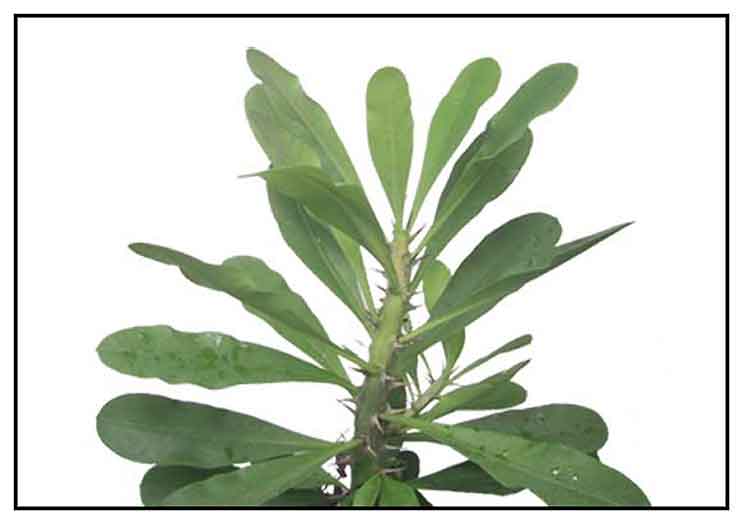
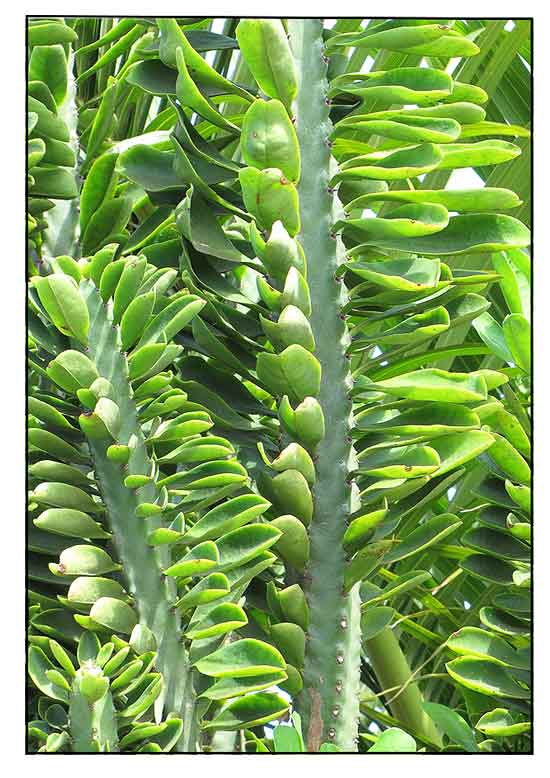
• Soro-soro is an erect, shrubby, branched, fleshy, cactus-like plant growing to 2 to 4 meters.
Trunk and older branches are grayish and cylindric; medium branches
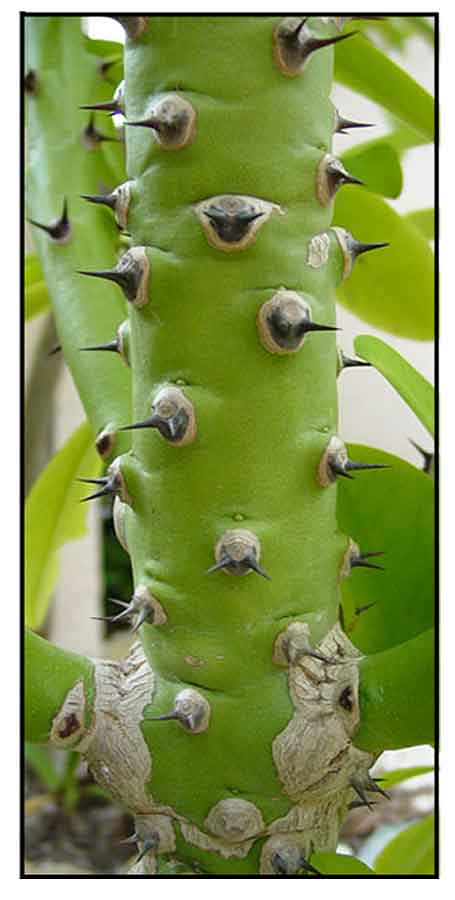
slightly twisted and stout, fleshy, 4- or 5-angled or winged, the younger ones usually 3-winged, the wings lobulate, with a pair of stout, sharp, 2- to 4-millimeter long spines rising from the thickened bases of each leaf or petiole-scar. Leaves, arising from the sides of wings towards the end of the branches, are fleshy, oblong-obovate, 5 to 15 centimeters long; in young plants, longer
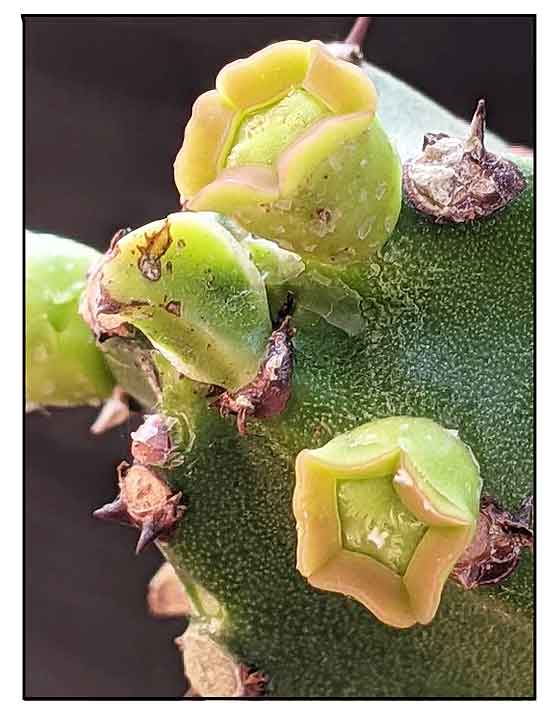
pointed or blunt at the tip. Cymes are short, solitary in the sinuses, and usually of 3 involucres. Involucres are green or pale yellow, about 6 millimeters in diameter, with the lobes fimbriate.
• Trees or shrubs, 3-5(-8) m tall, glabrous except for cyathia. Stems 6-15 cm thick, green, with 5 spiral ranks of tubercles, ascending, branching from upper parts. Leaves alternate, apically clustered, persistent, succulent; spine shields small, stipules pricklelike, 2-3 mm; petiole short, 2-4 mm; leaf blade obovate or obovate-oblong to spoon-shaped, 4.5-12 × 1.3-3.8 cm, fleshy, base attenuate, margin entire, apex obtuse, apiculate; veins inconspicuous. Cyathia in subterminal cymes, peduncle ca. 3 mm; cyathophylls membranous, caducous; involucre campanulate, ca. 4 × 5-6 mm, lobes 5, rounded; glands 5, succulent, thick and entire. Male flowers many, bracts linear. Female flowers rarely developed. Capsule and seeds not seen. (Flora of China)
Distribution
- Introduced.
-
Cultivated in gardens
as a hedge plant.
- Nowhere spontaneous.
- Native to Assam, Bangladesh, India, Iran, Myanmar, Pakistan, Vietnam.
 Constituents Constituents
- Studies have yielded euphorbon, resin, gun caoutchouc, malate of calcium,
among others.
- Phytochemical studies have yielded triterpenes like nerifolione, cycloartenol, euphol, euphorbiol, nerifoliene, taraxerol, ß-amyrin among others.
- Study isolated a new triterpene from the leaves and stems of Euphorbia neriifolia – glut-5(10)-en-1-one. (4)
- Fresh latex yields 10.95% solid with 18.32% total resinous matter, and 24.50% and 16.23% of total diterpene and triterpene respectively.
- Phytochemicals yielded steroidal saponin, reducing sugar, tannins, flavonoids in the crude extract.
- Phytochemically analysis of leaves yielded flavonoids, phlobatannins, saponin, tannins, cardenoloids, phenol, and terpenoids. (see study below) (18)
- Study of an ethanol leaf extract isolated a new flavonoid: 2-(3,4-dihydroxy-5-methoxy-phenyl)-3,5-dihydroxy-6,7-dimethoxychromen-4-one. (see study below) (21)
- Study isolated eighteen new diterpenoids, names eurifoloids A-R (1-18) including ingenane (1 and 2), abietane (3-7), isopimarane (8-12) and ent-atisane (13-18) types, along with four known analogues. (see study below) (22)
- Study isoloated two new abietane-type diterpenoids (3,5), a new lanosterol triterpenoid (8) and seven known compounds.
(see study below) (34)
- Study of stems isolated seven undescribed triterpenes, including six euphanes, neritriterpenols A-B and D-G, and a tirucallane, neritriterpenol C, together with four known triterpenes. (see study below) (37)
- Study of ethanolic extract of stems isolated eight triterpenes, including six new euphanes - neritriterpenols H and J-N (1 and 3-7)—one new tirucallane, neritriterpenol I (2), and a known compound, 11-oxo-kansenonol (8). (see study below) (39)
Properties
- Considered purgative, rubefacient,
expectorant.
- Leaves considered diuretic.
- Root is considered antiseptic.
- Latex considered purgative, diuretic, vermifuge and antiasthma.
- Studies have reported cytotoxic, antiarthritic, anti-inflammatory, wound healing , immunomodulatory , anti-anxiety, anti-diabetic, anti-thrombotic, anti-psychotic, anti-convulsant, phytoremediative, anti-COVID, anti-HIV, antioxidant properties.
Parts
used
- Leaves, roots and
latex.
 Uses Uses
Folkloric
- Roots have been used for
snake bites.
- Fluid from roasted leaves used for earache.
- The milky juice used for asthma, cough, earache. Also, used as an insecticide.
- Mixed with Margosa oil and applied to limbs in rheumatism.
- Tumeric powder mixed with the juice applied to piles. Thread steeped in the same mixture used for ligaturing external hemorrhoids.
- Milky juice used internally as purgative; rubefacient, externally. Applied to glandular swellings to prevent suppuration.
- Latex applied to heal cracks in the soles of the feet.
- Latex applied externally to sores, cysts, warts, and calluses.
- Used as a drastic purgative.
- For internal use: decoction or infusion of 10 grams for 1 liter of water,
2-3 cups daily.
- Juice of leaves used for spasmodic asthma.
- Leaves used as diuretic.
- In India, used for bronchitis, tumors, leukoderma, piles, inflammation, fever, earaches, anemia and ulcers. Milky latex and leaves used to treat burns, hemorrhoids, and deep cracks in the soles of feet.
- In Malaya, used for earache.
- In French Guiana, leaves
are heated, squeezed, and the salted sap used for wheezing in babies,
colds and stomach upsets. Also used for infected nails, fevers, coughs
and diabetes in NW Guyana.
- In Ayurveda, whole plant, leaf and roots used for abdominal complaints, bronchitis, tumors, splenic enlargement, coughs and colds.
Others
- Veterinary: Various parts (leaves, stems, flowers, bark, roots, seeds, and latex) used for treatment of skin diseases in cattle. (47)
Studies
• Anesthetic Activity / Stems: Both the alcoholic and aqueous extracts from the fresh stem of E neriifolia revealed significant anesthetic activity on intradermal wheal in guinea-pig and foot-withdrawal reflex in frog. (1)
• Radioprotective / Cytotoxic / Leaves: Study isolated Euphol from the triterpenoidal sapogenin fraction of E neriifolia leaf which exerted moderate antioxidant activity with highly significant reduction of gamma radiation-induced chromosomal aberrations. It also showed cytotoxic activity on melanoma cell lines. Results provide scientific basis for claimed anticarcinogenic use. (2)
• Wound Healing: In a research for wound healing drugs, E neriifolia was one of the Ayurvedic medicinal plants from Ayurvedic medicinal plants found to be effective in animal models. (3)
• Wound Healing / Latex: Aqueous extract of latex of E. neriifolia in surgically produced cutaneous wounds in guinea pig exhibited a facilitation of the healing process as evidenced by an increase in tensile strength, DNA content, epithelization and angiogenesis. (7)
• Antifungal: Study on the antifungal activity of ethanolic extracts of medicinal plants against Fusarium oxysporum showed various extracts with inhibition of mycelial growth. However, the bark of E neriifolia exhibited absolute toxicity against the test fungus. (5)
• Dermal Irritant / Anti-Inflammatory / Latex: The presence of polycyclic diterpene esters in Euphorbia plants sap makes it highly irritant and corrosive causing skin burning, a property that discourages it use despite its many therapeutic potentials. Study of topical latex showed anti-inflammatory activity attributed to the presence of triterpenes euphol, nerifoliol, and cycloartenol. (8)
• Chemoprotective Against Liver Carcinogenesis: In a study of DENA-induced liver cancer in mice, EN extract significantly restored the antioxidant enzyme level in the liver and exhibited significant dose-dependent protective effect against DENA induced liver toxicity, mainly attributed to the antioxidant property of the extract. (9)
• Free Radical Scavenging / Antioxidant: Study of ethanolic extract of leaves showed EN 0ssesses antioxidant properties and could serve as free radical inhibitors or scavengers. (10)
• Psychopharmacological Effects: Leaf extract of EN significantly reduced apomorphine-induced stereotype in mice, devoid of cataleptic effect, suggesting a specific dopaminergic receptor modulating activity. Results indicated anti-anxiety, anti-psychotic, and anticonvulsant activity of the leaf extract in mice and rats. Phytochemicals yielded steroidal saponin, reducing sugar, tannins, flavonoids in the crude extract. (11)
• Hepatoprotective: Study of a saponin fraction isolated from the leaf of E. neriifolia on CCl4-induced hepatotoxicity in rat showed hepatoprotection comparable to silymarin. (12)
• Renoprotective: Study evaluated the tissue protective effect of an isolated flavonoid and hydroalcoholic extract of E. neriifolia leaves against N-nitrosodiethylamine (DENA) induced renal carcinoma in albino mice. Results showed highest renal-protective activity among all the pretreatment groups. (15)
• Diuretic / Leaves: Study evaluated the diuretic effect of a leaf extract of Soro-soro. Results showed a diuretic effect, more effective with higher concentrations, and more significant than control Diuspec. (16)
• Antimicrobial / Leaves: Study evaluated a leaf extract against bacterial isolates: Staphylococcus aureus, Klebsiella pneumonia, Escherichia coli, Proteus vulgaris and Pseudomonas fluroscens. Maximum activity was noted in the chloroform extract against P. vulgaris followed by the ethanol extract against K. pneumonia. Results support the local use of the leaf for wound healing. (see constituents above. (18)
• Subacute Effects on Hematologic, Biochemical and Antioxidant Parameters: Study evaluated the effect of subacute administration of a leaf extract on hematological, biochemical, histological and antioxidant enzymes. Treatment significantly reduced glucose and lipid profile, with a significant rise in liver catalase and decrease in liver lipid peroxidantion. Results suggest safety up to 400 mg/kbw daily dose with a potential for long term use. (19)
• Pharmacological Screening / Leaves: Study of a leaf hydroalcoholic extract showed: (1) an analgesic effect against thermal, mechanical, and noxious stimuli, (2) significant anti-inflammatory activity in carrageenan-induced paw edema and cotton pellet induced granuloma model, (3) effective hypernatremic and hyperchloremic diuretic effect, (4) laxative property, (5) dose-dependent gastroprotection against ethanol-induced ulceration and pyloric-ligated ulceration. (20)
• New Flavonoid / Antioxidant / Leaves: Study isolated a new flavonoid 2-(3,4-dihydroxy-5-methoxy-phenyl)-3,5-dihydroxy-6,7-dimethoxychromen-4-one (C18H18O9) which possessed significant potential to scavenge free radicals, ROS and also inhibit lipid peroxidation. (21)
• Eurifoloids Diterpenoids / Anti-HIV: Study isolated eighteen new diterpenoids, names eurifoloids A-R (1-18) including ingenane (1 and 2), abietane (3-7), isopimarane (8-12) and ent-atisane (13-18) types, along with four known analogues. Eurifoloids E (5) and F (6) exhibited significant anti-HIV activities. (22)
• Anti-Diabetic Potential / Leaves: Study evaluated the antidiabetic potential of ethanolic extract of leaves in alloxan induced diabetic rats. Results showed a dose-dependent fall in fasting glucose with maximum effect observed at 400 mg/kg dose. (23)
• Immunomodulatory / Leaves: Study evaluated the immunomodulatory activity of extracts of dried leaves of E. neriifolia and dried flowers of Hibiscus rosa sinensis by carbon clearance method, haemagglutination antibody titer, footpad swelling method on wistar albino rats. Results showed E. neriifolia was dose dependently more efficacious on immune components than H. rosa sinensis. (24)
• Antithrombotic Potential: Study evaluated the antithrombotic potential of E. neriifolia in a carrageenan induced rat tail thrombosis model. Results showed the extract significantly increased the bleeding and clotting time of test animals. Activity was attributed to phytoconstituents like flavonoids and polyphenols. (25)
• Anti-Cancer / Latex: Study evaluated the antitumor activity of extracts of latex of Euphorbia neriifolia in experimental animal models against DLA induced ascites tumor in mice. Cyclophosphamide was used as standard. Results showed significant dose dependent reduction in mortality rate and increased recovery in extract treated mice. Maximum protection was seen at 100n mg/kg. Terpenoids were the major component of the acetone extract. (26)
• Anti-Inflammatory / Analgesic / Anti-Arthritic / Stem: Total steroid and terpenoid-rich fractions from a hydro-alcoholic extract of E. neriifolia stem demonstrated protection against acetic-acid induced pain and central neuropathic pain at 80 mg/kg. It showed protection against acute inflammation with a higher protective activity than the standard drug. The fraction also exhibited inhibition of proinflammatory cytokines TNF-α, IFN-γ, IL-12, and IL-6. There was dual inhibition of COX and LOX activity in a dose dependent manner. Results suggest the stem extract fraction has potential as a safe and therapeutic agent for treatment of nociceptive pain, acute inflammation, and arthritis. (27)
• Anti-SARS-CoV-2 Activity: Twenty-three chemicals have been recovered from the ethanolic extract of E. neriifolia leaves, including 22 triterpenoids and one flavonoid glycoside. 3- Friedelanol was more effective against HCV-229E than standard actinomycin D, suggesting relevance of th friedelane structure as template for new HCoV-229E medicines. Quercetin inhibits lysosomal membrane H+-ATPase, preventing coat removal and inhibiting viral replication, and also inhibits SARS-CoV 3CLpro competitively. Multiple docking studies have identified quercetin as a possible therapeutic candidate for SARS-CoV-2. (29)
• Wound Healing / Leaves: Study evaluated the wound healing activity of E. neriifolia leaf in measures of wound tissue growth and oxidative status in excision wound and dead space wound model. The leaf extract in doses of 200 and 400 mg.kg significantly (p<0.05) enhanced apithelization, significantly (p<0.001) increased hydroxyproline content, protein content, catalase activity, and decreased superoxide dismutase. The activity may be attributed to presence of flavonoids and saponins that can reduce oxidative stress in the wound area and promote healing. (30)
• Immunomodulatory Potential against Betamethasone Induced Immunosuppression / Leaves: Study evaluated the immunomodulatory activity of 70% v/v hydroalcoholic extract of dried leaves. Immunomodulatory activity was done testing the survival rate of rats against abdominal sepsis caused by E. coli in Betamethasone induced immunosuppressed rats. Results showed significant protection against E. coli induced abdominal sepsis, significant increase in total leucocyte count, differential leucocyte count and phagocytic index, along with potentiation of hemagglutination antibody titer and cell mediated immunity. The immunomodulatory effect in betamethasone induced immunosuppresion may be due to cell mediated and humoral antibody mediated activation of T and B cells. (31)
• Chemopreventive / DENA-Induced Renal Carcinogenesis / Leaves: Study evaluated the chemopreventive effect of hydroalcoholic extract of E. neriifolia on N-nitrosodiethylamine (DENA) induced renal cancer in male Swiss albino mice. The extract significantly restored the antioxidant enzyme level in the kidney and exhibited dose dependent protective effect against DENA induced nephrotoxicity, which was attributed t the antioxidant property of the extract. (32)
• Anti-Human Coronavirus (anti-HCoV) / Triterpenoids / Leaves: Study of ethanolic extract of leaves isolated 23 compounds, including 22 triterpenoids and one flavonoid glycoside. The anti-human coronavirus (HCoV) activity of the triterpenoids was studied revealing structure-activity relationship (SAR) of the isolates. 3ß-Friedelanol exhibited more potent anti-viral activity than positive control, actinomycin D, which implies the importance of the friedelane skeleton as a potential scaffold for developing new anti-HCoV-229E drugs. (33)
• Anti-Human Coronavirus (anti-HCoV) / Triterpenoids / Leaves: Study isoloated two new abietane-type diterpenoids (3,5), a new lanosterol triterpenoid (8) and seven known compounds. Compounds 6 and 9 showed antiangiogenic effects in vitro. They could inhibit HUVEC migration and microvessel sprouting in rat aortic rings. Compound 6 inhibited VEGR and phosphorylation of At, while compound 9 only showed inhibitory effect on phosphorylation of Akt. The inhibition of VEGF signaling and downstream pathways may be responsible for the antiangiogenic activity of compounds 6 and 9. (34)
• Anxiolytic / Anti-Psychotic / Anticonvulsant / Leaves: A leaf extract significantly reduced apomorphine-induced stereotypy in all doses of 100, 200, and 400 mg/kbw in mice and rats and was devoid of catalepsic effect, suggesting specific dopaminergic receptor modulating activity At 400 mg/kg, the extract potentiated pentobarbitone-induced hypnosis and showed protection against maximal electro-shock-induced convulsion. The extract did not reverse scopolamine-induced amnesia on elevated plus-maze. Results indicated anti-anxiety, anti-psychotic, and anti-convulsant activity of the leaf extract. (35)
• Antidiabetic / Drug Interactions and Synergism / Stems: Study evaluated stem extract of E. neriifolia for antioxidant and antidiabetic activity in streptozotocin-induced diabetic rats and effect of co-treatment with glibenclamide 5 mg/kg. The extract revealed its antidiabetic effect via inhibition of α-amylase and α-glucosidase. Histological exam showed normalization of pancreatic histoarchitecture. The number of islet ß-cells increased, resulting in increased insulin secretion and better utilization in muscle by increasing GLUT-4 transporter. Results suggest co-treatment with Glibenclamide 5 mg/kg + HAE 100 mg/kg exert synergistic antidiabetic effect. (36)
• Neritriterpenols and Triterpenes / Anti-Inflammatory / Antiproliferative / Stems: Study of stems isolated seven undescribed triterpenes, including six euphanes, neritriterpenols A-B and D-G, and a tirucallane, neritriterpenol C, together with four known triterpenes. Study of isolated triterpenes led to a structure-activity relationship implying the unsaturated functional group at the end of C17 side chain euphane-type triterpenes may be correlated with the increase of anti-inflammatory and anti-proliferative activities. (37)
• Potential in Mild and Moderate COVUD-19 Patients / Leaf Juice: Study evaluated the safety and efficacy of an herbal formulation of leaves of E. neriifolia in mild and moderate COVID-19 patients (30 mild, 30 moderate COVID). Moderate COVID-19 patients showed decrease in C-reactive protein and D-dimer and increase in oxygen saturation 7 days after trial commencement. The changes were not observed in patients receiving SOC (standard of care management). Hospital stay was significantly lower in both mild and moderate COVID patients receiving SOC + E. neriifolia. Use of E. neriifolia was found safe with no notable adverse effects. The observational study suggests possible beneficial effects in management of COVID19 patients. (38)
• Euphane- and Tirucallane-Type Triterpenes / Anti-Inflammatory: Study of ethanolic extract of stems isolated eight triterpenes, including six new euphanes - neritriterpenols H and J-N (1 and 3-7)—one new tirucallane, neritriterpenol I (2), and a known compound, 11-oxo-kansenonol (8). On anti-inflammatory testing, euphane triterpenes (1 and 3-8) showed inhibitory effect on LPS-induced IL-6 but not on TNF-α, while tirucallane-type triterpene 2 showed strong inhibition on both IL-6 and TNF-α. (39)
• Anti-HIV / Anti-Influenza Virus / Bioactive ent-Isopimarane Diterpenoids / Stem Barks: Study of stem bark isolated twelve ent-isopimarane diterpenoids, including six undescribed ones, eupnerias
J-O. Eupneria J amd eurifoloid H showed significant anti-HIV-1 activities with IC50s of 0.31 and 6.70 µg/mL, respectively, and ent-isopimara-8(14)15-dien-3ß,12ß-diol exhibited anti-influenza virus activity against A/Puerto Rico/8/1934, with IC50 3.86 µg/mL. (41)
• Anticancer / Human Tumor Cell Lines A549 and HL-60 / Aerial Parts: Study of aerial parts isolated six new ingenane-type diterpenoids, phonerilins A-F (1-6), five new ingol-type diterpenoids, phonerilins G-K (7-11) and five known analogues (12-16). Biological evaluation suggested some isolates exhibited cytotoxic effects against two human tumor cell lines, A549 and HL-60. (42)
• Fe Nanoparticles / Catalyst / Latex: The plant is a latex bearing plant. The latex can be converted into powder under a sun-drying process and used as catalyst in the preparation of Fe nanoparticles.The NPs can be used for the degradation of industrial waste dyes like Methylene Blue and Methylene Red. (43)
• SARS CoV-2 Main Protease Inhibitors: The main protease (Mpro) of SARS-CoV-2 plays a critical role inn viral replication, and inhibition of the protease can hamper the virus's replication and infection process. Study aimed to identify SARS-CoV-2 main protease (Mpro) inhibitors from E. neriifolia. A wide literature study identified a total of 31 compounds. Screening through molecular docking identified four phytochemicals viz., CID 5316673, CID 102316539, CID 101257, and CID 9547213 exhibiting higher binding affinity of -8.461,-7.355,-6.404, and-6.382 kcal/mol, respectively, to the active site of target Mpro. The four exhibited good pharmacokinetics and drugs properties without toxicity. The four can be developed as treatment options for SARS-CoV-2 disease related complications. (44)
• Anti-Inflammatory / Effect on Macrophage Function: Study of isolated ingenane-type diterpenoids, eurifoloid A (Euri A) and a new compound euphorneroid E (Euph E) from EtOAc fraction of E. neriifolia stem bark extracts. Euph E and Euri A exhibited significant inhibition of pro-inflammatory mediators NO, IL-1ß, IL-6, and iNOS on LPS-induced macrophage RAW264.7. Cellular signaling pathway showed they prevented degradation of IkBα and transloocation of NF-kB/p65 subunit. Results suggest Euph E and Euri A exhibited multidirectional regulation of cytokines and immune function of macrophages, in addition to good anti-inflammatory activity, which was closely related to regulation of PKCδ/MAPKs and NF-κB signal pathways. (45)
• Potential Inhibitor of SARS-CoV-2 ACE2-RBDA1 Receptor Complex: Study evaluated the potential antagonistic effects on SARS-CoV2 ACE2 protein of 17 phytochemicals extracted from E. neriifolia. Results of molecular docking studies showed the control ligand (2-acetamido-2-deoxy-ß-D-glucopyranose) had a binding potential of -6.2 kcal/mol, but the binding potentials of delphin, ß-amyrin, and tulipanin are greater at –10.4, 10.0, and –9.6 kcal/mol. Results suggest a greater likelihood of E. neriifolia chemicals binding to SARS-CoV-2 ACE2 active site. (46)
Availability
Wild-crafted. |




.jpg)

