General info
A South American plant
popular as a natural sweetening agent and dietary supplement. It was
discovered in Paraguay in 1887 and is native to Brazil, Venezuela, Columbia
and Paraguay where it has been used for over 1000 years to sweeten unpleasant
tasting medicinal drinks. It is a potential natural alternative to artificial
sweeteners (such as aspartame or sodium saccharin), but it has been
involved in a tug-o-war of controversy. In December 2008, the United
States FDA permitted Rebaudiana-based sweeteners as food additive. Widely
used in Japan, China, Korea, Israel and South American countries, It
is available in the U.S. as a dietary supplement.
Stevia is a genus of approximately 200 species native to South America; however, no other exhibits the S. rebaudiana's intensity of sweetness.
 Botany Botany
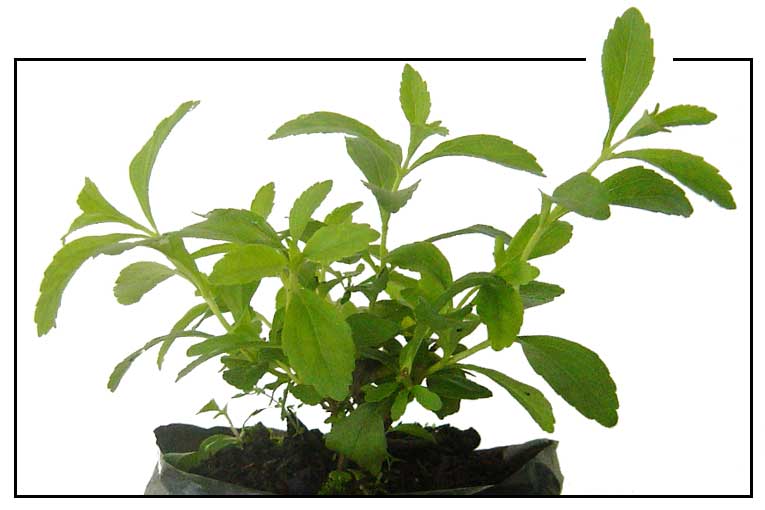
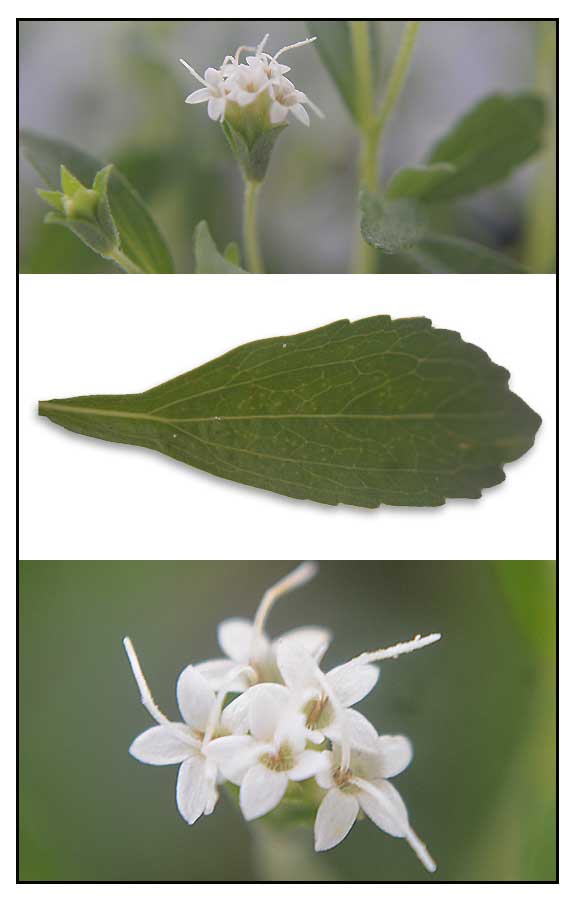
Stevia is as small herbaceous perennial branched bushy shrub growing up to 0.6
10 1 meter high. Stems are soft. Leaves are oval shape, 2 to 3 centimeters long. Flowers are small and white, with a pale purple throat. Tiny white florets are in small corymbs of 2-6 florets, arranged in loose panicles.
Distribution
- Recently introduced and
cultivated in the Benguet region for its sweet leaves.
- Originally native to Paraguay and Brazil.
- Commercially cultivated in Brazil, Paraguay, Uruguay, Central America, Thailand and China.
Constituents
• The sweetness in stevia is mainly
attributed to two compounds viz stevioside (3-10% of dry leaf weight)
and rebaudioside A (1-3%) which can be up to 250 times sweeter than
sucrose.
• Proximate analysis of dried leaves (g/100 g dry weight basis) yielded moisture (4.65-5.37), protein (10-20.4), fat (1.9-5.6), ash (6.3-15.5), carbohydrate (35.2-61.9), crude fiber (6.8-15.2). (14)
• Fatty acid composition of leaf oil (g/100g) was palmitic acid 27.51-29.5, palmitoleic acid 1.27-3.0, stearic acid 1.18-4.0, oleic acid 4.36-9.9, linoleic acid 12.40-16.8, and linolenic acid 21.59-36.2. (14)
• Study on amino acid constituents yielded arginine, lysine, histidine, phenylalanine, leucine, methionine, valine, threonin, and isoleucine. Non-essential amino acids were aspartate, serine, glutamic, proline, glycine, alanine, cystein, and tyrosine. (14)
• Various sweet glycosides isolated from Stevia leaves are stevioside, steviol, steviolbioside, rebaudioside A, rebaudioside B, rebaudioside C, rebaudioside D, and dulcoside A. Of these, stevioside and rebaudioside A are the most plentiful. Leaves may yield stevioside to concentrations around 18 percent.
• Proximate composition of stevia leaves (g/100 g dw) yielded protein 20.42 ± 0.57, fat 4.34 ± 0.02, carbohydrates 35.20 ± 1.26, ash 13.12 ± 0.31. (21)
• Study on mineral content of leaves yielded potassium 2.51g%, calcium 1.55g%, magnesium 0.50g%, phosphorus 0.35g%, sodium 0.16g%, sulphur 0.12g%, iron 363.00 ppm, manganese 98.30 ppm, zinc 63.90 ppm, copper 10.40 ppm, molybdenum 1.14 ppm, selenium 0.57 ppm, cobalt 0.27 ppm. (21)
• Study of phytochemical constituents of leaves yielded tannins, alkaloids, cardiac glycosides, saponins, sterols and triterpenes, reducing compounds, anthraquinones, cyanogenic glycosides. (21)
• In a study of two Stevia samples in Portugal,
the most abundant phenolic compounds in both samples were two caffeic acid derivatives: 5-O-caffeolyqunic acid (chlorogenic acid) and 3,5-O-dicaffeoylquinic acid. (see study below) (37)
- GC-MS study of ethanolic leaf extract yielded 40 compounds. Major constituents identified were oleic acid (RT-26.431l 100%), n-hexadecanoic acid (RT-20.999; 89%), 9,12,octadecadienoic acid (RT-26.685; 80%), phytol (RT-25.306; 11.67%), isosteviol (RT-35.903; 6.595%), hydroxydehydrostevic acid (RT-36.03; 20.92%), 1-heptatriacotanol (RT-35.01; 2.31%), vitamin E (40.334; 2.34%),and campesterol (41.25; 3.72%). (47)
Properties
• Estimated to be 300 times sweeter than cane sugar while dry stevia leaf is up to 30 times sweeter than sucrose.
• Stevioside, a natural plant glycoside, has been shown to have
blood lowering effects.
• Studies have suggested antibacterial, antifungal, anticaries, antidiabetic, antihypertensive, anti-inflammatory anti-tumor, anti-diarrheal, diuretic, and immunomodulatory properties.
Parts
used
Leaves
Uses
Edibility
- Leaves are eaten raw or cooked.
-
In South America, leaves used for centuries to sweeten tea.
- Leaves can be dried and ground and used as sweetener.
Folkloric
- No reported folkloric medicinal use in the Philippines.
-
In other countries, plant
has been used for diabetes, candidiasis, high blood pressure, skin abrasions.
- In South America, used for diabetes, cavities, depression, hypertension, obesity, wound healing and as tonic and sweetener.
Common Use
Its crude leaf form is
used as sweetener in foods and beverages.
Preparations:
Fresh stevia
(1) Add several leaves to a cup of hot liquid. (About 3 tablespoons of chopped fresh leaves equal one cup of sugar or 1 tsp of processed Stevia extract powder.)
(2) Fresh whole leaf extract: Steep a tea ball packed with fresh stevia leaves in just-boiled water for 30 minutes. Add the liquid to foods where its green color is compatible.
Dried stevia
(1) Dry in a warm dark and dry area. (2) Grind the dry leaves to a fine powder. Store in an airtight container away from light. (3) One tablespoon of dried powder equals a cup of sugar or 1 tsp of processed Stevia extract powder.
In the News
!
• Truvia and PureVia,
purified forms of stevia, rebaudioside A, was recently approved by the
FDA for use sweetener in foods and beverages. Coca-cola and Pepsico
will soon be launching stevia-sweetened products.
• Some reported side effects: muscle pain and weakness, dizziness,
nausea and abdominal fullness which usually resolve after a week of use.
• Not all stevia products are created equal. Stevia leaf is the primary sweetening ingredient of Truvia. Truvia® Natural Sweeteners has less than 1% stevia and contains Erythritol which is used to disperse the intense sweetness of stevia leaf. (34) (35)
• An Alternative Viewpoint / Concerns: Dr. Natalie Muth gives an alternative viewpoint and raises old concerns. In 1991, stevia was banned in the U.S. due to early studies that suggested the sweetener may cause cancer. In 1995, the FDA allowed importation of stevia as food supplement, not as a sweetener. Though stevia is most likely safe as artificial sweeteners (or more so), few long term studies have been done to document its health effects in humans. A review (2008) by toxicologists at UCLA raised concerns that stevia could contribute to cancer. In some test tube and animal studies, stevioside (not rebaudioside A) caused genetic mutations, chromosome damage and DNA breakage. No studies have been done to show the compounds cause cancer in animal models. In Japan, after a 40-year ban on artificial sweeteners, they started to sweeten their foods with stevia. However, there is a general lack of long-term studies on its use and side effects. For now, it seems safe to say, consumed in reasonable amounts, stevia may be an exceptional natural plant-based sugar substitute. (39)
• Steviol Glycosides / Effect of Commercial Extraction: More than forty different steviol glycosides have been identified in the stevia plant. All 40 plus steviol glycosides have US GRAS (Generally Recognized As Safe) status. The European Food Safety Authority (EFSA) currently specify the use of 11 steviol glycosides in high-purity stevia leaf extracts. This study sought to determine whether steviol glycosides are modified by typical commercial extraction and purification processes to obtain high-purity steviol glycoside sweeteners. Study results show commercial powders of extracted steviol glycosides (Pure Circle) contain the same nine steviol glycosides analyzed as the dried stevia leaves and their water extracts. (41)
Studies
• Anti-inflammatory:
Of the 100 methanol extracts from spices studied, hop, stevia,
cinnamon, turmeric, mate, mint, New Zealand spinach, watercress, tomato
and radish seedling showed marked inhibition of inflammatory activity
induced by TPA in mice. Two active compounds, humulone and lupeol 3-palmitate
were separated from hop and stevia,
respectively.(3)
• Renal Effects on Chronic Administration:
Administration of crude extract of Stevia dried leaves for 40 to 60
days induced systemic and renal vasodilation causing hypotension, diuresis
and natriuresis. (4)
• Anti-Hypertension:
(1) Using stevioside capsules (Nan Kai Chemical Factory, Tien Jing, China)
250 mg 3 times daily, the study found stevioside to be a safe and effective
compound or supplementary therapy for hypertension. (2) Study showed stevioside caused vasorelaxation through an inhibition of Ca influx into the blood vessels. (5)
• Antioxidant: Study
of ethanolic and ethyl acetate extracts of leaves indicate Stevia rebaudiana
may be a useful as a potential source of natural antioxidants. (6) Study showed that stevia, besides its sweetness, can act as a source of antioxidants, even at the intracellular level. (19)
• Stevioside / Anti-Diabetic: Study
on STZ-induced diabetes in rats showed stevioside lowered blood glucose. It dose-dependently decreased the protein levels of phosphoenol pyruvate carboxykinase, reduced insulin resistance in diabetic animals. Study concludes stevioside regulates blood glucose by enhancing insulin secretion and insulin utilization in insulin-deficient rats. (8)
• Powdered Form / Anti-Diabetic / Weight Reducing: Study
of powdered form of Stevia leaves on STZ-induced diabetic rats showed significant hypoglycemic effects and body weight reducing effects.
• Antimicrobial / Anti-Tumor Activities: Four solvent extracts showed effective antibacterial potential. The acetone extract showed no toxicity to normal cells and showed both anti-proliferative and anticancer activities. Study
confirms the antimicrobial and antitumor activities of various Stevia rebaudiana leaf extracts, suggesting a potential drug that warrants further studies and development. (9)
• Glucose Tolerance Effect: Study on the effects of aqueous extracts of S rebaudiana leaves on glucose tolerance in normal volunteers showed an increase in glucose tolerance, with a significant decrease of plasma glucose during the test and after overnight fasting in all volunteers. (10)
• Stevioside / Rebaudioside A: Toxicological studies have shown that stevioside does not have mutagenic, teratogenic, or carcinogenic effects. General and reproductive studies on toxicity of rebaudioside A showed safety at high dietary intake levels. (16)
• Antioxidant / Anti-Diabetic / Renal Protective: Study evaluated the effects of stevia leaves and its extracted polyphenols and fiber on STZ induced diabetic rats. Results showed, besides its hypoglycemic effect, a significant role in reducing risk of oxidative stress and alleviating liver and kidney damage in STZ induced diabetic rats. (17)
• Male Fertility Effects: Study on prepubertal rats showed chronic administration of Stevia rebaudiana extract tended to decrease plasma testosterone levels probably a putative affinity of glycosides of the extract for a certain androgen receptor. Results suggest extracts may decrease fertility of male rats. (18)
• Potential Use in Animal Feeds: The nutritional profile of stevia plant shows high levels of protein and gross energy that may be suitable for ruminant animals. It has a potential for use as energy diluent in monogastric diets due to slow ME and non-caloric nature. (20)
• Antibacterial / Wound Infected Pathogens: Study evaluated crude extracts and various solvent for antibacterial activity against wound infected pathogens. Highest inhibition zone was seen with the ethanol extract followed by chloroform, ether, and hexane. Staphylococcus was significantly suppressed followed by K. pneumonia, E. coli, and P. aeruginosa. (22)
• Hypoglycemic and Body Weight Reducing / Powdered Stevia: Study evaluated the effects of powdered form of Stevia leaves on blood glucose concentration and body weight in STZ induced diabetic rats. Results showed significant hypoglycemic effects. There was also a decrease in body weight, although not significant, compared to Glimepiride which increased body weight significantly. The body weight reducing effect of Stevia leaves powder may be due to inhibition of glucose from the intestine as well as induction of gluconeogenesis in the liver and muscles. (23)
• Green Corrosion Inhibitor for Mild Steel / Leaves: Study showed the extract of Stevia rebaudiana leaves could serve as an effective inhibitor of mild steel in sulphuric media. (24)
• Anticariogenic / Periodontal Effects: Review describes the anti-cariogenic and anti-periodontophatic properties of Stevia extracts. Stevia presents properties that are potentially anti-caries and anti-periodontal disease. Stevia is postulated as a potential therapeutic complement in odontological care, especially in patients with obesity, diabetes, and high blood pressure. (25)
• Study on Female Reproductive Effect / No Toxicity: Study of oral intake of water-based stevia extract and stevioside at doses of 500 mg/kbw and 800 mg/kbw, respectively, did not cause any significant female reproductive toxic effect in Swiss albino mice. (26)
• Inhibitory Effect on S. mutans and L. acidophilus / Compared to Chlorhexidine: The inhibitory effect of an alcoholic Stevia extract against Streptococcus mutans and Lactobacillus acidophilus was superior to the aqueous form, but inferior when compared to chlorhexidine. (27)
• Hepatoprotective / Leaves: Study showed the hepatoprotective activity of aqueous extract of leaves of Stevia rebaudiana against thioacetamide induced hepatotoxicity. (28)
• Potential for Treating Diseases Associated with Metabolic Syndrome: Stevia rebaudiana is often used by the food industry for it steviol glycoside content, a calorie-free sweetener. Study reviews the antiobesity, antihyperglycemic, antihypertensive and antihyperlipidemic effects of the majority of glycosides and aqueous/alcoholic extracts from leaves, flowers and roots of the plant. The compounds present a potential as natural and alternative treatment for diseases associated with metabolic syndrome. (30)
• Antidiabetic / Leaves: Study investigated the medicative effects of medium-polar (benzene:acetone 1:1 v/v) extract of leaves from SR on alloxan-induced diabetic rats. Results showed a delayed but significant (p<0.01) decrease in blood glucose level, without the hypoglycemia and greater reduction in body weight which are worrisome effects of sulfonylurea drugs (glibenclamide). The stevia extract was found to antagonize the necrotic action of alloxan and suggests a revitalizing effect on ß-cells of the pancreas. (31)
• Antihyperglycemia / Antihyperlipidemic / Hydroponic Stevia: Study evaluated the antihyperglycemic potential of extract of hydroponically grown S. rebaudiana. Results showed the aqueous extract possess antihyperglycemic and antihyperlipidemic activity and restores liver and muscle glycogen levels (hepatoprotective effect) in hyperglycemia induced by immobilization stress in rabbits. (32)
• Comparative Antioxidant Properties / Intracellular / Crude Leaf Extract: Study evaluated the antioxidant properties of stevia extracts within human cells to determine efficiency of protection against free radicals under physiologic conditions. Results showed stevia extracts decreased intracellular oxidation in a dose-dependent manner when compared to control cells, indicating an antioxidant action within the cell. Purified steviolglycosides showed a low ORAC value compared to crude extracts and did not elicit any cellular antioxidant activity. Antioxidant capacity in vitro as well as in cell-based assay was higher for crude leaves than for purified steviol glycosides, suggesting the polyphenols present in crude extracts are responsible for the antioxidant activity. Results suggest leaves or crude extracts have potential as food ingredient. (33)
• Wound Healing: Study evaluated the healing effects of S. rebaudiana ethanol extracts on cutaneous wounds in rats using a full-thickness excisional wound model. Results showed significant reduction in wound area as evidenced by changes in arrangement of the healing tissue, re-epithelization and epithelial formation, together with decreased total number of cells, fibrocytes/fibroblasts ratio, neutrophils and lymphocytes and enhanced number of blood vessels and fibroblasts. (36)
• Antioxidant: Study evaluated the antioxidant potential of two samples of Stevia rebaudiana in Portugal by free radical scavenging activity (DPPH) and reducing power (RP). Oven-dried samples gave the highest antioxidant activity with DPPH EC50 of 22.87 µg/mL and RP EC50 of 28.79 µg/mL and highest total phenol compounds concentration. (see constituents above) (37)
• Optimum Drying Method for Leaves: Study evaluated the drying characteristics of Stevia rebaudiana leaves using radiation drying, convection drying, sun drying, and shade drying treatments in convection type. Drying took place in the falling rate period. Proximate and fiber composition were affected by drying treatments. Convection drying and shade drying were the least aggressive treatments and leaf powders obtained by these drying methods could be used as sources of nutrients, fiber, and antioxidant compounds. Extracts from these drying methods exhibited the higher values of Trolox equivalent antioxidant capacities 416.89-423.64 mM mg-1 and ferric reducing power 85.19-87.97%. (38)
• Benefits in Hypertension and Diabetes
/ Clinical Trial: Recent randomized controlled trials have shown utility of stevioside and related compounds to improve blood glucose and blood pressure in T2 diabetes patients. This randomized, controlled, cross-over and double-blind study evaluated the effectiveness and safety of S. rebaudiana leaves in reducing blood glucose and mean arterial pressure in patients with type 2 diabetes. Results showed dried leave, in short-term use, significantly reduce postprandial blood glucose in all patients, and decreased mean blood pressure in hypertensive patients without detectable adverse effects throughout 24 hours after ingestion. (40)
• Austroinulin / Potential Agonist of Peroxisome Proliferator-Activated Receptor (PPAR?): Activators or agonists of the nuclear receptor, peroxisome proliferator-activate receptor (PPAR?) are used in the treatment of hyperglycemia associated with type 2 diabetes. This study screened 70 phytoligands characterized from Stevia rebaudiana for their agonistic effects of PPAR? belonging to the nuclear receptor family. Austroinulin was the lead compound with a binding energy of -8.1 kcal/mol. Results demonstrated the phytoligand (austroinulin) exhibited agonistic activity on PPAR? and could be a potential insulin sensitizer. (42)
• Multifunctional Source of Natural Antioxidants: Study evaluated the content and biologic activity of aqueous, ethanolic and glycol-aqueous extracts from dried Stevia rebaudiana leaves. Phenols (15.50 mg/g) and flavonoids (3.85 mg/g) were highest in the glycol-aqueous extract. Highest antiradical activity against DPPH and ABTS were seen with GA and E (IC50=0.38 and 0.71 µg flavonoids/mL). Study showed the potential application of the stevia extracts as natural antioxidants in the food and cosmetic industry. (43)
• Antioxidant / Antidiabetic
/ Effect on Oxidative Stress: Study demonstrated the free radical scavenging effects on diabetic induced oxidative stress in type 2 diabetic rat model. Results of hepatic antioxidant enzyme assays and lipid peroxidation showed a significant antioxidant effect on diabetes pathology. Extract also significantly (p<0.001) reduced the abnormal blood sugar. (44)
•
Potential Against Borrelia burgdorferi / Lyme Disease / Leaves: Lyme disease is a tick-borne multisystem disease caused by Borrelia burgdorferi. Study evaluated the effectiveness of whole leaf extract of Stevia against B. burgdorferi spirochetes, persisters, and biofilm forms in vitro. Results showed significant effect in eliminating spirochetes and persisters. Study suggests the potential for a natural product as an agent against B. burgdorferi. (45)
• Optimum Method for Stevioside Extraction from Leaves: Study evaluated the impact of varying process conditions on stevioside extraction. Results suggest microwave assisted extraction using water was found most the most suitable method for stevioside extraction from S. rebaudiana leaves yielding the highest stevioside content. (46)
• Wound Healing: Study evaluated the wound healing potential of crude aqueous extract of S. rebaudiana in experimental animals using graded doses of topical formulations in an excision wound model and oral doses in an incision model. Providone iodine was used as standard in both models. In the excision wound model there was significant decrease in the wound area, decreased epithelization time, and increased hydroxyproline content. In the incision model, there was increase in breaking strength, granulation and hydroxyproline content. Results showed the leaf extract accelerated healing activity in mice and support its traditional use. (48)
Availability
- Wildcrafted leaf form.
- Limited commercial availability in powder and liquid form.
- Recently approved: Truvia and PureVia. |