|
Gen info
- Cymbopogon, also known as lemongrass, barbed wire grass, silky heads, oily heads, Cochin grass, Malabar grass, citronella grass or fever grass, is a genus of Asian, African, Australian, and tropical island plants in the grass family.
- Etymology: The genus name Cymbopogon derives from the Greek words "kymbe" meaning "boat" and "pogon" meaning "beard", referring to the boat-shaped flower spathes and hairy fruit spikelets typical of the genus. The specific epithet citratus means "resembling Citrus", alluding to the lemony scent produced by parts of the plant. (44)
- Cymbopogon citratus is part of the grass family, Poaceae.
Botany
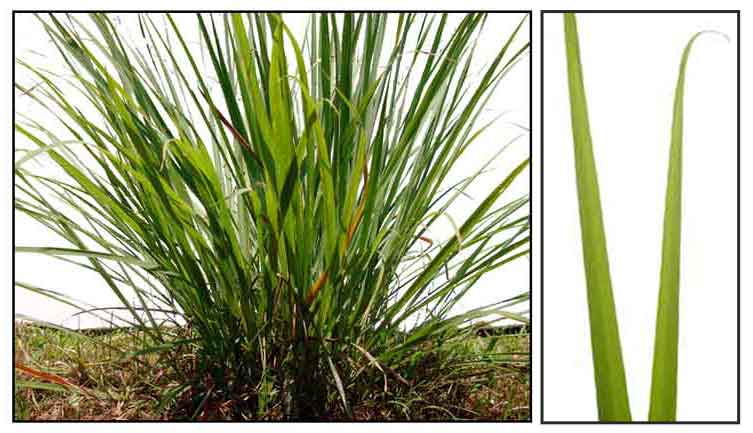
• Tanglad is a tufted and perennial
grass. Leaves grow to a length of up to 1 meter, about 1 to 1.5
centimeters wide, scabrous, flat, long-acuminate, and smooth. Panicles
are 30 to 80 centimeters long, interrupted below; the branches and branchlets somewhat nodding. Perfect spikelets
are linear-lanceolate, pointed, not awned, and about 6 millimeters long.
• Growth form: Clump-forming grass up to 1.2 m tall or 2m tall when in flower. Foliage: Leaf blades are light green and strap-shaped (up to 0.9 m long, 2.5 cm wide). Crushed leaves exude a lemony scent. Stems: A pseudostem formed from tightly-overlapping leaf sheaths on non-flowering shoots is 12-25 cm long and 1-2 cm across, bulbous and thickening towards base of plant. It is fragrant when crushed and yellowish-brown or reddish. Flowers: Numerous brownish florets held on compound drooping panicles up to 0.5 m across, rarely produced in cultivation. Fruit: Spikelets with hairy awns, rarely observed. (FLORA & FAUNA WEB)
 Distribution Distribution
- Introduced. (8)
-
Planted in most parts of the Philippines for its fragrant leaves, but is nowhere spontaneous.
- Native to India, Sri Lanka.
-
Introduced to Aldabra, Algeria, Angola, Argentina Northeast, Bahamas, Bangladesh, Belize, Benin, Bolivia, Borneo, Brazil North, Brazil Northeast, Brazil South, Brazil Southeast, Brazil West-Central, Cambodia, Cameroon, Caroline Is., Central African Republic, Chile North, China South-Central, China Southeast, Colombia, Comoros, Cook Is., Costa Rica, Cuba, Dominican Republic, DR Congo, Ecuador, Egypt, El Salvador, Equatorial Guinea, Fiji, Florida, French Guiana, Galápagos, Gambia, Ghana, Guatemala, Guinea, Guinea-Bissau, Gulf of Guinea Is., Guyana, Hainan, Haiti, Hawaii, Honduras, Ivory Coast, Jamaica, Jawa, Kazan-retto, Laos, Leeward Is., Lesser Sunda Is., Liberia, Madagascar, Malaya, Marianas, Marshall Is., Mauritius, Mexico Central, Mexico Gulf, Mexico Northeast, Mexico Southeast, Mexico Southwest, Morocco, Myanmar, Netherlands Antilles, New Caledonia, New Guinea, Nicaragua, Panamá, Paraguay, Peru, Puerto Rico, Rodrigues, Rwanda, Réunion, Samoa, Senegal, Seychelles, Sierra Leone, Society Is., Sulawesi, Sumatera, Suriname, Taiwan, Tanzania, Thailand, Tonga, Trinidad-Tobago, Vanuatu, Vietnam, Windward Is. ( 8) 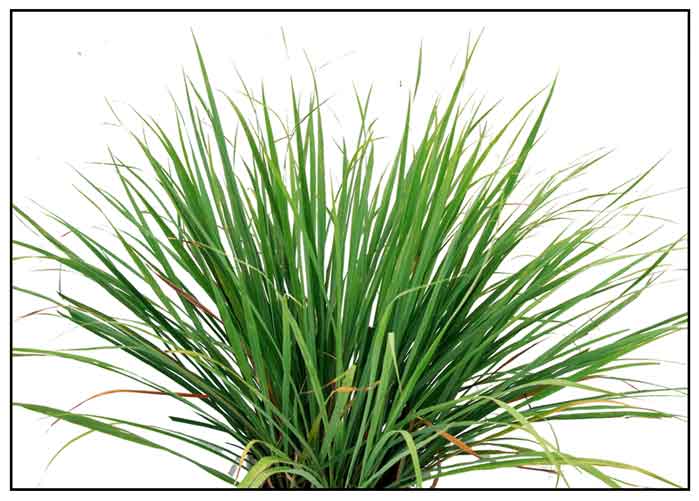 Constituents Constituents
- Distillation of the fresh plant yields lemon-grass
oil, verbena oil, and Indian Molissa oil.
- Plant contains small amounts of methyl heptenone and terpenes (limonene
and dipentene).
- Contains citral, an aldehyde found in lemon peel oil and other natural essential oils.
- Main constituents of essential oil are citral (aldehydes geranial and neral) and terpenes (myrcene, monoterpene and geranial-terpenic alcohol).
-
The exact value of the oil depends on the amount of citral it contains. High grade oil contains about 70 to 80 percent citral.
- Study of essential oil yields hydrocarbon terpenes, alcohols, ketones, esters and aldehydes.
- Leaves and roots have yielded alkaloids, saponin, α-sitosterol, terpenes, alcohol, ketone, flavonoids, chlorogenic acid, caffeic acid, p-coumaric acid and sugars.
- Plant yields flavonoids and phenolic compounds i.e., luteolin, isoorientin 2'-O-rhamnoside, quercetin, kaempferol, and apigenin.
- Study for essential oil composition yielded
(percentage of components): citral-α 40.8, citral-ß 32, nerol 4.18, geraniol 3.04, citronellal 2.10, terpinolene 1.23, geranyl acetate 0.83, myrecene 0.72, terpinol 0.45, methylheptenone 0.2, borneol 0.1-0.4, linalyl acetate 0.1, α-pinene 0.07, ß-pinene 0.04, traces of limonene, linalool and ß-caryophyllene. (10)
- GC-MS analysis of methanol leaf extract yielded
six compounds viz., hexadecanoic acid (8.11%) (1), hepta-9,10,11-trienoic acid (17.43%) (2), octadecenoic acid (8.41%) (3), 2-ethenyltetradecan-1-ol (13.28%) (4), eicosane aldehyde (37.56%) (5) and 1-ethoxyoctadecane (15.20%) (6). (32)
- GC-MS analysis of leaf sheath oil yielded
23 compounds representing 96.9% of the oil, with major compounds of geranial (42.4%), neral (29.8%), myrcene (8.9%), and geraniol (8.5%). (see study below) (33)
Properties
- The oils are reddish-yellow with an intense odor and taste of lemons.
- Carminative, tonic, stimulant, diuretic, purgative, sudorific.
- Leaves considered antimicrobial, anti-inflammatory and sedative.
- Possess pharmacologic activities: antimalarial, antimutagenicity, antimycobacterial, antioxidants, hypoglycemic and neurobehavioral.
- Studies have shown antioxidant, hepatoprotective, antimicrobial, neurobehavioral, analgesic, anti-inflammatory, antitumoral, repellent, insecticidal, analgesic, gastroprotective, antileishmanial, anxiolytic, sedative, hypotensive, diuretic, antimalarial, antilipidemic properties.
Parts utilized
Leaves, roots, whole plant.
 Uses Uses
Edibility / Culinary
-
In the Philippines, used as a stuffing ingredient in pig spit-roasting
to improve the flavor and decrease the grease-taste.
- Used for cooking stale fish to improve the taste.
- Also used to flavor wines, sauces and spices.
- In Java, plant is used for spicing sherbet.
- The roots have a ginger-like flavor and used as a condiment
and adding fragrance to gogo hair-washes.
- In Thailand, an essential ingredient of tom yam and tom kha kai. Fresh thin slices of lemongrass stem are used in the snack food miangpla. (41)
Folkloric
· For diarrhea, decoction of leaves with sugar and a small piece of crushed ginger taken orally. For adults, 1 cup, 3 times daily taken after each loose bowel
movement. For infants and babies, 1 tablespoon 3 times daily and after each
loose bowel movement; 2-6 years, 1/4 cup 3 times daily and after each
loose bowel movement; 7-12 years, 1/2 cup three times daily and after
each loose bowel movement.
· One of the 10 herbal ingredients in the decoction-bath
used in the post-partum ritual of suob. (See: Suob)
· Hot decoction of roots used for toothaches.
· Roots also used as a
diuretic.
· Leaves used for aromatic baths.
· Leaves applied to the forehead and face as a cure for headaches; infusion held in the mouth to alleviate toothaches.
· A stomachic for children. Tea made from leaves used as stomachic tonic, diuretic, and refrigerant.
· Used as emmenagogue.
· Used in baths and fomentations.
· The oil, mixed with equal amounts of coconut oil, is used as
a liniment for back pains, rheumatic complains, neuralgia, sprains and
other painful afflictions.
· Decoction of leaves used as stomachic, diuretic, and refrigerant.
· Used for stomach discomfort, toothache,
sprain, vomiting and ringworm
· In various traditional systems, leaf infusions used as antimicrobial, anti-inflammatory and sedative.
· In Cuban folk medicine, used to
lower blood pressure and as anti-inflammatory.
· In Brazil, used as sedative, for
gastrointestinal maladies, and as febrifuge. Also, tea from leaves used for anxiolytic, hypnotic, and anticonvulsant effects.
· In Malaya, used as a potion after
childbirth.
· In Indonesia, used as digestive, diuretic, sudorific and emmenagogue.
· In India, used for gastrointestinal problems. Also, oil used as remedy for cholera.
· In China, used as anxiolytic.
· In Nigeria, used as antipyretic, stimulant and antispasmodic.
· In Trinidad and Tobago, used for diabetes.
· In Egypt, hot water extract of dried leaves and stem taken orally as renal antispasmodic and diuretic. In Cuba, hot water extract of dried leaves taken orally as hypotensive, for catarrh and rheumatism. In Thailand, hot water extract of entire plant drunk as stomachic; extract of dried root taken orally for diabetes. In Argentina, leaf decoction taken orally for sore throat, empacho, and as emetic. (10)
· In various folk medicinal use: oil used for cough, cold, hemoptysis,
rheumatism, back pain, bladder problems.
· Roots consumed to induce sweating and improve urine flow. Leaves placed in bathwater to treat cuts and wounds, reduce swelling, improve blood circulation, and remove body odor. (44)
Others
- Essential Oil: Volatile oil, called
Lemon grass oil, consists mainly of citral and used in perfumery, soap, cosmetics, pharmaceutical, insecticide and food industries.
- Perfumery: Roots used for perfuming hair washes of gogo. Lemon grass oil is used in making perfumes, especially ionone (synthetic essence of violets).
- Anti-mite: Scavon Vet Spray: Andropogon citratus is one of the ingredients in a spray used for parasitic mite, Demodex bovis, that causes demodectic mange in cattle.
- Repellent: To keep away mosquitos, plant it around your house or place crushed
leaves on your window sills. In India, cultivated around houses to repel snakes.
- Liniment: Boil equal amounts of chopped leaves and roots with freshly
made coconut oil. Also use as insect repellant.
- Witchcraft / magic: In hoodoo, lemongrass is the primary ingredient of van van oil, one of the most popular oils used in conjure. It is used in this preparation or on its own in hoodoo to protect against evil, to spiritually clean a house, or to bring good luck in love affairs. (41)
- Beekeeping: Lemongrass oil imitates the pheromone emitted by a honeybee's Nasonov gland, which attracts bees to a hive or a swarm. (41)
Studies
• Antibacterial
/ Antifungal: (1) Studies have shown antibacterial activity,
comparable to penicillin. (2) Various studies has shown activity against C albicans, C pseudotropicalis, Mycrosporum gypseum and A niger. (3) Study evaluated the antibacterial properties of alcohol and water extracts. The alcohol extract was generally more effective than the water extract. The presence of alkaloids and phenols were assumed responsible for the antibacterial activity of the extracts.
• Neurobehavioral Effects: (1) Study of myrcene in rats suggests anxiolytic activity. (2) Study of essential oil produced marked CNS depression in mice, similar to chlorpromazine effect. Also, it increased sleepiness time, similar to a thiopental effect.
• Antinociceptive / Analgesic: Myrcene extract from the essential oil has been shown to have an antinociceptive effect.
• Antitumoral: (1) Study showed α-myrcene possess antimutagenic activity in mammary cells. (2) Plant compounds, α-limonene and geraniol showed inhibition of liver and intestinal mucous membrane cancer in mice. (3) Study in Thailand showed inhibition of colorectal neoplasia in mice. (4) Study showed inhibitory effects on early phase hepatocarcinogenesis in rats after initiation with diethylnitrosamine.
• Insect repellent / Insecticidal: Studies of plant oil and powder have shown insect repellent and insecticidal activity. Essential oil has shown activity against Anopheline mosquitos, A culicifacies and A quinquefasciatus and certain developmental phase inhibition of Ae. aegypti.
• Mosquito repellent: Study on the mosquito repellent properties of volatile oils derived from lemongrass (C citratus), citronella grass (Cymbopobon nadus) and May chang (Litsea cubeba) against Aedes aegypti and Culex quinquefasciatus showed no significant difference on repellency. (7)
• Vascular Smooth Muscle Relaxation Effect / Leaves and Roots: Study evaluated the effects of methanolic extracts of leaves, stems, roots, and citral on vascular smooth muscle using isolated tissue preparations. Citral, leaves, and roots exhibited a dose-dependent relaxant effect on the PE-induced contractions. Citral seemed to partially act via NO. Results suggest the relaxant effect of citral, leaves and roots is endothelium-dependent and may be through its effect on intracelluar calcium concentration. A vasodilator prostaglandin may mediate the effect of leaves. (12)
• Toxicity / Repellent Activity: Essential oils of C. citratus (lemongrass) and Murray koenigii (curry leaf) were tested for toxicity and repellant activity against C. maculatus in stored cowpea. Results showed lemongrass oil to be a more effective contact toxicant on bruchids than curry leaf oil. (13)
• Neurobehavioral Effect of Essential Oil: Study in Swiss male mice of essential oil from fresh leaves produced increase in sleeping time, elevation of seizure threshold and/or blockage of seizure spread. Results suggest sedative/hypnotic, anxiolytic, and anticonvulsant activity. (17)
• Essential Oil / Phytochemical Composition / Anti-Inflammatory / Analgesic: Study evaluated the anti-inflammatory and gastroprotective effects of C. citratus and Eucalyptus citriodora essential oils on formol-induced edema and acetic acid-induced abdominal cramps in Wistar rats. C. citratus yielded 16 chemical constituents, among which geranial (27.04%), neral (19.93%) and myrcene (27.04%) were major constituents. The oils exhibited significant dose-dependent edema inhibition. Results showed anti-inflammatory activities and a potential role as adjuvant alternative in the treatment of inflammatory-related diseases. (14)
• Antioxidant / Hepatoprotective / Carbon Tetrachloride Toxicity: Study evaluated the effect of C. citratus against carbon tetrachloride- mediated hepatic oxidative damage in rats. Results showed a hepatoprotective effect attributed to its antioxidant and free radical scavenging property. (15)
• Citral / Housefly (Musca domestica) Control: Study showed the potential of C. citratus oil as an excellent insecticide for housefly control, the results opening up the opportunity for oil/monoterpenes in the development of an eco-friendly, economical, and acceptable product. (16)
• Gastroprotective / Leaves: Study evaluated C. citratus leaves essential oil for gastroprotection against injuries caused by necrotizing agents (absolute alcohol and aspirin) in rodents. Results showed EOCC reduces gastric damage induced by ethanol, in part, through mechanisms involving endogenous prostaglandins.
• Inhibition of ACF (Aberrant Crypt Foci) in Rat Colon: Study showed lemon grass extract inhibits release of activated aglycon, methylazoxymethanol, from a glucoronide conjugate in the colon, and decreases the DNA adducts and ACF formation in the rat colon. (18)
• Antileishmanial / Essential Oil: Study evaluated the inhibitory effect of C. citratus essential oil on Leishmania amazonensis. Results showed a dose-dependent antiproliferative effect of the essential oil on promastigotes and axenic amastigotes. Results showed citral-rich essential oil has promising antileishmanial properties and a potential for a new anti-protozoan drug. (19)
• Hypotensive / Diuretic / Anti-Inflammatory / Leaves: Study evaluated the effect of 10% and 20% decoction of leaves on arterial pressure in rats, urine production and carrageenan-induced edema in rats. Results showed dose dependent hypotensive effects given intravenously, and a weak diuretic and anti-inflammatory effect when give orally. (20)
• Treatment of Pityriasis Versicolor / Phase 1 and 2 Clinical Studies / Essential Oil: Pityriasis versicolor is a fungal infection caused by Malassezia spp. Study evaluated the use of formulations containing essential oil of Cymbopogon citratus in Phase 1 and 11 clinical studies of patients with pityriasis versicolor. No significant adverse events were observed in volunteers during Phase 1. In Phase 2 studies, after 40 days of treatment, the rate of mycological cure was 60% (p<0.05) for the group treated with essential oil and over 80% (p<0.05 for the group treated with ketoconazole formulations. (21)
• Treatment of Oral Thrush in HIV/AIDS Patients: Randomized controlled trial of 90 patients evaluated the safety and efficacy of lemon juice and lemon grass infusion (Cymbopogon citratus) in the treatment of oral thrush in HIV/AIDS patients compared to use of gentian violet aqueous solution 0.5%. Although the patient population was small,the use of lemon juice and lemon grass for treatment of oral candidiasis in an HIV population was validated by randomized controlled trial. (22)
• Anthelmintic: Study evaluated the anthelmintic potential of aqueous extract of Cymbopogon citratus against earthworm Pheretima posthuma. Piperazine citrate was used as standard drug. Results showed anthelmintic activity in a dose-dependent manner. (24)
• Renal Protective Against Aminoglycosides: Study evaluated the renal protective activity of Cymbopogon citratus in gentamycin-induced nephrotoxicity in male rabbits. Results showed the co-adminstration of C. citratus with gentamicin successfully prevented renal damage associated with aminoglycosides assessed by renal functioning parameters and histopathological examination. (25)
• Reproductive Benefits in Diabetic Rats / GLUT3 and GLUT8 in Testis: Study evaluated the localization of glucose transporters (GLUT3 and GLUT8) protein in testis of rats with alloxan induced diabetes treated with aqueous extract of C. citratus. Results showed an increase in GLUT8 protein and decrease in GLUT3, suggesting C. citratus may be helpful in minimizing male reproductive disorders in diabetes. (26)
• Eugenol / Antioxidant / Alternative to BHT: Study evaluated the potential of eugenol extracted from Cymbopogon citratus to replace commercial antioxidants such as BHT (butylated hydroxytoluene) in packaging raw materials. Results showed the concentration of eugenol resulting in 50% inhibition of free radicals (IC50 0.11 mg/ml) is lower than the IC50 value of BHT (0.14 mg/ml) indicating better radical scavenging activity. (27)
• Sub-Acute Oral Safety Study / Stems: Study evaluated the effects of two doses (13 and 130 mg/kg body weight) of lemon grass stem infusion in female Sprague-Dawley rats to determine a safety guideline for use. The stem infusions did not show hepatotoxic or nephrotoxic effects in rats, with no significant changes in lipid profile, hepatic and renal biochemical parameters. Results showed lemon grass stem infusion was not toxic even at 10 times higher than normal human consumption. (28)
• Potential as Tablet Binder / Leaves: Study evaluated the formulation of Cymbopogon citratus leaves powder into tablets using acacia and gelatin as binders. Results showed C. citratus leaves tablets could be formulated by wet granulation using acacia or gelatin as binder. (29)
• Anti-Fungal / Oil: Study concludes a 100% lemongrass oil extract produced a zone of inhibition which is comparable to the effect of the standard and therefore can serve as antifungal agent against Tricophyton rubrum. (30)
• Deleterious Effect on Frontal Cortex / Leaves: Study evaluated the histopathological effects of oral consumption of aqueous leaf extract of C. citratus on the frontal cortex of Sprague-Dawley rats. Results showed deleterious and toxic effects on the frontal cortex of rats with histopathological findings of cytoarchitectural distortions ranging from neuronal degeneration, distortion, vacuolations and necrotic lesions. (31)
• Antidiabetic / Essential Oil of Leaf Sheath: Study evaluated the antidiabetic activities of essential oil from steam distillation of leaf sheath of C. citratus in poloxamer-407 induced type 2 diabetic Wistar rats. Leaf sheath essential oil study yielded 23 compounds. Diabetic rats treated with essential oil showed significant amelioration of glycemia, insulinemia, and lipid dysmetabolism, associated with increased GLP-1 content in the cecum and reduction of oxidative markers. Histopath analysis of pancreas showed increase in ß-cell mass, islet number, and quality of insulitis. Phytoconstituents like myrcenool, linalool,
α-elemol and ß-eudesmol may contribute to the antidiabetic effect by interaction with multiple targets operating in diabetes mellitus. (see constituents above) (33)
• Use of Essential Oil in Food Preservation: This overview reports on the use of C. citratus essential oil as an alternative to synthetic food preservatives in domestic and industrial applications. (34)
• Antiimicrobial Against Food Borne Pathogens / Essential Oil: Study evaluated the antimicrobial activity of C. citratus (lemongrass) essential oil against food-borne pathogens inn its potential for reducing microbial population of cream-filled baked goods. Five main food-borne pathogens including S. aureus, E. coli, C. albicans, B. cereus, and S. typhimurium were added to the cakes. The lemon grass essential oil showed potent antimicrobial activity against all tested microorganisms except for S. aureus. Results suggest lemongrass essential oil is a safe natural preservative and food spoilage inhibitor. (35)
• Antioxidant / Essential Oil from Dried Stems: Study evaluated the essential oil isolated from dried stems for antioxidant activity. On DPPH antioxidant assay, results showed low activity compared to ascorbic acid and lemongrass oil as standard references. (36)
• Anti-Inflammatory / Luteolin Conjugates L7G and L3'S: Study evaluated the in-vivo anti-inflammatory potential and phamacokinetic profile of lemongrass infusion after a single dose oral administration to male Wistar rats. Pharmacokinetic analysis showed compounds present in the infusion are not present in the plasma, liver, or kidneys. The two major luteolin conjugates in vivo, L7G and L3'S, were the major metabolites found in plasma and tissues, suggesting lemongrass polyphenols are promptly metabolized in vivo, and the metabolites may be responsible for the anti-inflammatory activity of C. citratus orally administered. (37)
• Hepatoprotective / Antioxidant / Paracetamol Induced Toxicity: Study evaluated the protective effect of C. citratus extract on paracetamol-induced hepatotoxicity in rats. Pretreatment with CS significantly reduced oxidative stress induced by PCM as evidenced by an increase in GSH level and reduction of MDA . Results suggest CS possesses hepatoprotective and antioxidant activity that exerts its effect through reduction of lipid peroxidation and restoration of GSH. (38)
• Antimalarial / Antiplasmodial / Leaves: Study evaluated the antimalarial potential of aqueous leaf extracts of C. citratus in 25 Swiss albino rats infected with Plasmodium falcifarum. Results showed Cymbopogon citratus possessed good antimalarial property with significant decrease of parasitemia levels at 120 mg/kbw compared to 0.1 ml chloroquine as positive control. Results suggest potential for use as prophylactic or chemotherapeutic. (40)
• Antilipidemic Effect / Roots and Flowers: Study evaluated aqueous extracts of roots and flower of C. citratus for antilipidemic activity in mice. Results showed significant decrease in LDL cholesterol and increase in LDL cholesterol levels. The root extract showed better antihypercholesterolemic activity. (42)
• Anticarcinogenic / SW1417 Colon Cancer Cells: Study evaluated the anticarcinogenic effect of lemongrass extract on human SW1417 colon cancer cells. Results showed changes in mitochondrial morphology (mitochondrial fission) in treated SW1417 cells at all concentrations of extract used, which increased with increasing concentrations and led to an apoptotic effect. Results showed anticarcinogenic action against cell proliferation of human colon cancer cells. (43)
Herb-Drug Interactions / Adverse Reactions / Concerns
-
Drug Interactions: (1) May interfere with actions of some chemotherapeutic agents. (2) Avoid during pregnancy as high doses of citral and myrcene has caused birth defects in rats. (3) Citral in essential oil shown to induce GST (Glutathione-S-Transferase). (4) ß-myrcene in lemongrass can interfere with cytochrome P450 liver enzymes. (23)
- Adverse reaction: (1) Oral: dizziness, dry mouth, excessive urination, and increased appetite. (2) High doses of essential oil can damage liver and stomach mucosae. (3) Excessive ingestion of lemongrass tea may have negative effects on renal function. (4) Topical: Contact dermatitis. (23)
Availability
- Wild-crafted.
- Cultivated for culinary use.
|