HOME • SEARCH • EMAIL • ABOUT
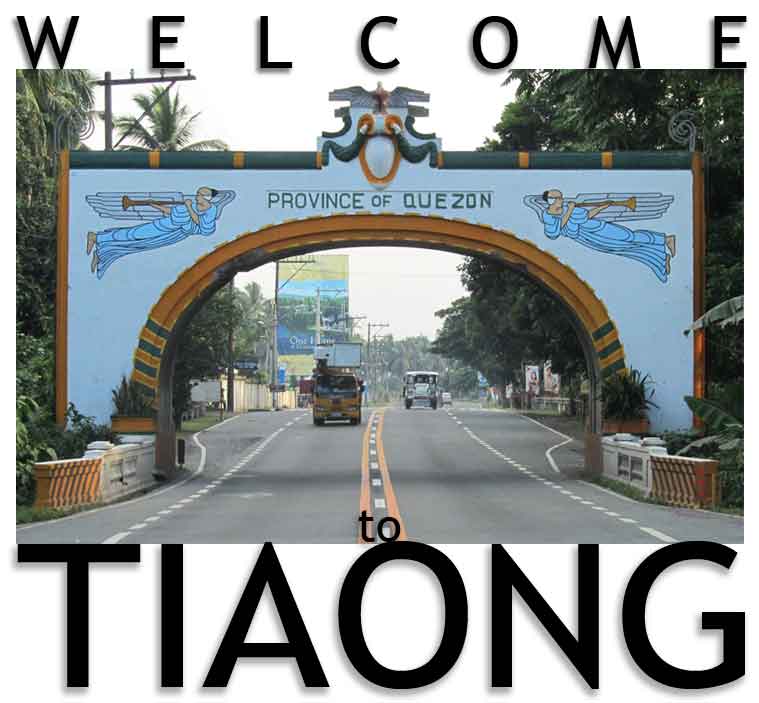
A TOWN ONCE CALLED NAYUM
Last Updated July 2019 |
||||
|
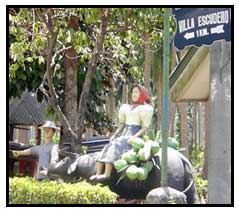
| THE LEGEND OF THE NAME OF THE TOWN ONCE CALLED "NAYUM" TIAONG There was a lady of great wealth Her name was Doña Tating. So kind and so giving, and so loved and respected "Tia" she was fondly called by all.  Every morning she would go to church Riding a cart drawn by her big black carabao. The priest would not begin the mass Until the carabao was heard, "Oooooonnng-ing" as it approached to announce the arrival of their beloved Tia. And so it came to pass, From the "Tia" they called Doña Tating And the "Oooonnng" of the carabao, TIAONG, the town was named. |
| 31
BARANGAYS Projected 2017 ns 2018 Population |
|||||||||||||||||||||||||||||||||||||||||||||||||||||||||||||||||||||||||||||||||||||||||||||||||||||||||||||||||||||||
|
| LIVELIHOOD Agriculture is the main source of income and livelihood. Gateway town to coconut country, coconut is not Tiaong's mainstay economic product. A decimated industry, local production is mostly sold its to neighboring towns for the manufacture of end products. But it still contributes to agri-income, together with palay, corn, lanzones, rambutan and rainy-season cash crops like ampalaya, sitaw, talong and kalabasa. Income is supplemented by the risky raising of animals –·horses, cows, pigs, goats, chickens and carabaos - to tide over existence through drought periods, or provide rainy-day sources of cash for celebratory needs (weddings, fiestas, birthdays), illnesses and funereal needs, that is, if the livestock survives the marauding on-site slaughterers and rustlers who come in the dark of night. Many of the farmers have learned secondary skills for dry-season work as masons and carpenters. Many are increasingly seeking employment in the neighboring towns. There is also a burgeoning local education industry —28 elementary schools in 28 barangays, 5 high schools and colleges (Southern Luzon Polytechnic University in Lagalag) and ALS for out-of-school youth—with the essential and peripheral livelihoods that caters to the needs of schools and students. |
| PULANG LUPA |
Locals and old-timers refer to the place as Pulang Lupa because of the color of volcanic soil found in abundance at the peak. Historically, it has been called "Pinagbanderahan" (Flag Site), where the Japanese held a strategic station during its provincial occupation in World War II. The folklore is replete with buried treasures the Japanese left behind, still undiscovered in tunnels and caves in the bowels of Sitio Santol. Furtive diggings still happen in the cloak of the dark of night. Some hunters come with their treasure-seeking gizmos or third-eye psychics in tow. Others try to establish contact for Japanese clients reported to be brandishing authentic-looking maps. On occasion, talks reach deep into the details of digging, security measures, and division of the treasure. . . On it stands my more than 10 years of an on-going architectural effort – a cluster of buildings that has become known locally as "The White House." Come visit. To contemplate, to while away . . . . To be engulfed by the sounds of birds. To indulge on a vista of an unending circumference of mountains and the verdant rural countrysides. . . the morning sunrises wrapped by wisps of awakening low lying clouds. . . . the capricious colors of the sunsets. To be swept by the fierce and moaning amihan winds of the early months. And at nights, there is the dome ablaze with a starry spectacle of constellations and planets, and the recurrent moon traversing the celestial arc. . . and the layers of sounds that hide in the dark. (More: Pulang Lupa) (Directions) |
| More: Pulang Lupa |
| Directions to Pulang Lupa |
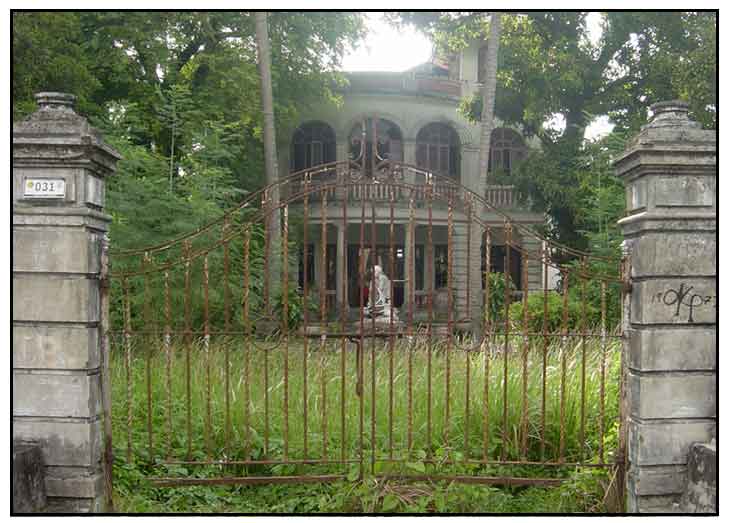 |
. . . Many say it's haunted. Headless soldiers in Japanese uniforms, helmets in hand. An elderly couple in white slowly descending the circular steps, sometimes completing the descent as a headless apparition. The rattling of doorknobs. Doors that suddenly refuse to open. The sound of shackled walking and the dragging of chains. The heavy cold air that wraps around the intruding guests. Many have tried to brave through a night. My brother's karate group, brown and black belters, visiting for a weekend of instructions and exhibition of their martial art skills. Another, a nephew and his barkada, aware of the ghosts, intent to tease and draw them out of their ethereal habitats, their nerves augmented by alcohol and fraternity. None lasted to the midnight hour, skedaddling back to Manila, their machismo bruised and tempered.
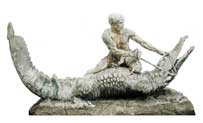
Some believe the spirits have claimed the space and have joined together to hinder and stall all efforts to sell or demolish it. Some say evil spirits have taken a penchant for hanging around the crocodile sculpture in the garden. Recent caretakers continue to tell of an old lady in the traditional ghostly garb of white, her white hair loose on her shoulders, lingering around the rooms, with a penchant for conversing with their little children, bringing them to giggles and laughter, and as often, fearful crying spells. It hauntedness is kept alive by the townsfolk – stories from diminishing number of old-timers who remember the olden days, replenished with sightings by passers-by as they steal glances at the framed glass windows and doors, sometimes catching shadowy forms moving about. And sometimes, at twilight or in the early evening hours, especially a Friday nearing a full moon, they tell of a white-haired woman gazing out from the second floor library window – stories that resuscitate as the October days march into Halloween night. Alas, for ghost lovers, the spirits seem to have moved on. In the past two and a half years of rehab work and many nights spent in the house, there have no sightings, no presences, no unearthly occurrences. Just small noises easily explained by old house creaks. . . |
| The Rehabilitation of the Ancestral House |
It has long stood abandoned, in chronic and progressing disrepair. The paint old and peeling, many windows gone, crooked, or unhinged, the garden unkept, the weeds overgrown, the interiors unlit - all lending to a look hauntedness. A communal property, it could not be sold; always there were dissenting votes that threw all offers out the window, always a few who would rather see the house rot in dilapidation. So instead, many shared in a sadness, shared in a dream to save the house. For some in my generation, distanced and dispersed, taking a peek at the house was a vacation ritual, to suffer the sadness and the memories of childhood, to close our eyes and imagine the place, resurrected, once again grand and resplendent. Two years ago, the dream to rehabilitate the house was once again resurrected, egged on by an impassioned and shared sentiment to dedicate the effort to the memory of our grandmother, Lola Concha. In February 2012, the restoration started. . . (more) |
| Revolutionary Routes by Angela Stuart-Santiago |
Perhaps, that will not be so. Little known to the Tiaong townsfolk, Lola Concha started writing in the 70s, filling ten notebooks in hand-written Spanish with stories of her life and the generations that revolved around it, colored with history, politics and details of rural life. She left behind the manuscripts: Fragmentos de mi juventud (Fragments of My Youth). For a while, it lay in limbo, collecting dust, until my mother, Nena, already burdened by progressing blindness, took on the work of translating it into English. Later, my sister Angela picked up that heirloom of memory, and for more than three years immersed herself into the translated memoirs, reliving, then extracting from it, the stories that would become the book Revolutionary Routes. - Godofredo Stuart Revolutionary Routes is more than a family history across four generations. Author Angela Stuart-Santiago has deftly woven together the memoirs, clippings, correspondence and other traces of her family's past into a microhistory that spans the late 19th century up to the 1950s. While this book is rooted in the specific experiences of a family that lived in Tiaong and its adjoining towns in southwestern Tayabas (now Quezon) province, it also tells us much, from the ground up, about everyday life in the countryside under the shadow of successive imperial and national regimes. This book can also be read as a modern history of the Philippines. -- Reynaldo C. Ileto. |
| website: http://revolutionaryroutesbook.com/ |
| The book is also available at the Pulang Lupa Library in Brgy. Lumingon. |
| TIAONG: Coming Into Its Own |
| A coffee table book |
The book captures in photographs the changing skyline and landscapes of Tiaong that are positive indications of Tiaong's determined thrust toward progress and modernity. The book is written by former journalist Abe Florendo. Archival research was done by Dulce Festin-Baybay and Dr. Luis Camara Dery, with images by Donald Tapan and Ramon Jeffrey Florendo, and book design by Teody Hidalgo. |
| Text excerpted from Arts and Culture / philSTAR.com |
• |
| Book is available at the Tiaong tourism office (Municipio) / P1950. |

|
A collection
of Tiaong photographs by Godofredo Umali Stuart. |
|
|
 |
|
|||
| Tiaong
Paper Workshop The genesis of Philippine paper-making with Luis Umali-Stuart at the helm of this grass roots industry. From Its early days of fledging paper production from banana leaves and kogon, his paper produce is now a merging of science, art and function. If you're lucky, you might chance your visit into a day of actual paper production. Address: Barangay Lusacan |
|||
| Ugu
Bigyan An in-resident potter-artist producing ceramic art for a wide range of applications. His workshop grounds showcase quaint huts and a garden trimmed and decorated by his artistry. Address: 490 Alvarez Village, Barangay Lusacan Telephone: 042 545-9144 Lunch by Reservation |
| MAYOR Mea, RJM (NP) Razon, William (IND) Aldovino, Raul (IND) |
37,504 18,361 1,085 |
| VICE-MAYOR Umli, Dick (LP) Preza, Amboy (PDPLBN) |
28,069 26,605 |
| COUNCILOR Escueta, Maja (NP) Castillo, Manong (IND) Lopez, Eula (NPC) Baldeo , Recrec Bautista (NP) Bautista, Rex (PDPLBN) |
33,820 30,387 28,855 24,643 22,554 |
| General Info Projected 2019 population: 114, 281 No. of clustered precincts reported: No of registered voters: . No of voters actually voted: |
|
| POINTS OF INTEREST WHERE
THE LOCALS GO |
|
Last Updated May 2022 |
| RELATED
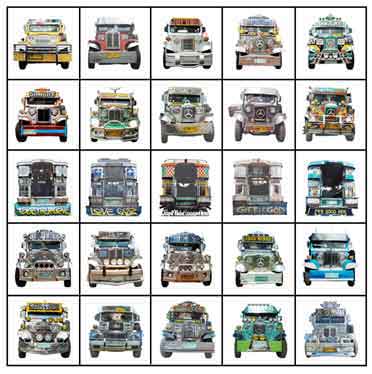
TOPICS Sabong Lambanog The Division of Quezon The Rural Wedding The Tiaong Jeepneys |
© Dr. Godofredo
U. Stuart |
godofredo.stuart@yahoo.com |
Please email comments, contributions and corrections. Postings for events and news worthy items are most welcome. |
 |
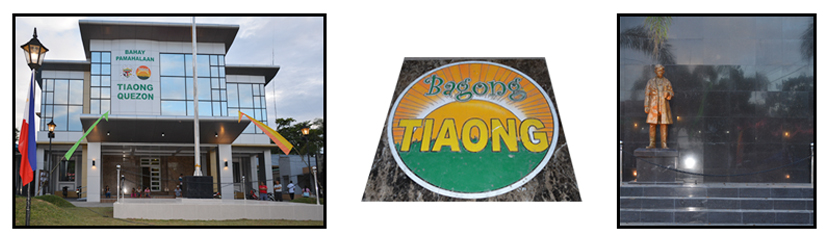 To his credit, Mayor Preza's has brought more visible changes in his first year of mayorship than what four terms of the Umali dynasty left behind. While some of the locals are hopeful, some are not, their hopes discolored by the past and the difficult lives they live. But I hope "Bagong Tiaong" is just that—new, with the promise of more changes to come. I am hopeful it is not just colors and modernization.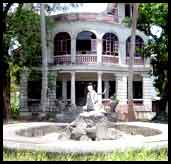
 Of course, there are still days when I stray into pondering
the wisdom of having returned. It still is a microcosm of
Small Town, Philippines, suffering the generic afflictions of rural
existence – poverty, unemployment, marginalization, and the
pervading culture of dishonesty. It is a difficult balancing act of
failures and successes. And it helps, to know that change is happening, albeit, so slowly. And I know it's just not posters and billboards. And although pondering the madness of returning is
inevitable, I try to put it on the shelf for now, spending the next two or three years in the
Of course, there are still days when I stray into pondering
the wisdom of having returned. It still is a microcosm of
Small Town, Philippines, suffering the generic afflictions of rural
existence – poverty, unemployment, marginalization, and the
pervading culture of dishonesty. It is a difficult balancing act of
failures and successes. And it helps, to know that change is happening, albeit, so slowly. And I know it's just not posters and billboards. And although pondering the madness of returning is
inevitable, I try to put it on the shelf for now, spending the next two or three years in the 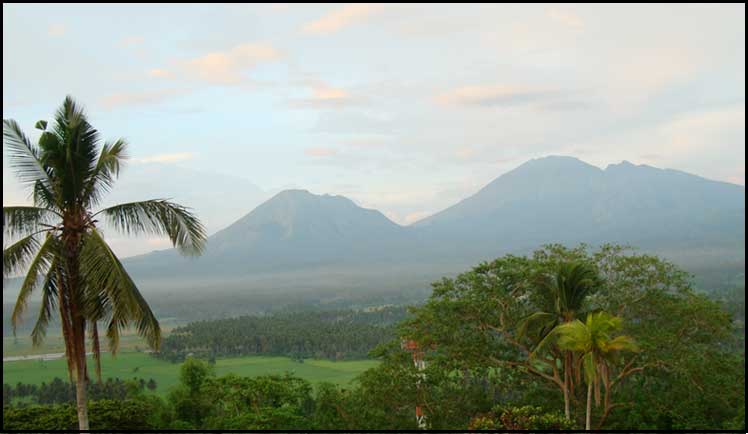
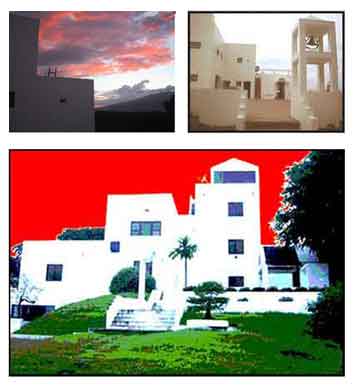 Pulang Lupa is the peak of 50 hectares of hilly agricultural
land called Sitio Santol - or "Proses" (a rural Taglization of Four Roses)
to the old-timers, or the "Farm" to family - less than
2 kilometers from the town center of
Pulang Lupa is the peak of 50 hectares of hilly agricultural
land called Sitio Santol - or "Proses" (a rural Taglization of Four Roses)
to the old-timers, or the "Farm" to family - less than
2 kilometers from the town center of 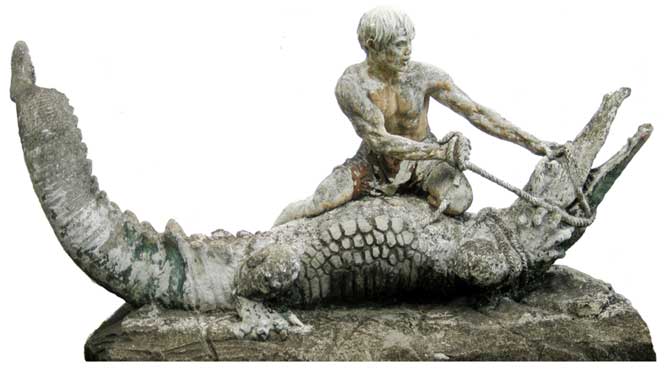
 Since I returned to Tiaong, I have been surprised so many times by the townsfolk's stories about the clan - the Umaling-itim clan, the disparate characters and their stories, the uncles and aunts, and some from this generation who contribute various colors to the story. Many of the stories were about Lola Concha, always told with fondness, her generosity, the parcels of land she donated for causes she was so passionate about. Alas, time continues to diminish the stories, and I have wondered that the ancestral house, that haunted stone house with the crocodile in front, might soon be all that will remain to link her memory with Tiaong's history.
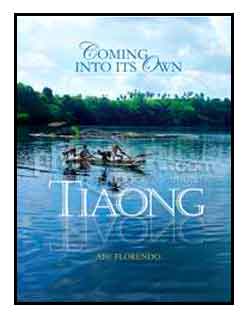 This coffee-table book Tiaong: Coming Into Its Own, published by the Tiaong Lubid-Lubid Foundation Inc. was launched in 2011.


 A resort replete with
all the essentials for a memorable experience. The slow carabao-drawn
cart ride around the grounds while being serenaded by native folk songs.
. . The Museum that houses a unique collection of religious art and
antiques and eclectic miscellany that could easily absorb two hours
of your visit. A wading lunch by the waterfalls indulging on a spread
of native cuisine. Bamboo rafting, a cooling dip into the pool, and
on weekends, a cultural show to highlight your visit.
A resort replete with
all the essentials for a memorable experience. The slow carabao-drawn
cart ride around the grounds while being serenaded by native folk songs.
. . The Museum that houses a unique collection of religious art and
antiques and eclectic miscellany that could easily absorb two hours
of your visit. A wading lunch by the waterfalls indulging on a spread
of native cuisine. Bamboo rafting, a cooling dip into the pool, and
on weekends, a cultural show to highlight your visit.