 General info General info
- The U.S. listed Sagittaria sagittifolia as a Federal Noxious Weed in 1981, cited as "impeding flow of water irrigation, interfering with water access, and reducing yield of rice.
- In the U.S. it appears on the noxious weed list for 46 states.
- In 1996, it was discovered the "arrowhead tubers" were approved in 1948 for importation as vegetables.
- Cultivated as a food crop in some countries.
- After review of risk assessment, it was kept on the Federal noxious weed list, prohibiting importation for propagation while allowing importation of the vegetable for consumption only.
- Since 1996, permits for tuber importation have been issued in Hawaii, California, and New York for human consumption during Chinese New Year, allowing movements from the months of November through March. (13)
- Etymology: The genus name Sagittaria
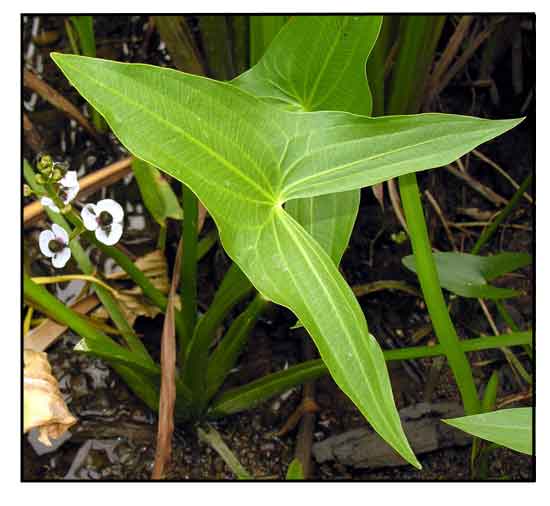
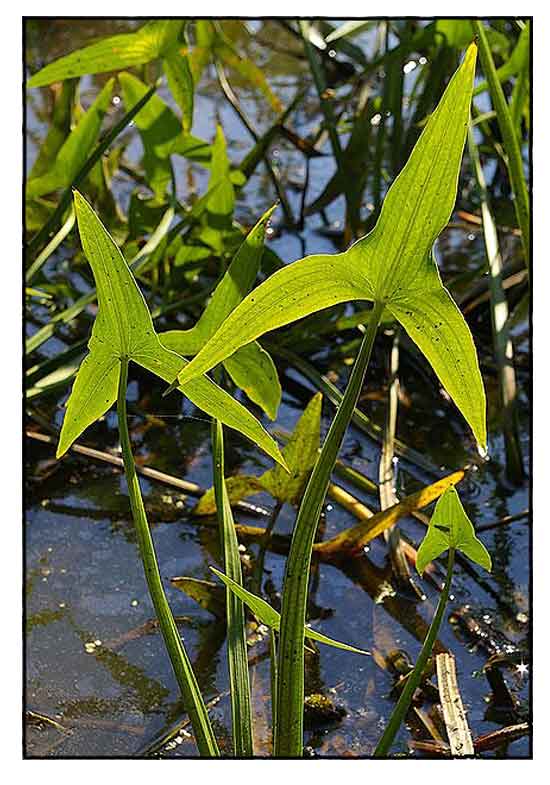
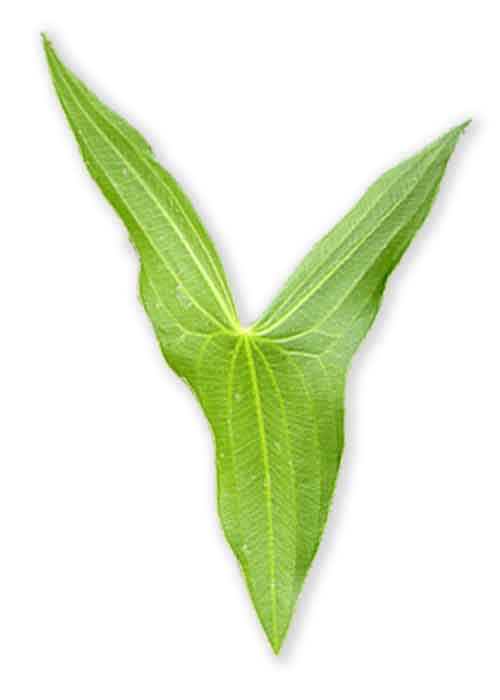
derives from Latin sagittarius, meaning "pertaining to arrows" refers to the leaf blade which is shaped like the point of an arrow.
- Remnants of Sagittaria sagittifolia have been found in Paleolithic/Mesolithic site of Calowanie in Poland.
(28)
Botany
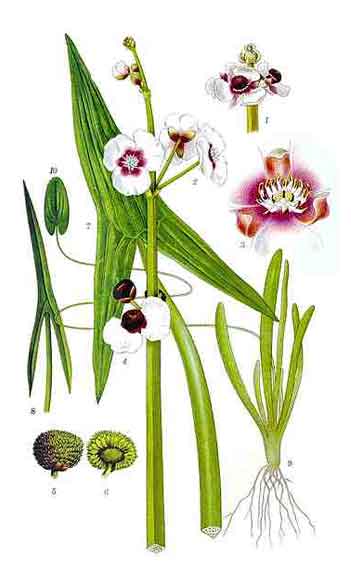
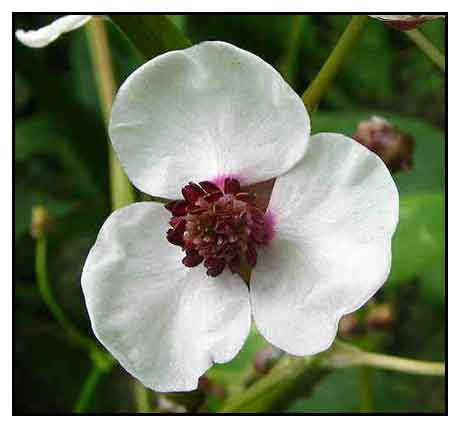
Tikog is an aquatic plant, erect, stemless and usually perennial. Leaves are arrow-shaped, 10 to 35 centimeters long; the petioles are long, often long than the leaves, with 3 to 5 whorls of 3 to 5 flowers, each 1 to 2 centimeters in diameter; the lower whorls are female, and the upper, male, with longer pedicels. Petals are white, with yellow center. Achenes are flat, obliquely obovate, apiculate, with broad wings.
 Distribution Distribution
- Introduced.
-
An aquatic plant found in fresh-water swamps, rice paddies, etc., at low and medium altitudes In the Luzon Provinces of Pangasinan, Nueva Ecija, Tayabas, Camarines, Albay and Sorsogon; and in Catanduanes, Samar, Leyte, and Mindanao.
- Native to Altay, Austria, Baltic States, Belarus, Belgium, Bulgaria, Central European Rus, Czechoslovakia, Denmark, East European Russia, Finland, France, Germany, Great Britain, Greece, Hungary, Ireland, Italy, Krasnoyarsk, Netherlands, North Caucasus, North European Russi, Norway, Poland, Portugal, Romania, Sardegna, South European Russi, Sweden, Switzerland, Transcaucasus, Turkey, Turkey-in-Europe, Tuva, Ukraine, West Siberia, Yakutskiya, Yugoslavia. (10)
Constituents
- Study isolated a new diterpene, sagittariol, characterized as labda-7,14-dien-13(S,17-diol.
(3)
- Study of whole plant isolated seven new ent-rosane diterpenoids, sagittines A-G (1-7), along with one new labdane diterpene, 13-epi-manoyl oxide-19-O-α-L-2'-5'-diacetoxyarabinofuranoside (6). (see study below) (5)
- Study of methanol extract isolated one terpenoid and identified as sandaracopimaric acid.
(see study below) (8)
- Phytochemical screening of tubers and leaf extracts
and solvents yielded tannin, saponins, flavonoids, phenols, steroids, glycosides, protein, amino acids, starch, reducing sugars, and alkaloids. Phytochemicals were highest in the ethanol extract. (14)
 Properties Properties
- Acrid.
- Considered diuretic, antiscorbutic, galactagogue.
- Studies have suggested
hepatoprotective, antibacterial, immunosuppressive and antioxidant properties.
Caution
- Ingestion of raw tubers may cause fluxes, diarrhea, weakness and hemorrhoids.
- Pregnant women should not eat them.
Parts used
Tubers, rhizomes, leaves.
Uses
 Edibility Edibility
- Tubers are edible.
- In Japan and China, a variety with starchy tubers is cultivated in rice paddies along small streams. The same form is also cultivated in the Trinidad Valley.
- In Vietnam, young leaves and rhizomes used in soups.
- In northeastern India, roots are steamed with sugar or prepared pakora along with besan. (4)
- Raw tuber has an unpleasant and bitter taste. Processing (baking, roasting, cooking) reduces bitterness and improves taste and flavor, resembling the taste of potato. Dehydrated and ground tuber is used in gruel and porridge or added to cereal flours in bread making. Roasting imparts a flavor similar to corn. (see study below) (18)
- Potential as antioxidant beverage. (see study below) (24)
Folkloric
- Tubers used for deficient lochia and retention of the placenta, as well as in gravel.
- Bruised leaves applied to foul sores, snakes and insect bites.
- Powdered leaves applied to relieve itching.
- Tubers used for skin diseases.
- Used as antigalactagogue, discutient, for colds, cough, tuberculosis, tracheitis, allergies, itching, pruritus and swelling.
 - In Indo-China, rhizome is grated in vinegar and applied as a poultice for boils and abscesses. - In Indo-China, rhizome is grated in vinegar and applied as a poultice for boils and abscesses.
- Decoction of rhizome used for dog and snake bites.
- Leaves mashed in molasses used for throat and tongue soreness and in breast inflammation.
- In northeastern India fresh root paste with a spoonful of honey used for coughs. (4) In India, leaf extract given with butter milk to treat skin diseases such as scabies and warts. (12) In Manipur, India, fresh leaves or roots are crushed and applied to skin diseases and itch. Vegetative parts are boiled in water and consumed to control high blood pressure. (25)
In Assam, leaf used as antiseptic ; used for snake and insect bites. (27)
- In Chinese medicine, bruised leaves are applied to foul sores, snake and insect bites. Powdered leaves applied to itchy diseases. (11) Use for treating gonorrhea and retention of placenta.
Studies
• Hepatoprotective: Study in Sprague-Dawley rats showed pretreatment with Sagittaria sagittifolia extract can militate cadmium-induced liver damage through decreasing the expression of TNF-a mRNA in the process of acute cadmium exposure. (2) Study showed S. sagittifolia pretreatment was more effective than vitamin E in protecting against cadmium-induced acute liver injury, possibly through enhancement of antioxidant and detoxification liver processes. (1)
• Antibacterial Against Oral Pathogens / ent-Rosane Diterpenoids: Study of the whole plant yielded seven new ent-rosane diterpenoids, sagittines A-G with one new labdane diterpene. Compounds 1-4 showed antibacterial activity against oral pathogens Streptococcus mutans and Actinomyces naeslundiis. Compound 5 was active only against A. naeslundiis. (5)
• C-fos Induction: Study results suggest c-fos induction is independent of oxidative stress or inflammation in the liver during the process of acute Cd exposure in rats. (6)
• Terpenoid / Sandaracopimaric Acid / Immunosuppressive: Study of methanol extract isolated a terpenoid, sandaracopimaric acid, showed to have good immunosuppressive action. (8)
• Antioxidant / Polysaccharide Extraction: Study reports on the optimal extraction process for Sagittaria sagittifolia polysaccharide. Under the optimized process, the S. sagittifolia polysaccharides content was 29.32%. In-vitro study for radical scavenging activities showed good antioxidant activity against DPPH, hydroxyl free radicals, and reducing power. (11)
• Antioxidant / Immunological Activity / Polysaccharide: Study reports on the ultrasound-assisted method (UAW) of extraction of S. sagittifolia polysaccharide and evaluated its antioxidant and immunological activities of the purified polysaccharide (SPU60-W). The SPU60-W exhibited excellent hydroxyl and ABTS radical scavenging activity comparable to vitamin C, and moderate DPPH radical scavenging activity. Immunity testing suggested SPU60-W significantly promoted proliferation, phagocytosis, and NO production of mouse macrophage RAW264.7. Results suggest potential utilization as antioxidant and immunomodulator in food and medicinal industry. (15)
• Comparable Activity of Three Polysaccharides / Immunomodulatory Activity: Study evaluated and compared in vitro biological activities of three polysaccharides (SSW, SSU, and SSP) obtained by hot water, ultrasound-assisted, and subcritical water extraction. The three polysaccharides were heteropolysaccharide with dramatically different monosaccharide species and mole ratios. The SSP exhibited stronger antioxidant activity in vitro and potent immunomodulatory activity than SSW and SSU. Results suggest SSP has potential as biological agent for use in complementary medicine or functional foods. (16)
• Hepatoprotective / INH-Rifampcin Induced Hepatic Injury / SSP Polysaccharide / Root Tubers: Sagittaria sagittifolia polysaccharide (SSP) is a purified form of a homogenous polysaccharide isolated from root tubers of S. sagittifolia, which has been used as protectant against hepatotoxicity induced by co-administration of isoniazid and rifampicin. Study evaluated the hepatoprotective effect of SSP and underlying mechanism in isoniazid-rifampicin induced liver injury in mice. SSP significantly alleviated liver injury, evidenced by decreased activities of ALT, AST, LDH and decreased level of malondialdehyde in the liver, and increased level of glutathione and increased activities of SOD and catalase in the liver. The hepatoprotective mechanism against INH-rifampicin induced liver injury may involve activation of NRF2 and its target antioxidant enzymes and inhibition of the expression of CYPs. (17)
• Effect of Roasting on Functional and Antioxidant Properties of Arrowhead Flour: Study evaluated the effect of pan and microwave roasting on tubers converted to flour and its functional and antioxidant properties. Total phenolic content, antioxidant activity and reducing power enhanced upon pan and microwave roasting from 1.02 to 2.42 mg/g GAE; 44.30% to 46.61%; 74.59% to 76.23% respectively. Water and oil absorption capacities increased in roasted flour, for use in products where improved moisture and oil retention are required. Roasting significantly decreased foaming, emulsification, and viscosity, which increased antioxidant and total phenolic content. (18)
• Antioxidant / Antineoplastic / Immune Activity / Selenium Modified Polysaccharides: A purified polysaccharide fraction of S. sagittifolia (PSSP) was modified with selenium (Se-PSSP) and was evaluated for characteristics, antioxidant, antineoplastic, and immune activities. Compared with PSSP, Se-PSSP showed stronger water-solubility, antioxidant activity, cytotoxicity, and immunomodulatory activity. Results suggest Se-PSSP is a promising Se-supplement with potential as an antioxidant, antineoplastic, and immunomodualtory agent for functional foods and the medicine industry. (19)
• Protective in Non-Alcoholic Fatty Liver Disease / Polysaccharide: Study evaluated the protective effect of S. sagittifolia polysaccharide (SSP) on NAFLD in mice. Findings suggest SSP exerts preventive protection against high-fat diet-induced NAFLD by interfering with arachidonic acid metabolism via Nrf2/HO-1 signaling pathway in liver oxidative stress. (20)
• Hepatoprotective Polysaccharide / Heavy Metal-Induced Hepatic Injury: Study evaluated the hepatoprotective role of S. sagittifolia polysaccharide (SSP) in mice and LO2 hepatocytes injured by heavy metal mixture of Cd+Cr)VI)+Pb+Mn+Zn+Cu. Results showed SSP can alleviate hepatic injury, evidenced by significantly decreased activities of AST, ALT, and MDA content, along with increase SOD activity and GSH, T-SH contents. SSP effectively decreased level of reactive oxygen species (ROS) in LO2 hepatocytes. SSP protects against six heavy-metal-induced hepatic injury in mice and LO2 hepatocytes. Supported by Nrf2 gene slicing, the mechanisms may correlate with activation of Nrf2 pathway to mitigate oxidative stress and apoptosis. (21)
• Mitigation of DDS-Induced Colitis / Modulation of Microbiota and Signaling Pathways / PSSP-1: Study identified a novel S. sagittifolia polysaccharide, PSSP-1, and evaluated its potential in alleviating dextran sulfate sodium (DDS)-induced colitis in a mouse model. PSSP-1 at doses of 100, 200, and 400 mg/kbw significantly reduced disease activity index (DAI) and suppressed expression of inflammatory cytokines in UC mice. It promoted abundance of beneficial gut microbiota, including Lactobacillus and Candidatus_Saccharimonas. Lactobacillus_johnsonii species may play a significant role in modulating colitis. Study suggests PSSP-1 mitigates colitis symptoms by repairing the intestinal barrier, promoting microbial metabolism, and regulating the gut microbiota-MAPK/;NF-kB signaling pathways. (22)
• Qici Sanling / Suppression of Bladder Cancer Growth / Inhibition of Wnt/B-Catenin Pathway: Qici Sanling decoction (QCSL), a traditional Chinese medicine, is a polyherbal mixture of corm of Sagittaria sagittifolia (SS) with nine other herbal medicinal plants at ratio of 10(SS):10:5:5:5:5:3:2:5:5, which was found in combination with pirarubicin for treatment of postoperative patients with non-muscle invasion bladder cancer to significantly reduce cancer recurrence rate, enhance systemic immunity, and alleviate side effects of chemotherapeutic drugs. (23)
• Antioxidant Health Drink: Study evaluated the development of an antioxidant health drink that can also regulated blood sugar. Raw materials consisted of Sagittaria sagiittifolia, hawthorn and liquorice. Results showed that 0.4% crude polysaccharide powder of S. sagittifolia, 10 cc of hawthorn extract, 2.5 cc of liquorice extract, 7.0% white sugar, 0.5% citric acid, 0.2% cyclodextrine, o.05 g/L sodium alginate, 0.5 g/L xanthan gum amount, 2.0 g/L agar and 20MPa homogenization produced a beverage of delicate sweet taste, rich nutrition, and stability. (24)
• Effect on Immune Function of Macrophages via mTOR Signal Pathway: Study showed Sagittaria sagittifolia polysaccharide could enhance the phagocytosis of macrophages through mTOR signal pathway. (26)
Availability
Wild-crafted.
|







.jpg&imgrefurl=http://en.wikipedia.org/wiki/File:Sagittaria_sagittifolia_(2005_08_08).jpg&usg=__feXxmSTt9nbY5sYNbSHzPkGns9c=&h=1536&w=2048&sz=634&hl=en&start=3&zoom=1&itbs=1&tbnid=KZReu-JyMiumdM:&tbnh=113&tbnw=150&prev=/search?q=sagittaria+sagittifolia+image&hl=en&client=safari&sa=N&rls=en-us&ndsp=20&tbm=isch&prmd=ivns&ei=_kOtTdvyH4-6vwOer_nBCw)