Gen info
- Chrysobalanaceae is a family of flowering plants, consisting of trees and shrubs in 27 genera and about 700 species of pantropical distribution with a center of diversity in the Amazon. (9)
-
Chrysobalanus is a genus of evergreen perennial shrubs to small tress, described as a genus by Carl Linnaeus in 1753. The major species in this genus are C. icaco, C. orbicularis, C. atacorensis and C. ellipticus, while others like C. purpureus, C. pellocarpus, C. luteus, C. savannarum and C. guianensis are sub-species of the major ones.
- Etymology: The genus name Chrysobalanus derives from Greek words chrysos, meaning "gold" or "golden", and balanos, meaning "acorn". The specific epithet icaco or hicaco derives from the indigenous Arawak work ikaku (or via Island Carib ikaku).
 Botany Botany
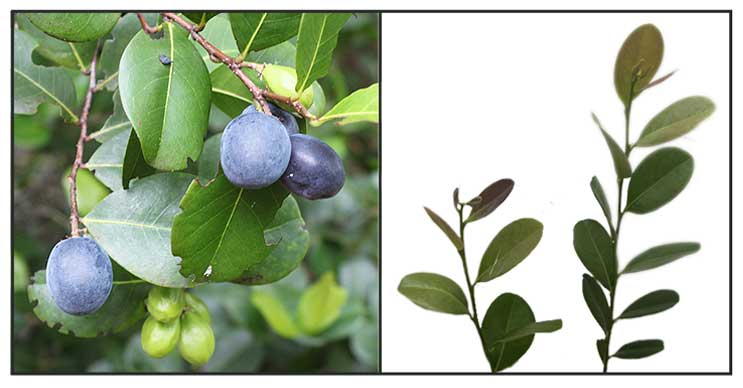
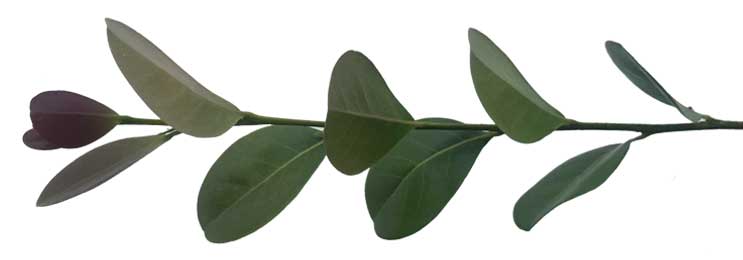
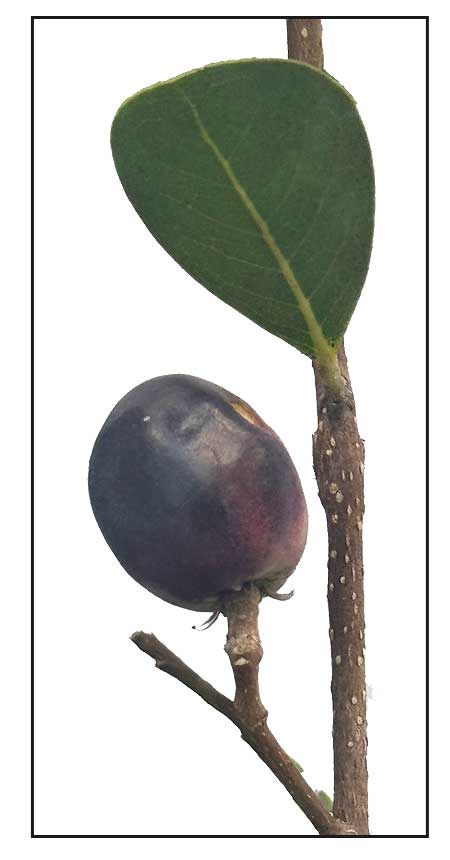
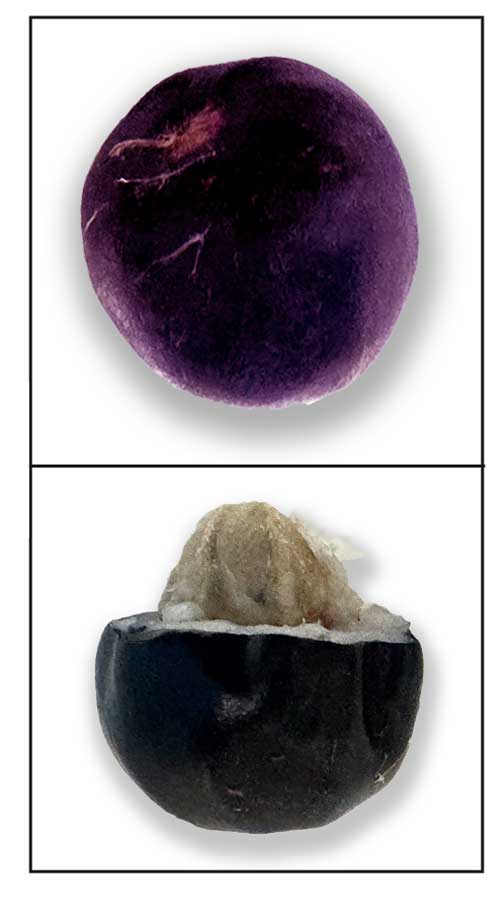
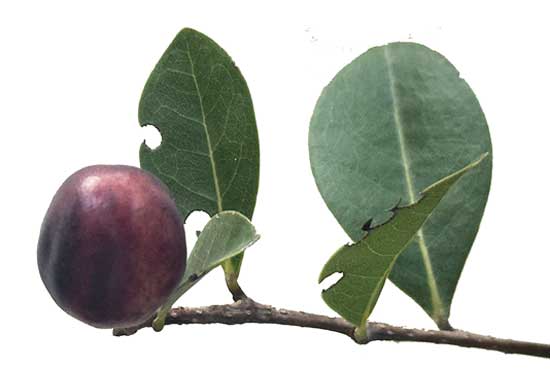
• Chrysobalanus icaco is a shrub 1–3 meters (3.3–9.8 ft), or bushy tree 2–6 meters (6.6–19.7 ft), rarely to 10 meters (33 ft). Leaves are evergreen, broad-oval to nearly round somewhat leathery, 3 to 10 cm long and 2.5 to 7 cm wide. Leaf colors range from green to light red. Bark is grayish or reddish brown, with white specks. Flowers are clustered, small, greenish-white, and appear intermittently throughout the year but more abundantly in late spring. Fruit that follows is variable, a drupe: the coastal form is round, up to 5 cm in diameter, white, pale-yellow with a rose blush or dark-purple in color, while the inland form is oval, up to 2.5 cm long, and dark-purple. Fruit contains contains a five- or six-ridged brown stone with an edible white seed. (3)
Distribution
- Cultivated; not naturalized.
-
Native to Angola, Bahamas, Belize, Benin, Bermuda, Brazil North, Brazil Northeast, Brazil Southeast, Cameroon, Cayman Is., Central African Republic, Central American Pacific Is., Colombia, Congo, Costa Rica, Cuba, Dominican Republic, DR Congo, Ecuador, El Salvador, Equatorial Guinea, Florida, French Guiana, Gabon, Gambia, Ghana, Guatemala, Guinea, Guinea-Bissau, Gulf of Guinea Is., Guyana, Haiti, Honduras, Ivory Coast, Jamaica, Leeward Is., Liberia, Mali, Mexico Central, Mexico Gulf, Mexico Northeast, Mexico Southeast, Mexico Southwest, Nicaragua, Nigeria, Panamá, Puerto Rico, Senegal, Sierra Leone, Southwest Caribbean, Suriname, Togo, Trinidad-Tobago, Turks-Caicos Is., Venezuela, Venezuelan Antilles, Windward Is., Zambia. (2)
 Constituents Constituents
- Rich in several minerals, including potassium, magnesium, calcium, and sodium, with concentrations of 340, 173, 93.4, 30 mg/g, respectively.
-
Study of seed oil for physico-chemical properties showed iodine and saponification values of 1.07 mg/g and 180 mg/g respectively. The iodine value indicates high level of unsaturation in oils, with oleic acid, trans-linoleic acid, linolenic, and eicosanid acids are dominant unsaturated fatty acids, while stearic and palmitic acids were major components of saturated fatty acids. (4)
- Plant contains a host of phytochemicals, including flavonoids, diterpenes, and triterpenes.
- AECS showed TPC content of 124.14 mg gallic acid.
- GC/MS study of flour extract from seed kernels
isolated 11 compounds from the methanol extract and 13 compounds from the dichloromethane/methanol extract. The most abundant compounds from the ME were cis-13-octadecenoic acid 2,6-octadienal-3,7-dimethyl (E) (ie α-citral), citral, cis-3-hexenyl cis-3-hexenoate and trans-2,7-dimethyl-4,6-octadiene-2-olester, cis vaccenic acid, and n-hexadecanoic acid. (9)
- Study for phytochemical composition yielded tannins 3.8%, alkaloids 10.4%, flavonoids 9.5%, saponins 3.67%, phytat 0.457%, cardiac glycoside 3.21%, cyanogenic glycoside 0.54%, steroid 4.25%, and anthocyanin 3.54%. (10)
- Proximate analysis yielded: moisture 66.235%, fat
0.650, ash 3.19, fiber 8.11, protein 11.2, and carbohydrate 10.61%. (10)
Properties
- Studies have suggested antioxidant, anti-inflammatory, antidiabetic, anti-obesogenic, hypocholesterol-emic, antigenotoxic, antifungal properties.
Parts used
Roots, fruits, roots, stems, leaves.
 Uses Uses
Edibility
- Fruit is edible: describe as almost tasteless to mildly sweet. Fruits are stewed in sugar, dried like prunes or made into jams and jellies. the purple or red-skinned fruits are considered superior in flavor to white forms. While preserving the fruits, piercing them right through the center, including the seed, will allow the juice of the fruit to penetrate the seed.
- Seeds inside the pit can be roasted and eaten for their almond-like flavor; also, crushed and added to jelly. (5)
- Fruits are readily consumed by gopher tortoises and other wildlife.
- The seed kernel is ground into a powder and dried, and used as a spice—variously called gbafilo, itsekiri, umilo,emilo or omilo, as part of West African Pepper Soup Mix. (3)
Folkloric
- No reported medicinal use in the Philippines.
- In southeastern Brazil, used for treatment of diabetes.
- In Africa, used for treatment of hypertension, fever, gastrointestinal diseases, and malaria. In Nigeria, In Brazil, infusions of fruits, leaves, roots, and stems used for treatment of chronic diarrhea, bleeding, abdominal pain, dysentery, inflammations. In El Salvador and Trinidad, infusions of plant parts used for treatment of stomach ailments and bleeding. (7)
- Plant parts used externally as wash to treat skin complaints. (8)
- Juice of roots and leaves, mixed with oil, is used to contract sphincters of the vulva by women wishing to simulate virginity. Same preparation used by men for treatment of flaccid scrotum. (8)
- Used for treatment of leucorrhea, bleeding, and chronic diarrhea.
Others
- Agroforestry: The 'horizontal' coastal type with tendency to root with its creeping branches, combined with high salt tolerance, can be planted to stabilize beach edges and prevent erosion. (3) Plants can be grown as hedge. Its large, rambling, impenetrable thickets can be used to stabilize sand dunes. (8)
- Oil: Edible oil can be extracted from the seed. Oil also reportedly used for making of candles. (•) Oil-rich seeds can be strung on sticks and burnt like a candle. (8)
- Dye: Fruit and leaves yield a black dye. (8)
Studies
• Toxicological Potential: Study has shown potential genotoxic effects through induction of single strand DNA breaks, using plasmid or via reduction in biotransformation efficiency in bacteria. Comet analysis of Wistar rats confirmed DNA lesions caused by administration of C. icaco from free market in Rio de Janeiro, Brazil. However, this has been attributed to source of plants (genotype and enviromental factors. (4) (see study below: 12)
• Antioxidant / Anti-Inflammatory / Seed: Study evaluated phytochemical content, antioxidant, and anti-inflammatory activities of aqueous extract of C. icaco seed (AECS). In antioxidant assays, AECS showed IC50s of 0.050 mg/mL (DPPH), 0.074 mg/mL (ABTS), 0.49 mg/mL (FRAP). For carrrageenan-induced model of subplantar acute edema, AECS decreased inflammation by 55%, similar to indomethacin (59%, p>0.05).Results suggest source of bioactive molecules with antioxidant and anti-inflammatory potential derived from TPC. (see constituents above) (6)
• Acute Toxicity Study / Leaves: Acute toxicity study of aqueous extracts of leaves showed no lethality with LD50 of >2 g/kg by intragastric route in both male and female Swiss mice. It suggests the consumption of leaves in the form of tea could be potentially safe for humans over short periods of time (<1 week) at low quantities. (6)
• Potential against Metabolic Syndrome / Hypoglycemic / Hypocholesterolemic, Anti-inflammatory / Anti-Obesogenic / Review: Review focused on the phyto-chemical content and hypoglycemic, anti-obesogenic, and anti-inflammatory potential of C. icaco. In a study in rats for anti-diabetic potential, aqueous extracts of leaves showed blood glucose lowering similar to metformin. An aqueous extract of fruits showed hypoglycemic activity in STZ-induced diabetic rats. An aqueous extract of leaves on high-fat diet fed male Wistar mice showed improved glucose tolerance, decreased fat mass gain, and decreased leptin. An aqueous extract of leaves on high-lipid diet fed mice showed decrease in adipose tissue gain, triglyceride levels, and excretion of lipids in the feces, in addition to increased locomotor activity and normalized insulin sensitivity and glucose tolerance. (7)
• Antiangiogenic Potential: Study evaluated the antiangiogenic potential of C. icaco methanol extract in chicken embryonary tissue. In a chorioallantoic membrane model (CAM) of chicken embryos, C. icaco ME showed average of 44% angiogenesis inhibition. Data indicate that the ME reduce the formation of new blood vessels in chicken chorioallantoic membrane. (11)
• Antigenotoxic & Anti-Inflammatory Against Doxorubicin (DXR)-Induced Damage / Fruits: Study evaluated the protective effects of cocoplum fruits against doxorubicin (DXR)-induced damage. Results showed cocoplum decreased DNA damage and expressions of Gadd45α, Il-1ß, and TNF-α induced by DXR. Findings suggest cocoplum fruits possess antigenotoxic and anti-inflammatory effects against DXR-induced damage. Further in vivo/clinical studies were suggested. (12)
• Antifungal / Oral Candida Isolates: Study evaluated a hydroalcoholic extract of C. icaco (HECi) against 11 oral clinical isolates of Candida species using broth dilution method. Analysis revealed high flavonoid content (132,959 µg/ QE/g extract). HPLC detected flavonoids myricetin and rutin. HECI showed antifungal activity against oral isolates Candida albicans and C. parapsilosis with MICs of 3.12 and 6.25 mg/'mL respectively. Results showed antifungal activity against Candida species with clinical potential for oral candidiasis. Activity was attributed to flavonoids in the HECi. (13)
• Antidiabetic / Antioxidant: Study evaluated the antioxidant, α-amylase inhibitory activity, and antidiabetic potential of aqueous extract of C. icaco (AECi) in alloxan-induced diabetes in rodents. Phytochemical screening showed presence of tannins, flavones, triterpenoids, steroids, saponins, and alkaloids. AECi showed potent antioxidant activity by DPPH scavenging assay. Lethality test and behavioral screening showed no lethality signs. In OGTT, AECi, while not preventing elevation of glycemia, showed significant (p<0.05) reduction of glycemia from 335 to 197 mg/dL. Results suggest potential beneficial effect for diabetes. (14)
• Testing for Embryotoxic and Teratogenic Potential / Leaves: Study evaluated the potential embryotoxic and teratogenic effects of aqueous extract of C. icaco leaves (AECi) on Wistar rats. AECi at doses of 100, 200, and 400 mg/kg were given to pregnant rats during preimplantation and organogenesis periods. Pregnant rats during pre-implantation period showed no signs of reproductive toxicity. Rats receiving AECi during organogenesis did not exhibit signs of maternal systemic toxicity or significant differences in gestational and embryotoxic parameters Results suggest
AECi at doses of 100, 200, and 400 mg/kg is safe for treated animals and does not induce reproductive toxicity under experimental conditions applied, but it also caused low systemic toxicity. (15)
• Effect on Adiposity of Rats Fed a High-Fat Diet: Study evaluated the effects of aqueous extract of C. icaco (AECI) on adiposity in Wistar rats fed a high-fat diet and mechanism of action in gene and protein expression of acetyl-CoA carboxylase (ACC), a key enzyme in lipogenesis. AECI showed no effect on intake or body weight. However, the weight of fat pads and the gene and protein expression of ACC were lower, and glucose tolerance was improved. Results suggest the AECI proved beneficial for the treatment of obesity, preventing fat storage and improving glycemic homeostasis. (16)
• Study on Hematological and Biochemical Indices: Study evaluated the effect of C. icaco on hemato-logical indices and some biochemical parameters in rats, in doses of 250 mg of aqueous extract given by gavage for 21 days. Results showed no significant increase in hematological indices, no significant difference in urea, uric acid, creatinine, AST, ALT, and GGTP. However, there was significant increase in alkaline phosphatase (ALP) activity. (17)
• Protective Against Nickel Toxicity: Study evaluated the defensive influence of methanol fraction and crude extract of cocoplum on nickel toxicity in male Wistar rats, with significant (p<0.05) increases in AST, ALT, ALP, creatinine, urea, fragmented DNA, and decrease in albumin and total protein, along with inflammation of the portal vein and degeneration of hepatocytes. Oral administration of C. icaco methanol fraction and crude extract significantly decreased the abnormal parameters and markedly reduced the histological alterations in various organs studied. Protective effects were betters with the crude methanol extract than the methanol fraction. (18)
Availability
- Cultivated.
-
Fruit plants in the cybermarket. |