Gen info
- Araceae is a family of monocotyledonous flowering plants in which flowers are borne on a type of inflorescence called a spadix. Also known as the arum family, members are colloquially known as aroids. The family contains 114 genera and about 3,750 known species. (17)
- Etymology: The common name Dumb Cane derives from the acrid and poisonous juice that numbs the tongue. Sometimes the loss of speech lasts; hence, the name, dumb cane. The genus name Dieffenbachia honors Joseph Diieffenbach, head gardener of the Royal Palace Gardens at Schönbrunn in Vienna during the 1830s. The specific epithet's origin is obscure, originally published by Nikolaus Joseph von Joaquin in 1760 as Arum seguine.
 Botany
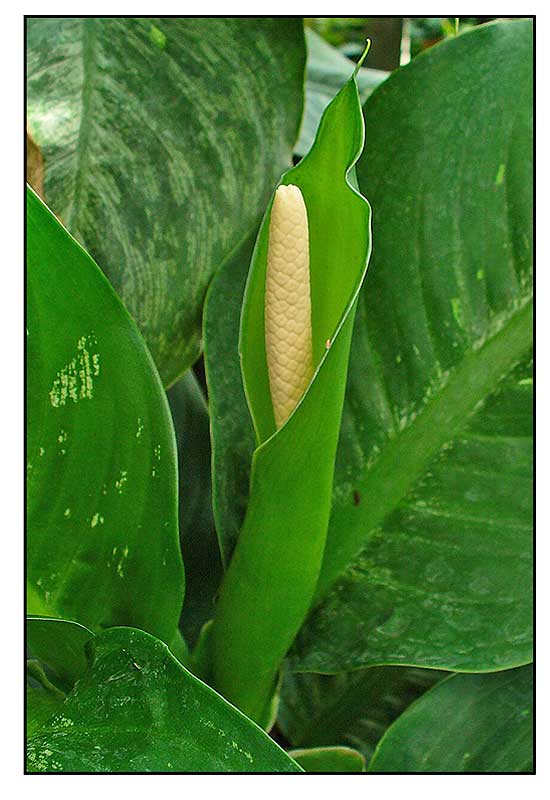
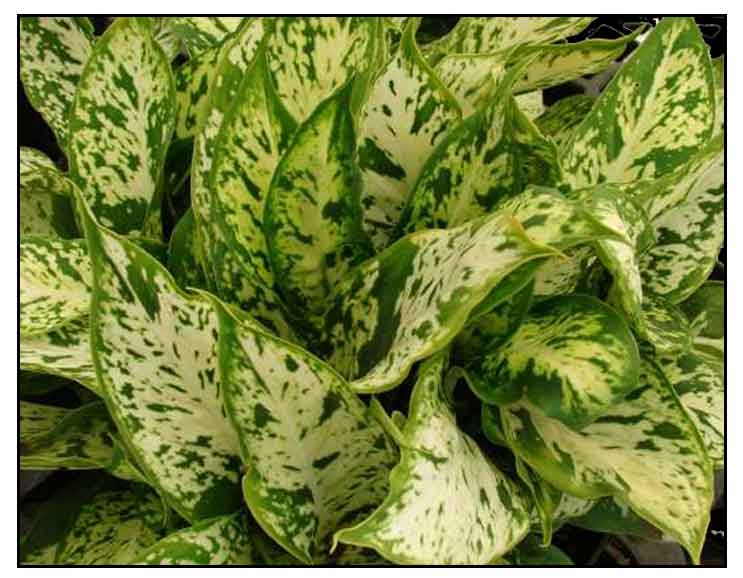
Dieffenbachia is a long-lived, evergreen, perennial herb growing to height of 1 to 1.5 meters. Stem is branchless, about 2.5 centimeters thick, cylindrical, tinged with leaf scars, and erect with the base usually reclining. Leaves concentrated towards the apical part of the stem, the stalk elongated, broadly grooved, the lower part forming a sheath around the stem. Leaves are 20 to 40 centimeters long, 10 to 20 centimeters wide, oblong to broadly lanced-shaped, dark to glossy green on both sides, with numerous white or yellowish spots or streaks, the base rounded to acute, the tip narrow. Flower cluster is white, erect, subtended and partly enclosed by a leaflike spathe. Flowers are stalkless, the males crowded on the upper part of the cluster, the females on the lower, the latter enclosed the spathe's tubular base. Fruits are berries, orange when ripe.
• Within the aroid family—which contains other iconic genera such as Alocasia, Monstera, and Philodendron. Dieffenbachia seguine and its relatives, interestingly, do not grow as a vine or from a tuber, instead growing vertically into a "bamboo"- or "cane"-like shrub (hence the common name dumbcane). Smaller or juvenile plants may only grow to 3 feet (0.91 m) tall, while mature specimens can attain heights of up to 10 feet (3.0 m), and 2 feet (0.61 m) to 3 feet (0.91 m) in trunk width. The plant's leaves are large and green, often with variegated white patterns. Like the entire Araceae family, and indeed all Dieffenbachias, the sap is toxic; the entire plant contains a high concentration of calcium oxalate crystals, which may produce negative side effects if ingested, potentially ranging from anaphylactic shock and respiratory failure to even death. Plant produces the typical whitish inflorescence seen amongst aroids, visually-similar to those found on the common 'calla lily' or the 'peace lily', distinguished by a whitish bract containing an inner spadix. (18)
 Distribution
- Naturallized. (16)
-
The most common cultivated Dieffenbachia species of the Philippines. Usually grown as a potted plant for its handsome foliage.
- In Panay, naturalized in waterways and other areas near irrigation systems.
(16)
-
Native to Bolivia, Brazil North, Brazil Northeast, Brazil Southeast, Brazil West-Central, Cayman Is., Colombia, Cuba, Dominican Republic, Ecuador, French Guiana, Guyana, Haiti, Jamaica, Leeward Is., Peru, Puerto Rico, Suriname, Trinidad-Tobago, Venezuela, Venezuelan Antilles, Windward Is. (4)
- In some places in Nigeria, considered an invasive species, forming extensive mats and displaced native flora. (11)
Constituents
- Leaf oil yielded major constituents of pyrimidine-5-carboxylic acid, 4-(1,3-dimethyl-1H-pyrazol-4-yl)-6-methyl-2- thioxo-1,2,3,4-tetrahydro-methyl ester (5.814%), 5-methyl-2-phenylindolizine (2.957%), 1- (3-methylbutyl)-4-(4,4,5,5-tetramethyl-1,3,2-dioxaborolan-2-yl)-1H-Pyrazole (2.764%),
Dichotine, 19-hydroxy-11methoxytriacetate methylpiperazin-1-yl)benzo[1,2,5]diazol-1-oxide methoxycarbonyl-1H-2-benzopyran-3-one ethanediylbis[diphenylphosphine]-p-p']hydro[(1,2,3,4,5-β)-1-methyl-2,4-cyclopentadien-1- yl] Iron (2.067%) and 9,10-dihyro-9,10,11-trimethyl-9,10-methano anthracen-11-ol (1.011%).
- Preliminary qualitative screening of plant extracts revealed flavonoids, tannins, alkaloids, glycosides, anthraquinones, steroids, and triterpenoids, with absence of saponins in all tested extracts. (19)
- TLC of hexane extract of aerial parts yielded triterpenes, including ß-sitosterol, stigmasterol, and lupeol. GC-MS revealed bioactive compounds such as fatty acids, esters, phytol,
γ-tocopherol (vitamin E) and several sterols) (see study below) (22)
Properties
- Considered analgesic, aphrodisiac, caustic, contraceptive, cyanogenic, insecticidal, rodenticide, vesicant.
- Caution: Although popularly grown as a houseplant, it can be toxic for pets and children who might chew on the leaves. Hand washing is strongly advised after handling the plant, and keeping your hands from the eyes or mouth.
- Studies have suggested antimicrobial, antiproliferative, antioxidant, rodenticidal, amylase inhibitory , antileishmanial, antiangiogenic, mosquito larvicidal, formaldehyde-phytoremediative, molluscicidal properties.
Uses
Edibility
- Caution: Despite folkloric uses mention below, plant is not edible. All plant parts are poisonous to humans and pets..
Folkloric
- No reported folkloric medicinal use in the Philippines.
- In Brazil, reported use of leaf decoction as gargle for angina. Root tincture used for genital pruritus and gout. (7)
- Natives of the
West Indies and Carribean Islands chew D. seguine to bring about temporary male sterility which lasts 24-48 hours. (12)
- In French Guiana, stems use to treat ulcers of leishmaniasis. Used as ingredient in curare by the Amerindians. (15)
- Stem and root extracts have been used as a choleretic, female aphrodisiac, and contraceptive; used for treatment of dropsy, gout, dysmenorrhea, impotence, and sterility. Also, stem and root extracts have been described as a narcotic, a gastric and kidney irritant. (19)
Others
- Poison: Used by West Indians as arrow poison. (11) Used by Brazilian Indians to sterilize enemies by administration in food or as arrow poison. (12) Diffenbachia poisoning has also been reported in chew-all dogs.
Toxicity / Concerns
• All plant parts are believed to contain lots of needle-shaped calcium oxalate crystals, which when chewed can cause painful swelling or blistering of the mouth. When the mouth swelling is severe, talking might be difficult or unintelligible, hence the name "Dumb Cane." The sap can also cause irritation of the eyes, of other unfortunately scratched body parts. In the past, the plants were also used as a means of torture. Plant juices/sap also reported to cause contact dermatitis.(5) (6) When plant parts are chewed, life-threatening systemic symptoms, such as respiratory failure, can occur. (23)
• Toxic principles in Dieffenbachia have been attributed to an insoluble oxalate, calcium oxalate raphides (bundles of long slender needles), and to a proteolytic enzyme, "dumbain" (Walter, 1967). (11) (13)
• Wash hand thoroughly after cuttings or removing leaves.
• Accidental Poisoning of Child: Study reports an 8-year old female child admitted to the ER presenting with sudden numbess on her tongue, lower lip swelling and redness, slurred speech and difficulty breathing. Five minutes prior to symptoms, the child was playing with soil of dieffenbachia with a pen, and placed the pen in her mouth. Symptoms resolved with antihistamines and steroids. (23)
• Poisoning Requiring Mechanical Ventilation: Case report is of a 3-year old Ethiopian boy brought to the ER after inadvertently chewing and swallowing parts of Diffenbachia plant. Initial oral symptoms were neglected by parents, leading to respiratory depression, desaturation, seizures and airway edema. Despite initial treatment that included steroids and antihistamines, the symptoms progress, eventually requiring intubation and mechanical ventilatory support. The patient eventually fully recovered, with no residual sequelae. (24)
• It is essential to seek immediate medical attention, and to monitor for late symptoms or complications for a minimum of 24 hours.
Studies
• Toxicity: Toxicity results from brine shrimp lethality test showed a higher level of toxicity in the leaf than the stem essential oils.
• Antimicrobial: Essential oil exhibited appreciable antimicrobial activity against E. coli, S. aureus, B. subtilis, P. aeruginosa, K. pneumonia, S. typhii, Candida albicans, C. krusei, A. niger and Penicillum aotatum.
• Antioxidant: Tests using a DPPH assay showed the essential oils with higher activity than a-tocopherol. Results showed Dp with promising antioxidant activity as a free radical scavenger.
• Eugenol / Toxicity: When chewed, the juice from the leaves causes a painful edema of the oral mucous membrane, buccal ulcerations and tongue hypertrophy - severe enough to possibly cause glottis obstruction, respiratory compromise and death. Topical application of essential oil extracted from Caryophyllus aromaticus provides about 70% reduction of edema. (3)
• Antiproliferative / Leaves: Study evaluated alcoholic extracts of four Gabonese medicinal plants for antiproliferative activity against human colon cancer cell line (Ca-Co-2). While roots of P. africanum and leaves of P macrocarpus and stem of C. debilis showed strong antiproliferative activity, only the leaf extract of Dieffenbachia seguine exhibited weak antiproliferative activity with 50% inhibition concentration (IC50) higher than 50 µg/ml. (8)
• Amylase Inhibitors / Leaves: Study of leaves, petoles, and stems of Dieffenbachia maculata all showed amylase inhibitor activity, highest for the mid-section of stems; water was the best extractant. The inhibitor is of non-competitive type and active against human salivary amylase, porcine pancreatic α-amylase, Bacillus subtilis α-amylase and sweet potato ß-amylase. (9)
• Rodenticide / Stem: Study evaluated the ability of dumb cane stem extract in killing black rats. (Black rats are famous for its role in spreading the dreaded bubonic plague in the Middle Ages). Results showed rodenticide activity. The commercial rodenticide Raccumin took earlier effect compared to dumb cane stem extract. (10)
• Acute Oral Toxicity Study / Leaves:Study evaluated the toxicological effect of ethanol leaf extract of Dieffenbachia seguine. Single oral doses of 0, 4000, 6000, and 8000 mg/kbw were administered to albino rats. Results suggest an LD50 slightly higher than 8000 mg/kg. Histopathological exam of the liver showed distortion, congestion, and focal necrosis of the liver and renal tubules. Caution is advised in the use of this plant for ornamental purposes in homes. (14)
• Phytosome Injection Development as Pro-Inflammatory Inducer / Leaves: Study reports on the optimized extraction of calcium oxalate crystals from D. seguine leaves and to develop and characterize a phytosome-based injectable formulation as a candidate for a proinflammatory inducer to support future development of inflammation model. Aqueous extracts of DS leaves yielded significantly higher calcium oxalate levels than ethanol extracts. F2 showed to be the optimal phytosome injection formula with stable physicochemical properties. The aqueous extract showed lowest LC50 values in cytotoxicity screening and highest efficacy as an inducer of inflammation. (20)
• Nanoemulsion as Intranasl Inflammation-Inducing Agent / Leaves: Study evaluated the proinflammatory effect of D. seguine leaf extract nanoemulsion following intranasal administration in rats. Results showed the 4% nanoemulsion group showed significant increase in IL-6 and TNF-α levels. Lower concentrations (1% and 2%) did not induce significant cytokine elevation. Results showed the 4% nanoemulsion concentration as potential as natural inflammation-inducing agent via intranasal route, although lowere than that of LPS (lipopolysaccharide). (21)
• Antileishmanial Activity / Aerial Parts: Study evaluated the phytochemical composition and in vitro antileishmanial activity of hexane extract of D. seguine aerial parts. Activity was measured against Leishmania tropica promastigotes using MTT assay. The extract exhibited moderate to significant inhibitory activity, with maximum inhibition rate of 80% at 4000 µg/mL. IC 50 was 94.837 µg/mL. The non-polar bioactive compounds, particularly sterols and triterpenoids, may contribute to its antileishmanial activity. (22)
• Anticancer / Antiangiogenic / Leaf Essential Oil and Extracts: Study evaluated the antiangiogenic effects of D, seguine essential oil, leaf extracts, mineral water, and Simvastatin) on wild duck embryos. Results showed embryos exposed to dumb cane's essential oil and leaf extracts had lower blood vessel branching points than embryos in mineral water solution. The antiangiogenic properties of the EO and leaf extracts were comparable to Simvastatin, an anticholesterol drug with anti-angiogenic effects). (23)
• Larvicidal on Aedes Mosquito / Leaves: Study evaluated the larvicidal potential of leaf extract of Dieffenbachia at 1% and 5% concentrations towards Aedes. Commercial larvicide, Baygon®, was used as positive control, rain water as negative control. Results showed the 5% concentration had most effective larvicidal potential. The 1% concentration also showed effect, though less than 5% concentration. Use of gloves and masks are suggested when handling the leaves and extract due to its severe toxicity. (25)
• Phytoremediation of Formaldehyde: Formaldehyde, a Group 1 carcinogen, is a ubiquitous indoor air pollutant in residential and occupational settings. Study evaluated the phytoremediation potential of the C3 ornamental plant D. seguine (dumb cane) for trace level formaldehyde (0.4-0.6 ppm) derived from cigarette smoke, simulating a realistic, multi-component pollution scenario. D. seguine exhibited > 50% removal of formaldehyde within 2 h and achieved near-total removal (98.8%) after 24 h under light conditions. D. seguine also showed high innate tolerance to trace-level oxidative stress. Findings suggest that D. seguine is a resilient biological sink for atmospheric formaldehyde and a superior candidate for sustainable indoor air quality management. (27)
• Molluscicidal Against Golden Apple Snail: The golden apple snail (Pomacea canaliculata) is an invasive species from South America, which has caused significant damage to rice plantations in South-east Asia, notably the Philippines. Study evaluated the molluscicidal activity of D. seguine leaf extract against P. canaliculata. The extract demonstrated dose-dependent mortality, with 100% mortality at 100 mg/L. Results suggest a potential plant-based alternative but requires further ecotoxicological and field validation. Further studies on extract standardization, formulation stability, degradation behavior, non-target ecotoxicity and field efficacy must be established before practical application. (28)
Availability
Ornamental cultivation.
Wildcrafted.
|