Gen info
- Selaginellaceae, also known as spikemosses or lesser clubmosses, is a genus of leucophyte, usually treated as the only genus in the family Selaginellaceae. It contains over 750 known species. Species are creeping or ascendant plants with simple, scale-like leaves (microphylls). (10)
- Selaginella doederleinii is a species of moss plant described by Georg Hans Emmo Ema Wolfgang Hieronymous.
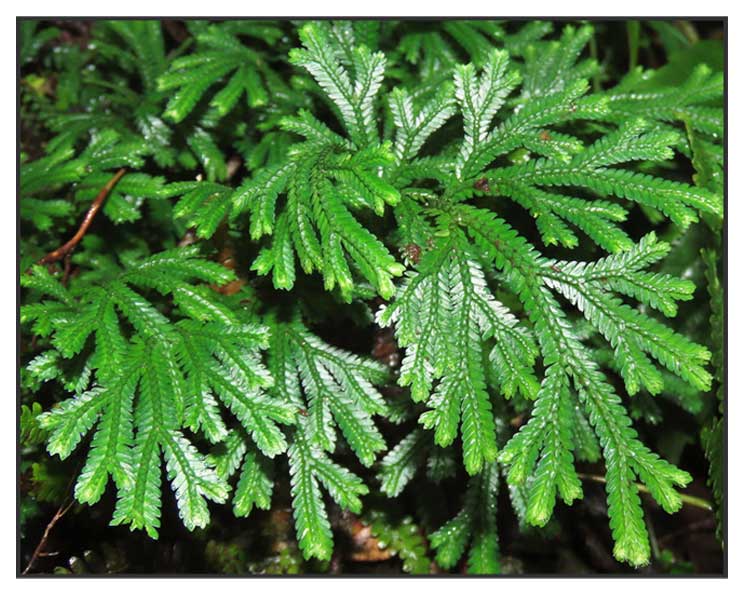
- Etymology: The genus name derives from Latin selago, referring to an ancient plant resembling savin juniper or clubmoss, and the Latin diminutive suffix -ella, meaning "little. The specific epithet doederleinii honors German zoologist and professor Ludwig Heinrich Dö0ederlein (1855-1936), who collected or provided specimens from East/Southeast Asia. The common name "chicken claw" (cakar ayam in Indonesian) refers to the flat, scaly microphyll leaves adhering to the branching stems in a pattern resembling the scaly foot and claws of a chicken.
 Botany Botany
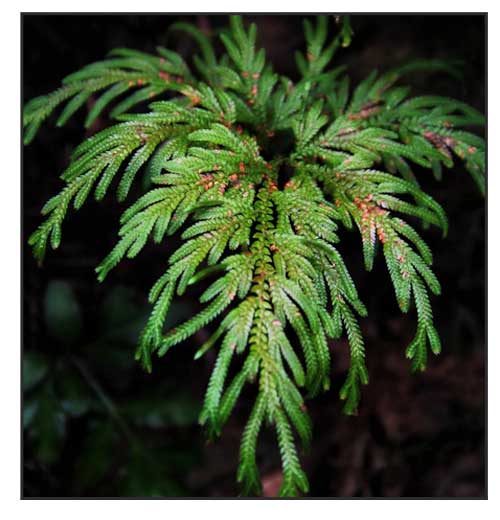
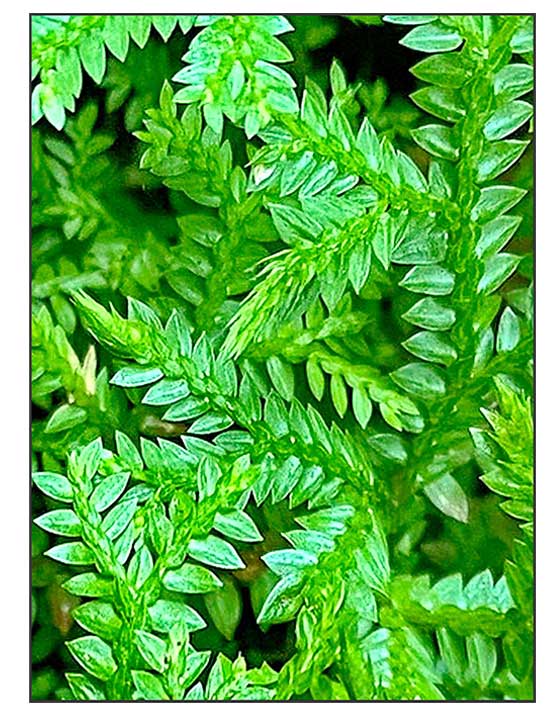
• Plants terrestrial, evergreen, suberect or ascending from decumbent base, 25-45 cm, without creeping rhizomes or stolons. Rhizophores branched from base to middle of main stem. Main stems branched from lower part upward, pinnately branched, stramineous, 1-3 mm in diam. in lower part, oval or subquadrangular, glabrous; primary leafy branches 3-6 pairs, 2 or 3 times pinnately branched, secondary branches once pinnately branched, tertiary branches forked, branchlets sparse, adjacent primary branches on main stem 3-6 cm apart, leafy portion of main stem including leaves 0.7-1 mm wide at middle, ultimate branches 4-7 mm wide including leaves. Axillary leaves on branches symmetrical, narrowly ovate to triangular, 1.8-3 × 0.9-1.4 mm, base exauriculate, margin denticulate. Dorsal leaves on branches imbricate, oblong-ovate, ovate-elliptic, or narrowly ovate, 1.1-2.7 × 0.4-1.4 mm, carinate or strongly carinate, base cuneate or obliquely subcordate, margin denticulate, apex acuminate to aristate, parallel to axis. Ventral leaves on branches contiguous or overlapping, slightly ascending, oblong-falcate, 2.3-4.4 × 1-1.8 mm, apex obtuse, subacute, or apiculate; basiscopic base slightly dilated, margin subentire, denticulate at base; acroscopic base enlarged, broader, overlapping stem and branches, margin denticulate. Strobili solitary or in pairs, terminal, compact, tetragonal, 5-30 × 1-2 mm; sporophylls uniform, not obviously white-margined, ovate-triangular, carinate, margin denticulate, apex acuminate; megasporophylls and microsporophylls at intervals, or megasporophylls in basal portion on lower side of strobilus; microsporangia elliptic-oblong, relatively thick, marginal cells differentiated, longer; microspores yellowish orange, megaspores whitish, without equatorial flange. (Flora of China)
• A herbaceous, creeping, and slightly upright plant. Leaves are small, elliptical, with pointed tips and a flat base. Upper leaves are dark green and the lower leaves are light green. Leaves are arranged on the left and right sides of the main stem, extending to the branches, which resemble chicken claws with their scales. Stem is round and forked, with no secondary growth and is brownish-white in color. It has reduced sporangia in the leaf axils and is white in color. This chicken claw plant has blackish-brown fibrous roots. (10)
Distribution
- Native to the Philippines. (1)
- In Mindanao, Davao del Sur; in Luzon: Mount Banahaw. (1)
- Also native to Cambodia, China South-Central, China Southeast, Hainan, Japan, Laos, Myanmar, Nansei-shoto, Taiwan, Vietnam. (2)
 Constituents Constituents
- Phytochemical studies have revealed biflavonoids, lignans, and alkaloids.
- Study of ethanolic extract of S. doederleinii by combination chromatographic techniques isolated five lignans: (-)-lirioresinol A, (-)-lirioresinol B, (+)-wikstromol, (-)-nortracheloside, (+)-matairesinol (1), two phenylpropanones: 3-hydroxy-1-(3-methoxy-4-hydroxyphenyl)-propan-1-one (2), 3-hydroxy-1-(3,5 -dimethoxy-4-hydroxyphenyl)-propan-1-one (3), and four biflavonoids: amentoflavone, 7,7″-di-O-methyl-amentoflavone, 7,4′,7″,4‴-tetra-O-methylamentoflavone, and heveaflavone (4). (5)
- Six new flavonoids, seladoeflavones A-F (1-6) were isolated from whole herbs of S. doederleinii, along with one known flavonoid (7). (see study below) (16)
Properties
- Studies have suggested antioxidant, anticancer, CYP450 inhibitory, anti-inflammatory, hepatoprotective properties.
Parts used
Roots, leaves, aerial parts.
Uses
Edibility
- Although not a standard table food item, it is traditionally cooked with pork and consumed as medicinal herbal folk medicine rahter than as vegetable.
Folkloric
- No reported folkloric medicinal use in the Philippines.
- In China, traditionally used for treatment of cardiovascular disease, sore throat, cancer, and rheumatoid arthritis. (3)
Others
- Host: It is a larval host plant of blue tiger and dark blue tiger butterflies. (3)
Studies
• Antioxidant / Antiproliferative / Flavonoids: Study evaluated the ethanol extract and its four fractions (petroleum ether, dichloromethane, ethyl acetate, and n-butanol) for flavonoid content and antioxidant activity. Study isolated secondary metabolites (1-16) and were evaluated antioxidative potentials by DPPH and FRAP assay and for antiproliferative activities by MTT assays on 3 human cancer cell lines: colon (HT-29), cervical (HeLa), and lung (A549). Compound 14 exhibited best antioxidant activity on DPPH assay and highest ferric reducing ability on FRAP assay. Compound 7 exhibited best activity against the three cancer cell lines via dose dependent inhibition of rate of cancer cell growth with IC50s of 27.97, 35.47, and 20.71 µM, respectively. Compound 8 and 16 showed notable antiproliferative activities on A549 cancer cell line, with potential as lung cancer candidate. (3)
• Potential for Cervical Cancer Treatment: Combining chemotherapy with chemopreventive agents can enhance efficacy and reduce side effects. Study evaluated the chemopreventive mechanism of S. doederleinii ethanol extract (EESD) as co-chemotherapy agent for HeLa cells through in silico and in vitro approaches. EESD exhibited moderate cytotoxic activity (IC50 367.89 µg/ml) and demonstrated chemopreventive properties. EESD mechanism is presumed to involve inhibition of key regulatory proteins in cervical cancer, ESR2 and HSP90AA1. EESD also exhibited slight synergistic effect with doxorubicin, with a combination index value of 0.85870. Results suggest chemopreventive potential of EESD and its role as co-chemotherapy agent. (4)
• Phenolic Constituents / Cytotoxicity: Study of ethanolic extract of S. doederleinii by combination chromatographic techniques isolated five lignans, two phenylpropanones, and four biflavonoids. Their cytotoxic activity against L929 murine cells accounts for its use in traditional Chinese medicine as an anticancer agent. (see constituents above) (5)
• Biflavonoids / Antioxidant / Antitumor: Study reports on a novel, efficient, and green extract method, using IL-MAE (microwaves assisted extraction based on ionic liquids: IL-MAE) for total biflavonoid extraction (TBE). The IL-MAE was more efficient than MAE. TBE exhibited better antioxidation by four assays: DPPH, ABTS, ferric reducing power, and ferric chelating ability, and ant-tumor activity against A549 cell line and 7721 cell line. Results showed S. doederleinii was a good natural source of biflavones and IL-MAE an efficient extraction method for biflavonoids from natural products. (6)
• New Cytotoxic Biflavones / Anticancer: Study of 75% EtOH extract of S. doederleinii isolated three new biflavones, apigenin-(3′,8″)-chrysin (1), (2S)-2,3-Dihydroametoflavone 5,4′-dimethyl ether (2), and (2S)-5″,7″-Dihydroxy-2″-phenoxychromonyl-(4′″,3′)-naringenin (3), together with seven known biflavones (4–10). All new compounds were evaluated for cytotoxic potential against three human cancer cell lines: A549, MCF-7, and SMMC-7721 in vitro. Compound 2 exhibited potent cytotoxic activity with IC50s ranging from 6.35 to 10.18 µM. (7)
• Antitumor Activity and Possible Mechanism: Study evaluated the antitumor activities of ethyl acetate extracts from S. doederleinii in vitro and in vivo and its possible mechanism. Molecular assay of the six biflavonoids from the SD extract showed considerable antitumor activity in vitro and in vivo without obvious toxicity or normal cells and could induce cell apoptosis. Mechanisms of tumorigenesis and cell apoptosis induced by SD extracts may be associated with decreasing ratio of bcl-2 and bax mRNA level, activating caspase-3, suppressing survivin, and decreasing the gene expression of COX-2, 5-LOX, FLAP, and 12-LOX mRNA. The main active component in the SD extracts is biflavonoids, with some exhibiting strong interactions with COX-2, 5-, 12-, and 15-LOX. Results suggest SD mechanisms of suppressing cell proliferation, promoting apoptosis, and provide the molecular theoretical basis of clinical application of SD for cancer therapy. (8)
• Biflavonoid-Rich Extract against Throat Carcinoma: Study evaluated the specific anti-throat carcinoma (TC) impacts and potential mechanisms of a biflavonoid-rich extract of S. doederleinii (SD-BFRE). SD-BFRE exhibited antiproliferation and pro-apoptotic effects in TC cells (Hep-2 and FaDu). Results showed SD-BFRE exerted its anti-TC effects by way of IKKß/NF-kB/COX-2 and Akt/Bad pathways, and suggests a potential chemotherapeutic agent for throat carcinoma. (9)
• Inhibitory Effect on Human Cytochrome P450: Study evaluated the inhibitory effect of ethyl acetate extract of S. doederleinii (SDEA) and its four constituents (Amentoflavone, Palmatine, Apigenin, Delicaflavone) on human cytochrome P450 on seven CYP450 isoforms. The SDEA showed strong inhibitory effect on CYP450 enzymes, which was attributed to amentoflavone inhibition. Delicaflavone is more suitable for development as a drug for clinical use, considering the low level of CYP450 metabolic inhibition. (12)
• Multi-target Mechanism in treatment of Nasopharyngeal Carcinoma: Study identified NPC related target genes from databases. Active components and their targets were screened from the TCMSP and identified 32 overlapping genes. Comprehensive multi-level analysis suggested the active components of SD may play a significant role in the treatment of NPC through multi-pathway and multi-target
synergistic effects. (13)
• Anti-Inflammatory in Interleukin-1ß-Induced Hepatocytes / Hepatoprotective: IL-1ß, a key pro-inflammatory cytokine, promotes inducible nitric oxide synthase (iNOS) expression in hepatocytes, leading to excessive NO production and liver inflammation. Study evaluated the anti-inflammatory potential of crude fractions of S. doederleinii using an IL-1ß-induced primary rat hepatocyte model and explored underlying molecular mechanisms. Results provide preliminary and exploratory in vitro and in silico evidence that the ethyl acetate-soluble fraction of S. doederleinii may exert anti-inflammatory activities in IL-1ß-induced hepatocytes and potential hepatoprotective activity of fraction A. (14)
• Anti-Breast Cancer: Study evaluated an ethyl acetate fraction of S. doederleinii extract for phytochemicals and their potential as oral medicine, and analyzed their chemical interactions as mTOR/c-Myc inhibitors using molecular docking. The fractions contained 12 phytochemicals, of which three predicted to ha e good bioavailability, namely: 2-trans,6-trans-Farnesal, Affinisine, and Valeroidine. Interaction patters indicated the compounds were predicted to inhibit mTOR/c-Myc. Binding affinity values of the compounds are comparable for inhibitory effects. (15)
• Seladoeflavones / Cytotoxicity Against 3 human Cancer Cell Lines: Six new flavonoids, seladoeflavones A-F (1-6) were isolated from whole herbs of S. doederleinii, along with one known flavonoid (7). Bioassay of the isolates revealed compounds 5-7 exhibited moderate cytotoxicity against three human cancer cell lines: NCI-H460, A5498, and K562 in vitro with IC50s ranging from 8.17 to 18.66 µM. (16)
• Cytotoxic / Antibacterial / Antioxidant: Study evaluated five fractions of ethanol extract, i.,e. petroleum ether (PE), diethyl ether (DERE), ethyl acetate (EA), methyl alcohol (MA), and water extract (W) for antitumor, antioxidant, and antibacterial effects. Among the 5 fractions, the EA showed high amount of total biflavonoids, while the MA showed higher phenols content. At 150 µg/mL, the EAE exhibited 85.77% DPPH radical scavenging activity, 90.39% ABTS radical scavenging activity, 82.51% chelation of ferrous ions and 1.227 reducing power. The PEE showed more efficient zone of inhibition against B. subtilis, S. aureus, E. coli, and Pseudomonas. EAE showed marked cytotoxicity against A549 cell strain, 7721 cell strain, HeLa cell line and Eca-109 cell line with IC50s of 52.66, 66.20, 37.53, and 62.09 µg/ml, respectively. (17)
• Anti-Tumor Biflavonoids: Study evaluated an ethanol extract EESD) for anticancer activity against NCF-7, using in silico and in vitro methods and reports on the formulation of EESD nanoparticle effer-vescent granules. GC-MS identified 3 major compounds: cyclopentadecanoic, 2-hydroxy; hexadecanoic acid; and 9-octadecanoid, methyl ester. Bioinformatics revealed interactions with specific protein targets, and molecular docking indicated hexadecanoic acid's superior binding to TP53, surpassing paclitaxel at -8.7 kcal/mol, which suggests potential to modulate TP53, impacting P53's role in impeding cancer cell growth. Results suggest EESD shows anticancer activity against MCF-7, along with successful formula for nanoparticle development in effervescent granule form. (19)
• Anti-Human Lung Cancer A 5649 / Caspase-Dependent Apoptosis: Study evaluated the chemical composition and anti-lung cancer mechanism of SDEA extract. SDEA extract yielded 8 biflavonoids. The extract cause loss of mitochondrial membrane potential and induced cell apoptosis by upregulating Bax, downregulating Bcl-2, activating caspase-9 and caspase-3, and blocked cell cycle in S phase. Extract reduced expression of antigen Ki67, decreased MVD, and significantly inhibited tumor growth. Results suggest the extract exerted anti-tumor effect via activation of mitochondrial pathways and reducing Ki67 expression and MVSD. Low oral toxicity suggest potential as chemotherapy agent. (20)
• Potential on Hepatocellular Carcinoma / SD-EVLPs: Plant-derived extracellular vesicle-like particles (EVLPs), which naturally encapsulate diverse bioactive molecules and possess favorable biocompatibility and delivery capacity, provide a promising strategy for transplanting plant-derived therapeutics in nanomedicine. Selaginella doederleinii-derived extracellular vesicle-like particle (SD-EVLP) significantly suppressed cell viability, proliferation, migration, invasion, and clonogenic formation in HepG2 and Hepa1-6 cells in a dose-dependent manner. Study identified SD-derived EV-like nano-particles as natural anticancer nanotherapeutics and demonstrate potential for HCC treatment through ferroptosis activation. (21)
• Anti-Luminal A Breast Cancer (T47D) / Aerial Parts: Study evaluated the anticancer potential and mechanism of S. doederleinii extract and fractions on luminal A breast cancer (T45D) cells. Results showed the ethyl acetate (EA) fraction exhibited strongest cytotoxicity and selectivity against T47D cells (IC50 19.31 µg/ml; SI 18.94). The fraction also significantly induced apoptosis, impeded cell cycle, and diminished glucose consumption and lactate secretion; significantly downregulated expression of
p-mTOR, c-Myc, and Hexokinase 2 (HK2) proteins in modulating apoptosis, cell cycle, and aerobic glycolysis. The EA Fx showed considerable anticancer effects against T47D cells, with potential for development of cure for luminal A patients. (22)
• Severe Reversible Bone Marrow Suppression / Case Report: Study reports on a 52-year old female patient with cholangiocarcinoma who developed severe bone marrow suppression after taking S. doederleinii as alternative anticancer treatment. Two weeks after taking SD daily, she presented with skin ecchymosis, itching, and gum bleeding. Bone marrow smear and biopsy showed severe hypocellularity with no malignant cell infiltration. Her hemogram returned to normal two weeks after discontinuation of S. doederleinii. Study suggested an unidentified substance that contributed to the reversible bone marrow suppression. (23)
• Inhibition of Lung Cancer Cells A549 / Nanoparticles / Leaves: Study reports on the preparation of nanoparticles from leaves extract and its anticancer activity by MTT assay. The nanoparticles from SD leaf extract greatly inhibited A549 cells growth, with IC of 3% or 1020 µg/ml. The NPs also inhibited growth of normal cells (Chang cells), with IC50 of 4% or 1442 µg/mL. Effective concentration of NPs without causing harm to normal cells is 0.5% (167 µg/ml). (24)
Availability
- Wild-crafted. |