Gen info
- Asteraceae is a large family of flowering plants that consists of over 32,000 known species in over 1,900 genera within the order Asterales. The number of species is rivaled only by Orchidaceae. It is an economically important family, providing food staples, garden plants, and herbal medicines. Species outside of their native ranges can become weedy or invasive.
- Asteraceae were first described inn 1740 under the original name Compositae. The family is commonly known as aster, daisy, composite, or sunflower family.
- Centratherum is a genus of flowering plants in the family Asteraceae.
- Etymology: The genus name Centratherum derives from Greek word kentron, meaning "spur or sharp point" and anthos, meaning "flower, referring to the flower having a spur-like base, or antheros, meaning a barb or spine. The specific epithet punctatum, derives from Latin, meaning "spotted" or "dotted with glands."
 Botany
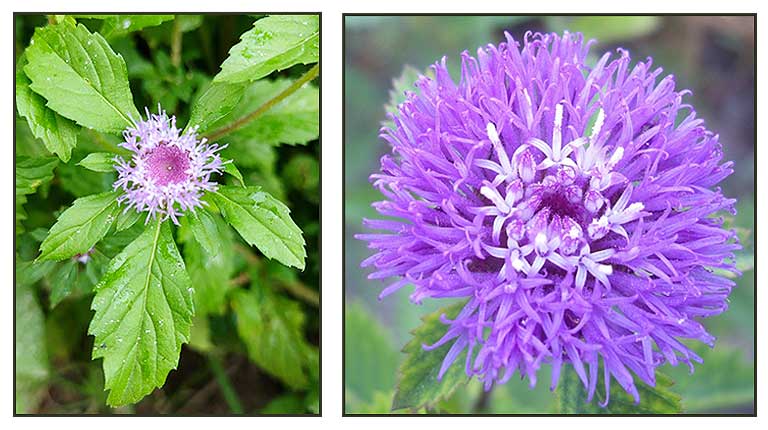
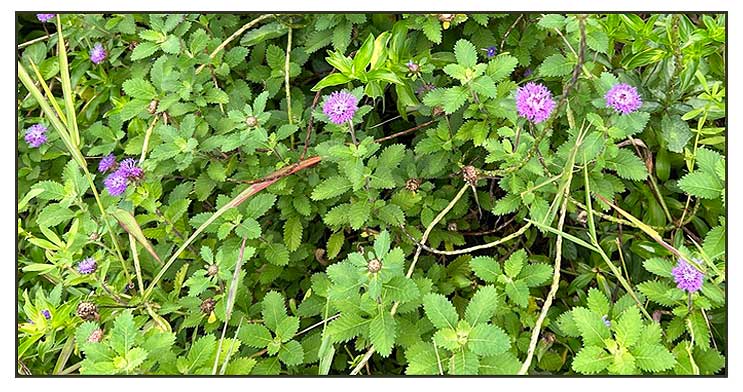
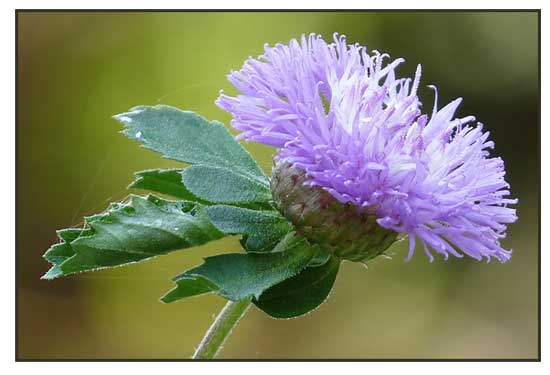
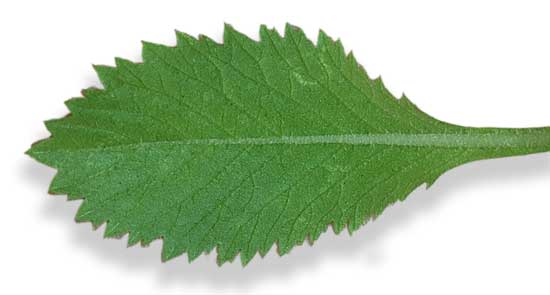
• Centratherum punctatum is a sprawling to erect annual or short-lived perennial herb, typically 0.5–1 meter tall, occasionally reaching 1.5 meters. Its key characteristics include: Stems: Slightly ridged, densely hairy, becoming woody at the base; branching divaricate, often purplish when young. Leaves: Opposite, obovate to elliptic (2–6 cm × 0.6–2 cm), with 10–18 pairs of acute, serrated teeth; glabrous to sparsely hairy, gland-dotted, on short petioles (0.5–1 cm) (Prance & Jongkind, 2015). Flowers: Showy, purple to lilac capitula (2–3 cm wide), in terminal or axillary heads; disc florets tubular, ray florets absent; bloom year-round in tropics (Kew Science, n.d.). Fruit:Cylindrical achenes (2–3 mm), ribbed, with a pappus of short bristles, aiding wind dispersal.
(NMPP Database)
• Growth form: Small herbaceous plant with branched growth habit. Foliage: Light green leaves are elliptic with toothed leaf margin. Stems: Round and pubescent. Flowers: Compound flowers are composed of light purple disk florets without ray florets. The outer florets are longer than the inner florets. The disk florets have erect bristles at their base known as pappus. (Flora & Fauna Web)
Distribution
- Introduced; naturalized. (1) (2)
- In Babuyan islands; in Luzon: Bataan, Benguet, Ilocos Norte, Mountain Province, Rizal; In Mindanao: Misamis Oriental; Panay.
- In forest edges, thickets, and clearings; chiefly at medium elevation; up to 1500-200 m. (1)
- Native to Argentina Northeast, Bolivia, Brazil North, Brazil Northeast, Brazil South, Brazil Southeast, Brazil West-Central, Canary Is., Colombia, Ecuador, French Guiana, Guyana, Paraguay, Peru, Venezuela. (2)
- In Australia, described as a weed in disturbed places.
 Constituents
- Phytochemical screening of ethanolic extract of leaves revealed presence of tannins, saponins, flavanones, alkaloids, terpenes, and flavonoids. (see study below) (3)
- Phytochemical analysis of powdered leaf extract revealed flavonoids, tannins and cardiac glycosides. (see study below) (4)
- Qualitative screening of C. punctatum leaves using different extracts viz., n-hexane (nH), ethanol (E), and aqueous (A) yielded: tannins (A), saponins (nH, E, A), phenols (E,A),reducing sugar (nH, E, A), alkaloids (A), with absence of flavonoid, terpenoid, steroid, and carbonyl compounds. (5)
- GC-MS analysis of methanol leaf extracts of regenerated C. punctatum yielded 37 phytocompounds, including some important bioactive compounds: phytol, 1,6-octadien 3,5-dimethyl-cis, 4,8-dimethylnona-3,8-dien-2-one, 2,6-octadiene, stimasterol, chondrillasterol, lanosteryl acetate, etc. Callus yielded 57 phytocompounds: Stigmasterol, guanosine, and tri-decanoic acid as major ones. Roots extract revealed 23 phytocompounds, with important compounds: stigmasterol, trimethylsilyl derivative, chrysantenyl 2-methylbutanoate, 4-tert-butoxybutan-1-ol, etc. Order of phytocompounds present in tissue sources are: callus>leaf>root. (13)
Properties
- Studies suggest antioxidant, chemoprotective, antimicrobial, anti-inflammatory wound healing properties.
- Toxicity / Poisoning: Toxicity and natural poisoning have been reported in livestock. While compre-hensive human toxicity data are limited, field outbreaks and studies in Brazil show that ingesting large amounts of C. punctatum can cause clinical symptoms including soft feces, diarrhea, dehydration, and rapid weight/body condition loss. (see study below) (15)
Parts used
Leaves, flowers, seed oil.
Uses
Edibility
- No information found on edibility or culinary use.
- Herbal tea used from stomachaches.
- Caution: While use in traditional herbal practices, human toxicity data are limited. Reports of toxicity on livestock, cautions against consumption. Also, in-vitro studies on human cells have shown high concen-trations of leaf extracts have suggested cytotoxic properties. (see study below: 15)
Folkloric
- No reported folkloric medicinal use in the Philippines.
- In folk medicine, used for treatment of liver problems, intestinal discomfort, and ulcers.
- Used for treating wounds, infections, depression, tumors, hypertension, and inflammatory conditions.
- In Ayurveda, noted for its yava-sevana property, i.e., alleviating kapha-related hair disorders. Early 20th century Ayurvedic practitioners recommended it as a "dipana" (digestive enhancer) to improve appetite in convalescent patients.
- Fresh leaf juice combine with coconut oil used for scalp massages. Dried leaf powder mixed with buttermilk taken internally for mild indigestion. (6)
-
In coastal Odisha, an old fisherwoman's recipe involves boiling petals with tamarind to produce a sour decoction used for "balancing pitta" and clarifying the scalp. (6)
- Women in rural Bengal and Orissa, crushed fresh leaves applied as paste overnight to itching scalp and to prevent premature graying. (6)
- In British colonial era, botanical surveys documented use of C. punctatum as "hair tonic."
-- In Nigeria, leaf decoction used for treatment of skin infection,. Aerial parts applied to swelling. Whole plant extracts traditionally used for tumors. Leaf decoctions used for treatment of malaria. Leaf pastes applied to cuts. (10)
- Flowers used for wound healing, and antidote for snake bite.
- Used to increase libido, as pain killer, and antidote for snake bite. (12)
- In Brazil, used as relaxative and for treatment of heart problems.
-
Seed and leaf oil used for treatment of itchy skin afflictions and skin infections such as impetigo, acne and fungal infections of skin and nails.
Others
- Cosmeceutical: In modernized Ayurveda, Keshavardhini is used as ingredient in proprietary hair oils and shampoos. (3) Extracts used in hair oil preparations and as skin whitening and antiageing agents.
- Cultural: In Nigeria, occasionally used in traditional rituals for its aesthetic appeal and perceived protective properties. (10)
Studies
• Antioxidant / Chemoprotective / Leaves: Study evaluated an ethanolic extract of C. punctatum leaves for antioxidant activity, and cytogenotoxic and chemoprotective effects in Allium cepa and Drosophila melanogaster cells. DPPH, ABTS, and TPC showed 142.10 µg/mL, 623.94 mM Trolox/g, and 77.78 mg EAG/g, respectively. In A. cepa and SMART (somatic mutation and recombination test) bioassays, none of the EE concentrations (3.9, 15.6, 62.5, and 250 µg/mL) were cytogenotoxic. The EE showed a protective effect (pre-, simultaneous, and post-treatments) against methyl methanesulfonate damage at all concentrations in A. cepa and antigenotoxic activity (simultaneous) in SMART against doxorubicin damage. Results suggest a potential source of compounds with antioxidant and chemoprotective properties. (3)
• Antimicrobial / Leaves: Study evaluated powdered leaf extract of C. punctatum for antimicrobial, antioxidant, and human cell toxicity properties. Acetone, methanol, and ethyl acetate extracts of leaves showed inhibitory activity against four of five pathogenic bacteria including the MDR Acinetobacter baumanii and Staphylococcus aureus. Acetone and EA extracts showed antifungal activity. (4)
• Anti-Inflammatory: Study evaluated the potential of ethanol extract as an anti-inflammatory agent. HPTLC and LC-MS/MS identified the presence of flavones, kaempferol, glycoside isorhamnetin-3-O-rutinoside, and kaempferol-3-glucoside. Extract exhibited antioxidant activity by DPPH assay and IC50 of 271.6 µg/ml during inhibition of protein denaturation, 186.8 µg/mL during membrane stabilization, and 278.2 µg/mL for proteinase inhibition. In silico evaluation using molecular docking protocol with receptors of COX-2, TNF-α, IL-1ß convertase, and Histamine H1 predicted high binding affinity of isoflavones and isoflavone glycosides of C. punctatum. (11)
• Wound Healing / Protease / Flowers: Flowers are used in traditional medicine for wound healing. Protease, one of the key enzymes in wound healing, has not been reported in flowers of C punctatum. Study evaluated the protease activity of floral extracts Floral extract showed higher protease activity when extraction was carried out at pH 4.0. Study suggests the protease activity of the flower may be responsible for the wound healing property of flowers of C. punctatum. Isolation and purification of proteases from the plant, in vitro and in vivo testing of the enzyme of wounds, will further elucidate the wound healing potential of the herb. (12)
• Antioxidant / Anti-Inflammatory / Cream Formulation of Leaves: A cream formulation from methanolic extract of C. punctatum leaves showed antioxidant and anti-inflammatory activities by FRAP assay and protein denaturation method respectively. The ME showed good amount of phenolic content, which may be responsible for its antioxidant and anti-inflammatory properties. (14)
• Naturally Occurring Poisoning in Sheep: A widely distributed plant in northeaster Brazil, it has been associated with natural poisoning in cattle and goats, as well as as experimental intoxication in sheep. Study reports on two outbreaks of C. punctatum poisoning in sheep in northeastern Brazil. Outbreak 1: Sheep grazing in forage cactus field heavily invaded by C. punctatum developed soft feces, diarrhea, dehydration. All animals recovered spontaneously when access to plant was prevented. Outbreak 2: Four sheep received freshly harvested forage, predominantly composed of C. punctatum. Two lambs developed severe gastrointestinal disease and died.
Study reports on necropsy findings. The convergence of epidemiological, clinical, laboratory and pathological findings, together with recovery after plant withdrawal, supports C. punctatum as cause of the disease. (15)
• Anti-Inflammatory / Silver Nanoparticles / Leaves: Study reports on the natural, economical, and efficient synthesis of silver nanoparticles (AgNPs) using aqueous extract of C. punctatum leaves. The AgNPs showed anti-inflammatory potential by inhibition of protein denaturation, RBC membrane stabili-zation and proteinase inhibition, and antioxidant activity by DPPH assay with IC50 of 203.6 µg/mL. (16)δ
Availability
- Wild-crafted.
- Seeds, live plants in the cybermarket. |