|
Gen info
- Orthosiphon aristatus is a plant species in the family Lamiaceae (also known as Labiatiae).
- It is used in landscaping to attract bees butterflies, and hummingbirds to its nectar.
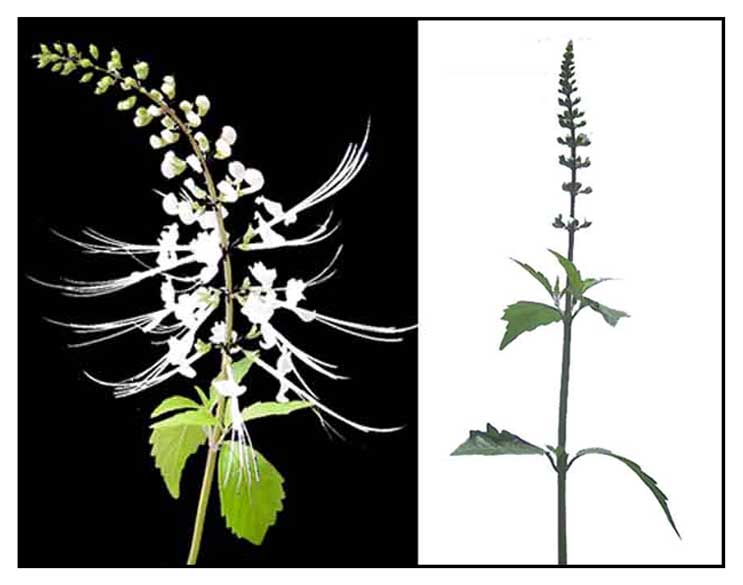
- The common names derives from the flowers' white and bluish filaments resembling a cat's whiskers.
- Etymology: The genus name orthosiphon is a fusion of Greek words orthos, meaning straight, and siphon, meaning tube, referring to the elegant tubular structure. The specific epithet aristatus derives from Latin, means "awned" or "bearded", referring to the long, protruding stamens that resemble whiskers.
 Botany Botany
• Kabling-gubat is a slender, smooth or hairy undershrub, 30 to 60
centimeters high. Leaves in distant pairs, narrowed into the stalk, ovate,
5 to 10 centimeters long, pointed at both ends, coarsely toothed at the margins.
Flowers are borne in very lax racemes. Calyx is bell-shaped,
with a naked throat and two slender lower teeth. Corolla is 2.5
centimeters long, smooth, white or purplish, very slender in the tube, and
thrice as long as the calyx. Nutlets are oblong and compressed.
• Growth form: Perennial herb up to 1 m tall. Foliage: Dark green, smooth leaves are lighter green on the bottom with a toothed leaf margin (5 cm long, 2.5 cm wide). Stems: Purplish stems are 4-sided and smooth. Flowers: White, 2-lipped flowers are hairy with 5 cm-long, whisker-like stamens (male part producing the pollen). Flowers are arranged in a conical-shaped inflorescence (6-10 cm long).
(Flora & Fauna Web)
Distribution
- Native to the Philippines.
-
In thickets, at low and medium
altitudes in Cagayan, Isabela, Nueva Ecija, Pampanga, Bulacan, and Rizal Provinces in Luzon; and in Coron.
- Also native to Assam, Bangladesh, Bismarck Archipelago, Borneo, Cambodia, China South-Central, China Southeast, Hainan, India, Jawa, Laos, Lesser Sunda Is., Malaya, Maluku, Myanmar, New Guinea, Nicobar Is., Queensland, Sri Lanka, Sulawesi, Sumatera, Taiwan, Thailand, Vietnam. (23)
 Constituents Constituents
- Leaves contain a high percentage of
potassium salts (0.738 gm in 100 grams of fresh leaves.
- From dried leaves, a small amount of volatile oil and a bitter alkaloid,
orthosiphonin.
- Studies yielded flavonoids, carbohydrates, tannins, saponins, phenols, and terpenoids.
- Phytochemical screening yielded twenty compounds: nine lipophilic flavones, two flavonol glycosides, and nine caffeic acid derivatives. Caffeic acid derivatives included the major compounds rosmarinic acid and 2,3-dicaffeoyltartaric acid.
- Major constituents are sesquiterpenes including ß-elemene, ß-caryophyllene, orthochromene A, acetovanillochromene, sinensetin, tetramethyl scutellarein, eupatorin, neoorthosiphons A and B. (25)
- Study of methanolic extract of aerial parts yielded five new isopimarane-type diterpenes [orthosiphols F-J (1-5)] and two new diterpenes [staminols A (6) and B (7)] and three new highly-oxygenated staminane-type diterpenes [staminolactones A (8) and B (9) and norstaminol A (10)] along with 16 known compounds, 7,3',4'-tri-O-methylluteolin (11), eupatorin (12), sinensetin (13), 5-hydroxy-6,7,3',4'- tetra- methoxyflavone (14), salvigenin (15), ladanein (16), tetramethylscutellarein (17), 6-hydroxy-5,7,4' - trimethoxy- flavone (18), vomifoliol (19), aurantiamide acetate (20), rosmarinic acid (21), caffeic acid (22), oleanolic acid (23), ursolic acid (24), betulinic acid (25), and b-sitosterol (26). (see study below) (39)
- Study of aerial parts isolated four flavonoids, sinensetin (1), salvigenin (2), tetramethylscutellarein (3) and 3,7,4′-tri-O-methylkaempferol (4), together with a diterpenoid named orthosiphol A (5). (see study below) (53)
- Study of aerial parts isolated 2 new compounds, oraristatin A (1) and oraristatinoside A (2), one new natural compound (2 S)-methyl-6,7-dihydroxytropate (3),and 11 known phenolic metabolites. (see study below) (58)
Properties
- Considered anti-allergic, anti-inflammatory, anti-bacterial, diuretic
and hypoglycemic.
- Studies have showed diuretic, antioxidant, anti-tumor, hypouricemic, histamine antagonist, antiasthma, nephroprotective, anti-diabetic, antihypertensive, anthelmintic, anti-obesity, anti-inflammatory, memory-improving, antimicrobial, hepatoprotective, antifungal, antiviral properties.
Parts
utilized
Leaves, aerial parts.
 Uses Uses
Edibility
- Tea made from leaves and fresh or dried flowers.
- Leaves are bitter with a characteristic odor.
- Leaves reportedly rich in potassium (738 mg/ 100 g of fresh leaves).
Folkloric
- Leaves used for gout and renal disorders.
- Also used for its diuretic effect.
- Poultice of leaves or chewed leaves stuffed onto painful tooth.
- In South East Asia and Australia, frequently used for renal inflammation, kidney stones and dysuria.
- In Holland and France, reported use for treatment of genitourinary diseases.
- In Malaysia, traditionally used for bladder catarrh, diabetes, kidney diseases, for hypertension and as diuretic.
- In Java, leaves made into tea for treatment of diseases of the kidney and bladder. Used as diuretic and for treatment of diabetes, rheumatism, hypertension, and biliary lithiasis. In Malaysia, used for treatment of catarrh; plant decoction used to eliminate bladder stones. In Japan, used a tea to facilitate body detoxification. (24)
Others
- Java Tea is derived from Orthosiphon aristatus, touted
for its diuretic action, kidney flushing benefits for kidney and bladder
stones.
- New age uses: Extracts used for skin whitening and as anti-cellulitic.
Creams and lotions used to decrease skin oiliness.
Studies
• Antihypertensive / Methylripariochromene A:
Methylripariochromene A (MRC), isolated from the leaves of OA showed
blood pressure lowering effect and a vasodilating action, decrease cardiac
output and diuretic action. It supports the traditional use of the plant
for hypertension treatment. (1)
• Na+,K+-ATPase Inhibition:
In the study of ten Thai indigenous medicinal plants, O aristatus showed
high potent inhibitory activity. (2)
• Inhibition of Smooth Muscle Contraction:
Three Indonesian medicinal plants were studied for their biologically
active constituents. Three benzochromenes
and four isopimarane-type diterpenes isolated from the leaves of Orthoshiphon
aristatus were shown to exhibit inhibitory effects on smooth muscle
contractions caused by several stimulants (3)
• Pimarane-type Diterpenes / Suppressive Effect on Thoracic Aortic Contraction: Study isolated pimarane-type diterpenes, neoorthosiphols A and B, and other known compounds from the water decoction of leaves of O. aristatus. The compounds exhibited a suppressive effect on contractile responses in rat thoracic aorta. (10)
• Diuretic:
O. stamineus extract exhibited dose-dependent diuretic activity with
a significantly increased excretion of K. There was also slight increase
of BUN, creatinine and blood glucose levels, although statistically
significant when compared to control , the levels were considered within
normal range. Although less potent than furosemide and HCTZ, care should
be taken in its consumption because of alterations in kidney parameters.
(4)
• Nephrolitihiasis
Study : In a randomized control trial
of Orthosiphon versus placebo, no statistically significant difference
was found. (6)
• Hepatoprotective
: A study on the
methanol extract of leaves of Orthosiphon stamineus against paracetamol-induced
hepatotoxicity showed treatment with OS extract brought back the altered
biochemical markers in a dose-dependent manner suggesting hepatoprotective
activity. (2) Study showed dose-dependent in vivo hepatoprotective activity of Et-F on liver injury induced by CCl4 in mice. (8) Study showed the hepatoprotective effect of Orthosiphon stamineus which was attributed to antioxidant and free radical scavenging properties. (28)
• Diuretic /
Hypouricemic : A study on the methanol
extract of OS showed significantly increased excretion of sodium and
potassium excretion in a pattern comparable to hydrochlorothiazide.
It also showed reduced serum urate level in hyperuricemic rats. Study
provides evidence towards a diuretic and hypouricemic effect in rats. (9)
• Antioxidant /
Anti-Inflammatory : A study
results showed the ethanolic extract and its bioactive compound, ursolic acid, suppress LPS-induced NO and PGE2 production by inhibiting ROS generation, along with reducing expression of iNOS and COX-2 in RAW 264.7 cells. (11)
• Radical Scavenging Activity /
Flavonoid : Study concludes a correlation between flavonoid content and radical scavenging activity. In the study, F obovata, D lobbiana and O aristatus exhibited the highest free radical scavenging activity.
(12)
• No Diuretic Effect / Double-Blind Placebo-Controlled Study: In a study of four traditional Vietnamese herbal remedies (Z mays, I cylindrica, Plantago major, O stamineus) claiming to increase diuresis, no diuretic effect was seen in a placebo-controlled double-blind crossover model.
• Antioxidant / Hepatoprotective : Study showed dose-dependent in vivo hepatoprotective activity of Et-F on liver injury induced by CCl4 in mice. An n-butanol fraction showed higher in vitro antioxidant activity on FRAP assay than others in the DPPH assay. Results show O. aristatus is a potential source of natural antioxidants and hepatoprotective agents. (15)
• Nephroprotective: Study in rats investigated the nephroprotective effect of O. stamineus in gentamicin-induced renal damage. Lab parameters were improved and the extent of renal damage was decreased by a methanolic extract of O. stamineus. (16)
• Histamine Antagonist / Anti-Asthma: Study showed OA exhibited bronchodilator and antihistamine action as theophylline did. Results propose several mechanisms of actions: (1) chemical constituents that might stimulate adenyl cyclase that stimulates increase cAMP production from ATP, with consequent vasodilatation and bronchodilation. (2) extract may inhibit phosphodiesterase with consequent increase in cAMP (3) extract could be a histamine antagonist, or (4) anticholinergic activity. (19)
• Anti-Inflammatory / Leaves: Study of leaf extracts showed anti-inflammatory activity. The flavonoid rich chloroform extract fraction containing sinensetin, eupatorin, and 3'-hydroxy-5,6,7,4'-tetramethoxyflavone, significantly reduced rat hind paw edema, NO, and decreased dye leakage. Results suggest the anti-inflammatory effects may be due to the presence of flavonoid compounds affecting the NO pathway. (18)
• Anthelmintic: Study evaluated the efficacy of O. aristatus aqueous crude extract as anthelmintic. Results showed effective control of swine parasites with decreased number of worm eggs and reduced number of adult worms. (20)
• Antihypertensive: Study investigated the effect of oral O. stamineus on the blood pressure of spontaneously hypertensive rats. A two-week administration showed significant mean reduction of blood pressure among SHR. (21)
• Antioxidant / Toxicity Study: Study evaluated the antioxidant activity and potential toxicity of a 50% methanolic extract of leaves after acute (5000 mg/kg single dose) and subchronic (1250, 2500, and 5000 mg/kg/day for 28 days) administration in rats. Results showed good superoxide radical scavenging, hydroxyl radical scavenging, ferrous ion chelating, and antilipid peroxidation activities. No mortality or any signs of toxicity was detected in the acute and subchronic toxicity studies. The oral lethal dose was more than 5000 mg/kg with NOAEL and MEOS for both male and female rats of 5000 mg/kbw per day. (22)
• Antiobesity: Administration of O. stamineus extract for two weeks significantly decreased total food intake, weight gain and visceral fat deposition in rats Decrease food intake was associated with an increase of hypothalamic POMC expression while decreasing NPY expression was caused by elevation of plasma leptin level. (24)
• Drug Interactions / Lithium: (Moderate interaction) Lithium interacts with Java tea. Java tea might decrease the excretion of lithium and increase its blood level which may require an adjustment of its dose. (26) Patients should also be cautioned that the herb can augment the prescription diuretic effects.
• Nephroprotective /
Ethylene Glycol Induced Urolithiasis / Leaves: Study of ethanolic extract of leaves of O. stamineus showed nephroprotective activity in ethylene glycol induced urolithiasis in albino rats. Results showed an effective decrease in the abnormal level of biomarkers involved in the kidney defect. (27)
• Potentiation of Herb-Drug Interaction / Interaction with Human Cytochrome P450: Extract showed moderate inhibition towards CYP2C9 with IC50 of 49.90, 89.24, and 97.82 µg/mL for CYP1A2, CYP2D6, and CYP3A4, respectively. Results suggest O. stamineus extract may potentiate herb-drug interaction via CYP inhibition. (29)
• Anti-Diabetic / α-Glucosidase Inhibitors / Leaves: Study of an aqueous extract of leaves isolated methyl caffeate (1), 3,4-dihydroxy benzaldehyde (2), methyl rosmarinate (3) and rosmarinic acid (4). These compounds were active against α-glucosidase from the rat intestine (maltase and sucrase) with IC50 values in the range of 0.061-0.738 mM, equipotent to standard antidiabetic drug acarbose. (30)
• Effect of Storage / Leaves and Stems: Study evaluated the effect of different storage durations on the phytochemical profile of O. aristatus leaves and stems examining total phenolics and flavonoid contents, antioxidant capacities. The leaf extract was likely to have more phytochemicals than stem extract, particularly caffeic acid derivatives including glycosylated and alkylated caffeic acids. There was higher ration of total phenolics to total flavonoid content with higher antioxidant capacities for the leaf extracts. Rosmarinic acid dimer and salvianolic acid B were major constituents. The phytochemical profile was at least stable for a month stored at 4ºC. As herbal tea, it has comparable radical scavenging activity as other tea samples, although lower in caffeine content. (31)
• Antibacterial / Leaf and Leaf Callus: Study evaluated the antibacterial efficacy of various extracts of leaf and leaf derived callus against B. cereus, B. subtilis, S. aureus, S. pyogenes, E. aerogenes, E. coli, P. mirabilis, and K. pneumonia. An ethanolic leaf extract showed maximum inhibitory activity with 28 mm zone of inhibition against P. mirabilis with MIC of 0.32 mg/ml. The ethanolic callus extract showed maximum bioefficacy against S. aureus with 26 mm ZOI and MIC of 0.64 mg/ml. Bioefficacy study confirmed strong antibacterial potential of leaf and leaf derived callus of O. aristatus. (32)
• Cognition Enhancer / Invention: Invention related to the use of compounds of isopimarane diterpene type, e.g. obtainable from extracts of Orthosiphon species, for use in the management of cognitive performance. (33)
• Antidiabetic: Previous study has shown that the sub-fraction of a chloroform extract was able to inhibit the rise of blood glucose levels in a GTT. This study evaluated the chronic effect and possible mechanism of action of a bioactive chloroform sub-fraction of O. stamineus using in vitro methods and STZ-induced diabetic rats. Results showed significant reduction of glucose absorption in everted rat jejunum. There was no evidence of effect on insulin release. Results suggest an extra-pancreatic mechanism. (34)
• Cytotoxicity / Leaves and Flowers: Study evaluated the cytotoxicity and phytochemical content of O. stamineus leaves and flowers solvent extracts. Cytotoxicity evaluation by MTT assay towards Vero cell showed CC50 values between 3.4-7.4 mg/ml, and can be considered nontoxic. Phytochemical screening yielded terpenes, alkaloids, and phenolics. (35)
• Flavonoids Eupatorin and Sinensetin / Anti-Inflammatory / Leaves: Study evaluated the anti-inflammatory properties of Orthosiphon stamineus leaf chloroform extract, CF2 fraction, flavonoids eupatorin and sinensetin. Results showed the chloroform extract and CF2 fraction inhibited iNOS expression, NO production, and PGE2 production. Eupatorin and sinensetin inhibited iNOS and COX-2 expression and production of NO and PGE2. The extracts and compounds also inhibited tumor necrosis factor-α (TNFα) production. Eupatorin and sinensetin also inhibited LPS-induced activation of transcription factor signal inducers and also inhibited carrageenan-induced paw inflammation in mice. Results suggest potential for use in the development of novel anti-inflammatory treatments. (36)
• Protective Mechanisms in Diabetes Using Urine Metabolomics: Study evaluated the metabolic protective mechanism of O. stamineus in diabetes mellitus using STZ-induced experimental model in rats. Results showed reversal of metabolic abnormalities comparable to that of glibenclamide. A systematic metabolic pathways analysis showed the aqueous extract contributed to antidiabetic activity mainly through regulation of tricarboxylic acid cycle, glycolysis/gluconeogenesis, lipid and amino acid metabolism. (37)
• Antifungal to Candida albicans / Leaves: Study evaluated the antifungal potential of Orthosiphon aristatus leaf extract against growth of Candida albicans. While ketoconazole showed greater inhibition of C. albicans, Orthosiphon aristatus leaf extract showed inhibition of C. albicans growth with most optimal inhibitory concentration of 25%. Results suggest a potential as alternative natural anticandidiasis drug. (38)
• Cytotoxicity Towards Highly Liver Metastatic Murine Colon Carcinoma Cells: Study of methanol extract of aerial parts of Orthosiphon stamineus yielded five new isopimarane-type diterpenes (orthosiphols F-J [1-5]), two diterpenes (staminols A and B [6,7]), three new highly oxygenated staminane-type diterpenes (staminolactones A and B and norstaminol A [8,9,10]), along with 16 known compounds. All isolated diterpenes, except for 4, and flavonoids 11, 12, 16, and 18 showed weak cytotoxicity against highly liver metastatic murine colon 26-L5 carcinoma cells, with ED50 between 50 and 90 µg/ml. (see constituents above) (39)
• Wound Healing / Diabetic Foot Ulcer: Study evaluated the mechanism by which phytochemicals from O. aristatus promote DFU (diabetic foot ulcer) healing. DFU healing was characterized by reduction in blood glucose level, attributed to concentration of extract constituents such as caffeic acid, rosmarinic acid, and sinensetin. The phytochemicals possibly induce insulin secretion and sensitivity, improved lipid profile, and stimulate glucose uptake. Antioxidant, anti-inflammatory, and antihyperglycemic properties of the plant may also contribute to the healing effect. No adverse effects were reported with oral administration. (41)
• Attenuation of Alzheimer-like Pathology / Anti-Inflammatory / ß-Amyloid Inhibitory: Study evaluated the effect of O. aristatus on Alzheimer's disease (AD). Results showed the OA extract could increase cell survival, inhibit expression of TNF-α, IL-6, IL-1ß, COX-2, and iNOS, and increase BDNF levels. It is inferred the OA may attenuate Aß-induced cytotoxicity by retarding the production of inflammatory-related factors. Animal behavior testing suggested learning and memory-improving ability of the extract. The memory-improving effect suggests a potential therapeutic target for the treatment of neurodegenerative diseases like AD. (42)
• Antimicrobial / Leaves: Study evaluated the antibacterial activity of methanolic extract O. aristatus leaves against Gram(+) Streptococcus mutans, S. epidermis, and Propionibacterium acnes and Gram(-) Escherichia coli and Klebsiella pneumonia using well diffusion assay, MIC and MBC. Qualitative screening showed presence of glycosides, flavonoids, alkaloids, saponins, tannins, phenolic, and terpenoids. Extracts showed inhibition of S. epidermis, S. mutans, P. acnes and K. pneumonia with ZOI ranging from 9 to 30 mm. (43)
• Molecular Mechanism of Antihyperuricemic Effect: Study evaluated the uricosuric effect in hyperuricemia in rats induced by 10% fructose and 20% yeast and measuring uric acid (UA) levels in serum and cecal contents and the effect of O. aristatus on gut microbiota and its metabolites. Resuults showed OA decreased serum UA levels and increased UA levels in cecal contents in hyperuricemic rats. OA improved intestinal morphology and altered the composition of gut microbiota and metabolites. Results suggest OA exerts UA-lowering effect by regulating gut microbiota and ABCG2 expression, suggesting potential for the treatment of hyperuricemia. (44)
• Effect in Atopic Dermatitis: Study evaluated the potential of OA extract in improving skin lesions in atopic dermatitis using BALB/C mice in an atopic dermatitis model induced with DNCB. Administration of OA extract reduced the severity of skin lesions. Histologically, there was reduced epidermal thickness and mast cell infiltration. There dose dependent decreases in IgE, IL4, IL22, and PGE2. Results showed potential for improving lesions in atopic dermatitis by regulating Th2 cytokines and anti-allergic activity. Study suggests potential for a herbal treatment for atopic dermatitis. (45)
• Alleviation of Non-Alcoholic Fatty Liver Disease: Non-alcoholic fatty liver disease (NAFLD) is the most prevalent form of liver disease. OA has showed to attenuate obesity and hyperglycemic condition. Study showed 8 weeks of feeding C57BL/6 mice with standardized OA extract (400 mg/kg) inhibited the progression of NAFLD. There was significant reduction of liver enzymes, reduction in glucose, insulin, total cholesterol, triglycerides, LDL and atherogenic risk index relative to negative control. Histologically, OA reversed hepatic fat accumulation and reduced NAFLD severity. Antioxidant activity was suggested by increased SOD and reduction in hepatic MDA levels. There was decrease in serum pro-inflammatory mediators IL-6 and TNFα, indicating anti-inflammatory activity. There was significant reduction of intra-cellular fat accumulation in HepG2 cells treated with palmitic-oleic acid. Results suggest antioxidant mechanisms are the primary mechanism of action of anti-NAFLD effects of OA. (46)
• Sinensetin / Antiproliferative and Apoptotic in HepG2 cells: Orthosiphon extracts have been found to be cytotoxic to hepatocellular carcnoma (HCC) cells, which is attributed to phytochemical contents. Study evaluated the effect of purified Sinensetin from OA on HCC in vitro. Results showed 24-hour treatment with the purified compound markedly inhibited the survival of HepG2 cells, with IC50 of 39.93 µg/mL. Treated HepG2 cells showed characteristic morphological changes, including DNA fragmentation, confirming apoptosis induction. Sinensetin induced cell cycle arrest at G0/g1 phase, modulated key signaling molecules, down-regulation of apoptotic Bcl-xL, and upregulation of expressions of tumor suppressors TRAIL and PTEN. Results suggest efficacy of Sinensetin against HCC. (47)
• Effect on Crystallization of Struvite / Urolithiasis / Leaves: magnesium ammonium phosphate hexahydrate (MgNH4PO4.6H2O), commonly known as struvite crystals, may form kidney stones in urinary tracts which can lead to infections and urolithiasis. Study evaluated the effect of OA leaves extract on crystallization behavior of struvite. Addition of A. aristatus leaves extract resulted in fragmentation of struvite crystals, suggesting the extract could interrupt the growth of cyrstals. Results suggest potential for urinary calculi treatment, since fragmented crystals have less tendency to conglomerate. (48)
• Granule Preparations / Herbal Beverage Candidate / Leaves: O. aristatus leaf extract purple varieties developed into granule dosage forms can facilitate consumption, storage, and extend shelf-life of the product. Study evaluated the formulation of granule preparations, with comparison of lactose and maltodextrin fillers to produce the best formula. Granules were evaluated for moisture content, flowability, compressibility index, particle size distribution, and granule dissolving time. Results showed OA leaf extract can be effectively formulated into instant granule preparations suitable for herbal beverage or use for alternative medicine. Modifying the filler material can help maintain the physical stability of the granule preparation. (49)
• Cynaroside Interaction with Malaria and Asthma: Study evaluated the interaction between cynaroside, a natural component in OA plant extract, with TNF-α as stimulant in the context of malaria and asthma. Results provides understanding of the potential of cynaroside in regulating the immune response to malaria and asthma through its intervention with TNFα. Results can provide basis for further research in development of more targeted and effective therapies for both diseases. (50)
• Sinensetin / Anti-Breast Cancer Activity: HPLC with acetonitrile-water mobile phase successfully isolated sinensetin to 95% purity. In-silico screening of OA-derived bioactive compounds revealed that flavonoids (including sinensetin), polyphenols (2,3-O-dicaffeoyltartaric acid, rosmarinic acid), diterpenoid (trans-ozic acid), triterpenoids, dipeptide (aurantiamide acetate) have good binding affinities with 17β-HSD1, ErbB2/HER2 and PI3K-PKB/Akt proteins. Results suggest OA can be a rich source of inhibitors targeting molecular pathways involved in breast cancer, offering promising therapeutic benefits. (51)
• Therapeutic Potential for Hypertension: Study evaluated the pharmacological network of OA and its therapeutic potential for hypertension. TP53 exhibited the highest degree of centrality, while scutellarein and aurantiamide acetate exhibited highest affinities in molecular docking with TP53. Findings provide novel insights into OA's potential as adjunctive therapy for hypertension. (52)
• Orthosiphol A / Hypoglycemic via α-Glucosidase Inhibition / Aerial Parts: Study identified the putative agents responsible for the antidiabetic activity using an α-glucosidase-guided isolation. Four flavonoids were characterized, namely: sinensetin (1), salvigenin (2), tetramethylscutellarein (3) and 3,7,4′-tri-O-methylkaempferol (4), together with a diterpenoid named orthosiphol A (5). Flavonoids 3 and 4 inhibited α-glucosidase with IC50s of 6.34 and 0.75µM, respectively. Orthosiphol A (5) selectively inhibited intestinal maltase with IC50 of 6.54 mM. Kinetic study of compound 5 indicated it retarded maltase function in a noncompetitive manner. (53)
• Emulgel / Topical Anti-Inflammatory: Study reports on the development of an O. aristatus emulgel in three formulations (F1,F2,F3) and its anti-inflammatory effects. Anti-inflammatory activity was evaluated using a cell-based assay, measuring inhibition of pro-inflammatory mediators, such as cytokines, in stimulated cells. As concentration of emulgel increased, inhibition of pro-inflammatory mediators also increased. Measured parameters were pH, spreadability, viscosity, in-vitro drug release, in-vitro cytotoxicity assay. Phytochemical screening of extract use revealed alkaloids, tannins, flavonoids, terpenoids, phenols, and glycosides, with absence of saponins and steroids. All 3 formulations exhibited significant inhibitory effect, with effect attributed to bioactive compounds present. (54)
• Antidiabetic Synergism / O. aristatus and Oryza sativa: Studies have shown, traditionally and scientifically, that O. aristatus and Oryza sativa var. glutinosa have antidiabetic activity. Study evaluated the antidiabetic activity of OA and OSg on single and combined extracts, using α-glucosidase inhibitory method. Single extracts showed α-glucosidase inhibitory activity. The combination of 96% ethanol extract of OSg and OA in a ratio of 2:1 was most effective in increasing inhibitory activity. (55)
• Antiviral / Potential for Inhibition of COVID-19 Replication / Review: Review suggests O. aristatus has great potential to be developed into an antiviral herbal medicine and source of new antiviral agents such as sinesetin and rosmarinic acid. In silico study showed the main content, rosmarinic acid, has potential to inhibit replication of COVID-19. (56)
• Silver Nanoparticles Incorporated with Zeolite A / Antibacterial Wound Healing: Study reports on a novel in-situ biosynthesis of AgNP-incorporated synthesized zeolite (AgNP-SZ)
using O. aristatus leaves. Antibacterial activity testing against E. coli and S. aureus showed the AgNP-SZ had higher antibacterial activity than Ag-SZ. Materials were not cytotoxic to HSF 1184. The AgNP-SZ promotes cell migration and proliferation higher than AgSZ. Results showed a biocompatible antibacterial wound healing agent of AgNP-SZ can be synthesized using an in situ approach using plant extract. (57)
• Antimicrobial Phenolic Metabolites / Aerial Parts: Study of aerial parts isolated 2 new compounds, oraristatin A (1) and oraristatinoside A (2), one new natural compound (2 S)-methyl-6,7-dihydroxytropate (3),and 11 known phenolic metabolites. Compound 2 showed weak antibacterial activity against Gm(+) and Gm(-) bacteria, while compounds 6 and 7 suppressed growth of 3 Gm(+) bacteria and a yeast. (58)
 Toxicity
Study Toxicity
Study
•
Chronic Toxicity Test:
A study on the chronic toxicity of water extract of Orthosiphon aristatus
on Wistar rats showed that high doses of the extract caused a reduction
of serum sodium levels in all extract-treated groups and increase alkaline
phosphatase level and incidence of hydrocalyx in male rats, therefore
advising that the prolonged use of OA should be avoided. (7)
Availability
Wild-crafted.
Tea, powders, extracts in the cybermarket.
|




.jpg)
