| 
 Gen info Gen info
• Cordyline fruticosa is an evergreen flowering plant in the family Asparagaceae. It is a plant of great cultural importance to the traditional inhabitants of the Pacific Islands and Southeast Asia. (17)
• Etymology: The genus name Cordyline is derived from Greek kordyle, meaning 'club', referring to the plant's thick underground stems or rhizomes
• Kilala, one of the common names in the Philippines, derives from the Proto-Austronesia kilala, "to know", referring to its use in divination rituals.
Another derivation include Tagalog sagilala and Visayan and Bikol kilala or kilaa. (17)
Botany
• Tungkod-pare is an erect, smooth shrub which
grows from 1 to 3 meters high from tuberous roots. Stems are simple or somewhat branched,
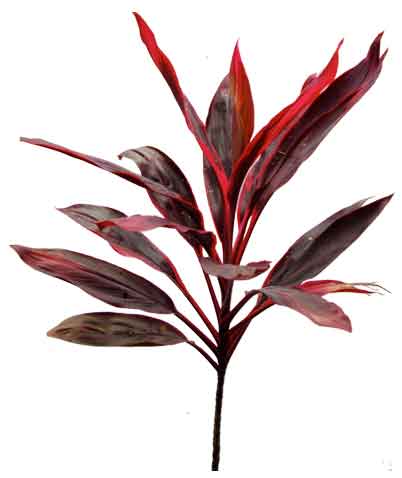
and marked with leaf-scars. Leaves are mostly near the apex of the stem, lanceolate to oblanceolate,
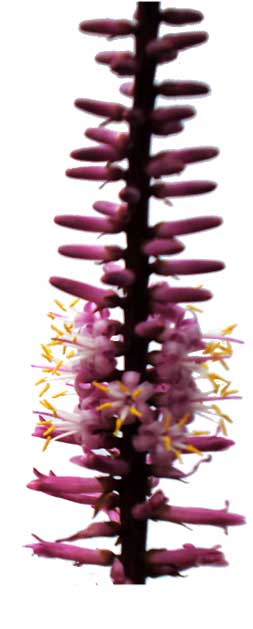
and usually tinged with red or purple, 30 to 50 centimeters long. Panicles are terminal, purplish, laxly branched; the branches up to 30 centimeters in length, and slender. Flowers are pink, and about 1 centimeter long, slender, tubular, with
the perianth split to the middle into 6 equal lobes. Stamens are 6, ovary
3-celled, with 4 to 16 ovules. Fruits are globose berries, and about 5 millimeters in diameter, few or one-seeded.
• A palm-like plant growing up to 4.5 meters (15 feet) tall with an attractive fan-like and spirally arranged cluster of broadly elongated leaves at the tip of the slender trunk. Leaves range from red to green and variegated forms. Leaves are30–60 centimeters (12–24 inches) (rarely 75 cm or 30 in) long and 5–10 cm (2–4 in) wide at the top of a woody stem. It produces 40–60 cm (16–24 in) long panicle of small scented yellowish to red flowers that mature into red berries. (16)
Distribution
- Introduced, not naturalized.
- Widely cultivated for ornamental
purposes.
- Native to Bismarck Archipelago, Caroline Is., Fiji, Marianas, Marshall Is., New Guinea, Queensland, Santa Cruz Is., Solomon Is., Vanuatu, Wallis-Futuna Is. (14)
- Now pantropic in cultivation.
 Constituents Constituents
- Yields imidazole alkaloids, linoleic acid, saponins, sarsapogenin, smilagenin, sterols, tyramine.
- Contains 5b-spirostanes, calcium oxalate, cholestine glycosides, flavonoids, fructan, polyphenols, polysaccharides.
- Study isolated four new cholestane glycosides (1-4) from the leaves of C. terminalis.
(13)
- Cordyline fruticosa leaf extract yielded farrerol, quercetin 3-O-[6-trans-p-coumaroyl]-ß-D- glucopyranoside, helichrysoside, apigenin 8-C-ß-D- glucopyranoside, quercetin 3-O-ß-D glucopyranoside (isoquercitrin), and quercetin 3-O-"-l-rhamnopyranosyl-(1-6)-ß-d-glucopyranoside. (see study below) (16)
- Study of leaves isolated three new steroidal saponins, spirosta-5,25(27)-diene-1β,3β-diol-1-O-α-l-rhamnopyranosyl-(1→2)-β-d-fucopyranoside (fruticoside H) 1, 5α-spirost-25(27)-ene-1β,3β-diol-1-O-α-l-rhamnopyranosyl-(1→2)-(4-O-sulfo)-β-d-fucopyranoside (fruticoside I) 2, and (22S)-cholest-5-ene-1β,3β,16β,22-tetrol 1-O-β-galactopyranosyl-16-O-α-l-rhamnopyranoside (fruticoside J) 3, together with the known quercetin 3-O-β-d-glucopyranoside, quercetin 3-O-[6-trans-p-coumaroyl]-β-d-glucopyranoside, quercetin 3-rutinoside, apigenin 8-C-β-d-glucopyranoside and farrerol. (see study below) (24)
- Study of 70% aqueous methanolic
extract of leaves isolated four steroidal saponins, spirostan-25(27)-ene-1β,3α-diol-1-O-[α-L-rhamnopyranosyl-(1 → 2)-α-L-rhamnopyranoside] (fruticoside M) (6), 5α-spirost-25(27)-ene-1β,3β-diol-1-O-α-L-rhamnopyranosyl-(1 → 2)-(4-O-sulfo)-β-D-fucopyranoside (fruticoside I) (8), 26-O-β-D-glucopyranosyl-22-O-methyl-(25S)-5α-furostane-1β,3α,22ε,26-tetrol 3,26-O-β-D-glucopyranoside (9), and 26-O-β-D-glucopyranosyl-22-O-methyl-(22S)-5α-furostane-3α,22ε-26-triol-3-O -β-D-glucopyranoside (12), along with 8 phenolic compounds, 5,3′,5′-trihydroxy-3,6,7,4′-tetramethoxyflavone (1), procyanidin B2 (2), vitexin 2′′-O-rhamnoside (3), naringenin (4), 3-O-[6-trans-p-coumaryl]-β-D-glucoside (helichrysoside) (5), baicalein-6-O-β-glucuronopyranoside (7), 4′,5,7-trihydroxy-6,8-dimethylisoflavone (10) and farrerol (11). (see study below) (29) -β-D-glucopyranoside (12), along with 8 phenolic compounds, 5,3′,5′-trihydroxy-3,6,7,4′-tetramethoxyflavone (1), procyanidin B2 (2), vitexin 2′′-O-rhamnoside (3), naringenin (4), 3-O-[6-trans-p-coumaryl]-β-D-glucoside (helichrysoside) (5), baicalein-6-O-β-glucuronopyranoside (7), 4′,5,7-trihydroxy-6,8-dimethylisoflavone (10) and farrerol (11). (see study below) (29)
- Study of aerial parts of Cordyline fruticosa L. var. strawberries. isolated a new sulfated steroidal derivative (fruticogenin A: 1-sulfo-australigenin-3-sodium sulphate, 1) and three new steroidal saponins named fruticoside K (3-sulfo-spirostan-25(27)-ene-1β,3β-diol-1-O-[α-L-rhamnopyranosyl-(1 → 4)-β-D-fucopyranoside], 2), fruticoside L (3-sulfo-spirostan-25(27)-ene-1β,3β,6α-triol-1-O-[α-L-rhamnopyranosyl-(1 → 4)-β-D-fucopyranoside], 3) and fruticoside M (spirostan-25(27)-ene-1β,3α-diol-1-O-[α-L-rhamnopyranosyl-(1 → 2)-α-L-rhamnopyranoside], 4). (see study below) (31)
- Chromatographic study of flowers isolated five anthocyanins: cyanidin 3,5-di-O-β-glucopyranoside (2.6 ± 0.2 mg/g fr. wt) (1), peonidin 3,5-di-O-β-glucopyranoside (2.8 ± 0.3 mg/g fr. wt) (2), cyanidin 3-O-β-(6″-O-E-p-caffeoylglucopyranoside)-5-O-β-glucopyranoside (3.2 ± 0.2 mg/g fr. wt) (3), cyanidin 3-O-β-(6″-O-E-p-coumaroylglucopyranoside)-5-O-β-glucopyranoside (6.2 ± 0.4 mg/g fr. wt) (4), and peonidin 3-O-β-(6″-O-E-p-coumaroylglucopyranoside)-5-O-β-glucopyranoside (9.8 ± 0.2 mg/g fr. wt) (5). (see study below) (32)
Properties
- Considered antiseptic, aphrodisiac, depurative, diuretic, mildly cooling, blood
refrigerant, febrifuge, laxative, purgative, hemostatic, disperses contusions, analgesic, tonic.
- Studies have suggested
antibacterial, antiproliferative, antipyretic, analgesic, anti-inflammatory, anticancer, cytotoxicity, antidiarrheal, anti-trypanosomal, wound healing properties.
Toxicity
Some leaves are reported to contain
calcium oxalate raphides and should be cooked. Young raw leaf shoots
are sweet and edible.
Parts
utilized
· Flowers, leaves, stems, and
roots.
· Flowers may be collected in May. Sun-dry.
· Roots and leaves may be collected through the year.
· Rinse and cut into pieces, sun-dry.
 Uses Uses
Edibility
- In Java, young tender leaf shoots are eaten as vegetable.
- Roots may be boiled and baked into food, sweet candy or a fermented drink.
- In Hawaii, leaves used to preserve breadfruit.
- Used as sweetener in Fiji.
- In the Philippines, roots are used to flavor the traditional intus sugarcane wines of the Lumad people of Mindanao.
Folkloric
· In Albay, decoction of leaves drunk for treatment of inflammation; plaster of leaf blade applied to sprains. (27)
· Used for hemoptysis due to pulmonary
tuberculosis, premature abortion, excessive menstruation and blood in
urine, bleeding due to piles.
· Used in enteritis-bacillary dysentery, rheumatic bone pains, swelling pain due to sprains.
· Dosage: use 60 to 90 gms fresh leaves or 30 to 60 gms dried
roots or 9 to 15 gms dried flowers in decoction.
· In Fiji, root used for baldness, gum abscess, gingivitis, toothaches; leaf juice for eczema, abdominal pain, gastritis, eye infections; leaf buds used for lower chest pains. Also, leaves and stems used as abortifacient.
· In Java, sweet rhizome used with betel leaf to cure diarrhea and dysentery. Also, used for indigestion.
· In Malaya, decoction of red leaves with Lygodium used for dysentery.
· In New Guinea, root decoction used by lactating mothers to treat mammary gland infection. Juice from heated leaves used for colds, cough, and whooping cough.
· Infusion of new plant shoots used for filariasis. Stem juice used for postpartum illnesses and to help expel the placenta.
· Roots used to treat baldness. Leaf juice used for earaches, sore eyes, cough, stomachaches, eczema and gastritis. Roots used for treating toothaches and laryngitis.
· In Sumatra, outer part of the stem used with white sale for inflamed gums.
· In Hawaii, leaves
used as heat pack; also for fever, asthma, chest congestion, headache,
back pain, burns, constipation; flower juice snorted for nasal polyps.
· Surinamese Indonesians use pieces of root in vinegar for bleeding. Leaf infusion in oil used to treat wounds. Infusion of three crushed leaves of the purple cultivar used for a hypotensive drink. Proximal part of the leaf. macerated in olive oil, used as a cataplasm or tampon for wounds.
· In Lombok, Indonesia, used for diarrhea. Leaves used for wounds inflicted by fish stings.
·In Samoa, used for elephantiasis, gout, scrotal swellings, and back pains.
Others
· Ceremonial: In Hawaii, used in making healer's leis, and used in ceremonial blessings - blessings, purifications, to dispel curses, and for exorcisms. In New Guinea, plant used for casting love magic on women. In Malaysia, used for black magic. (•) Among the Baktaman people, red plants are used for initiation rites, while green plants are used for healing. Among the Maenge people of New Britain, leaves are worn as skirts. Red leaves are worn only by women past puberty. Ti is also the most important plant in magic and healing rituals of the Maenge. In Polynesia, green ti are cultivated for food and religious purposes. They are widely believed to protect against evil spirits and bad luck, and to host spirits of dead people and nature spirits. Red plants are used in white magic rituals, while green plants are used in black magic rituals. Among Baktaman people, red plants are used for initiation rites, and green plants are used for healing. (17)
· Philippine animism / rituals: Used by the babylan (female shamans) when conducting mediumship or healing rituals. There is a belief that the plant has innate ability to host spirits. Among the Ifugao people of northern Luzon, it is planted around terraces and communities to drive away evil spirits; also used to mark boundaries of cultivated fields. Red leaves, believed to be attractive to spirits, are worn during rituals, as part of headdresses or tucked into armbands. They were also worn during bangibang, a ceremonial dance honoring warriors who died in battle or through violent means. In Palawan, it is planted in burial grounds to prevent the dead from becoming malevolent spirits. (17)
· Kitchen utility: In Hawaii, leaves used as food wrapper; also to line pans used for baking fish and other seafoods, imparting a flavor to cooked products. (12)
· Ornamental: In Hawaii, ti leaf used for hula skirts, leis, garlands, or pu olo (bundle or container) used to make an offering to the gods. (12)
· Crafts: In Hawaii, fiber from the eaves of the Ti plant used for making sandals, baskets, bird snares, sieves, and thatch for roofs, rope and cord. (25)
· Dye: Among Mendi and Sulka people, dye derived from the plant is used as body paint.
· Cultural symbolisms: Planted in grave sites, used in magical and ritual practices. Red ti plants symbolized blood, war, and ties between the living and the dead, while green ti plants symbolize peace and healing. (17) In Hawaii, a symbol of purity and spiritual power. Planted around houses, made into healers leis, and used in ceremonial blessings. Grown at temples of the medicine god Lono and the hula goddess Laka. (33)
Studies
• Antibacterial:
Study of methanolic extract of C terminalis (Cordyline fruiticosa) showed
moderate antibacterial activity against E coli, Shigella boydii, Strep
pyogenes and Staph epidermis. (1) Study evaluated the antibacterial property of a leaf extract. Results showed moderate antibacterial effect against E. coli and massive antibacterial activity against B. subtilis. (15)
• Antiproliferative:
Study isolated from the aqueous extract of C terminalis a natural nucleoside,
thymidine. Thymidine inhibited cell replication and decreased cell viability.
It also inhibited a human breast cancer line. (2)
• Anticancer Potential:
Preliminary results showed the presence of potential MKK1 inhibitors in the crude extracts of A excelsa, C terminalis and T crispa. MMK1 (Mitogen-activated Protein Kinase 1) is one of the potential molecular targets for cancer therapy, together with GSK-3b and PP1, that play a vital role in MAP kinase signal transduction, tumorigenesis, apoptosis and cancer metastasis. (3)
• Anthocyanin:
Study reports an efficient and promising protocol for enhancement of anthocyanin production from the callis cultures of some ornamental plants. The highest values were obtained with celosia, cordyline and catharanthus calli cultures, respectively. Anthocyanin pigments and derivatives are flavonoids and unique to the plant kingdom, beneficial to human health with potential anti-cancer, cardioprotective, anti-inflammatory and antioxidant properties. (4)
• Antioxidant / Sodium-Caseinate Bead Encapsulation:
Study of methanolic extracts revealed 102.6 mg/g of gallic acid equivalent of polyphenols, with an antioxidant activity of 13.4 mg/g of ascorbic acid equivalent. Encapsulation in sodium-caseinate beads provided antioxidant stability compared to unencapsulated extracts. Sodium-caseinate beads offer a potential for food supplementation with natural antioxidants. (8)
• Anti-Cancer / MMK1 Inhibition:
MMK1 (mitogen-activated protein kinase) is one of the potential molecular targets for cancer therapy, playing a vital role in mitogen activated protein (MAP) kinase signal transduction, tumorigenesis apoptosis, and cancer metastasis. Study of crude extracts of C. terminalis showed potential inhibition against MKK1. (10)
• Antibacterial / Leaves:
Methanolic extract of C. terminalis Kunth and its solvent fractions moderate antibacterial activity against Escherichia coli, Shigella boydii, Streptococcus pyogenes and Staphylococcus epidermis. (11)
• Antioxidant / Stem Barks: Study evaluated the antioxidant activity of two plants viz., Cordyline fruiticosa (leaves) and Eriobotrya japonica (stem bark). Both plant fractions exhibited excellent radical scavenging ability on all assays and showed to be promising sources of natural antioxidant ingredients.
• Anti-Inflammatory / Antipyretic / Analgesic / Leaves: Study evaluated a methanolic extract of Cf leaves (MCFL) for analgesic, anti-inflammatory and antipyretic activities. In analgesic test, • A Study evaluated the an significantly (p<0.05) reduced paw licking and abdominal writhing of mice in a dose dependent manner. At dose of 800 mg/kbw, there was significant increase of pain threshold in tail immersion and hot plate test. MCFL showed significant anti-inflammatory activity by reducing xylene induced air edema and cotton pellet induced granuloma in a dose dependent manner. All test doses exhibited anti-pyretic activity in the Brewer's yeast-induced pyrexia test. (16)
• Cytotoxicity: Brine shrimp lethality testing of methanol extract showed considerable toxicity with LC50 of 355.7 µg/mL, compared to vincristine sulfate (LC50 of 3.8 µg/mL). Results indicate the methanol extract has a cytotoxicity effect and could have antitumor molecules. (18)
• Anti-Diarrheal / Cytotoxicity / Leaves: Study evaluated the effects of methanol extract of C. fruticosa leaves (MCFL) on castor oil-induced diarrhea, magnesium sulphate induced diarrhea and charcoal meat test in mice. In castor oil induced diarrhea test, the MCFL at dose of 200, 400, and 800 mg/kbw significantly (p<0.05) and dose-dependently reduced frequency of diarrhea. Frequency of magnesium sulphate-induced diarrhea was significantly decreased at does of 800 mg/kg. In charcoal meal test, extract dose of 400 and 800 mg/kbw significantly (p<0.05) reduced distance traveled by charcoal. In BSLT, the extract showed considerable toxicity towards brine shrimp with LC50 of 355.7µg/mL, compared to standard vincristine LC50 of 3.8 µg/mL. (19)
• Antitrypanosomal / Cytotoxicity / Leaves: Study evaluated the antitrypanosomal activity of aqueous and ethanol extracts of five selected medicinal plants viz., Acanthus ilicifolius, Allium sativum, Cordyline terminalis, Goniothalamus tapis, and Maesa ramentacea. The aqueous extract of leaves of Cordyline terminalis exhibited antitrypanosomal activity with IC50 of 48.1 µg/ml, with the highest SI of 27.21. Results showed C. terminalis showed considerable antitrypanosomal activity with potential as source of new antitrypanosomal compounds. (20)
• Hepatoprotective / Nephroprotective in Doxorubicin-Cisplatin Toxicity / Leaves: Study evaluated the effect of C. fruticosa leaf extract against doxorubicin-cisplatin-induced nephrotoxicity and hepatotoxicity in rats. The extract induced significant decrease in AST, ALT, alkaline phosphatase, urea and creatinine in doxorubicin-treated rats. The extract protected renal tissues from necrosis induced by doxorubicin. Administration of the extract 10 days before cisplatin ingestion contributed to a pronounced protection against hepatic injury induced by cisplatin. (21)
• Antibacterial / Endophytic Fungi and Leaves: Study evaluated gradient solvent of leaves for antibacterial activity against Gram(-) S. typhi, E. coli and Gram(+) S. aureus and B. subtilis. Extracts of endophytic fungi from leaves were also evaluated for antibacterial activity. The ME of C. fruticosa leaves showed strong antibacterial activity equivalent to the endophytic fungus. (22)
• Antimicrobial against S. dysenteriae / Antidiarrheal / Leaves: Study evaluated phytochemicals from the leaves and activity against microbes that cause diarrhea, such as Shigella dysenteriae and Candida albicans. Phytochemical screening of ethanol extract and infusion of andong leaves revealed flavonoids, tannins, saponins, and phenols. The ethanol extract and infusion of leaves inhibited the growth of S. dysenteriae but showed no effect on C. abicans. (23)
• Antimicrobial / Anticancer / Steroidal Saponins / Leaves: Study of leaves isolated three new steroidal saponins, spirosta-5,25(27)-diene-1β,3β-diol-1-O-α-l-rhamnopyranosyl-(1→2)-β-d-fucopyranoside (fruticoside H) 1, 5α-spirost-25(27)-ene-1β,3β-diol-1-O-α-l-rhamnopyranosyl-(1→2)-(4-O-sulfo)-β-d-fucopyranoside (fruticoside I) 2, and (22S)-cholest-5-ene-1β,3β,16β,22-tetrol 1-O-β-galactopyranosyl-16-O-α-l-rhamnopyranoside (fruticoside J) 3, together with the five known quercetins. Compounds 1 and 2 showed moderate cytotoxic activity against MDA-MB 231 human breast adenocarcinoma cell line, HCT 116 human colon carcinoma cell line, and A375 human malignant melanoma cell line. Compound 2 also showed moderate antibacterial activity against Gram(+) Enterococcus faecalis. (24)
• Acceleration of Wound Healing / Leaves: Study evaluated the histopathological effect of Andong leaf extract on the number of fibroblasts on incised labial gingival wounds in Wistar rats. Leaf extract was topically applied. Histopathological exam showed an increase in the number of fibroblasts on the 7th day,14th day, followed by a decrease on the 14th day, and further decrease on the 21st day in the treatment group. Results showed Andong leaf extract accelerates wound healing, (26)
• Leaf Powder Diet Supplement: Study evaluated the effect of C. fruticosa leaf powder supplemented in the diet of weaned pigs on growth performance, hematological and serum biochemical indices. Results showed higher average daily weight gains in leaf powder-supplemented groups. Results suggest leaf powder can be supplemented in the diet of weaned pigs without causing any negative effect on growth and health status. (28)
• Nephroprotective / Hepatoprotective / Leaves: Study of 70% aqueous methanolic extract of leaves isolated four steroidal saponins, along with 8 phenolic compounds. Study evaluated the effect of C. fruticosa leaves extract against doxorubicin-cisplatin-induced nephrotoxicity and hepatotoxicity in rats. Administration of C. fruticosa extract at 200 mg/kg/day induced significant decrease in AST, ALT, ALP, urea, uric acid, and creatinine in doxorubicin-treated rats and protected the renal tissue from necrosis induced by doxorubicin. The administration of a single dose of the extract (200 mg/kbw) 10 days before cisplatin ingestion (single dose of 5 mg per kg) showed pronounced protection against hepatic injury induced by cisplatin. Protection increased through the post prevention and treatment stages with levels of ALT and AST. Molecular docking analysis showed the isolated compounds as tumor necrosis factor-α inhibitors compared to silymarin as reference drug. Compounds 6 and 9, either alone or in combination with other extract isolates may have potential for hepatoprotective and nephroprotective effects. (see constituents above) (29)
• Supramolecular Gels as Polyphenol Release Scaffold for Biomedical Applications / Leaves: Cordyline terminalis leaf extract (aqCT) possesses abundant polyphenols and other bioactive compounds, which are encapsulated in gelatin-polyethylene glycol-tyramine (GPT)/alpha-cyclodextrin (α-CD) gels to form additional functional materials for biomedical applications. GPT/α-CD/aqCT gels achieved significant antioxidant activity through 1 100% scavenging of DPPH radical. All gels are non-cytotoxic with cell viability of more than 85%. The GPT/α-CD/aqCT gels might be studied to integrate multi-properties, such as tunable mechanical strength, self-healing, adhesive, stimuli-response, and antibacterial characteristics satisfying requirements for advanced biomaterials. (30)
• Steroidal Saponins / Cytotoxicity / Aerial Parts: Study of aerial parts of Cordyline fruticosa L. var strawberries isolated a new sulfated steroidal derivative and three new steroid saponins. Compounds 2 and 4 exhibited weak cytotoxicity against melanoma (A375), breast adenocarcinoma (MDA-MB-231) and colon carcinoma (HT116) human tumor cell lines (see constituents above) (31)
• Anthocyanin Profile / Antioxidant / Flowers: Study characterized and evaluated the antioxidant property of anthocyanins from C. terminalis purple flowers. Chromatographic study of flowers isolated five anthocyanins. The extract exhibited appreciable antioxidant activity with IC50 of 13.1 µg/mL against quercetin (IC50 4.5 µg/mL) compared to individual anthocyanins (IC50 13.8 to 16.4 µg/mL) when measured using DPPH method. Cordyline terminalis flowers may be justified for use and standardization as herbal therapy for asthma. (32)
Availability
Wild-crafted.
Plants, teas, powders in the cybermarket. |