 Gen info Gen info
- Worldwide there are over 800 species of the genus Ficus (Latin: fig) and of
the more than 10 species found in the Philippines, Balete is a
shared common name for six of them: (1) Ficus
Benjamin, Salish (2) Ficus elastics, Indian
rubber tree (3) Ficus indict, baleen-baging
(4) Ficus papaya, papaya
(5) Ficus recusant, marabout's,
and (6) Ficus stipulation, bongo.
- Weeping Fig is the official tree of Bangkok, Thailand.
Botany
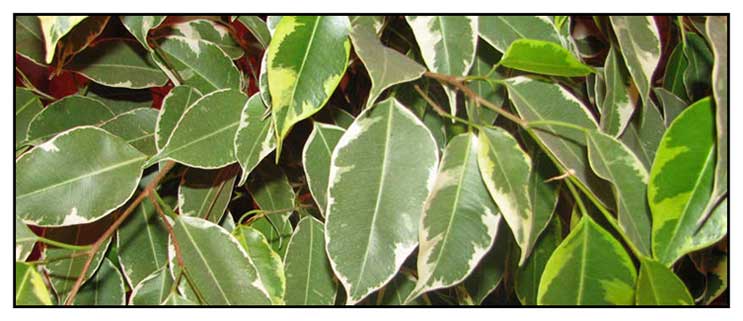
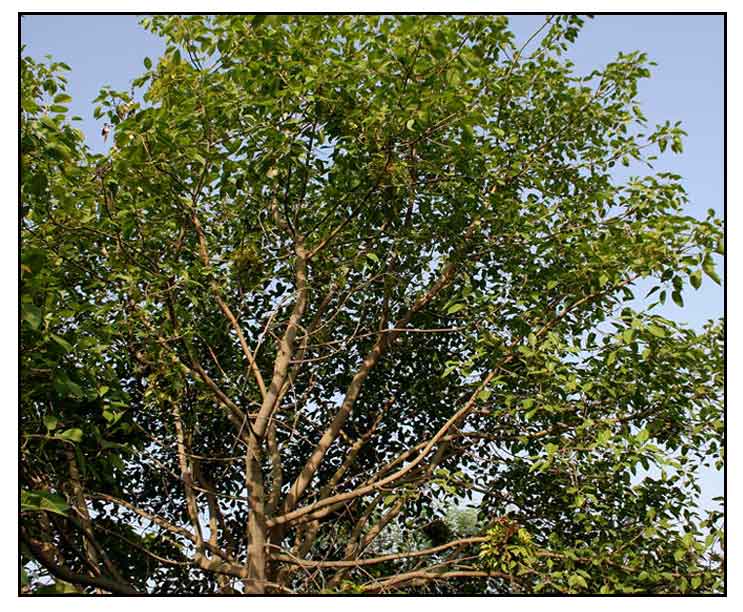
Balete is a strangling, smooth plant, assuming a tree form and reaching a height of 15 meters or more. Branches are drooping. Leaves are leathery, oblong-ovate, 6 to 9 centimeters long, with prominent and rather slender point, rounded base, entire margins, smooth green and shining; the nerves slender and spreading, not prominent. Petioles are 5 to 10 millimeters long. Fruit is axillary, solitary, stalkless, dark-purple and fleshy when mature, somewhat spherical, and 1 centimeter in diameter.
 Distribution Distribution
- From northern Luzon to Mindanao, in most islands and provinces, in primary forests at low and medium altitudes.
- In Manila, planted as avenue and shade tree.
- Also occurs in India to southern China, Malaya, northern Australia, and the islands of the South Pacific.
Constituents
- Bark contains 4.2 percent tannin.
- Latex contains 30% caoutchouc, along with 59% resin.
- Wax contains cerotic acid.
-
Extraction of leaves, bark, and fruits yielded six compounds: cinnamic acid, lactose, naringenin, quercetin, caffeic acid and stigmasterol. (11)
- GC/MS analysis of essential oil yielded four compounds in stem and eight compounds in root. HPLC analysis yielded four phenolic compounds (chlorogenic p-coumaric, ferulic and syringic acids) in roots, three (chlorogenic, p-coumaric, and ferulic acids) in stems, and one (caffeic acid) in leaves. (see study below) (15)
- Study of gum show major constituents of sucrose and d-glucose, constituting 60.92% of chemical constituents, while carboxylic acids (albietic acid 1.00%. hexadecanoic acid 4.41%, 9-octadecanoic acid 1.00%, stearic acid 3.01%, oleic acid 0.01%, octadecanoic acid 9.12%, and 6,13-pentacenequinone 20.43% accounted for the remaining constituents. (see study below) (18)
- Ethanol fraction of fruits yielded alkaloids, tannins, saponin, flavonoids, anthraquinone, and phenol. A chloroform fraction. Other tested fractions yielded alkaloids, flavonoids, anthraquinone and phenol glycosides. (see study below) (29)
- Phytochemical screening of methanolic extract of leaves yielded carbohydrates, phenolic compounds, oils and fats, saponins, flavonoids, alkaloids, proteins and tannins as major phytochemical groups. The ME showed high levels of phenolic (4.006 mg gallic equivalent/gm) and flavonoids (16.005 mg quercetin acid equivalence/gm) compounds. (see study below)
(33)
Properties
- Dermatitis and Allergic Reactions: Plant sap from all parts reported to cause minor skin irritation. Frequent contact may cause itching of the eyes, coughing, and wheezing. (4)
- Studies have suggested hepatoprotective, antibacterial, air-cleaning, antioxidant, antidiabetic.properties.
Parts
utilized
Bark, root, leaves.
Uses
Folkloric
• Root, bark of root and leaves boiled in oil and applied on wounds and bruises.
• In norther Surigao del Sur, preheated and pounded bark is applied directly to area of rheumatism. (35)
• The Subanens in Zamboanga del Sur apply the poultice of bark on fractures. (37)
• Latex used to seal minor wounds.
• Juice of bark used for liver diseases.
• Pounded leaves and bark applied as poultice for rheumatic headache.
• In Nepal, the Higaonon tribe of Rogongon, Iligan City, decoction of roots of Ficus benjamina is drank three times daily for relief of muscle pains or fatigue (bughat) in women; also used as appetite stimulant. (12) Latex applied to boils. (31)
• In Vietnam, latex applied to itches. (36)
Others
• Wood: Wood is low quality, but used for temporary construction, mouldings, interior work, cladding, drawers, crates and boxes, etc. (28)
• Landscape: In Manila, used as an avenue and shade tree.
• Fiber / Rope: Inner bark is a source of fiber. In the provinces, rope made from its bast.
• Latex: All plant parts yield latex, containing 30% caoutchouc, along with 59% resin. (28)
• Tannins: Bark yielded about 4.2% tannins. (28)
• Repellent: Twigs used as insect repellent by keeping them under the beds. Leaf juice used as flea and bug repellent. (31)
• Ethnoveterinary: In Nepal, bark wrapped in grass with inflorescence of Musa paradisica and dry seed of Oryza sativa is fed to cattle to minimize risk of abortion. (39)
Studies
• Household Allergen:
Ficus benjamina is a relatively common source of indoor household allergen, with a prevalence of sensitization similar to moulds. (1)
• Allergic / Toxic Irritative:
Study showed more complaints of asthmatic bronchitis, rhinoconjunctivitis and skin symptoms among gardeners handling Ficus benjamina (weeping fig) and Hedera helix (Ivy). (2)
• Asthma / Weeping Fig / Cross-Reactivities:
Study showed hypersensitivity to F. benjamina may cause IgE-mediated respiratory allergy. The association with allergy to fig and papains is likely due to cross-reactive allergen structures. (3)
• Hepatoprotective / CCl4-Induced Toxicity / Leaves:
Study showed hepatoprotective activity of an ethanolic extract of Ficus benjamina leaves against CCl4-induced liver damage in rats. Silymarin was used as standard reference drug. (7)
• Leaves as Indicator of Atmospheric Pollution:
Study evaluated the suitability of Ficus benjamina leaves as a captor of heavy metal particles from atmospheric dusts in urban areas. Samples collected yielded values almost ten times higher than those obtained from unpolluted reference. (8)
• Hypersensitivity to Ficus benjamina / Implications in Food Allergy:
Study of exposure to Ficus benjamina and other Ficus species was documented in 101 (29%) of patients. Of the 22 with hypersensitivity to F. benjamina, 8 showed hypersensitivity to common edible fig, seven to kiwi and two to latex. Study concludes that both prevalence of exposure and sensitization to F. benjamina and presence of allergic manifestations in some patients should be a concern for the plant as an indoor allergen which may also have implications in food allergy. (9)
• Cross-Reactivity / Latex and Fig Fruit:
Allergic reactions to fresh or dried figs can present as a consequence of primary sensitization to airborne FB allergens independent of sensitization to rubber latex allergens. Other fruits like kiwi, papaya, avocado, pineapple, and banana may be associated with sensitization to Ficus allergens. (10)
• Constituents / Antibacterial / Cytotoxicity:
Leaves, bark, and fruits yielded six compounds: cinnamic acid, lactose, naringenin, quercetin, caffeic acid and stigmasterol. Caffeic acid showed strong cytotoxic activity against T-lymphoblastic leukemic (CEM-SS) cell line. The compounds showed antibacterial activity against B. cereus and P. oleaginous.(11)
• Constituents / Antimicrobial / Antioxidant / Hemolytic:
Study evaluated the antioxidant, antimicrobial, and hemolytic potential of stems, leaves, and roots of Ficus benjamina. All extracts and fractions were significantly rich in antioxidants and exhibited potent antimicrobial activity and substantial hemolytic activity. (see constituents above) (15)
• Volatile Formaldehyde Removal by Indoor Plants: In the NASA Clean Air Study that evaluated the ability of certain common indoor plants to provide a natural way of removing toxic agents, Ficus benjamina was listed as having potential to eliminate significant amounts of formaldehyde, xylene and toluene. (16) Study evaluated the volatile formaldehyde removal capacity of entire plant, aerial parts, and root zone of Ficus benjamina and F. Napoleonic. In both species, the aerial parts reduced the formaldehyde concentration during the day but little during the night. Root removal was the same for day and night. The effectiveness of the root zone for formaldehyde removal was due primarily to microorganisms and roots (90%); only 10% through absorption by growing medium. (20)
• Sub-Chronic Toxicity Study / Effect on Liver Functions / Leaves: Study evaluated the sub-chronic toxicity of ethanol extracts of leaves on liver function of white mice at doses of 200, 400, and 800 mg/kbw. Results showed the EE of leaves could significantly increase AST (p<0.05) at doses of 400 and 800 mg/kbw for 60 days, and significantly increase ALT (p<0.05) at dose of 800 mg/kbw. (17)
• Gum Corrosion Inhibition Potential / Aluminum: Study evaluated the corrosion inhibition potential of Ficus benjamina gum for aluminum. Results showed the gum to be an active inhibitor against corrosion of aluminum in solutions of tetraoxosulphate (VI) acid. (see constituents above) (19)
• Anthelmintic / Figs: Study evaluated the anthelmintic activity of Ficus benjamina figs against adult Indian earthworms Pheretima posthuma. Results showed dose dependent reduction in paralysis and death time. The methanol extract was most effective at 100 mg/kg and comparable to standard Piperazine citrate. (21)
• Nanoparticle Synthesis: Study reports on the synthesis of silver nanoparticles from Ficus benjamina. Results showed F. benjamina is able to synthesize nanoparticles, and the addition of three different cocktails of polyphenols with similar absorbance values increases the efficiency of production. (22)
• Hepatoprotective
/ Ethanol-Induced Liver Damage: Study of crude aqueous leaf extract on ethanol-induced hepatotoxicity in mice showed hepatoprotective activity similar to Silymarin. (23)
• Molluscicidal / Control of Schistosomiasis Vector / Leaves: Study evaluated the molluscicidal activity of a crude extract of F. benjamina leaves in Biomphalaria glabrata. Results showed low molluscicidal activity based on WHO parameters. The low activity may be due to sample collection, extraction form, and type of solvent use, resistance of snails, environmental and climatic factors. (24)
• Improvement of Indoor Air Quality: Weeping fig is in the NASA study of 10 plants that may improve indoor air quality. Study suggests F. benjamina is effective at cleansing airborne formaldehyde, xylene, and toluene. (25)
• Silver Nanoparticles
/ Effect on Cervical Cancer Cells: Study reported on the green synthesis of silver nanoparticles using crushed leaves of F. benjamina as reducing agent and studied the effect on normal and cervical cancer cells. (26)
• Effect on Indoor CO2 Concentrations: Health is affected by the concentrations of CO2 in indoor spaces. Study evaluated the effects of indoor plants on concentration of CO2 in indoor environment under certain light conditions. All studied plants reduced the concentration of CO2 to a certain extent during the day. Ficus benjamina reduced the concentration of CO2 by 657 ppm. Ficus elastica and Yucca massengena considerably reduced CO2 concentrations during the day, but substantially increased it during the night, relative to other plants. (27)
• Antibacterial / Fruits: Study evaluated the phytochemical composition and antibacterial activity of various extract fractions of fresh fruits of F. benjamina against selected gram positive and negative bacterial. An ethanol fraction showed highest zone of inhibition of 20 mm against S. pyogenes at 250 mg/ml. (see constituents above) (29)
• Antioxidant / Antidiabetic / Inhibitory Properties Toward α-Amylase and α-Glucosidase / Leaves: Study evaluated the antidiabetic effects of leaf extracts of F. benjamina towards carbohydrate hydrolyzing enzymes, i.e., α-glucosidase and α-amylase. A 90% ethanolic leaf extract showed most efficient a-glucosidase and α-amylase inhibition with IC50s of 9.65 ± 1.04 µg/mL and 13.08 ± 1.06 µg/mL, respectively. Values were better than acarbose with its α-glucosidase inhibition activity. The 90% ethanolic extract also exhibited highest antioxidant activity based on its DPPH radical scavenging ability with IC50 of 63.71 ± 2.66 µg/mL. (32)
• Antioxidant / Leaves: Study evaluated he phytochemical composition and antioxidant potential of methanolic extract of Ficus benjamina leaves. The extract showed significant antioxidant activity in DPPH radical scavenging assay, total antioxidant activity, iron chelating activity, and reducing power assay. Phenolic acids and flavonoids were likely responsible for the antioxidant activity. (see constituents above) (33)
• Silver Nanoparticles / Antibacterial / Leaves: Study reports on a simple, low-cost method and quick in action silver nanoparticles using eco-friendly biological material of leaves. On disc diffusion analysis, the AgNPs strongly inhibited the pathogenic activities of Bacillus subtilis, Pasturella multocida, Staphylococcus aureus, and Enterobacter aerogenes with inhibition range from 7mm ti 13mm. (34)
• Antiviral / Leaves: Study evaluated various parts (leaves, stems, fruits, bulbs) of several plant extracts i.e., Ficus benjamina, Lilium candidum, Callissia fragrans, and Simnondsia chinensis for in vitro antiviral activity against Herpes simplex virus ! and 2 (HSV-1 and HSV-2), and Varicella-Zoster virus (VZV). Results showed F. benjamina and L. candidum ethanol leaf extracts to be the most effective. The ethanol leaf extract of F. benjamina inhibited all studies viruses, whereas L. candidum inhibited only HSV1 and 2. Bioassay guided fractionation of the ethanol extract of F. benjamina leaves isolated three flavone glycosides from an 80% MeOH fraction viz., quercetin 3-O-rutinoside, kaempferol 3-O-rutinoside, and kaempferol 3-O-robinobioside with high antiviral activity against HSV1 and HSV2. The high efficacy and low toxicity of F. benjamina extract and effective fractions suggest a potential as natural resource for production of antiviral and anticancer compounds. (38)
Availability
Wild-crafted. |




_in_Hyderabad_W_IMG_8314.jpg)
