
|

Family • Annonaceae
Susong-kalabau
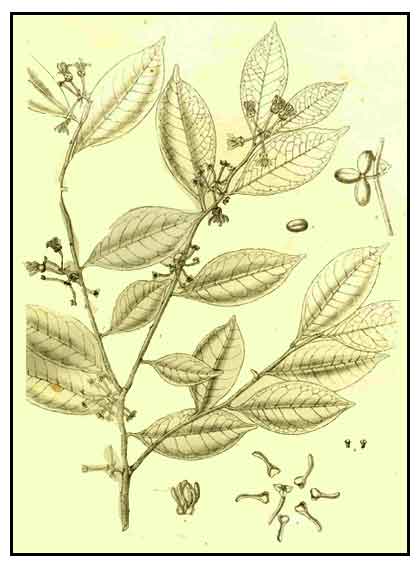
Artabotrys suaveolens Blume
| Scientific names | Common names |
| Artabotrys suaveolens Blume. | Bahai-balangan (C. Bis.) |
| Artabotrys rolfei Vidal | Kintubo (Sub.) |
| Artabotrys hamata Vidal | Susong-damulag (Tag.) |
| Artabotrys corniculata Merr. | Susong-damulog (Pamp.) |
| Unona suaveolens Blume | Susong-kalabau (Tag.) |
| Unona corniculata Blanco | Fragrant tailgrape (Engl.) |
| Susung-kalabau is a local name shared by (1) Hilagak, Uvaria rufa, and (2) Susong-damulog, Artabotrys suaveolens. | |
| Other vernacular names |
| CHINESE: Xiang ying zhao. |
| BURMESE: Nga pye yin. |
| MALAYSIA: Akakai, Akar chenana, Akar larak. |
| TAMIL: Manarancitam. |
| THAI: Akakai (Malay Translit), Kai, Aa-kaa-kai. |
Botany Distribution Parts
utilized Constituents Properties Uses Studies Availability |
Last Update June 2013

 |
| IMAGE SOURCE:50046 Artabotrys suaveolens (Blume) Blume / Annals of the Royal Botanic Garden, Calcutta, vol. 4, t. 61 (1893) / plantIllustrations.org / Modifications by G. Stuart |
Additional
Sources and Suggested Readings |
• |
 |
• |
|
 Gen info
